
The Road to Kashi — A Divine Kanwar Yatra
The Kanwar Yatra is not a festival of temples. It is a festival of the road. The dust, the blisters, the aching shoulders, the chant that begins before dawn and does not stop until the Ganga water is poured over the Shivling. It is the longest pilgrimage in India, not because of the distance, but because of the devotion that walks every step of it.
The Divine Kanwar Yatra collection imagines what that road would look like if the gods themselves became kanwariyas. Not as spectators. Not as distant blessings. But as pilgrims, barefoot, with kanwars balanced on their shoulders, saffron cloth tied around their foreheads, walking toward Kashi, toward Rameshwaram, toward Haridwar, toward the source of the sacred water.
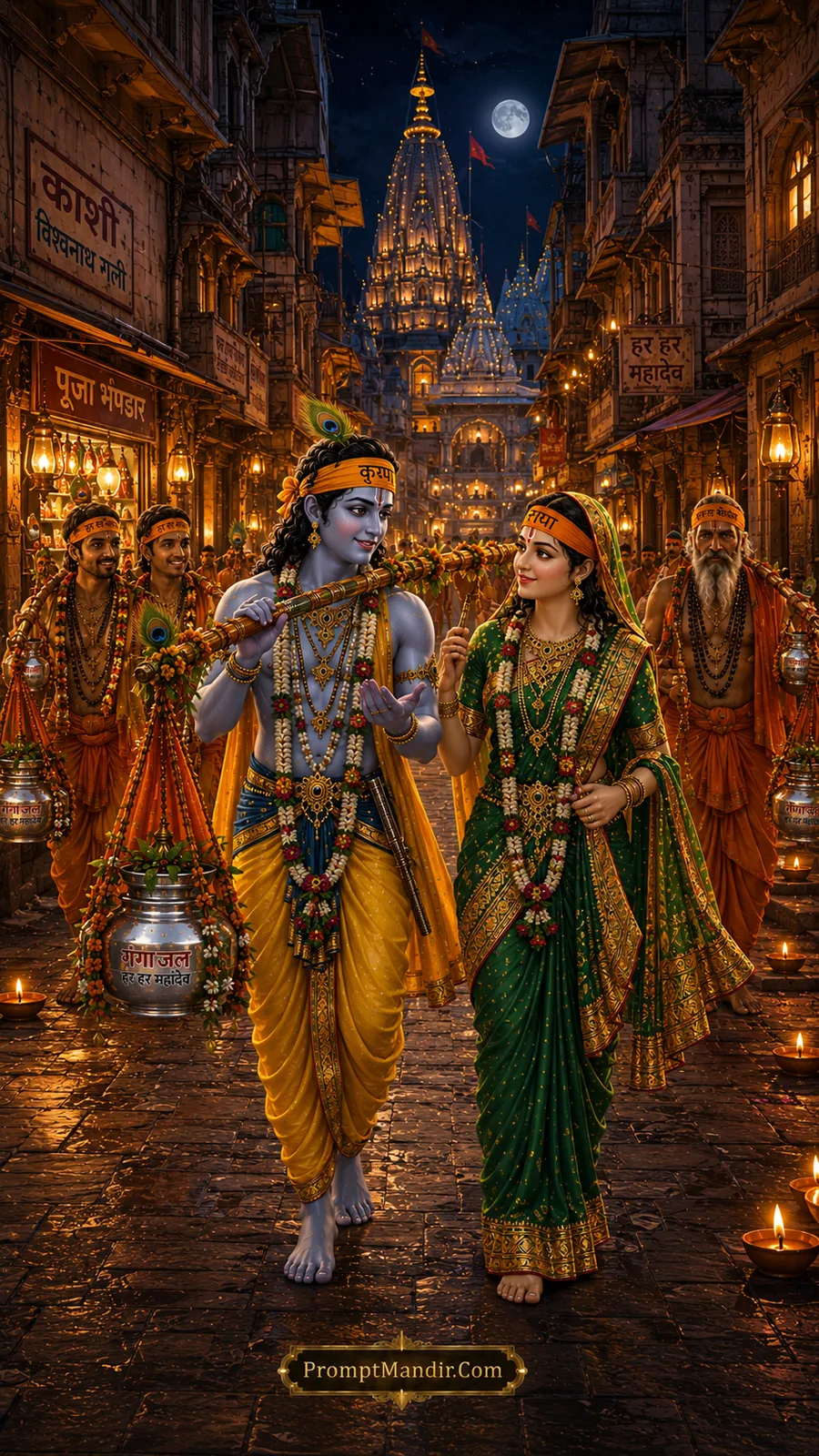
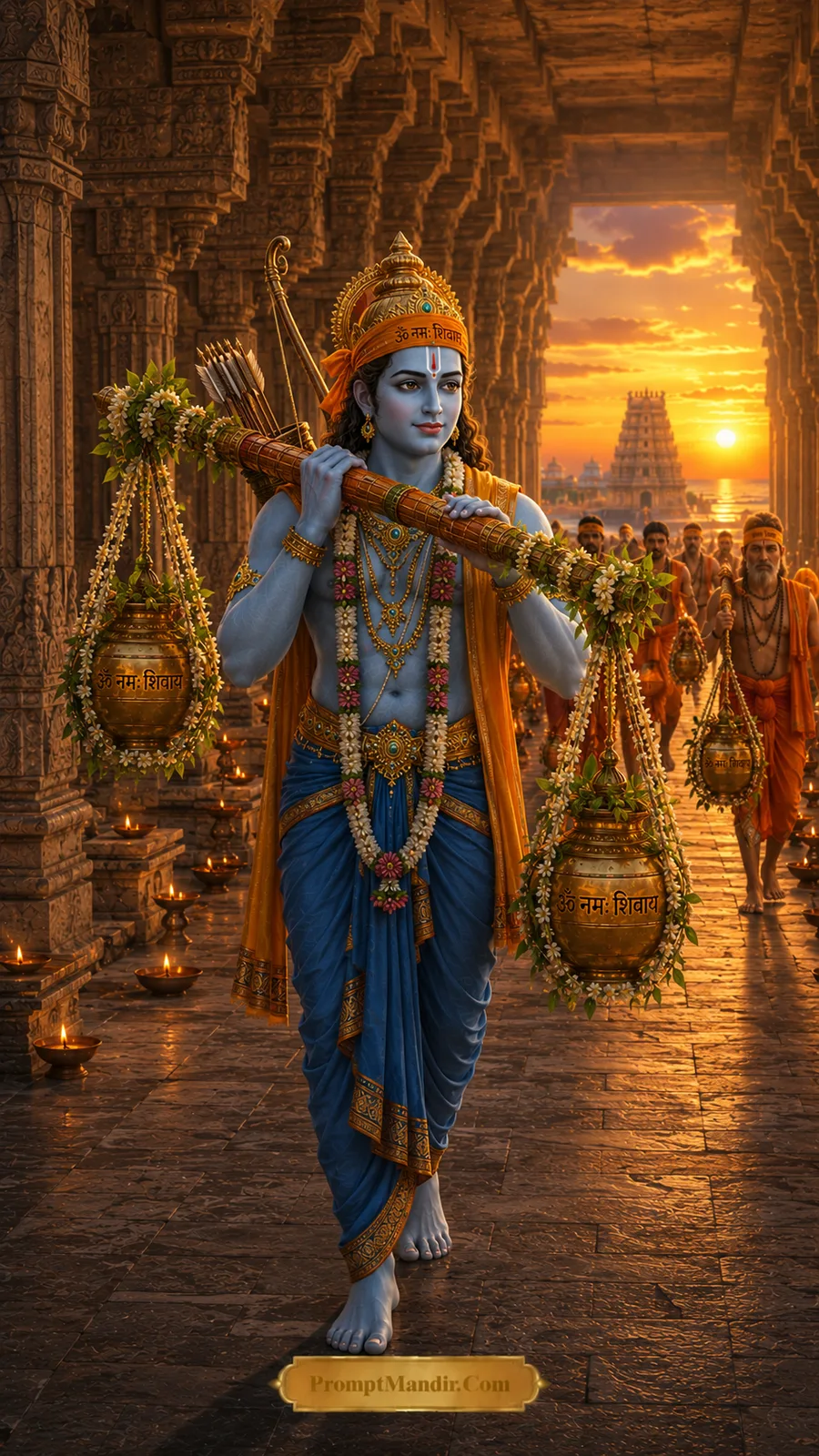
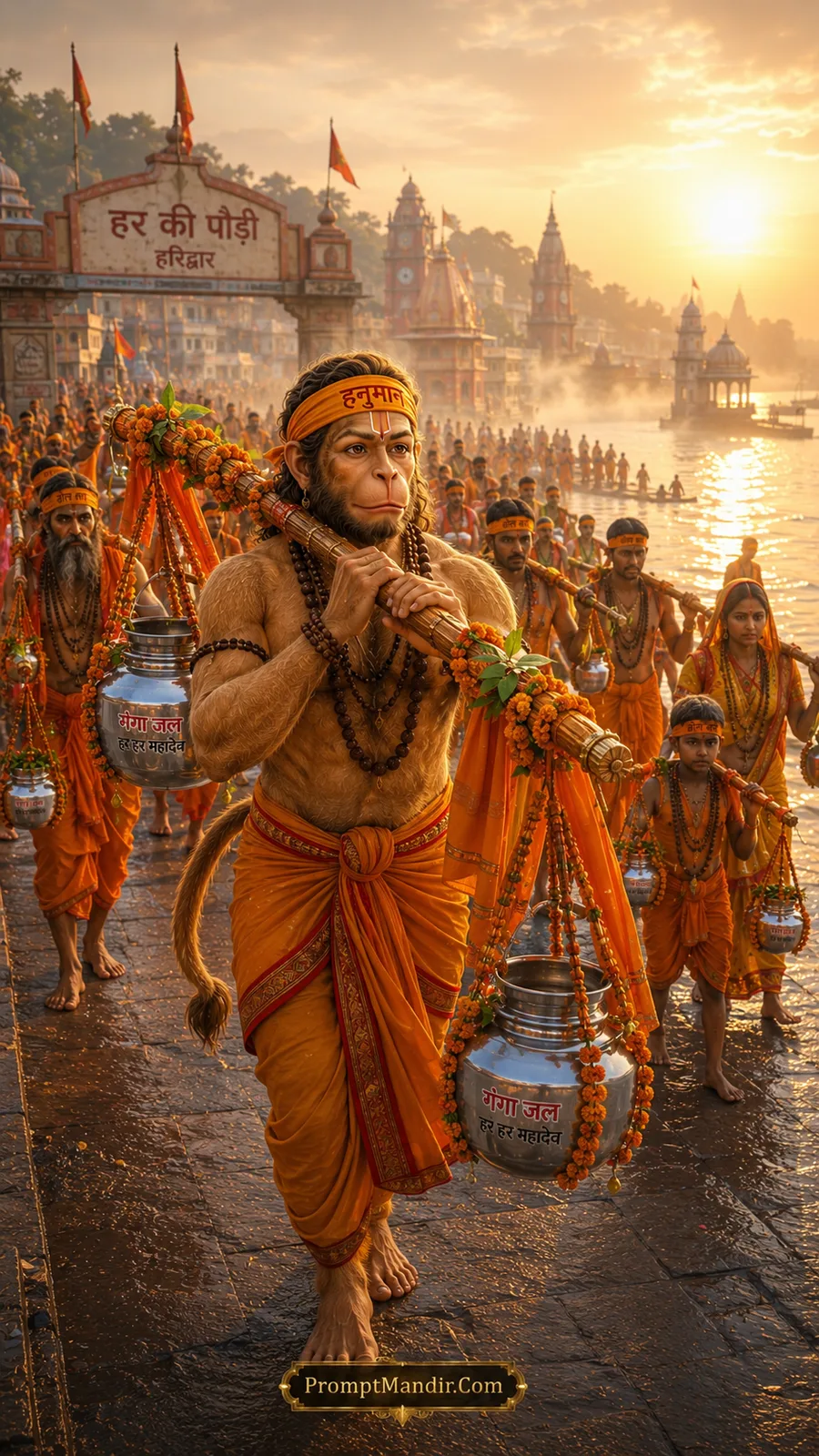
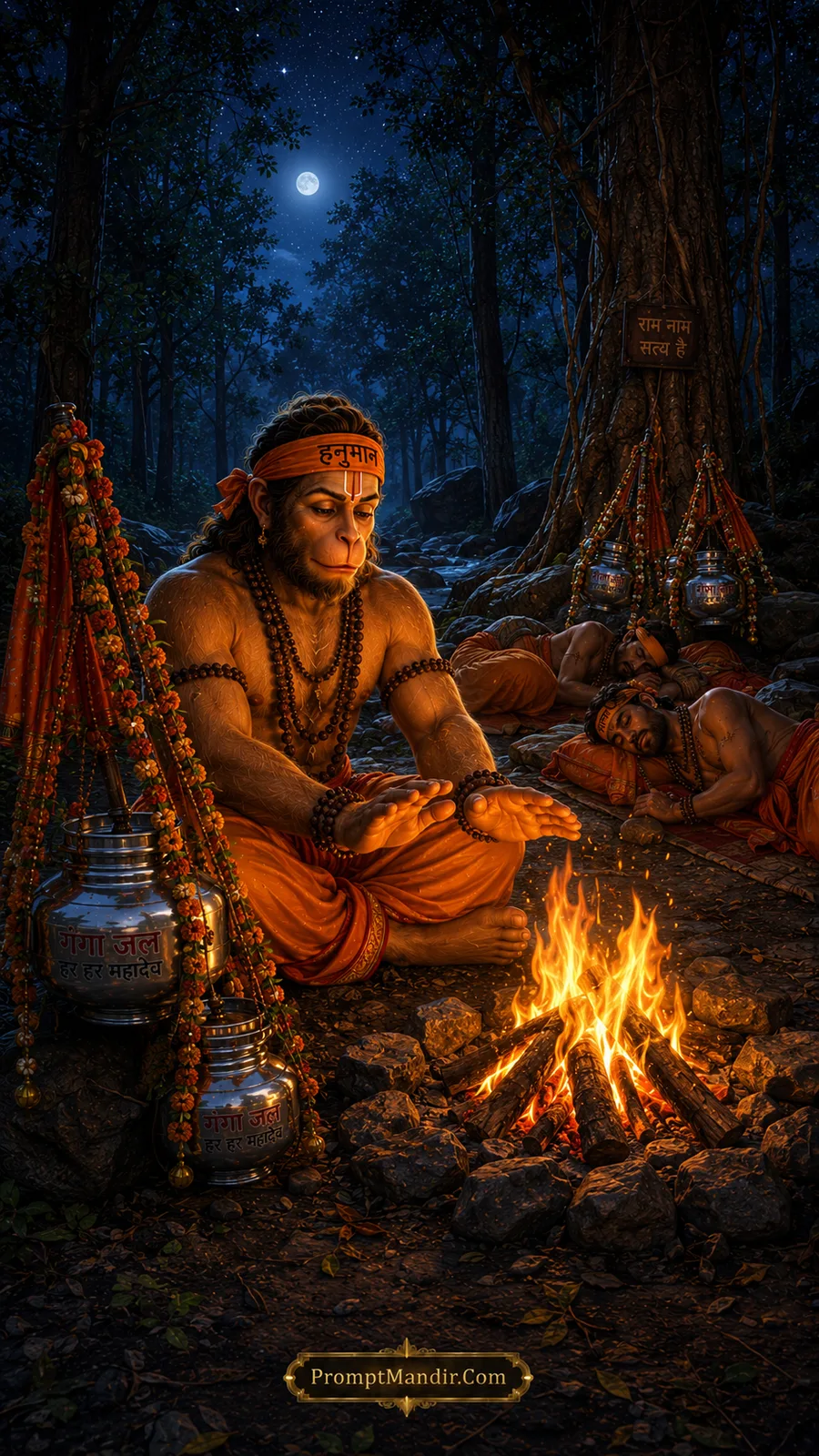
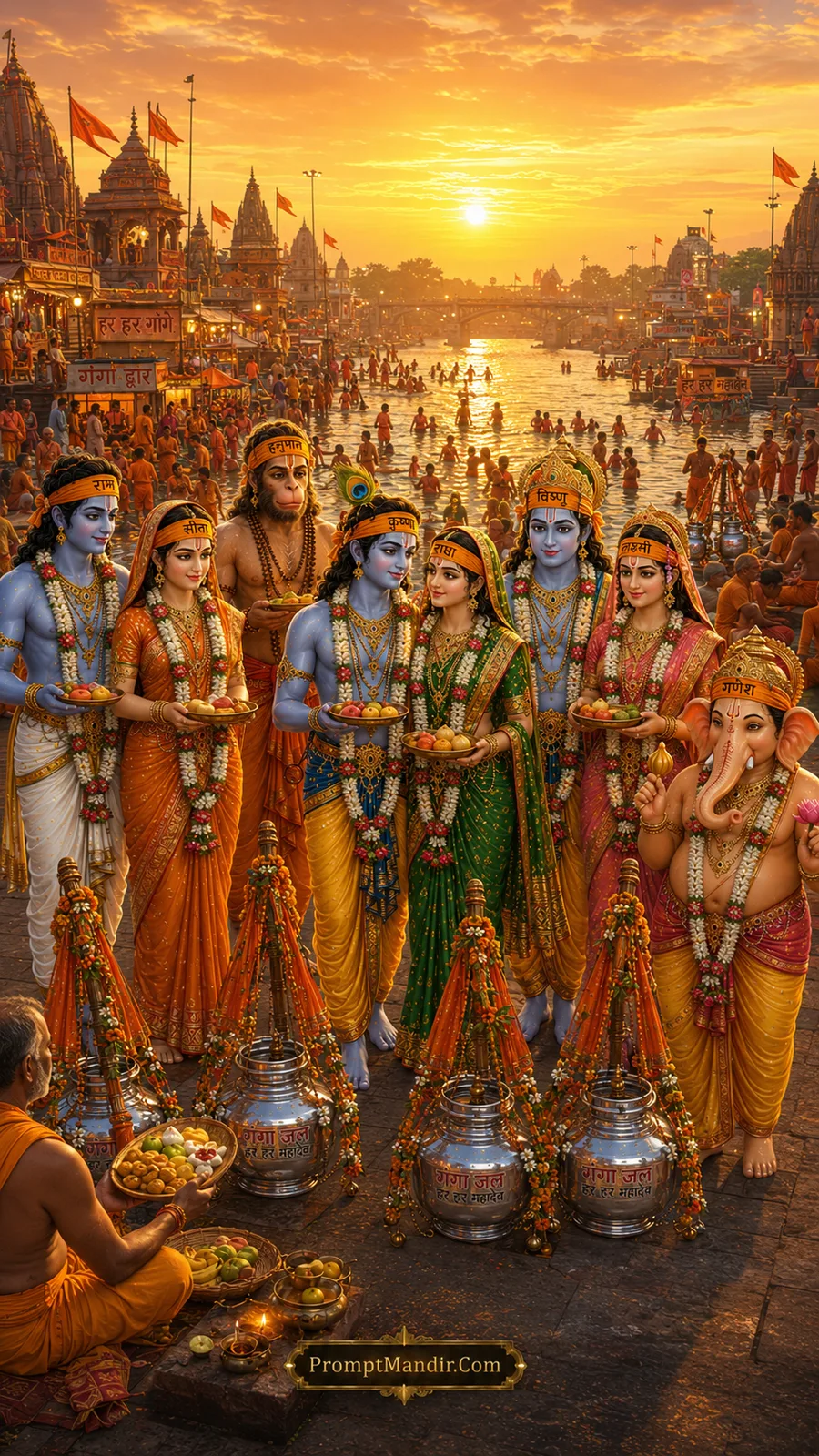
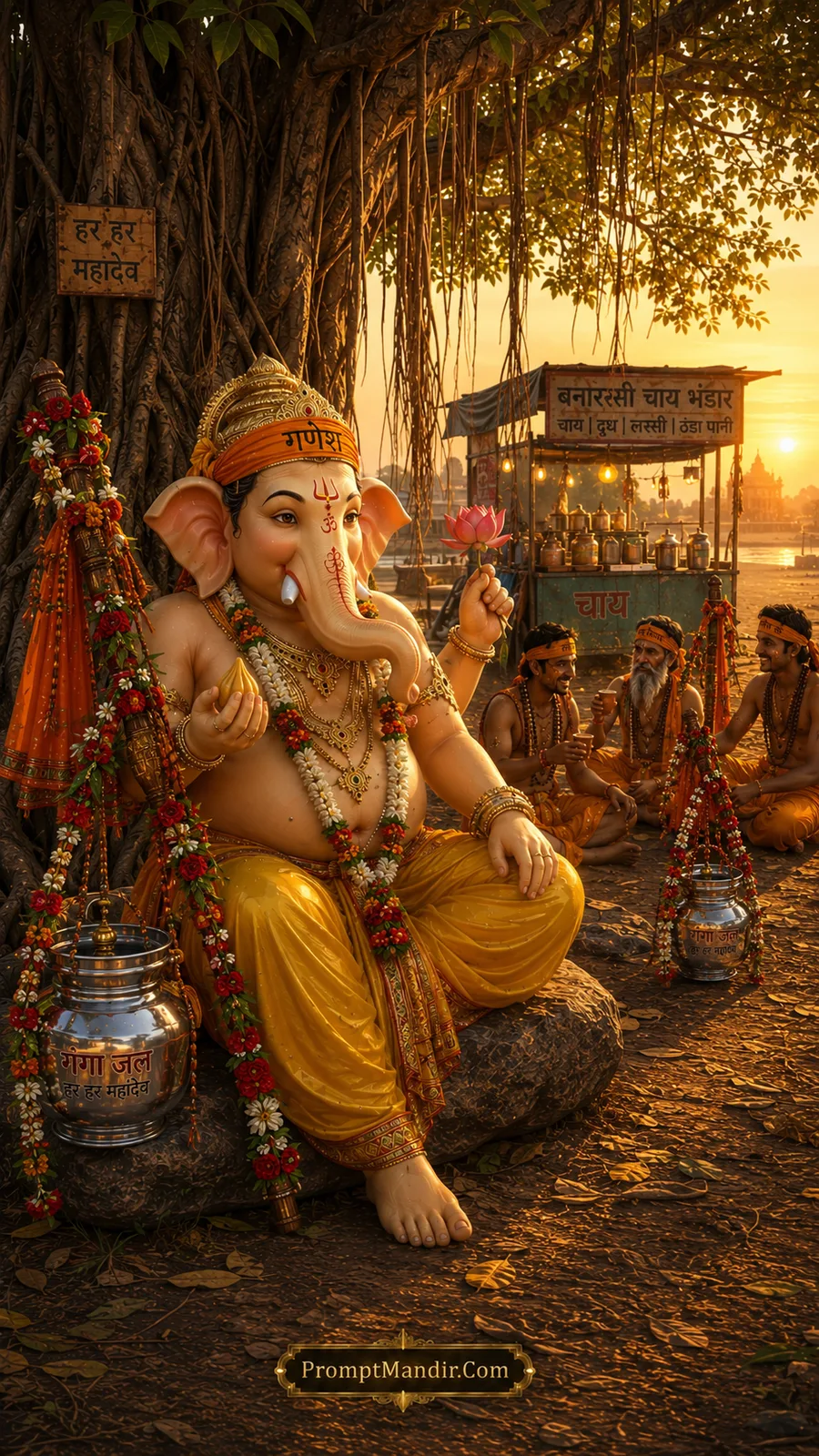
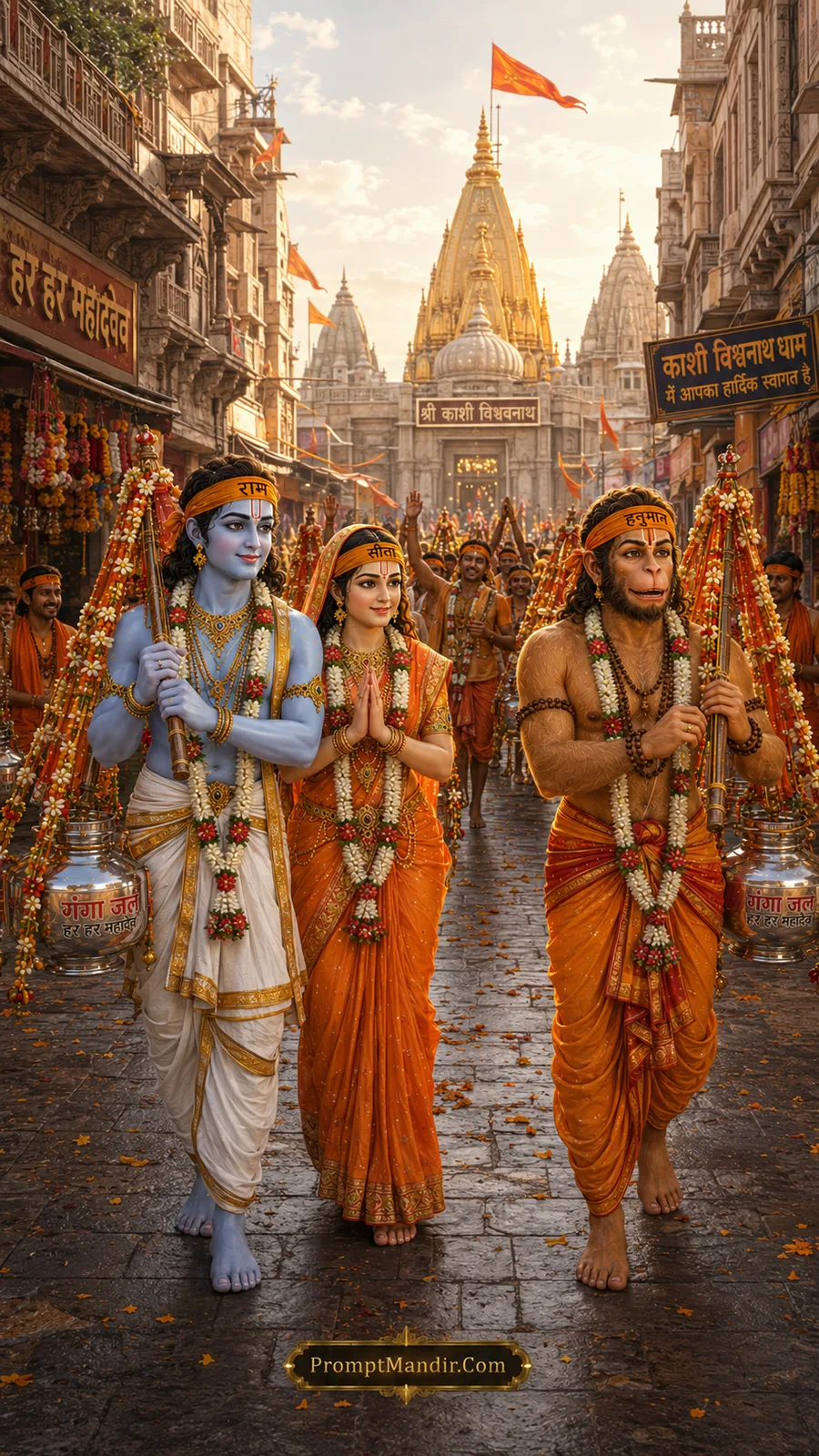
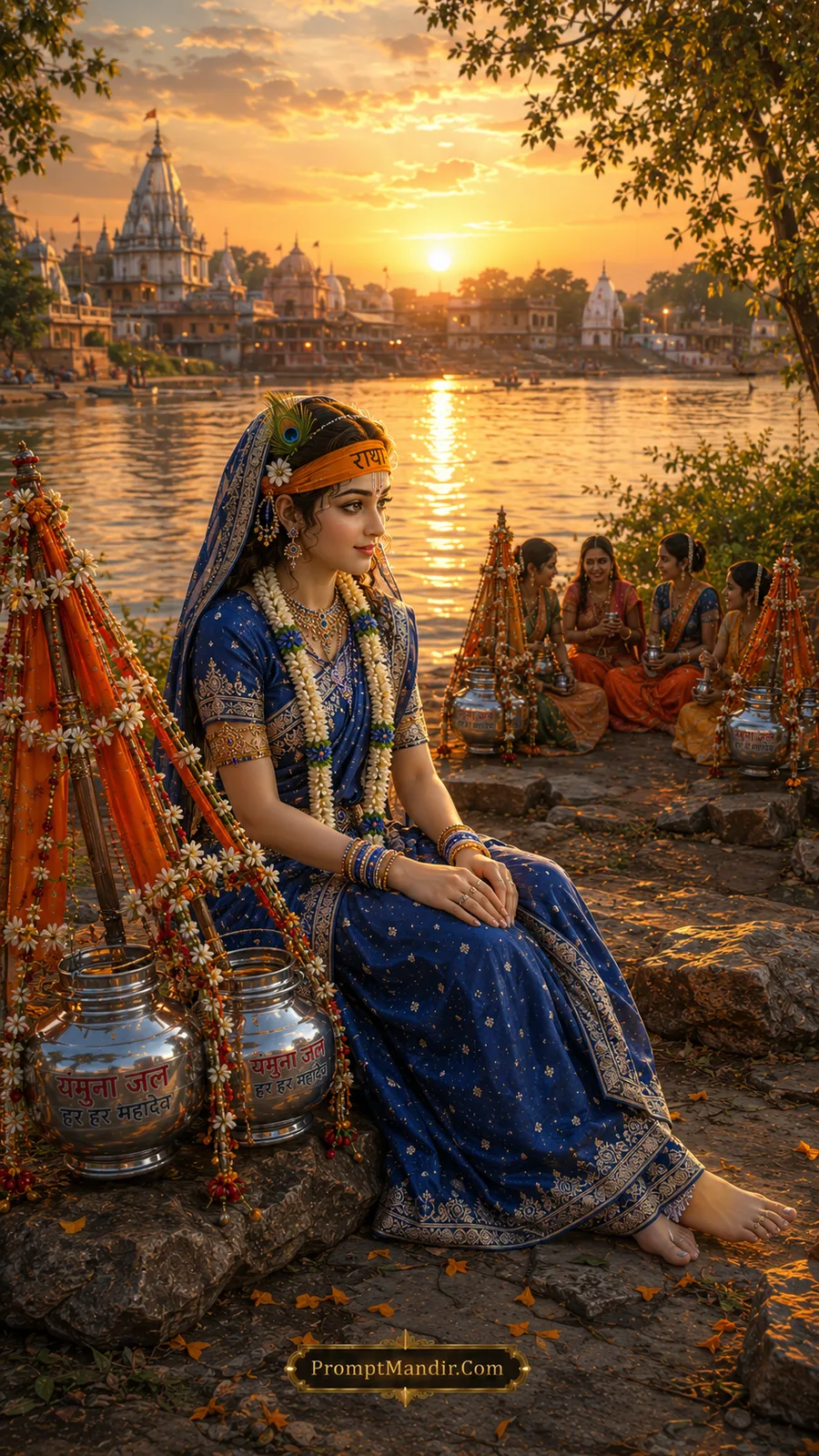
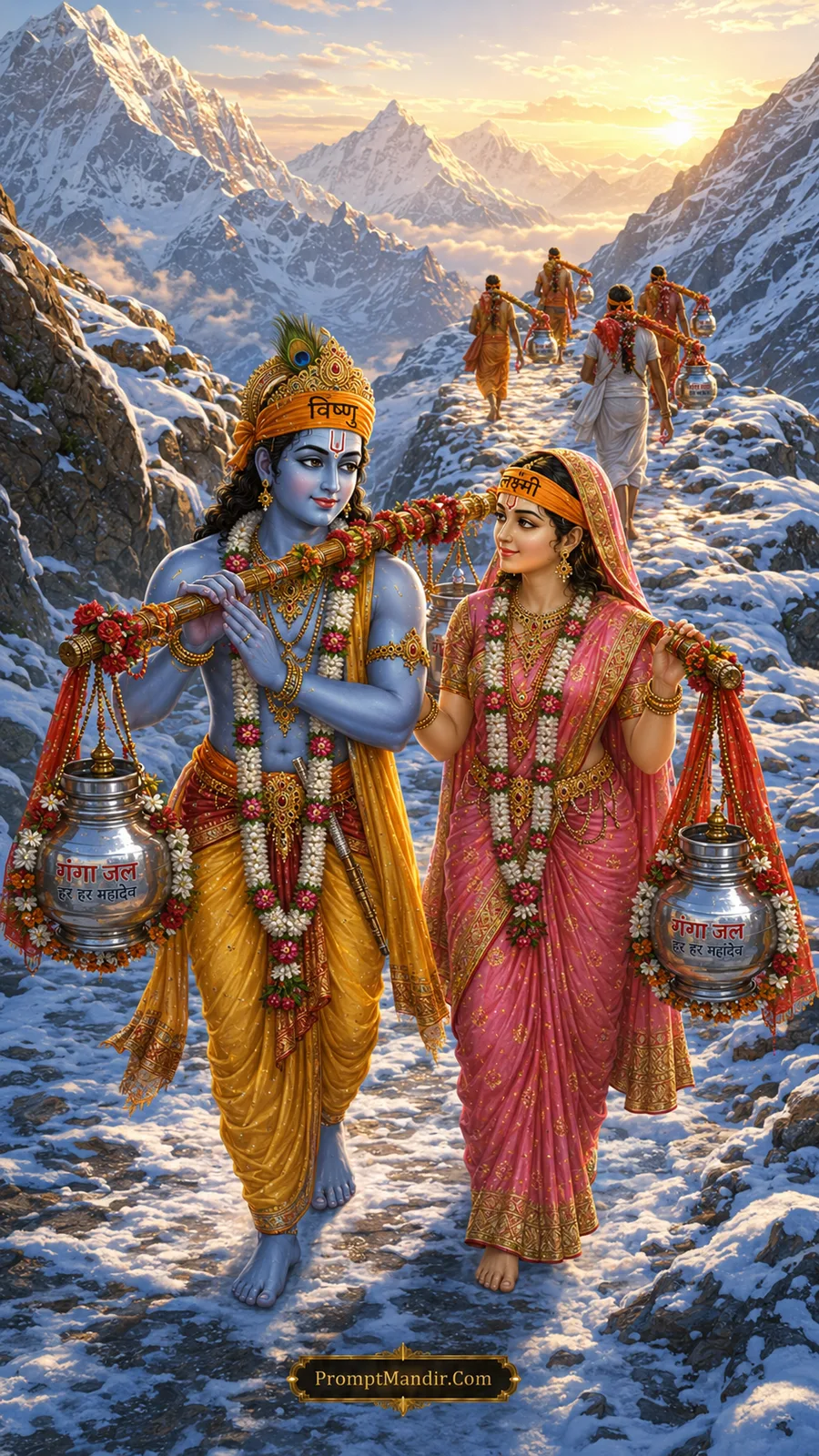
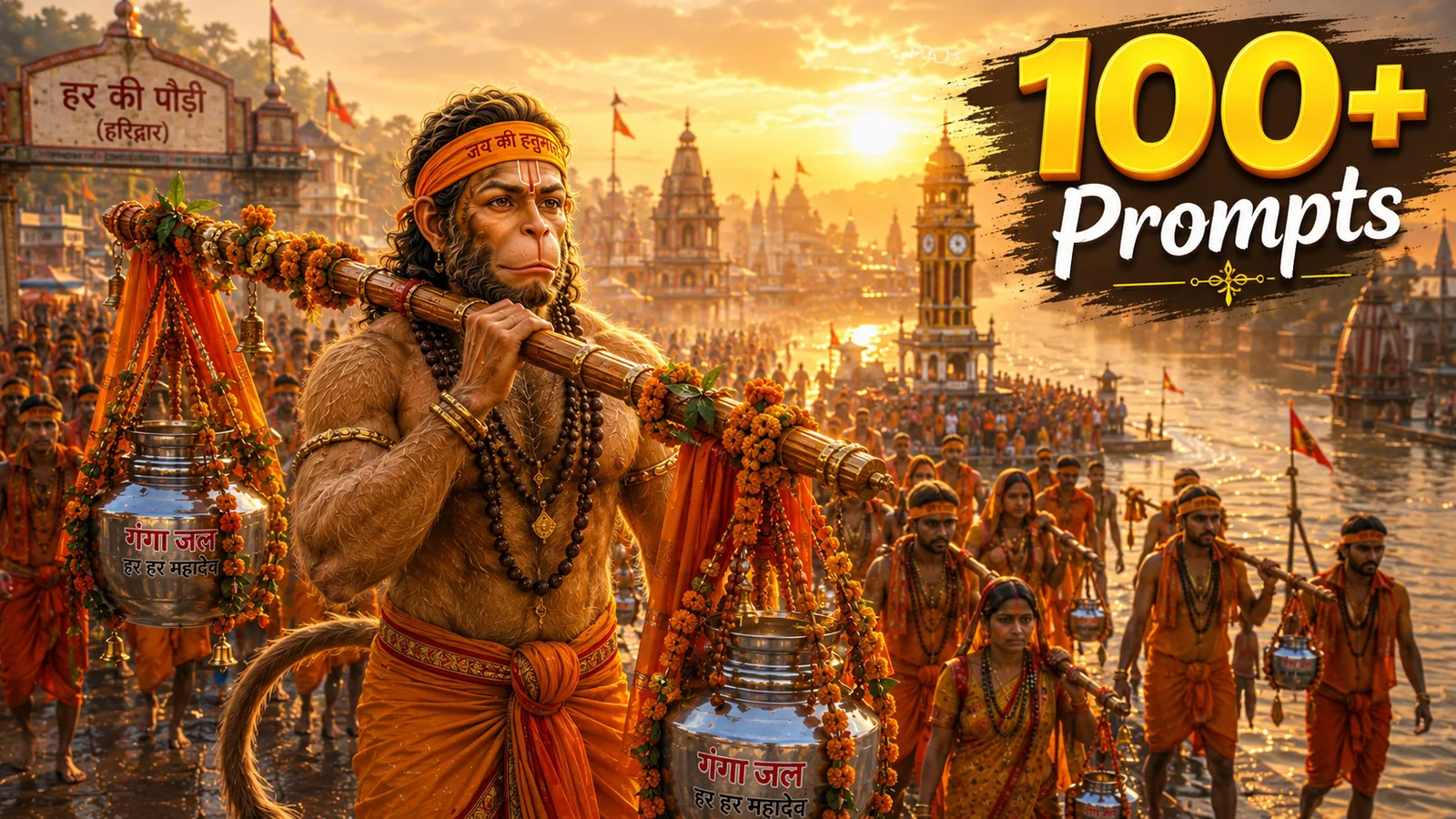
Ram, Sita, and Hanuman walk together through a narrow lane in Kashi, the Vishwanath temple spire visible ahead, joy on their faces. Ganesha rests under a banyan tree at evening, his kanwar propped beside him, a modak in one hand. Vishnu and Lakshmi climb a snow-covered Himalayan path, their breath misting in the cold morning air. Hanuman walks alone on the ghats of Haridwar, the Ganga behind him golden with sunrise. Ram walks alone through the stone corridors of Rameshwaram, the sea visible at the corridor’s end. Krishna and Radha talk and laugh through the night lanes of Kashi, oil lamps glowing on every doorstep, his peacock feather tucked into his hair.
Every Divine Kanwar Yatra image is rooted in the specific geography of the pilgrimage. The lanes of Kashi. The ghats of Haridwar. The corridors of Rameshwaram. The mountain paths of the Himalayas. The kanwars are decorated with saffron cloth, flowers, and bel leaves. The brass pots shine on both ends. The forehead cloths bear each deity’s name in Devanagari script. The deities are recognizable not by crowns and weapons, but by the small, unmissable details. Ram’s blue skin and vanamala. Krishna’s peacock feather tucked in his hair. Ganesha’s elephant face and modak. Hanuman’s golden-orange skin and bare chest.
This is not a collection of gods. It is a collection of pilgrims. The Divine Kanwar Yatra is the great equalizer. On this road, everyone walks. Everyone carries water. Everyone chants the same name. Even the gods.
VIEW PROMPT
VIEW PROMPT
VIEW PROMPT
VIEW PROMPT
VIEW PROMPT
VIEW PROMPT
VIEW PROMPT
VIEW PROMPT
VIEW PROMPT
VIEW PROMPT
Explore More AI Prompt Collections
Discover more AI prompt collections covering devotional artwork, spiritual illustrations, divine characters, temple-inspired scenes, cultural designs, and creative visual concepts.
Browse related categories to find fresh inspiration for generating unique AI images, wallpapers, posters, social media graphics, and digital artwork.
Divine Shiva Lingam Jal Abhishek
Divine Kanwar Yatra
The kanwar itself is the central object in every Divine Kanwar Yatra image. It is a wooden pole, decorated with saffron cloth, fresh flowers, and bel leaves. Two brass pots hang from each end, polished to a shine. The kanwar rests on the left or right shoulder, and both hands hold it. The Divine Kanwar Yatra prompts must describe the kanwar in detail. Its decoration, its weight, the way the pots catch the light.
The forehead cloth is the identity marker in the Divine Kanwar Yatra. Each deity wears a saffron cloth tied around their forehead, and on that cloth, their name is written in Devanagari script. राम. सीता. हनुमान. गणेश. विष्णु. लक्ष्मी. कृष्ण. राधा. This small detail is essential. The Divine Kanwar Yatra collection uses the forehead cloth to name the pilgrim.
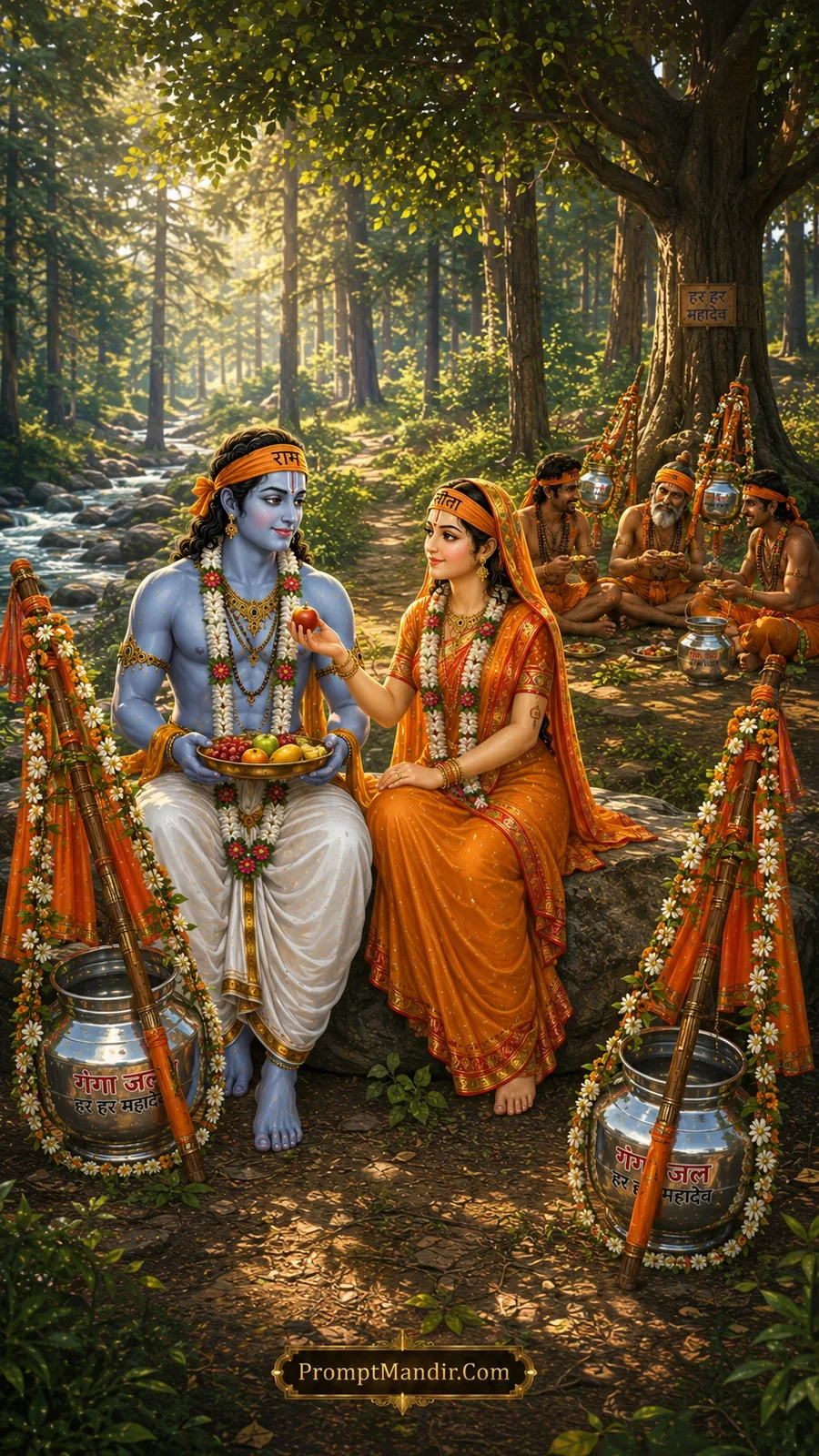
The deities in the Divine Kanwar Yatra are dressed as pilgrims, not as royalty. No crowns. No heavy ornaments. No weapons. Ram wears a simple white dhoti with a thin gold border. Sita wears an orange saree. Hanuman wears a saffron dhoti, bare chest, rudraksha beads. Ganesha wears a yellow silk dhoti. Vishnu wears a royal yellow dhoti but no crown. Lakshmi wears a pink saree with gold border. Krishna wears a bright yellow dhoti, his peacock feather tucked visibly in his hair. Radha wears a deep green saree. The Divine Kanwar Yatra strips away the royal identity and reveals the devotee beneath.
The divine identity of each deity is preserved through a single, small detail in the Divine Kanwar Yatra. Ram’s blue skin and vanamala around his neck. Krishna’s peacock feather tucked in his hair and his flute tucked in his waist belt. Ganesha’s elephant face, one tusk, and the modak in his hand. Hanuman’s monkey face and golden-orange skin. Vishnu’s Srivatsa mark on his chest and Kaustubha gem on his neck. These details are subtle but unmistakable. The Divine Kanwar Yatra does not need grand iconography. A peacock feather is enough.
The landscapes of the Divine Kanwar Yatra are specific and real. The narrow lanes of Kashi with oil lamps on doorsteps and the Vishwanath temple spire in the distance. The stone ghats of Haridwar with the Ganga reflecting the golden morning light. The long stone corridors of Rameshwaram temple with carved pillars and the sea at the end. The Himalayan mountain path with snow on both sides. The banyan tree on the roadside at evening. The Divine Kanwar Yatra roots each image in a real, recognizable place.
The other kanwariyas in the background are essential to the Divine Kanwar Yatra. Groups of pilgrims walking ahead on the same road. Some raising their hands in joy. Some resting under a tree, drinking tea from clay cups. Some walking silently. Their kanwars are decorated, their brass pots shining. They create the sense that this is not a solitary journey. The Divine Kanwar Yatra is a river of devotees, and the gods have joined its flow.
Lighting in the Divine Kanwar Yatra is always natural and specific to the time of day. Soft golden morning light for the Kashi lane and the Haridwar ghat. Golden evening light for the banyan tree rest stop. Warm golden sunset for the Rameshwaram corridor. Cool morning light with rim lighting for the Himalayan mountain path. Warm orange from oil lamps mixed with cool blue moonlight for the Kashi night scene. The Divine Kanwar Yatra uses light to anchor each scene in a real time and a real place.
Frequently Asked Questions
What is the Divine Kanwar Yatra collection?
It is a series of devotional images depicting Hindu deities as kanwariyas, walking the sacred pilgrimage routes of the Kanwar Yatra. The Divine Kanwar Yatra shows gods as devotees, carrying decorated kanwars on their shoulders, walking barefoot toward Shiva temples.
Why are the gods shown as kanwariyas in the Divine Kanwar Yatra?
Because the Kanwar Yatra is the great equalizer. On this road, everyone is a pilgrim. The Divine Kanwar Yatra imagines what it would look like if Ram, Krishna, Ganesha, Vishnu, and Hanuman themselves joined the pilgrimage.
What do the deities wear in the Divine Kanwar Yatra?
They wear simple pilgrim clothing. Dhotis and sarees without heavy ornaments. No crowns. No weapons. A saffron cloth tied around the forehead with their name written in Devanagari. The Divine Kanwar Yatra strips away royal identity to reveal the devotee.
How are the deities recognizable in the Divine Kanwar Yatra?
Through a single, small detail. Ram’s blue skin and vanamala. Krishna’s peacock feather in his hair. Ganesha’s elephant face and modak. Hanuman’s golden-orange skin. Vishnu’s Srivatsa mark. The Divine Kanwar Yatra preserves divine identity through subtle, unmistakable details.
What is the most important object in the Divine Kanwar Yatra?
The kanwar itself. A wooden pole with brass pots hanging from both ends, decorated with saffron cloth, flowers, and bel leaves. The Divine Kanwar Yatra describes the kanwar in detail in every prompt.
Where do the scenes of the Divine Kanwar Yatra take place?
On the real pilgrimage routes. The lanes of Kashi leading to Vishwanath temple. The ghats of Haridwar. The stone corridors of Rameshwaram. Himalayan mountain paths. A roadside banyan tree. The Divine Kanwar Yatra is rooted in specific, recognizable geography.
What time of day do the scenes in the Divine Kanwar Yatra occur?
Different times for different scenes. Early morning for the Kashi lane and Haridwar ghat. Evening for the rest under the banyan tree. Golden sunset for Rameshwaram. Night for the Kashi lane with Krishna and Radha. The Divine Kanwar Yatra uses time and light to create atmosphere.
Are other kanwariyas present in the Divine Kanwar Yatra?
Yes. In every scene, other pilgrims are visible in the background. Walking ahead on the road, resting under trees, raising their hands in joy. The Divine Kanwar Yatra shows that the gods are part of a larger river of devotees.
What is the overall mood of the Divine Kanwar Yatra?
Joy. Devotion. Humility. The fatigue of a long walk and the exhilaration of nearing the destination. The Divine Kanwar Yatra is not solemn. It is full of chatter, laughter, and the shared energy of pilgrimage.
Can the Divine Kanwar Yatra be used for personal devotion?
Yes. These images remind the viewer that the gods themselves walk the same road. The Divine Kanwar Yatra is for anyone who has ever carried a kanwar, or wanted to, or simply wanted to walk beside those who do.
About This Divine Kanwar Yatra Collection
The road to Kashi is long. It passes through dust and rain, through cold mountain passes and humid plains. The shoulders ache. The feet blister. But the chant keeps going. Bol Bam. Bol Bam. Har Har Mahadev.
The Divine Kanwar Yatra collection walks that road with the gods. Not the gods of temples and thrones, but the gods who have tied saffron cloth around their foreheads, balanced a kanwar on their shoulders, and joined the endless river of pilgrims moving toward the Shivling.
Ram walks beside Sita and Hanuman, the temple spire visible ahead. Ganesha rests under a banyan tree, a modak in his hand. Vishnu and Lakshmi climb through snow. Krishna and Radha talk and laugh through the lamp-lit lanes of Kashi at night.
This is not a collection about power. It is a collection about the road. About the joy of walking it together. About the moment when the temple comes into view and the fatigue vanishes, replaced by something that feels like home. The Divine Kanwar Yatra is an invitation to pick up your kanwar and join them. The road is long, but the company is divine.