
Deity Name Art Purple Edition — Royal Purple Meets Sacred Stone
Some colors ask for attention. Purple waits to be noticed. It does not shout like orange or burn like gold. It sits quietly at the edge of perception, the color of dusk before the first star appears, of temple shadows when the lamp oil runs low. Purple is not a choice made lightly. It is a decision to offer something intimate rather than loud. The Deity Name Art Purple Edition takes this regal, contemplative hue and pairs it with deep matte black.
The result feels like a sacred object retrieved from a vault. A velvet-lined box opened in low light. The background shifts from soft lavender at the top to a profound royal purple below. It has texture, the kind that makes you want to reach out and touch the surface. Every Deity Name Art Purple Edition composition carries that sense of contained mystery.
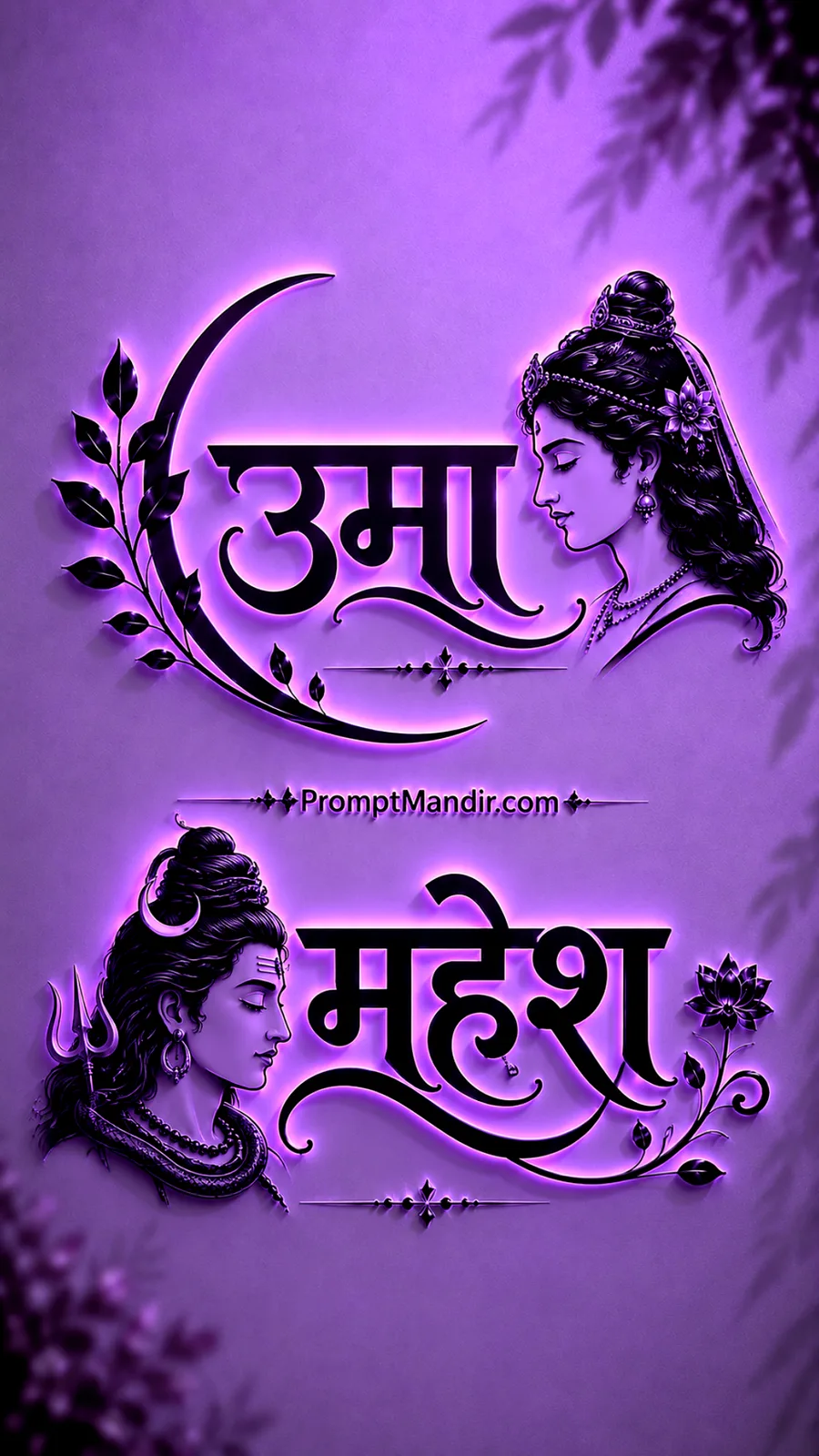
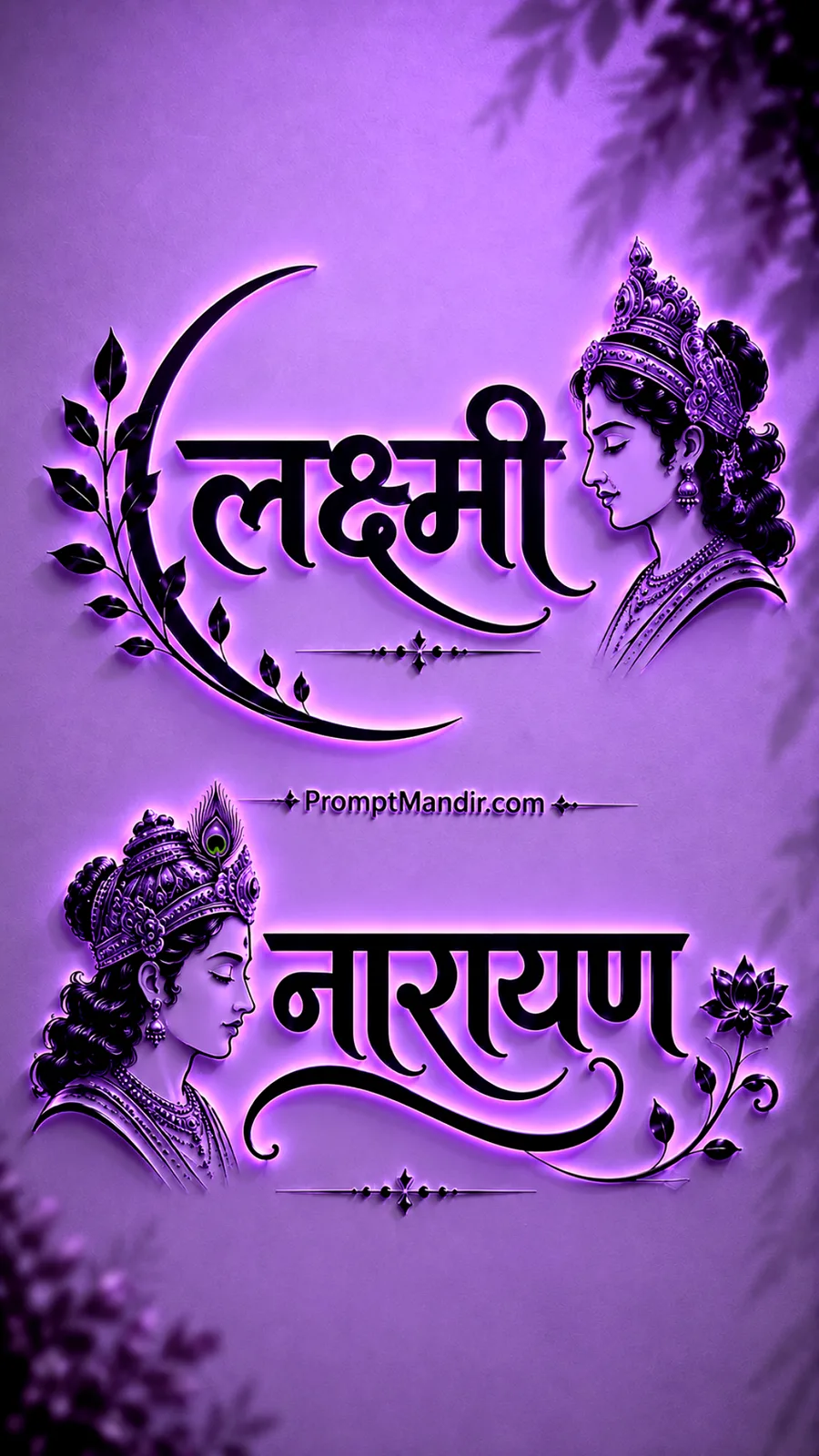
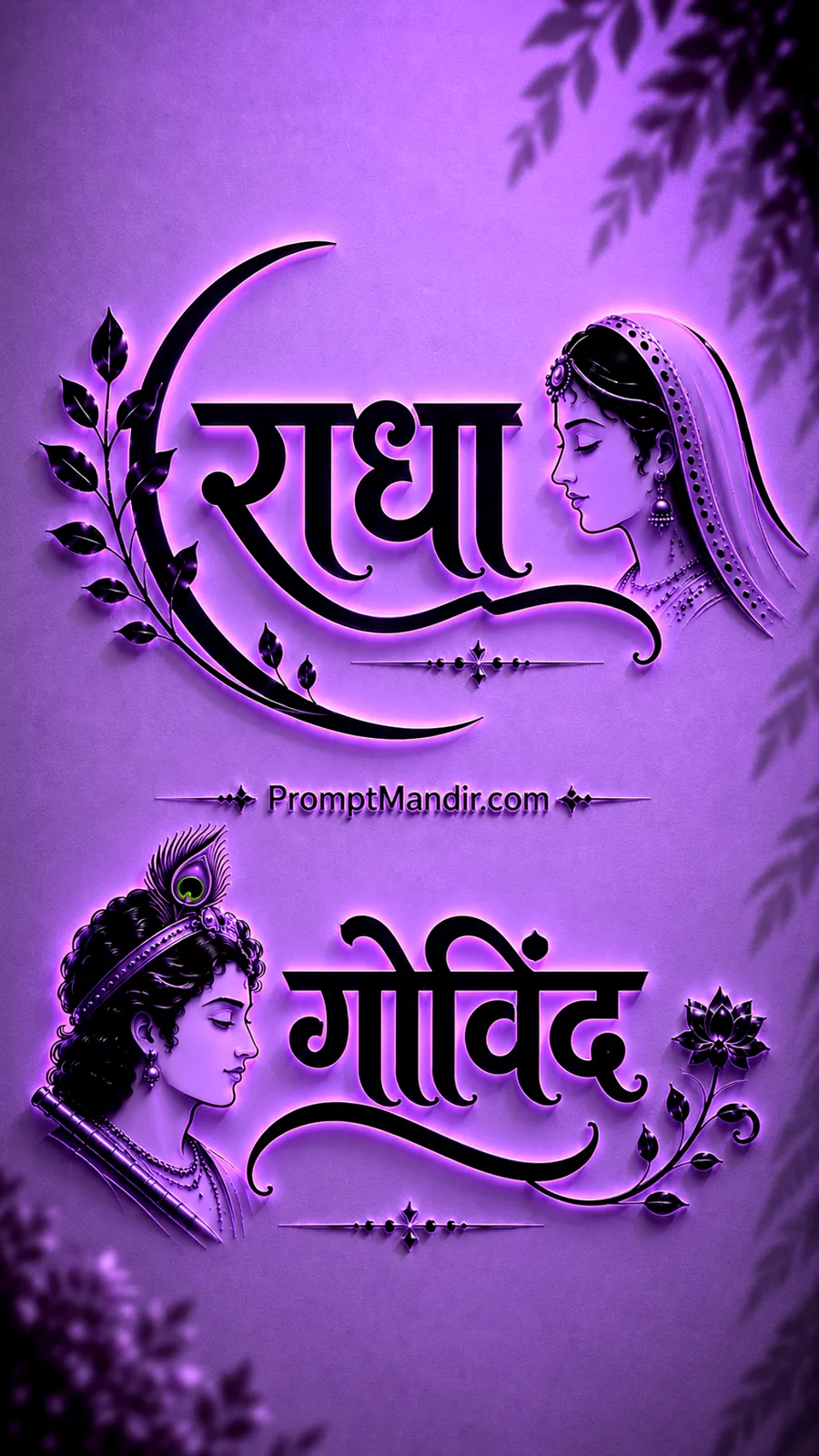
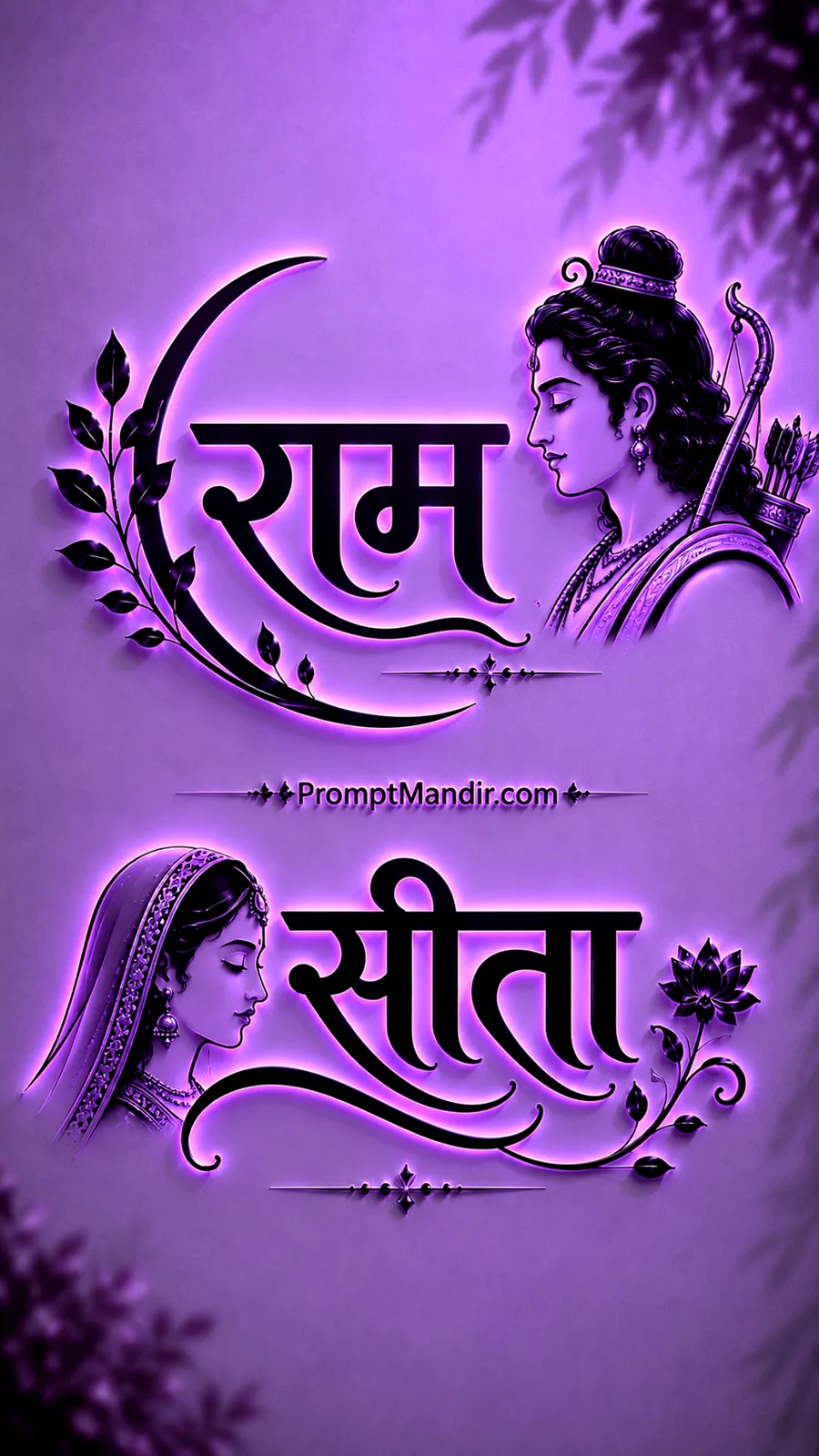
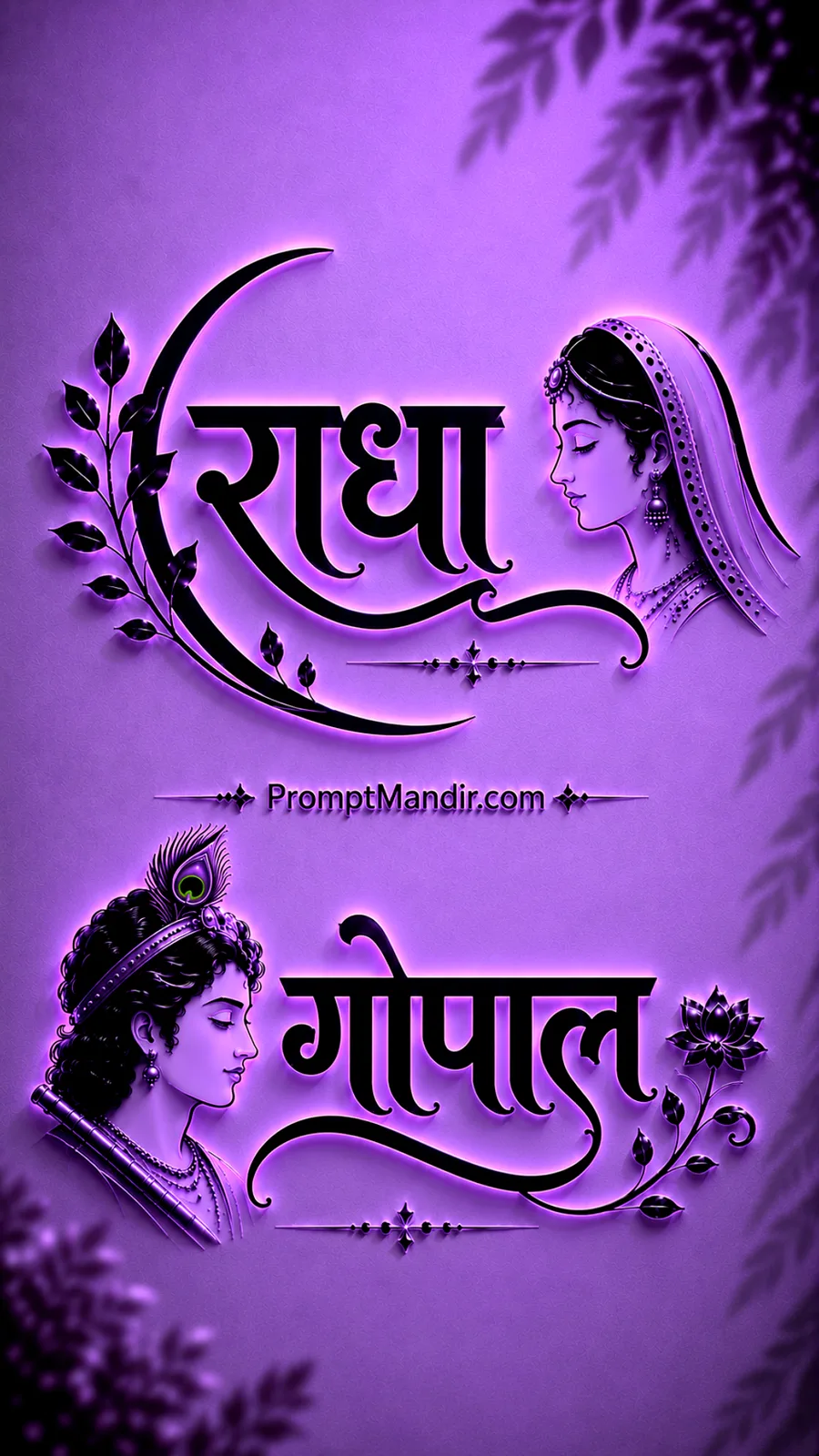
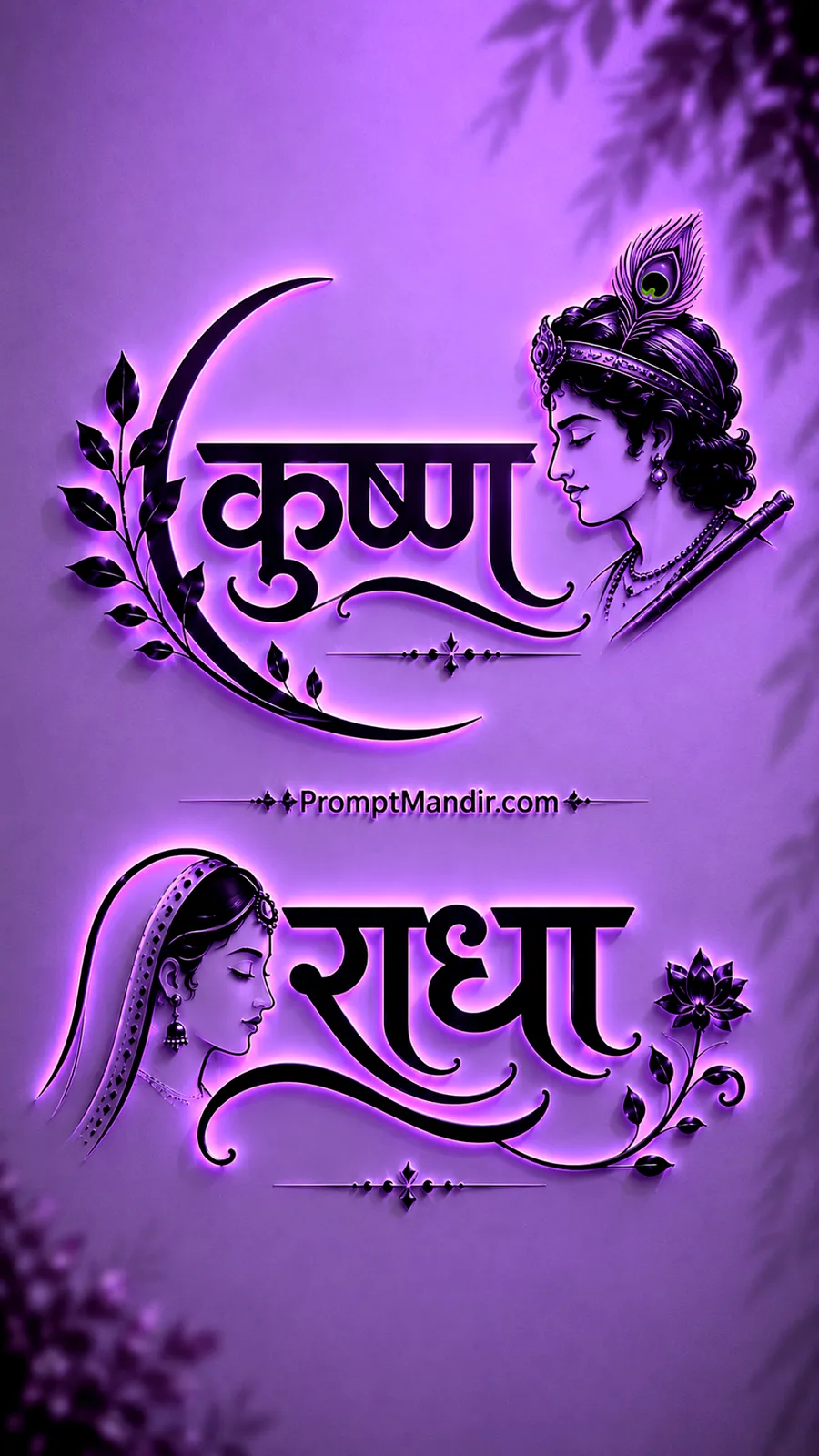
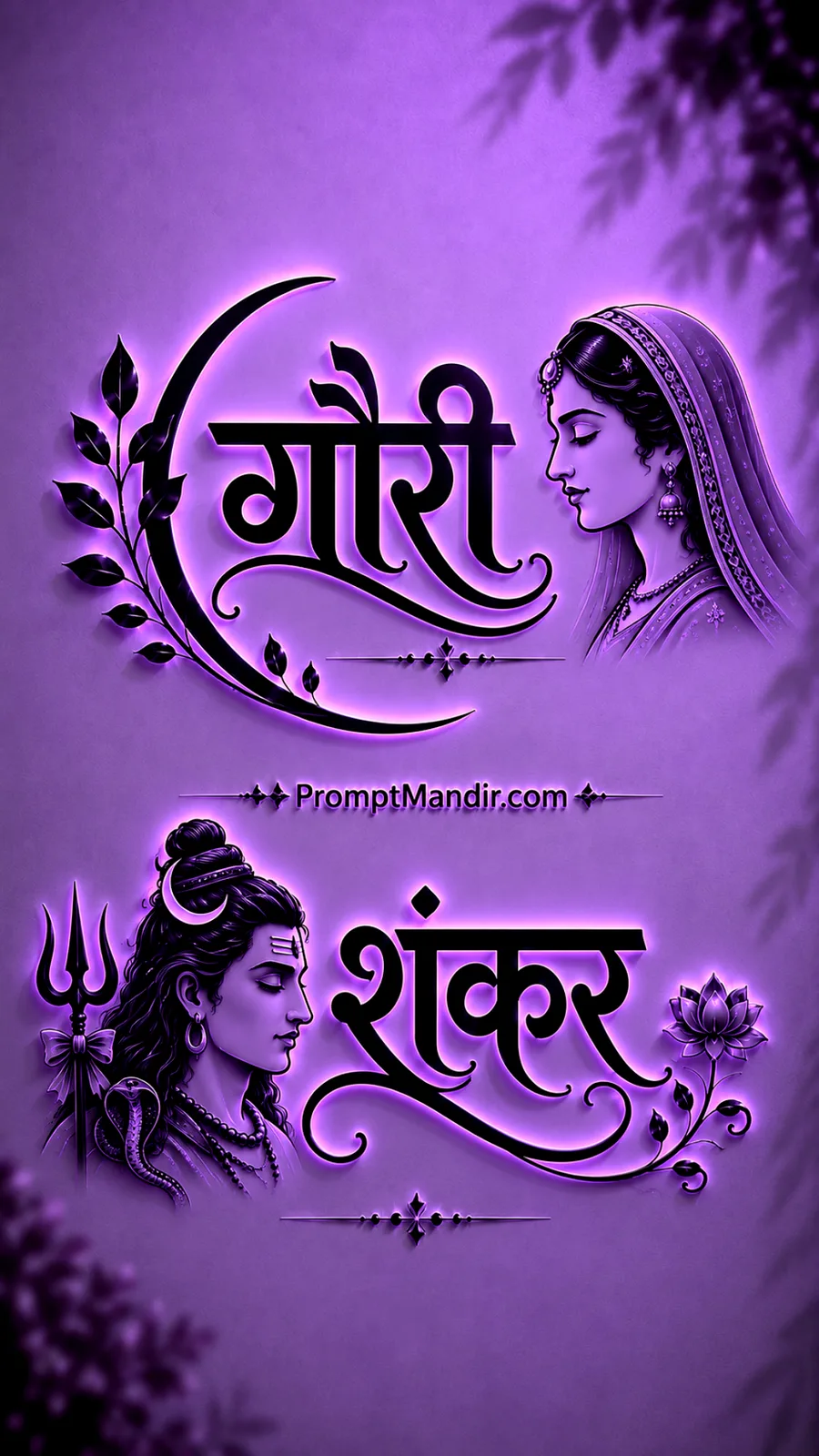
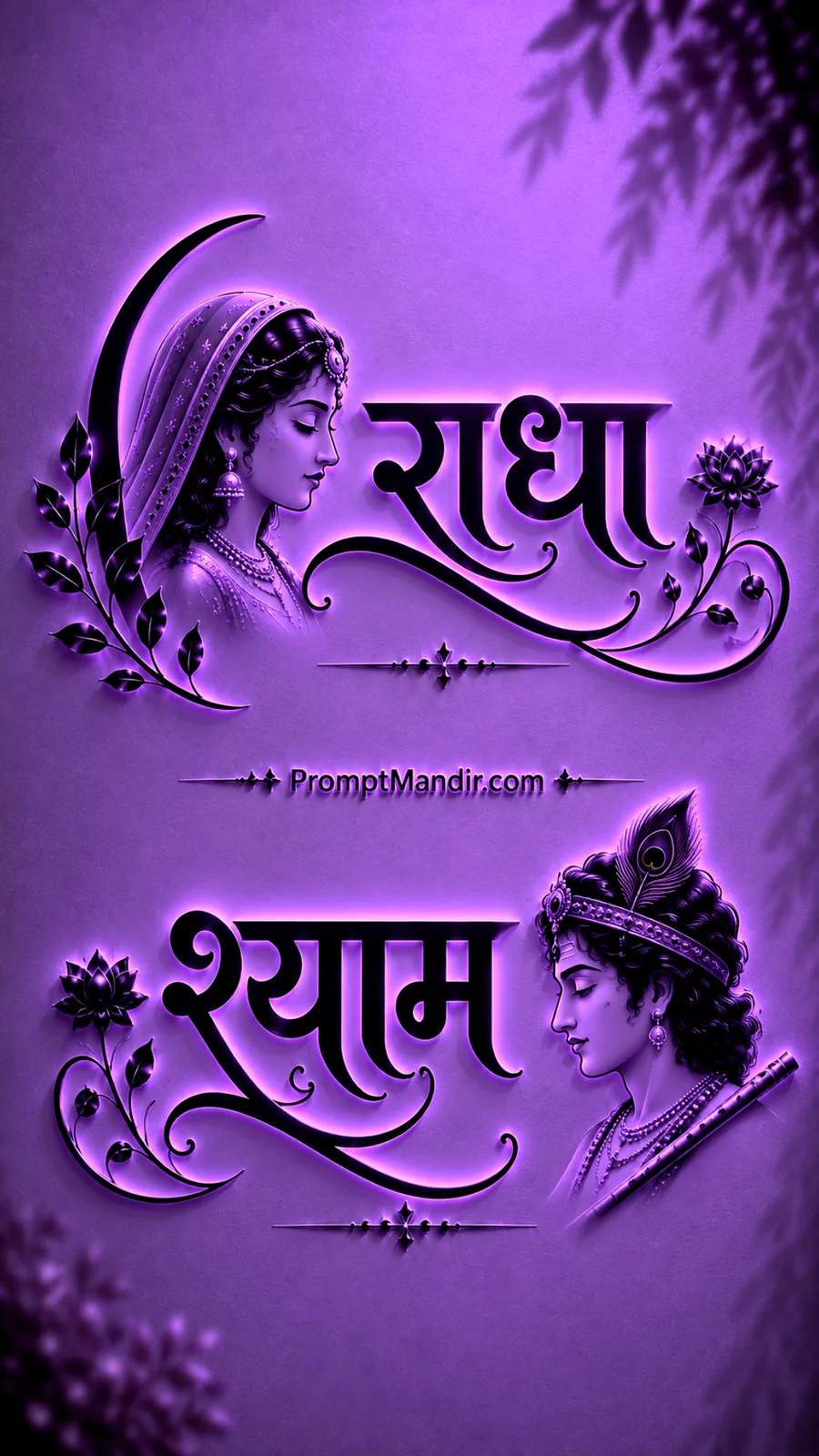
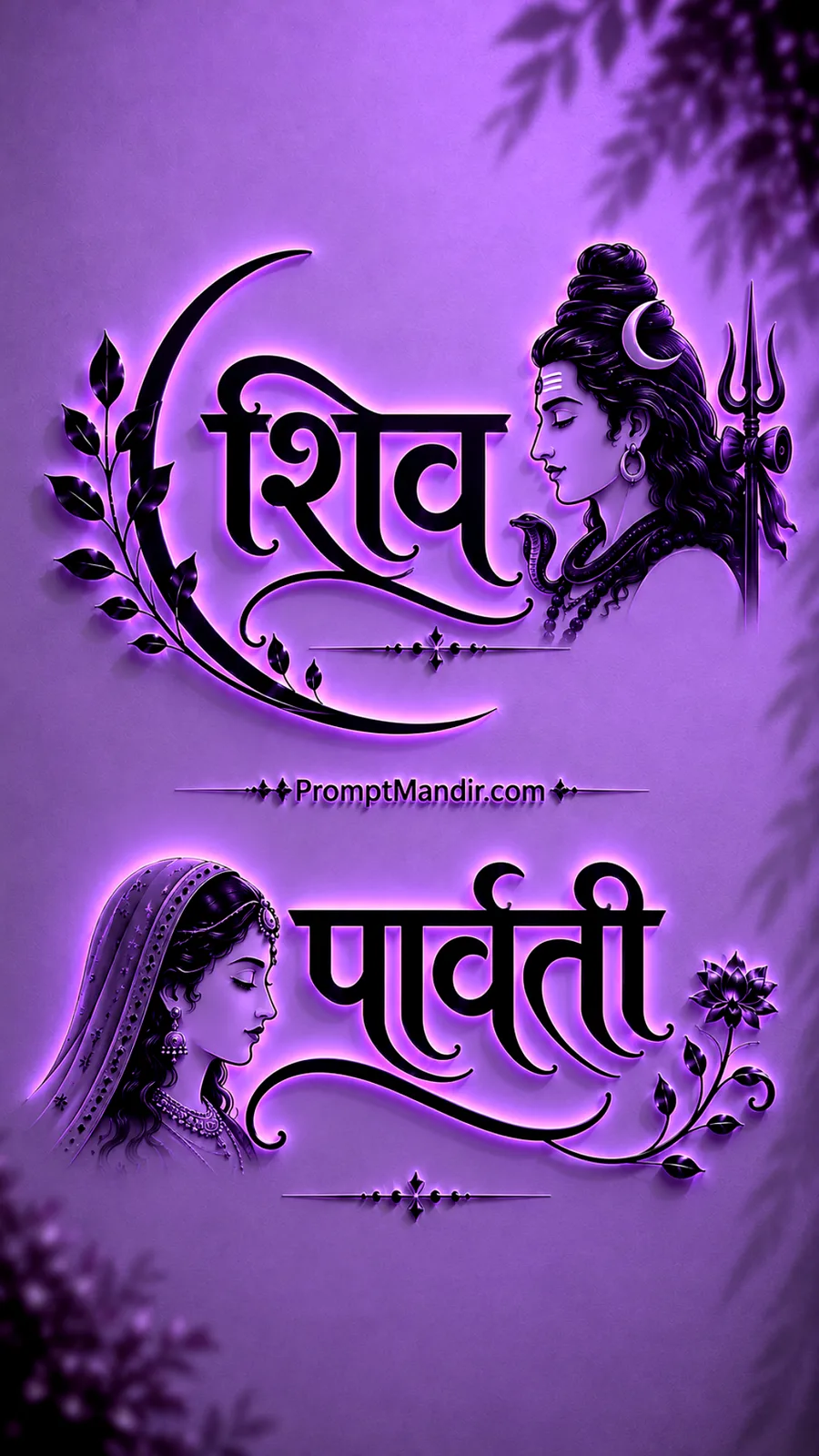
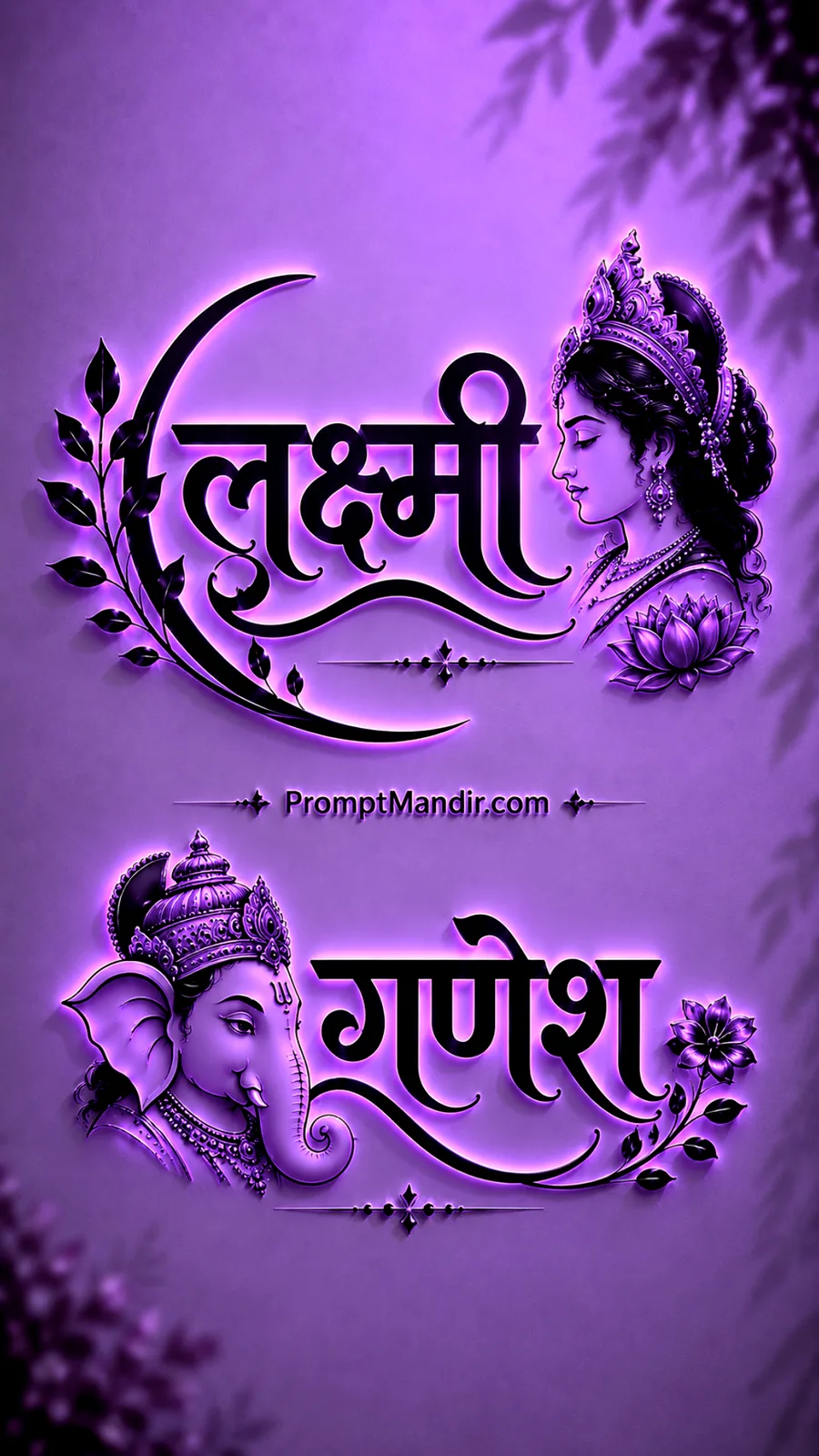
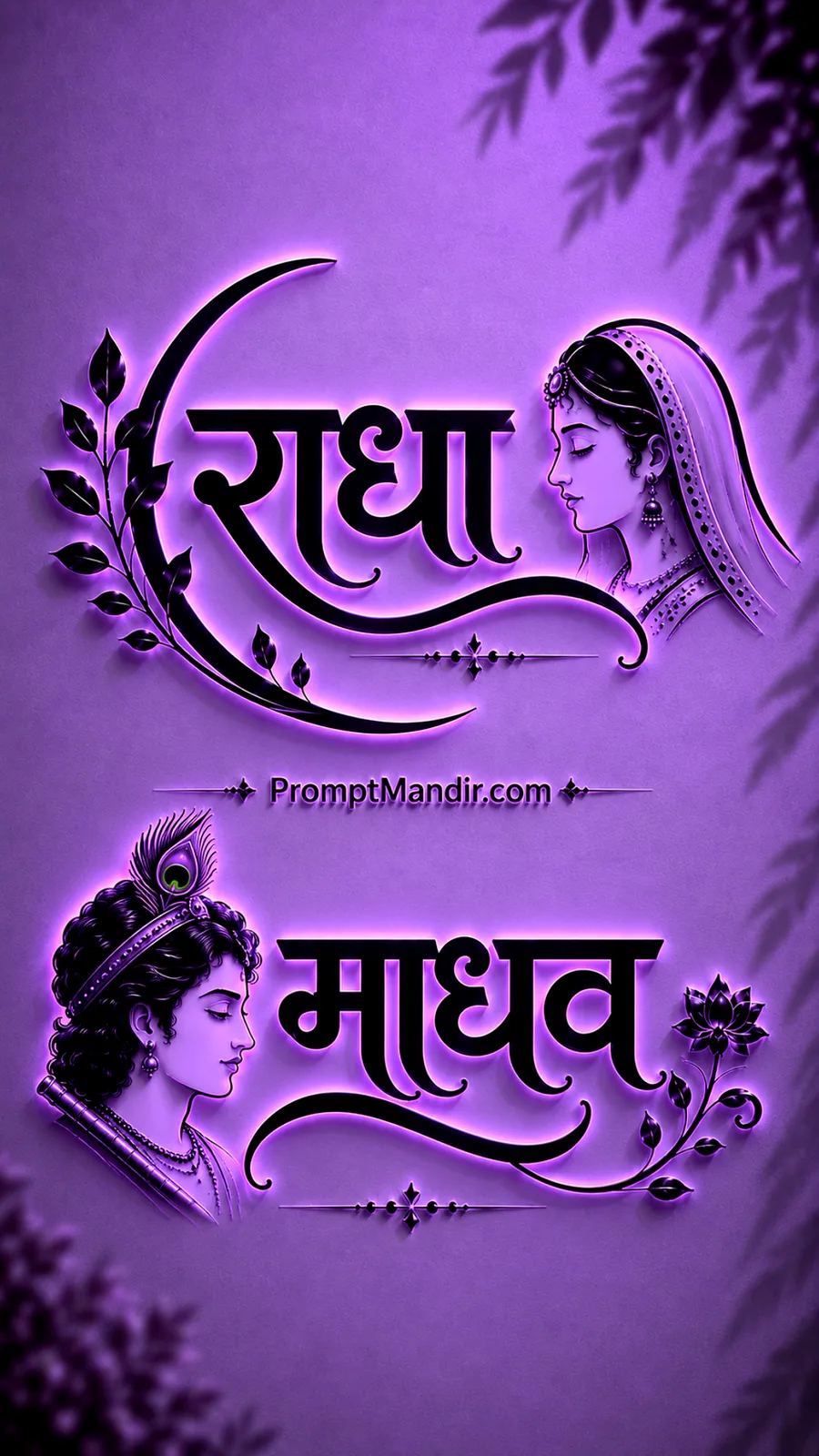
Two names sit stacked on each composition. Above, a deity’s name in embossed Devanagari, the letters thick and weighty, edged in satin purple metallic highlights. Beside the name, a profile portrait in clean line art. Below, a second sacred name that completes the divine pair. Between them, nothing but quiet space and a small, refined signature.
This series is about pairing. Lakshmi and Ganesh. Lakshmi and Narayan. Ram and Sita. Shiv and Parvati. Krishna and Radha. The names belong together. The portraits face each other across the span of the composition. Nothing else intrudes. No temples. No landscapes. Just the names, the faces, and the purple silence that holds them. Writing for the Deity Name Art Purple Edition means understanding that purple is not just a color here. It is the mood. It is the hour. It is the velvet lining of a shrine you carry in your pocket.
VIEW PROMPT
VIEW PROMPT
VIEW PROMPT
VIEW PROMPT
VIEW PROMPT
VIEW PROMPT
VIEW PROMPT
VIEW PROMPT
VIEW PROMPT
VIEW PROMPT
VIEW PROMPT
Explore More AI Prompt Collections
Discover more AI prompt collections covering devotional artwork, spiritual illustrations, divine characters, temple-inspired scenes, cultural designs, and creative visual concepts.
Browse related categories to find fresh inspiration for generating unique AI images, wallpapers, posters, social media graphics, and digital artwork.
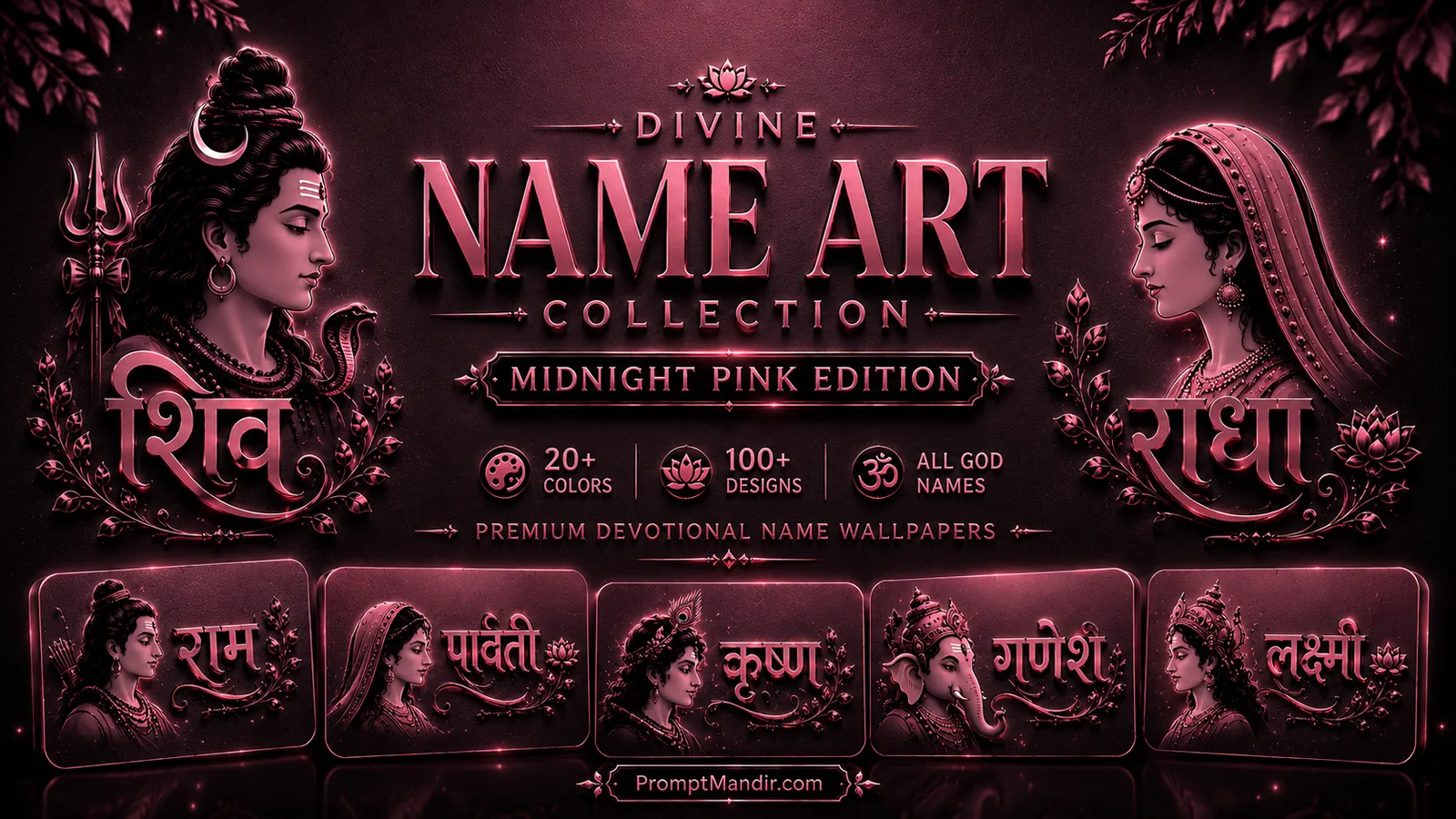
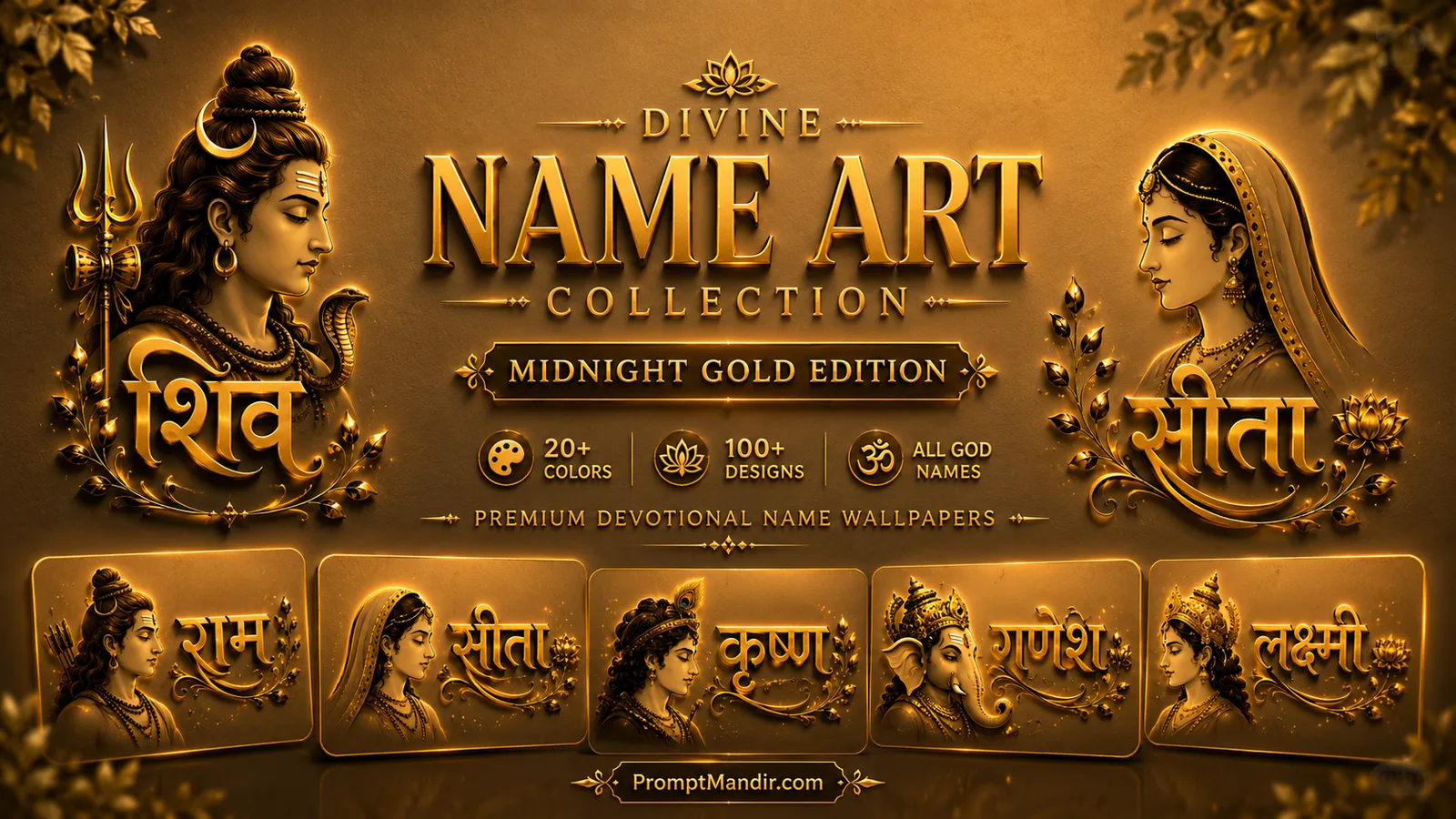
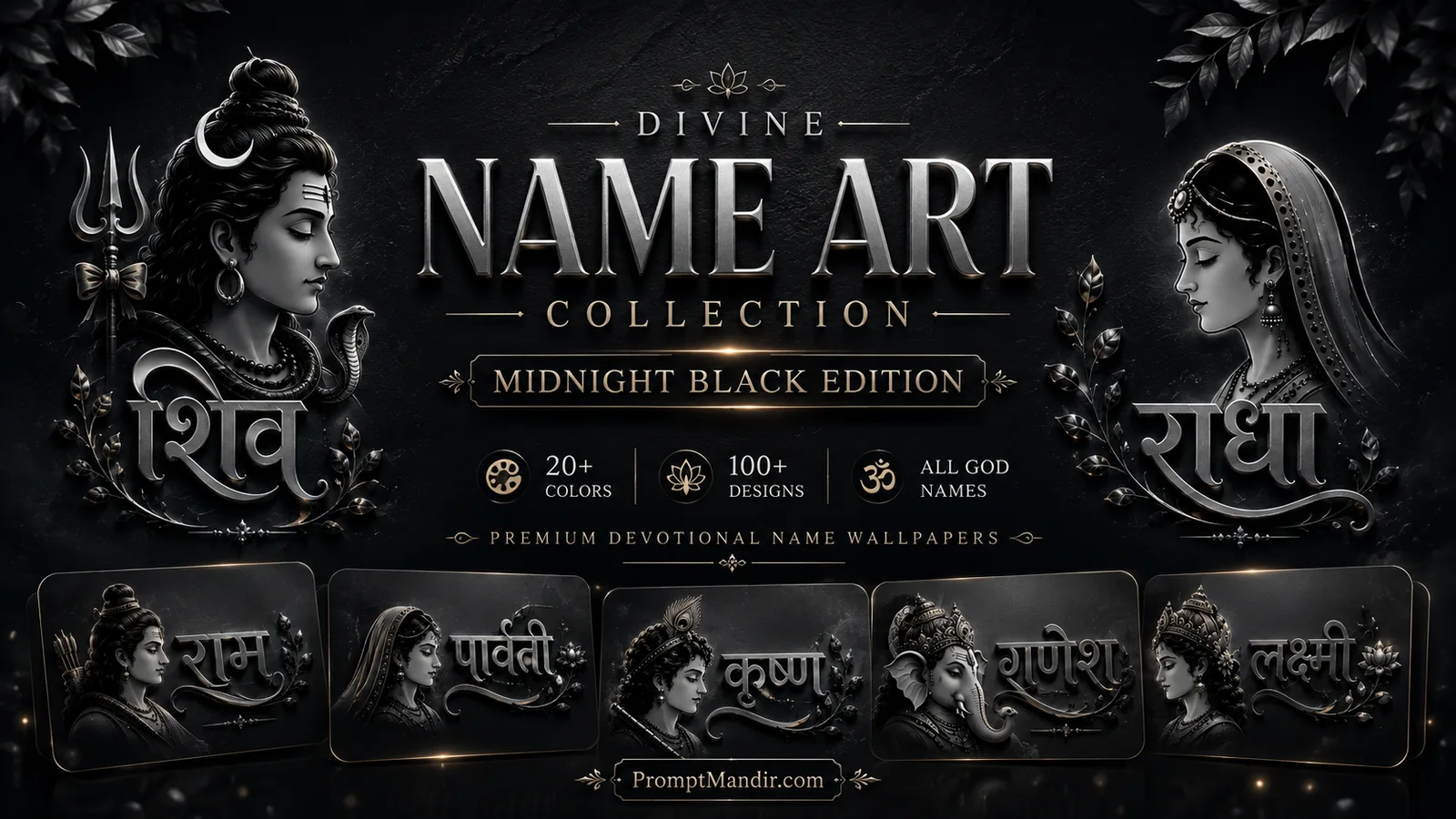
Prompt Customization Tips
The purple background of the Deity Name Art Purple Edition must breathe. Ask for a smooth gradient that transitions from a soft lavender at the top to a deep, rich royal purple at the bottom. The surface should have a refined matte wall texture, not glossy, not flat. A slight grain. A sense of substance. This is the velvet, and everything else in the Deity Name Art Purple Edition rests upon it.
The typography in the Deity Name Art Purple Edition is carved, not painted. Every letter of लक्ष्मी, राम, शिव, कृष्ण must feel like it was pressed into the surface by a heavy stamp. Use words like deep matte black embossed lettering, polished beveled edges, and rich royal purple metallic edging. The letters should catch a soft violet light along their rims, as if a distant window is open somewhere in the composition.
The profile portraits in the Deity Name Art Purple Edition are line art, but line art with weight. They are not sketches. They are icons. A side profile of Lord Shiva with his jata, crescent moon, and a trident resting behind him. A delicate portrait of Goddess Sita with a traditional veil. The prompt must specify clean sculpted outlines, minimal embossed styling, and a finish that matches the typography in black and royal purple. The portrait should feel like it was struck from the same metal as the letters.
The crescent ornament is a recurring motif in the Deity Name Art Purple Edition. It wraps around the left side of the upper typography, a graceful curve with elegant botanical leaves finished in matching black and purple. Do not let it grow wild. It is a frame, not a garden. Its job is to balance the portrait on the opposite side and give the composition a sense of gentle enclosure.
The pairing of names is the structural spine of the Deity Name Art Purple Edition. The upper name and the lower name are not random. They are a divine couple. They belong together. The upper portrait faces right. The lower portrait faces left. They look toward each other across the quiet center of the composition. This creates an invisible thread of connection that holds the entire piece together.
The space between the names in the Deity Name Art Purple Edition is sacred. It contains only a thin ornamental divider and a small, centered signature. Nothing else. Do not fill this space with decoration. The emptiness is what allows the names to resonate. It is the pause between two syllables of a mantra. The silence that makes the sound meaningful.
The leaf shadows in the corners of the Deity Name Art Purple Edition are the only organic touch. One in the top right. One in the bottom left. Soft, natural, and slightly blurred. They suggest a tree just outside the frame, a real world beyond the embossed surface. They keep the artwork from feeling like a sterile digital file. This is a living shrine, placed near a window.
Frequently Asked Questions
Why purple and black as the primary colors for the Deity Name Art Purple Edition?
Purple is historically associated with royalty, temple mystery, and the hours of dawn and dusk. Black provides the structural weight. Together, they create a palette that feels both luxurious and deeply contemplative. The Deity Name Art Purple Edition does not overwhelm. It invites stillness.
What is the significance of pairing two names in one Deity Name Art Purple Edition composition?
Many devotional traditions recognize the divine as paired. Lakshmi with Narayan. Ram with Sita. Shiv with Parvati. The dual-name composition honors that relationship. The upper and lower placement allows each name its own space while the facing portraits create a visual dialogue between the two.
How should the Devanagari typography be described to achieve the embossed effect in the Deity Name Art Purple Edition?
Ask for thick matte black lettering with polished beveled edges. The key term is embossed depth. Add satin royal purple metallic edging and soft violet rim illumination. This combination tells the AI to treat the letters as three-dimensional objects catching light from an unseen source.
Why use profile portraits instead of front-facing deity images in the Deity Name Art Purple Edition?
A profile portrait is quieter. It does not demand eye contact. It suggests the deity is present but looking toward the sacred name, not at the viewer. This creates a more contemplative, artistic mood. The line art style also keeps the focus on the typography without competing for attention.
What is the purpose of the crescent ornament beside the name in the Deity Name Art Purple Edition?
It provides a soft architectural frame. The crescent with botanical leaves adds a sense of ceremony without becoming a heavy border. It also balances the visual weight of the portrait on the opposite side, ensuring the composition does not lean.
How much negative space should be kept in the Deity Name Art Purple Edition composition?
A lot. The strength of this series is in what is not there. The center must remain clean, with only the small signature text. Resist the urge to add dividers, symbols, or extra decorative lines. The names in the Deity Name Art Purple Edition need room to breathe.
Can I use the Deity Name Art Purple Edition style for a single name instead of a pair?
The structure supports both. A single name can be centered, with the portrait on one side and the crescent ornament on the other. The lower section can then feature a sacred phrase or simply be left empty. The purple background and embossed styling of the Deity Name Art Purple Edition remain consistent.
What should be strictly avoided in the Deity Name Art Purple Edition?
No temples, halos, thrones, animals, weapons, photorealistic faces, neon colors, or heavy borders. The magic of the Deity Name Art Purple Edition is restraint. Every element that is not essential to the name and the portrait should be removed.
Is the Deity Name Art Purple Edition artwork suitable for both screen and print?
Yes. The smooth gradient background and embossed typography scale beautifully. On a phone screen, the purple feels rich and immersive. In a matte print, the black lettering and purple edges create a tactile, handcrafted quality that defines the Deity Name Art Purple Edition.
How does the leaf shadow contribute to the overall feel of the Deity Name Art Purple Edition?
It is a small anchor to the physical world. The shadow suggests that the artwork exists in a real room, near a window with a tree outside. It adds warmth and prevents the Deity Name Art Purple Edition composition from feeling like a cold, digital layout.
About This Deity Name Art Purple Edition
Purple is the color of the hour when the temple bells have stopped and the only light comes from a single lamp near the sanctum. It is not a color of arrival. It is a color of remaining. Of staying behind after the crowd has gone.
The Deity Name Art Purple Edition is built for that hour. It pairs sacred names and their divine counterparts in a composition that values space over clutter and depth over decoration. The embossed black letters sit heavy on the purple surface. The profile portraits face each other across a quiet center. Nothing competes for your attention. Nothing rushes you.
This is not a collection about spectacle. It is about the names themselves, given the weight and permanence of carved stone, wrapped in a purple that feels like the inside of a meditation room at twilight. It is for those who find the divine not in noise, but in the slow, certain presence of a name that has been spoken for centuries.