
Vishnu Ji Divine Mountain — The Lord Who Rests Above the World
Mountains have always been the staircase between earth and heaven. They rise from the ordinary world and disappear into cloud. And on their highest terraces, where the stone steps wind upward like the vertebrae of the earth, the divine chooses to sit. The Vishnu Ji Divine Mountain collection places Lord Vishnu in that sacred high place.
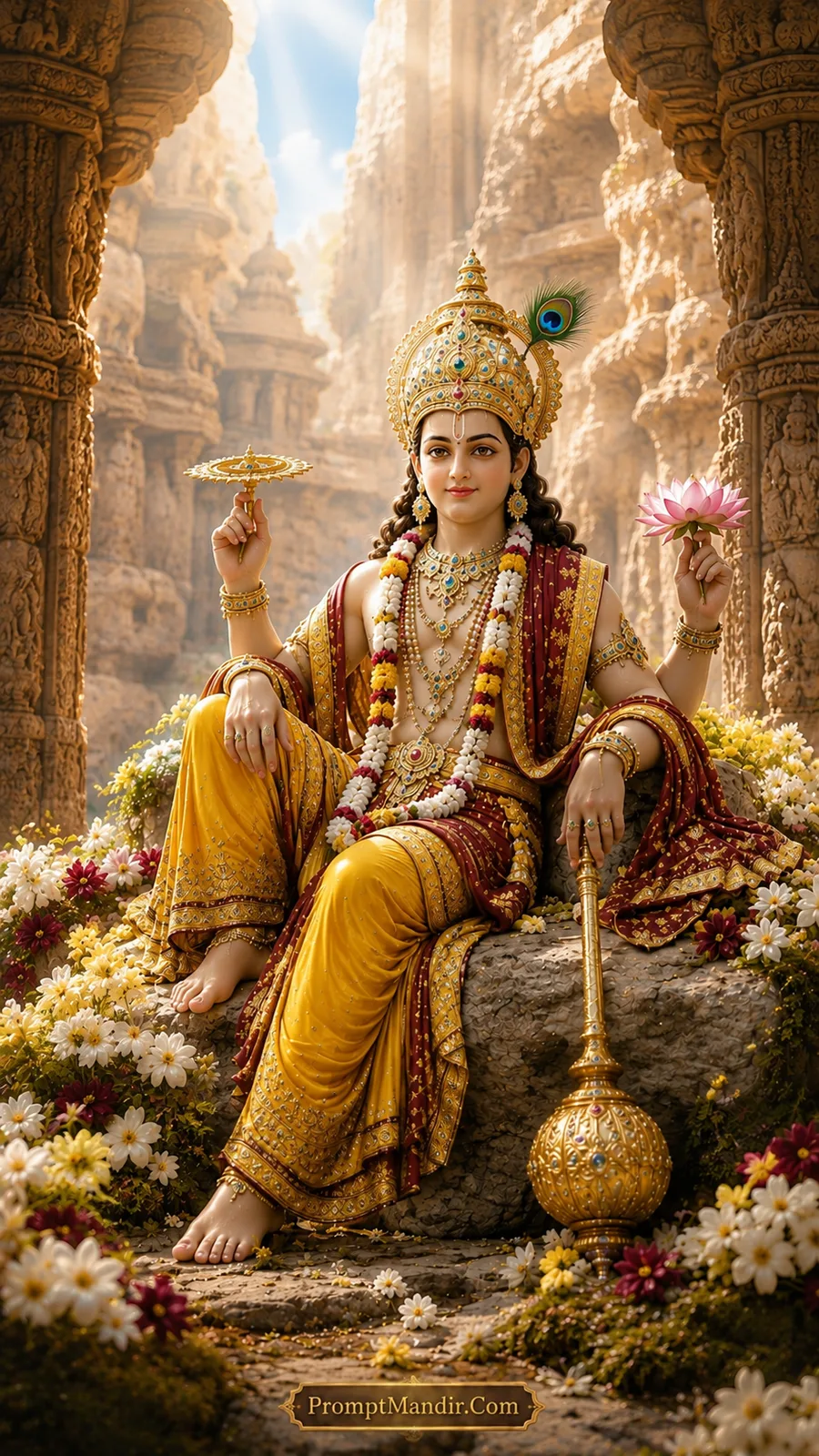
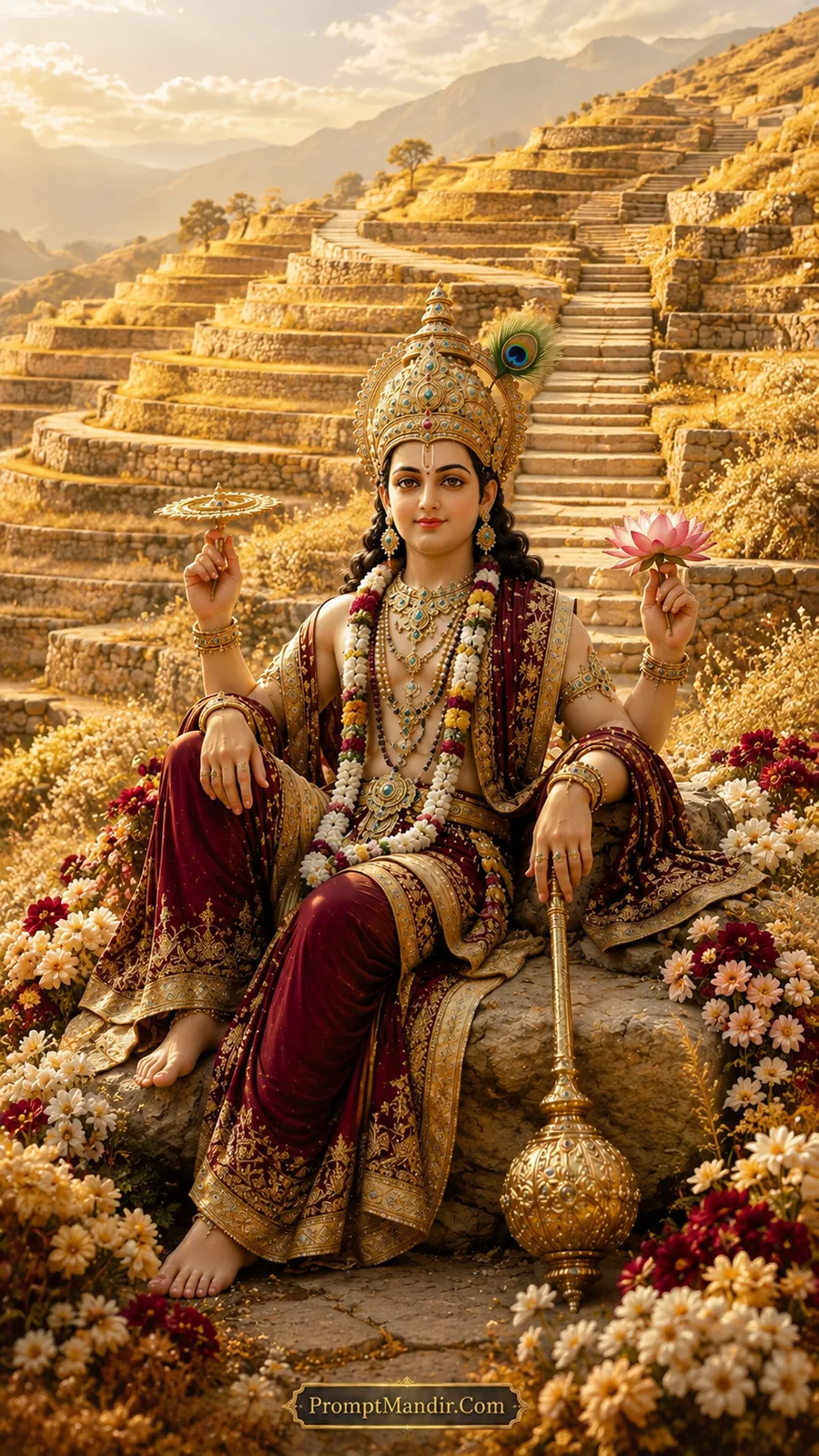
What makes the Vishnu Ji Divine Mountain collection so striking is its patience. There is no battle here. No cosmic crisis. No urgent message. There is only the Lord, seated on a natural stone throne, surrounded by flowers and golden grass, while ancient terraces stretch behind him like the steps of a forgotten temple.
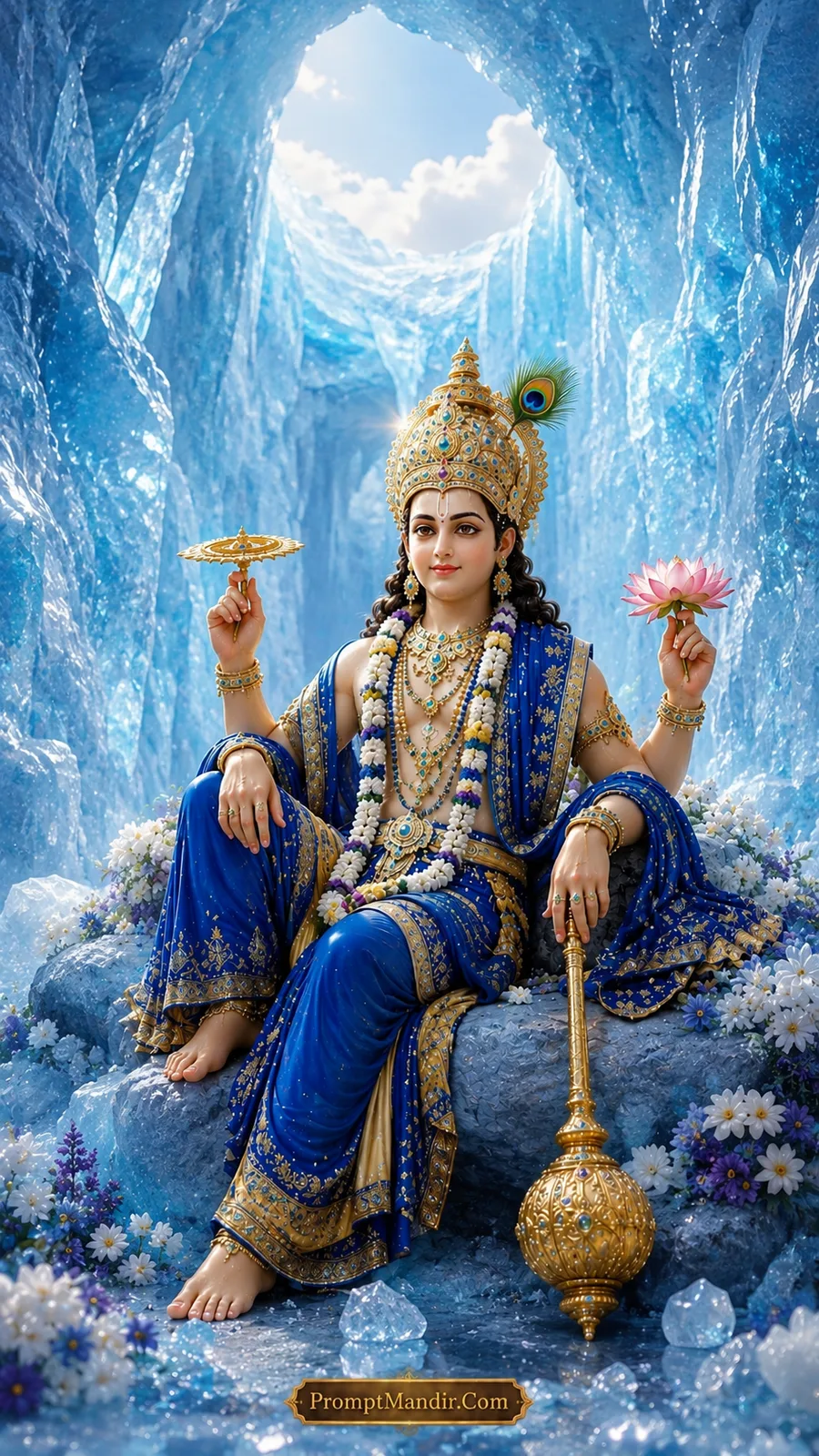
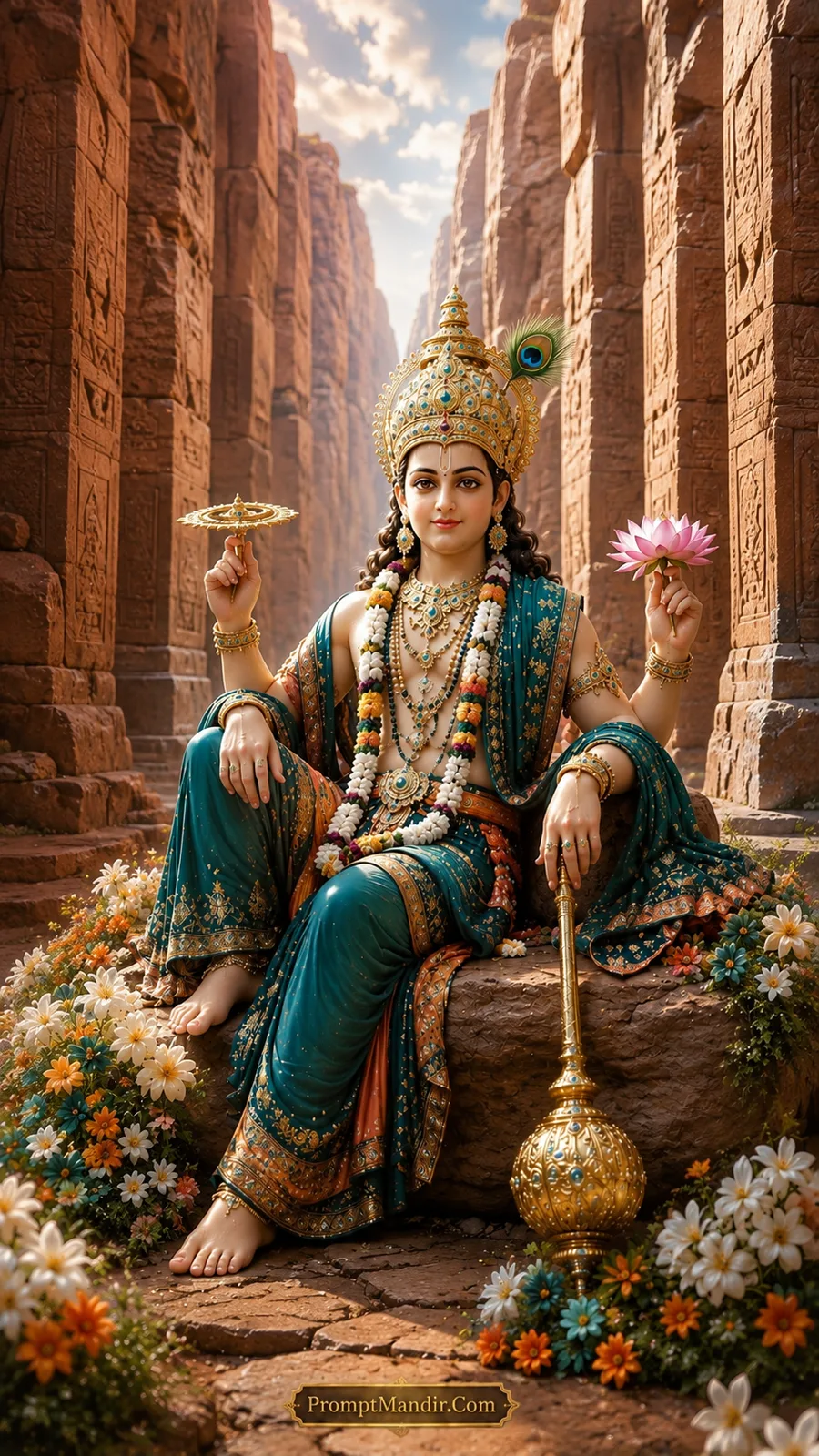
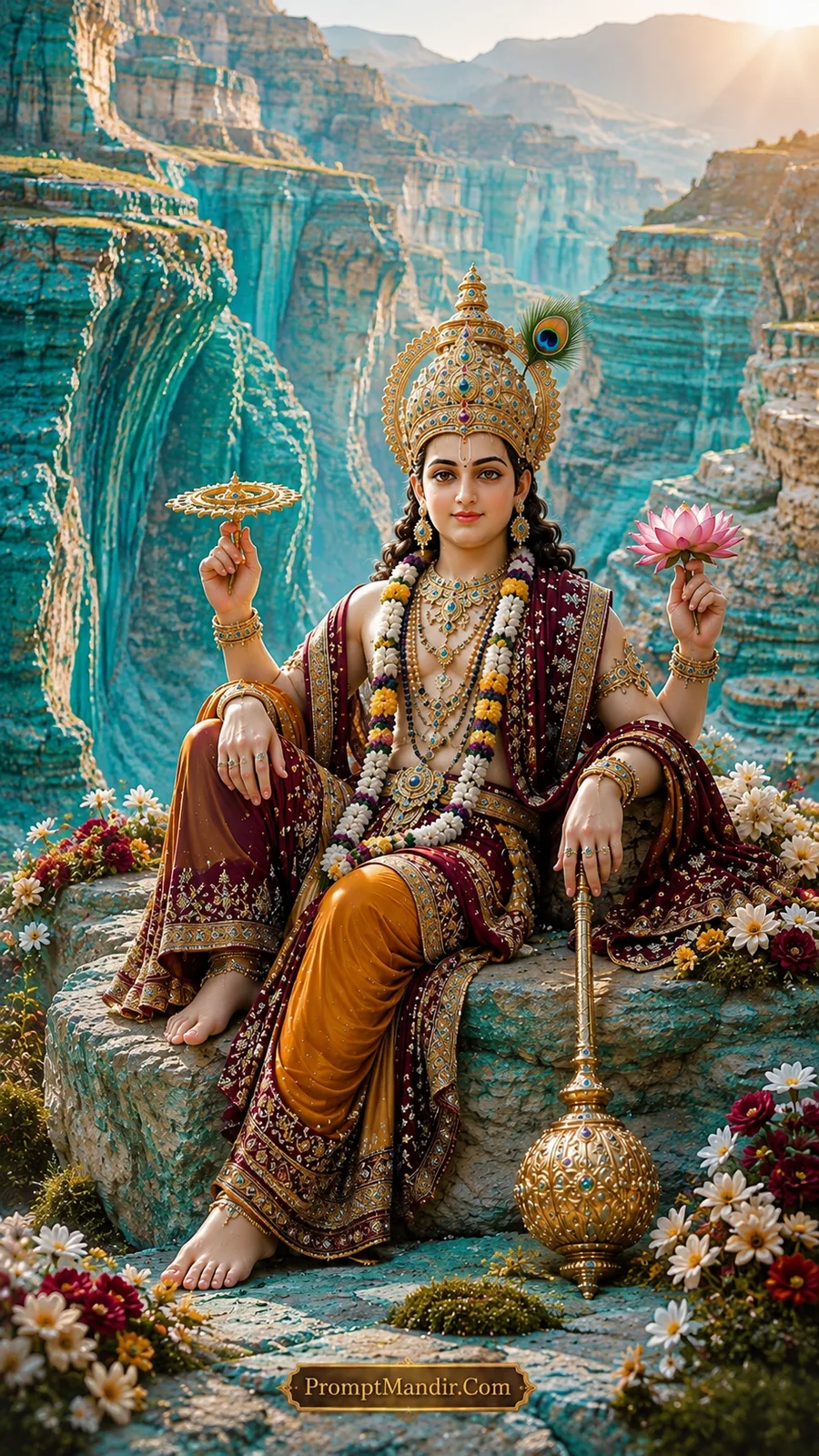
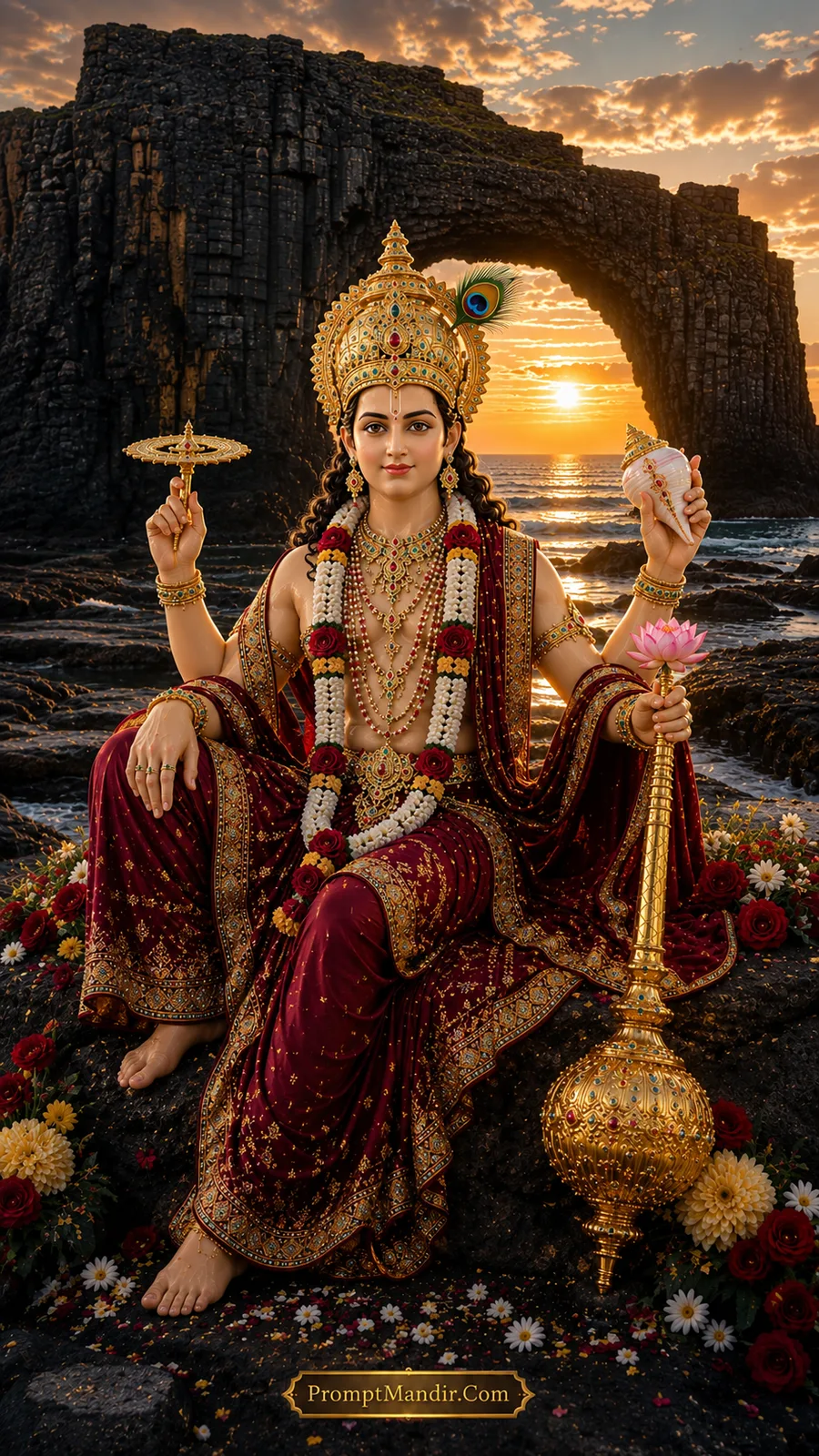
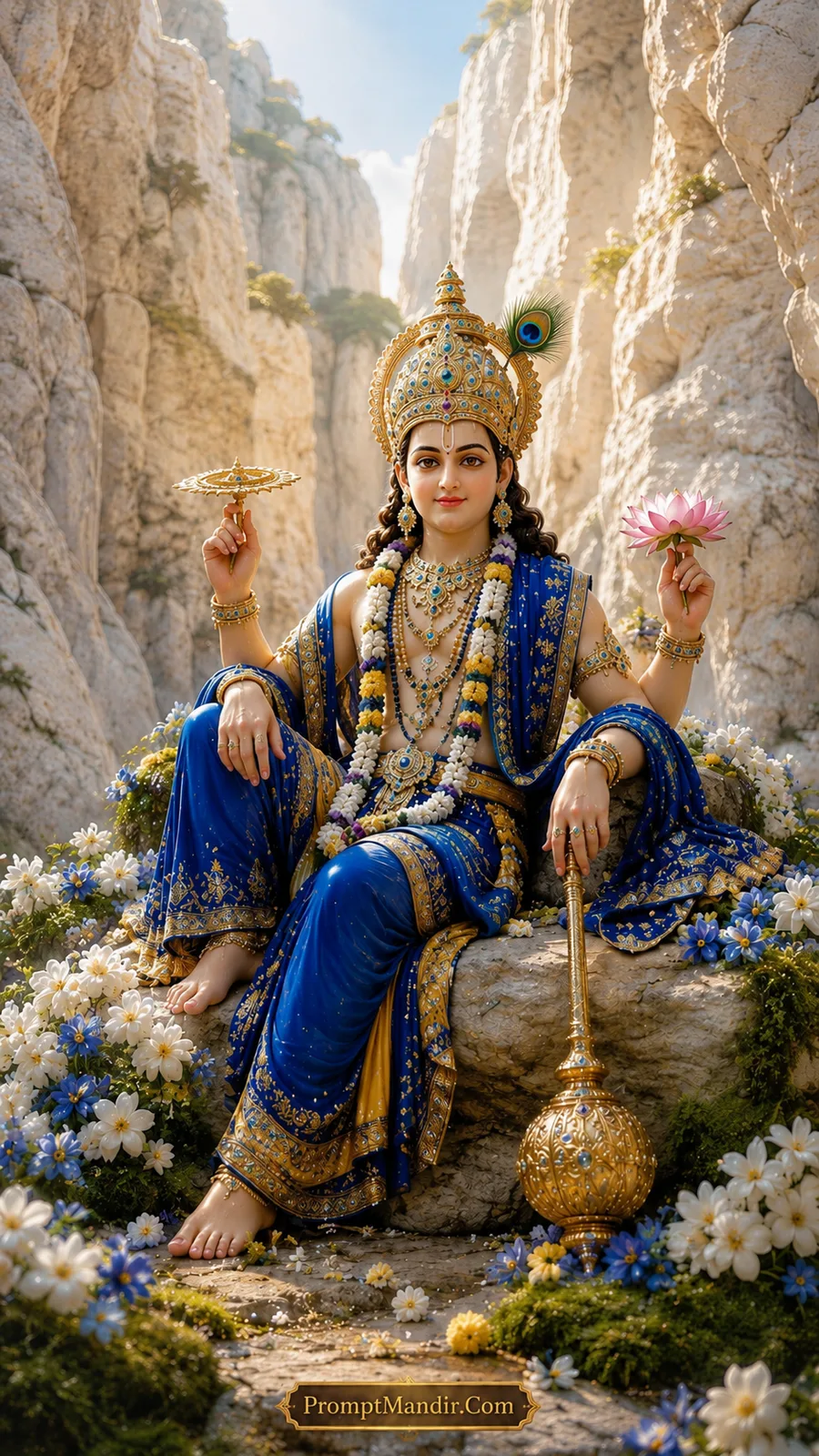
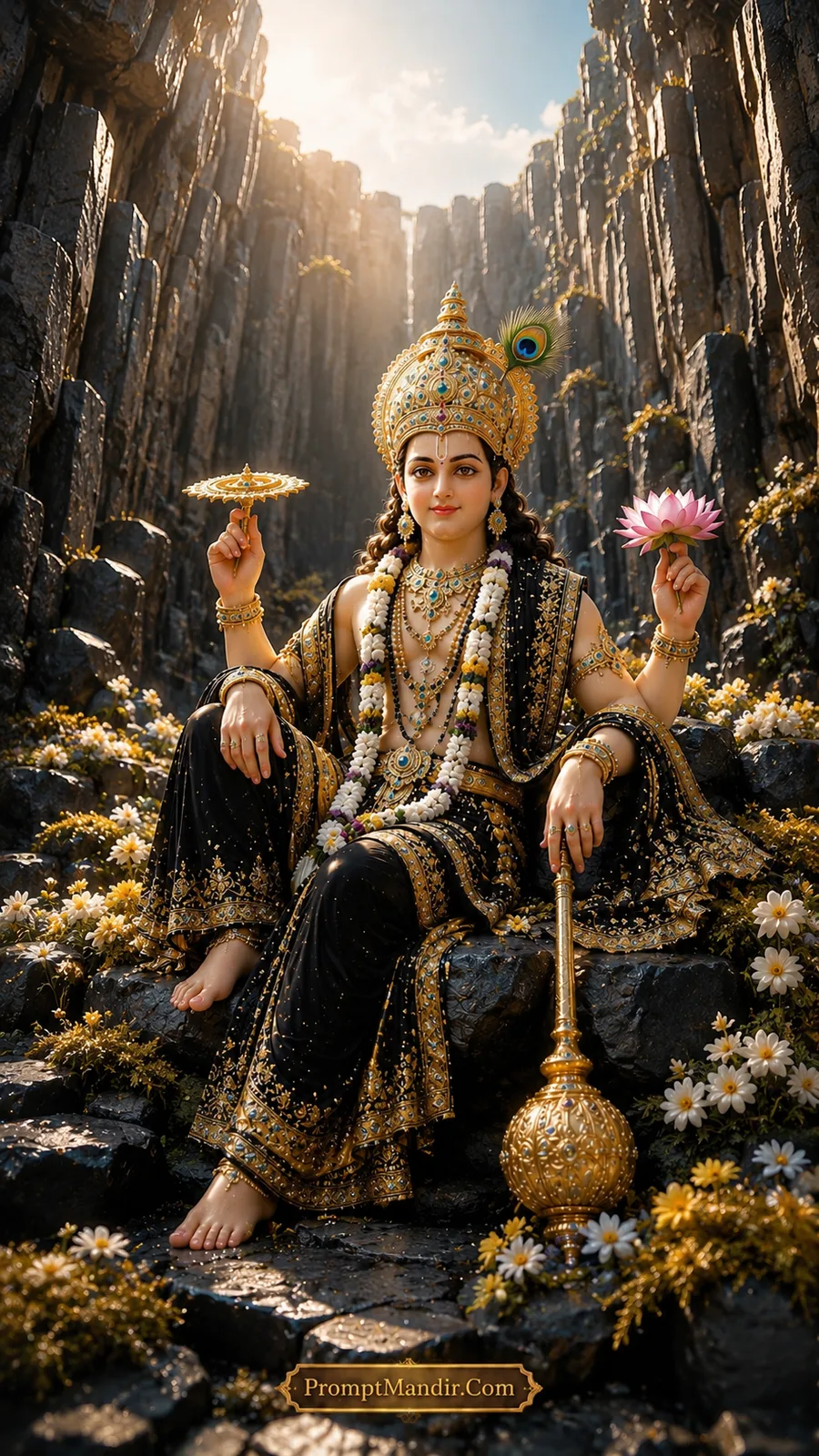
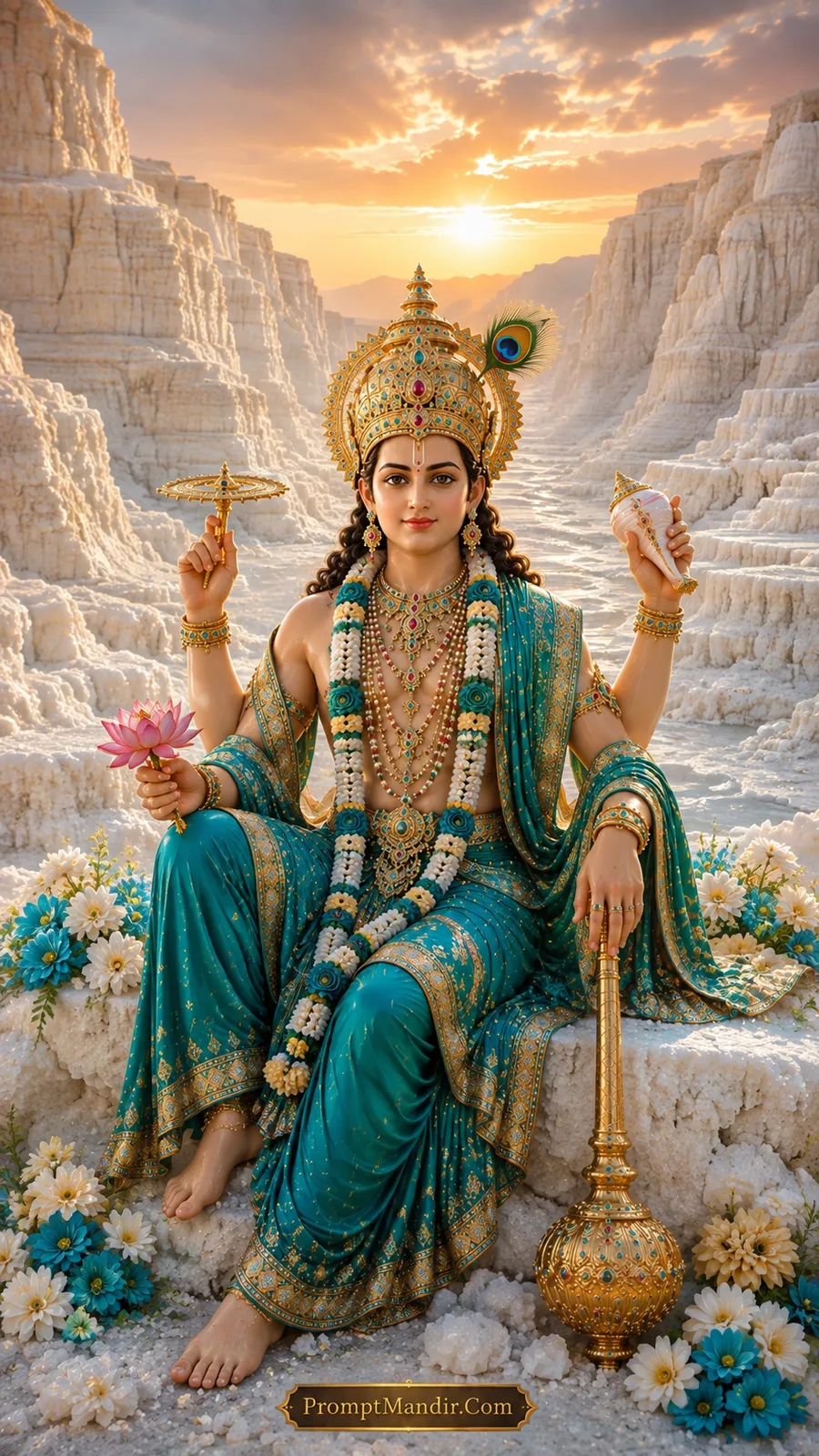
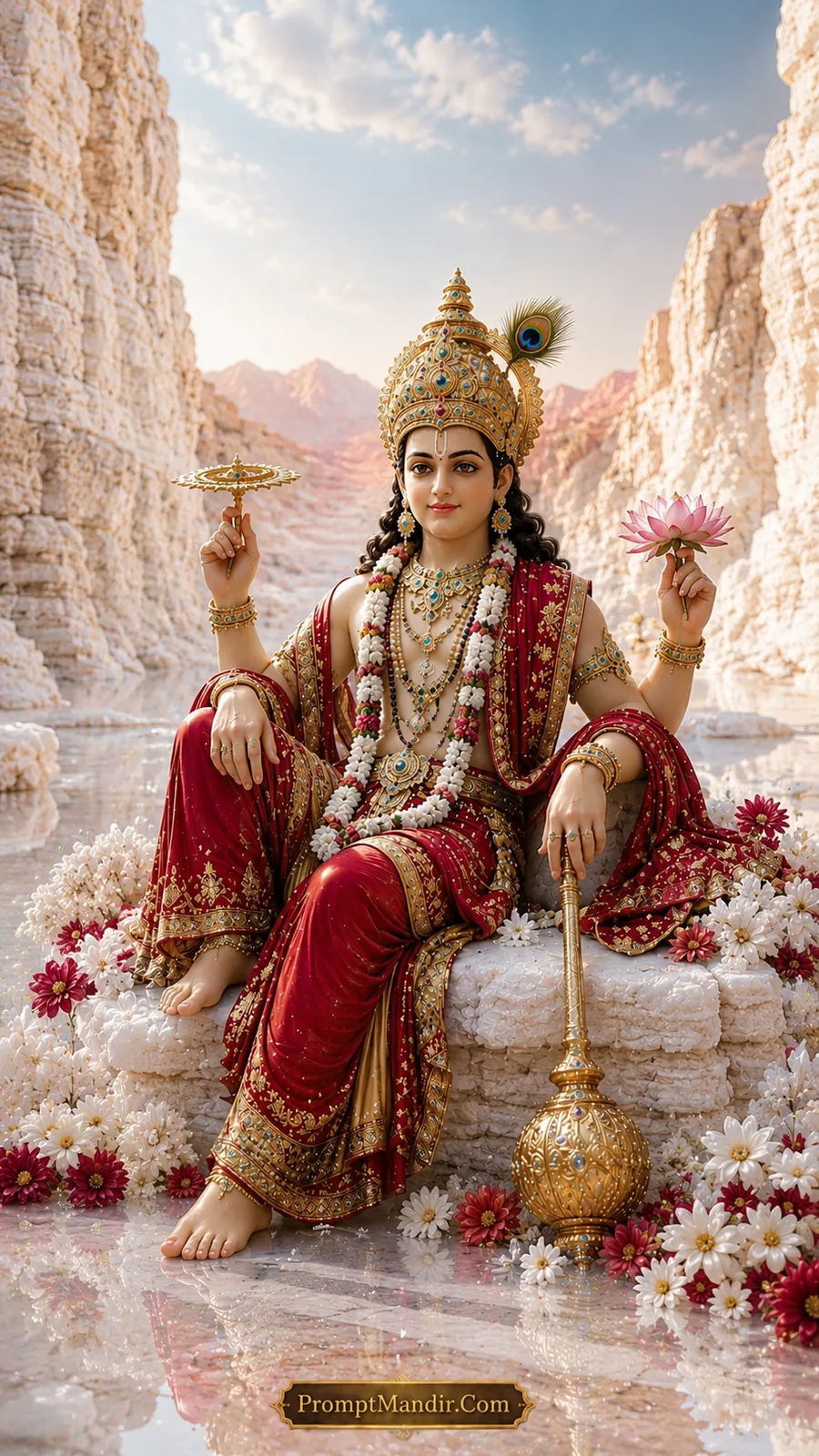
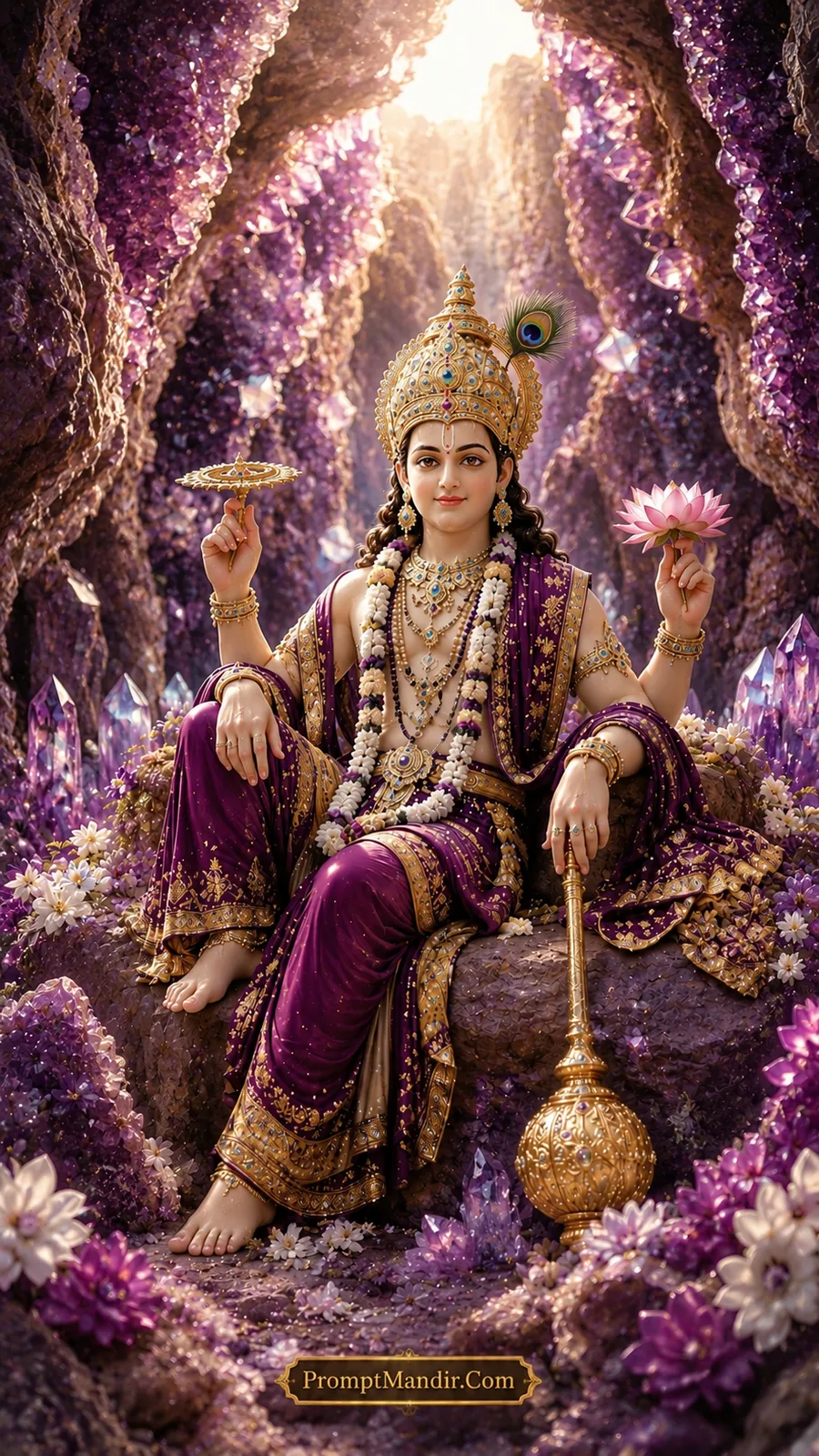
Each Vishnu Ji Divine Mountain prompt builds a different mountain sanctuary. One is a golden stepped landscape at sunset. Another is a sandstone canyon whose walls rise like red monoliths. A third is a blue ice cavern, its translucent walls glowing with cold light. A fourth is an amethyst crystal chamber, purple and luminous. And a fifth is a white mineral canyon, pale and sacred.
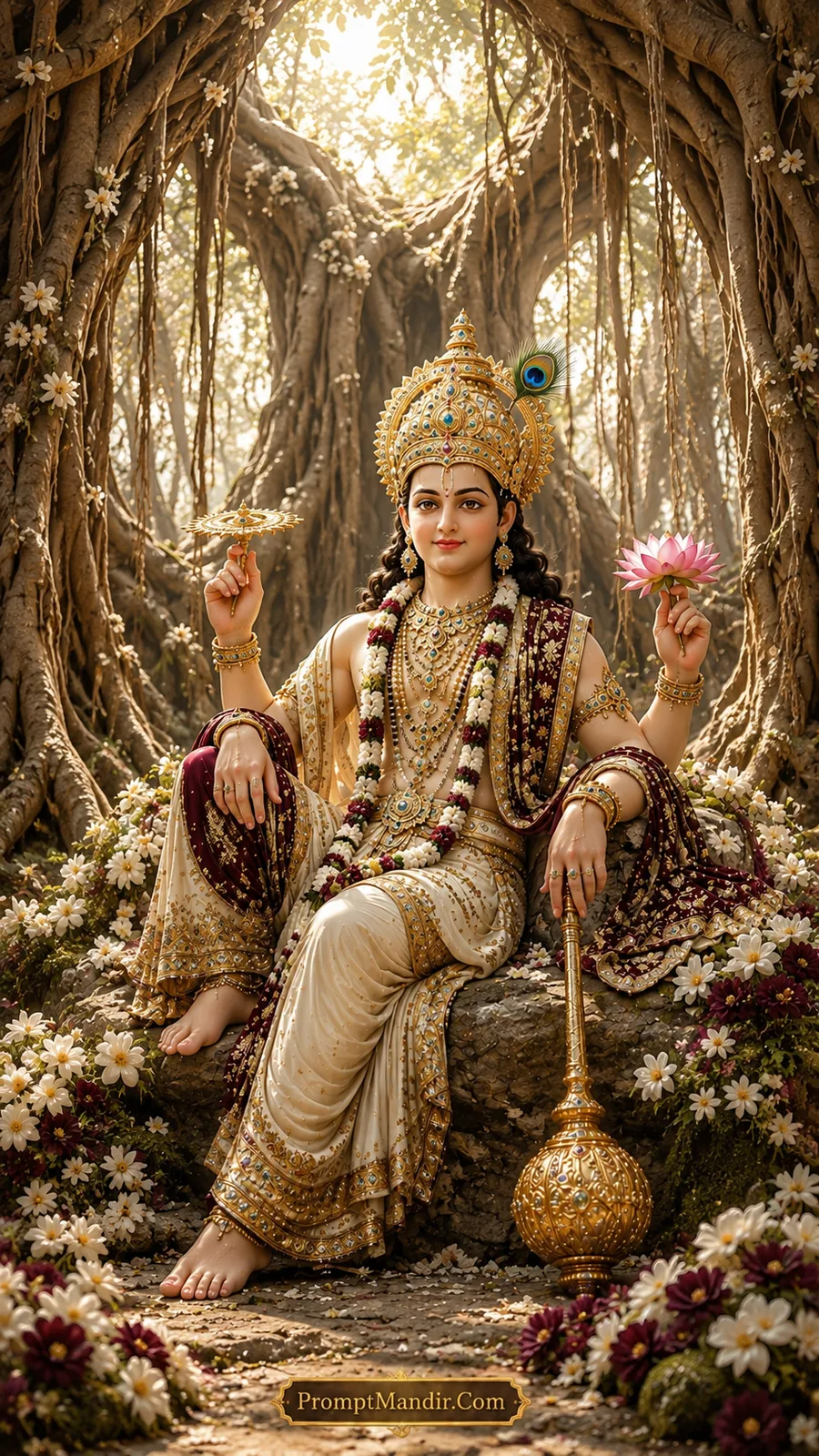
In every Vishnu Ji Divine Mountain image, the Lord holds his chakra and lotus. The gada rests beside him. The peacock feather rises from his crown. His expression is calm, direct, and quietly knowing. He is not looking past the viewer. He is looking at the viewer. The Vishnu Ji Divine Mountain collection is an invitation to meet the preserver of the universe, not in a temple, but in the wild, ancient sanctuaries he might choose for himself.
VIEW PROMPT
VIEW PROMPT
VIEW PROMPT
VIEW PROMPT
VIEW PROMPT
VIEW PROMPT
VIEW PROMPT
VIEW PROMPT
VIEW PROMPT
VIEW PROMPT
VIEW PROMPT
VIEW PROMPT
Explore More AI Prompt Collections
Discover more AI prompt collections covering devotional artwork, spiritual illustrations, divine characters, temple-inspired scenes, cultural designs, and creative visual concepts.
Browse related categories to find fresh inspiration for generating unique AI images, wallpapers, posters, social media graphics, and digital artwork.
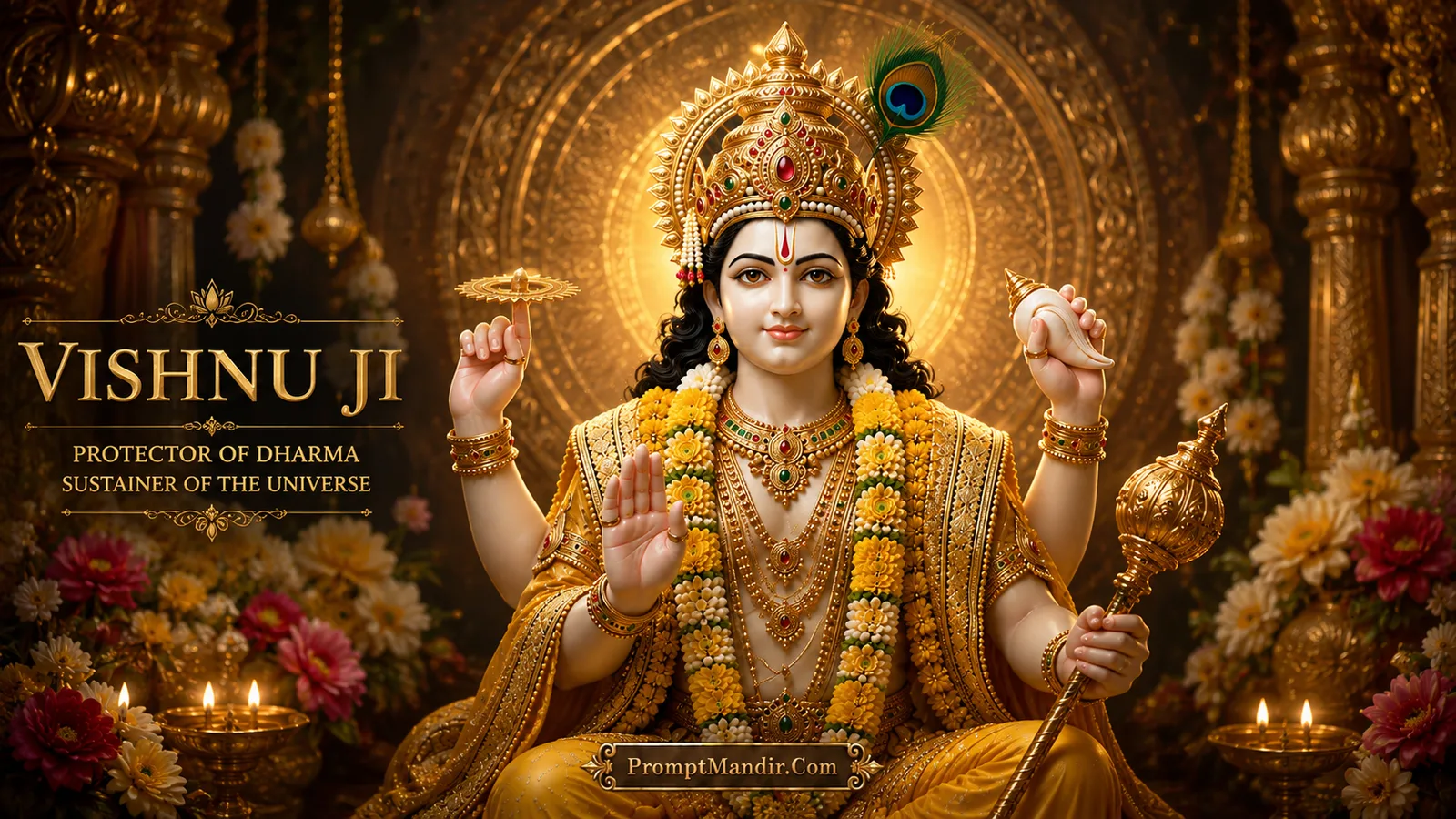
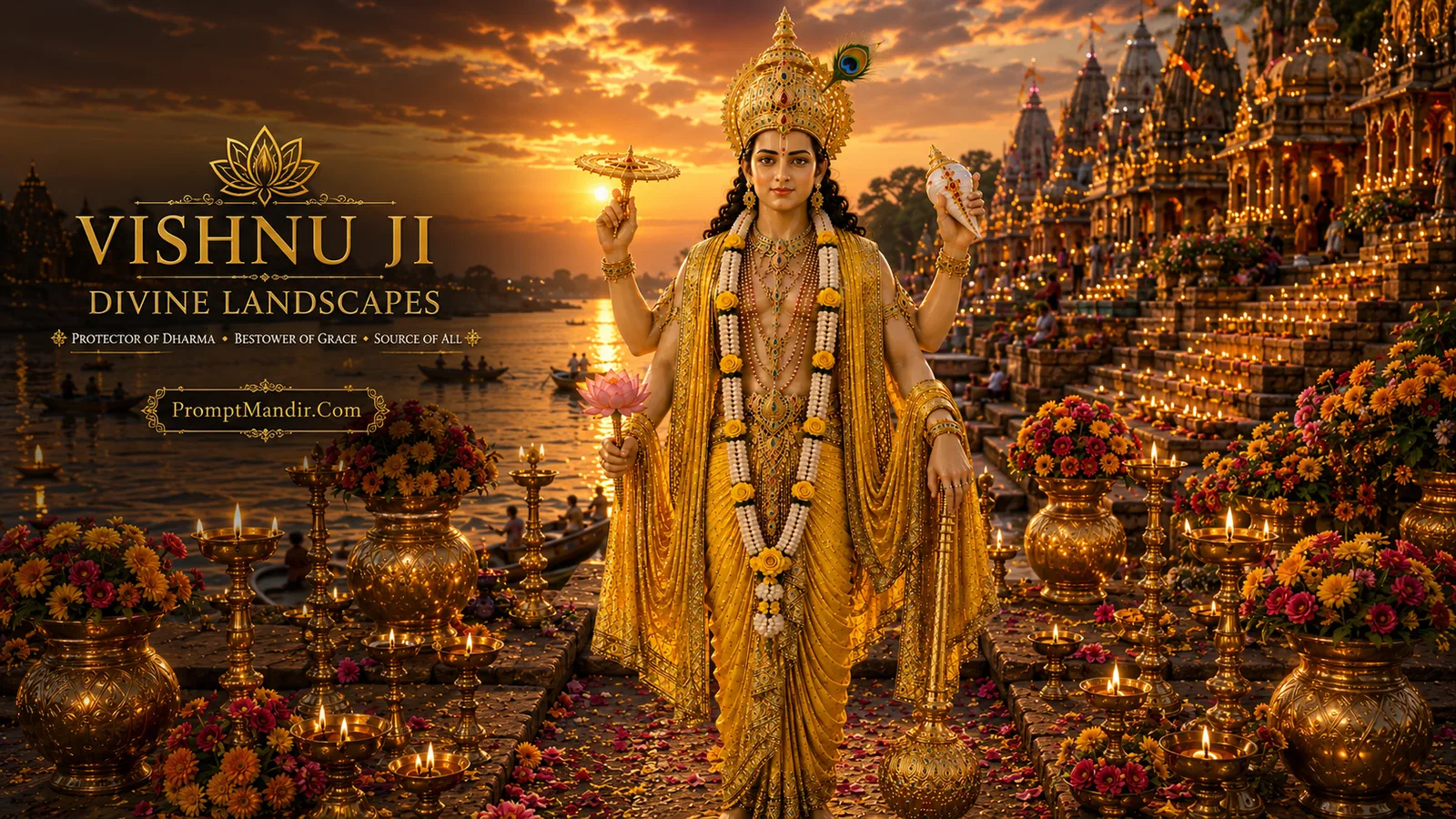
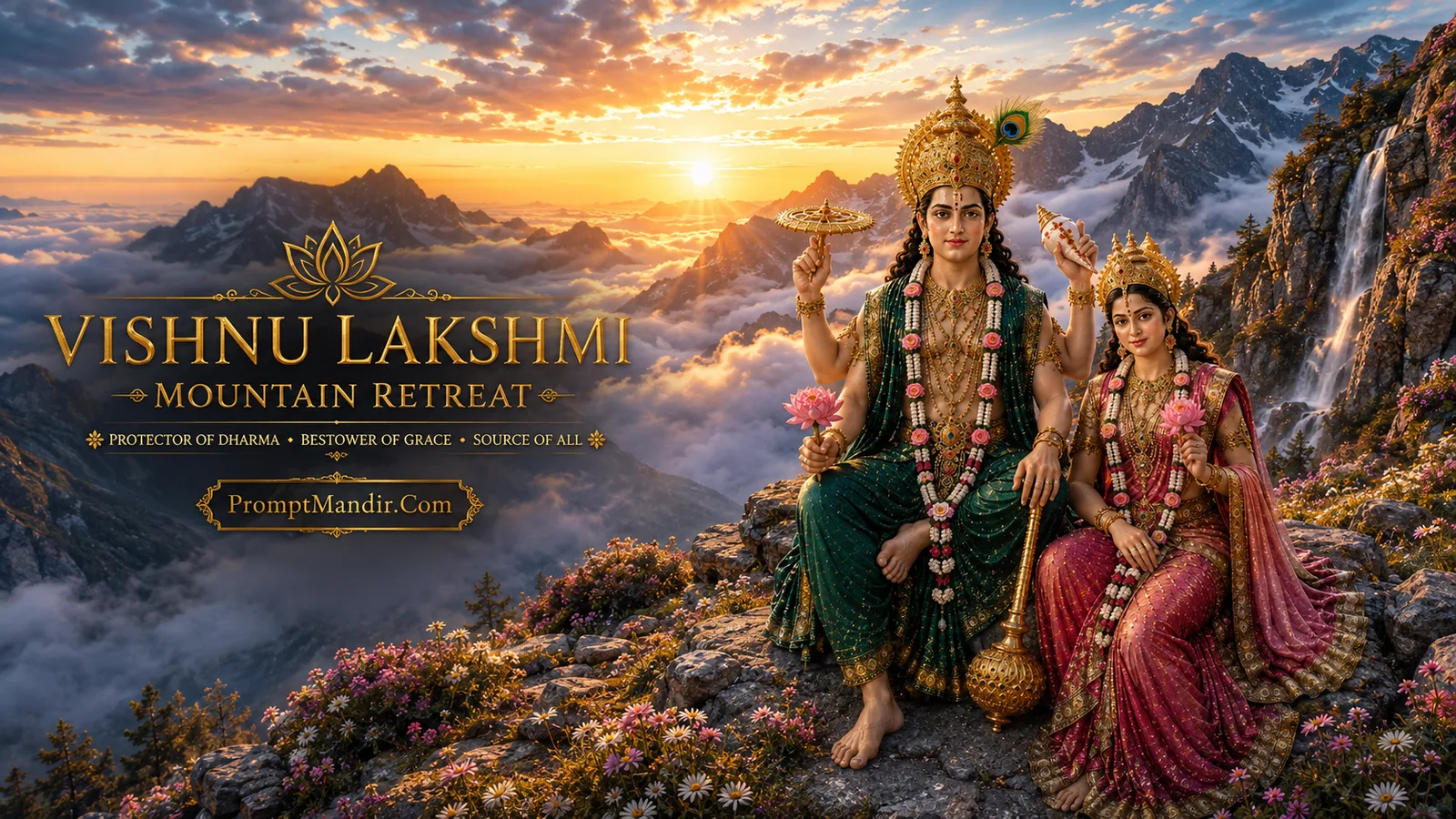
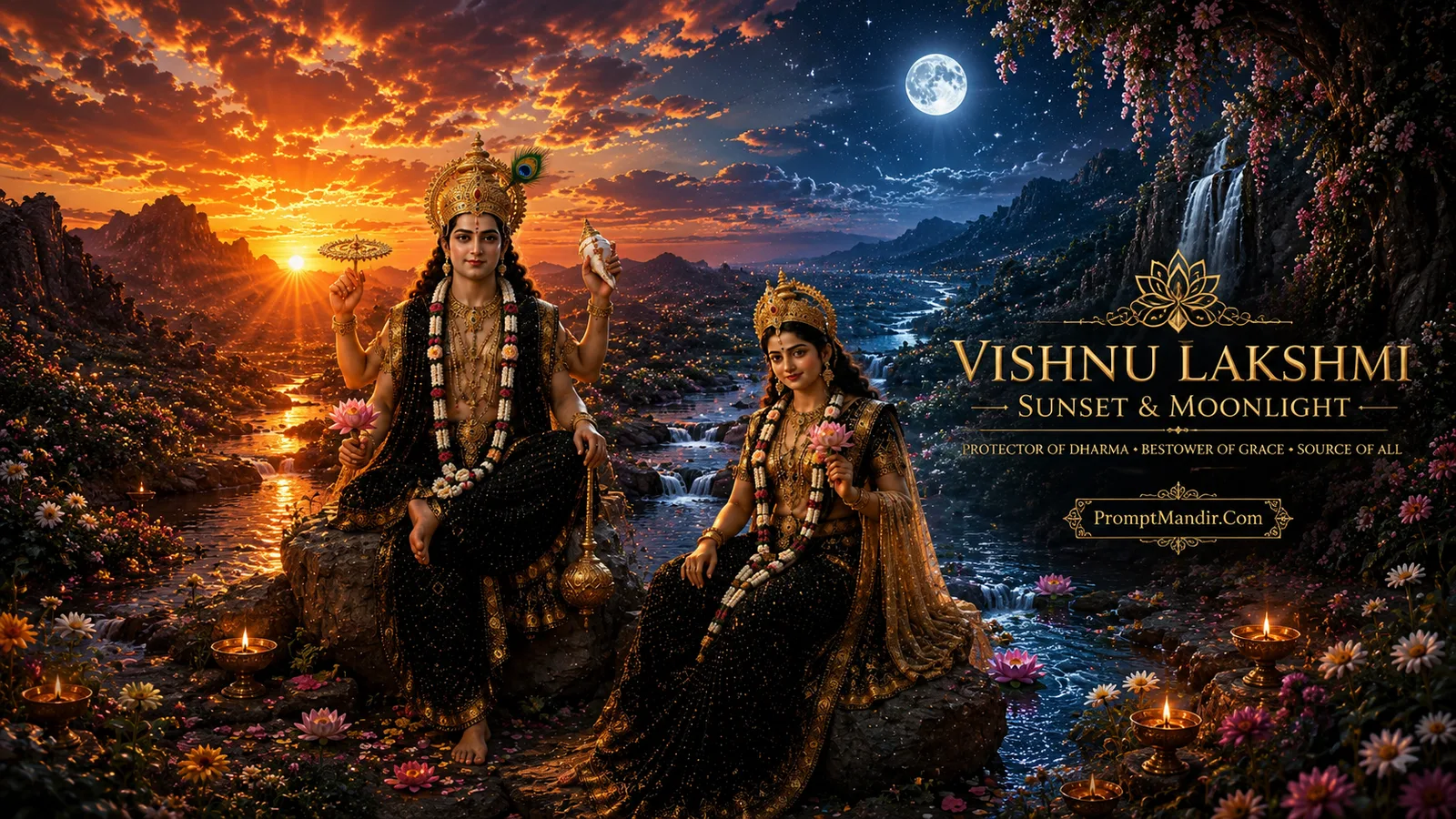
Prompt Customization Tips
The stone seat is the anchor of every Vishnu Ji Divine Mountain composition. It is not a carved throne. It is a natural formation, rough and weathered, shaped by wind and water over centuries. The Lord sits on it as if he has always been there. When writing a Vishnu Ji Divine Mountain prompt, describe the stone seat with precision. Its color, its texture, its relationship to the surrounding landscape.
The landscape itself is a character in the Vishnu Ji Divine Mountain collection. Whether it is golden terraces, red sandstone corridors, blue ice walls, or amethyst caverns, the environment must feel vast and ancient. The prompts ask for towering formations, winding stairways, and dramatic natural architecture. The Lord is not placed in the landscape. He emerges from it.
The chakra and lotus are held in raised hands in every Vishnu Ji Divine Mountain image. These are not props. They are the symbols of his divine function. The chakra represents the wheel of time and cosmic order. The lotus represents purity rising from the mud of the world. The Vishnu Ji Divine Mountain collection keeps these symbols present and clearly visible, always rendered in realistic gold and fresh pink petals.
The gada rests beside the seated figure throughout the Vishnu Ji Divine Mountain collection. It is a massive, ornate golden mace, leaning against the stone seat or placed on the ground. It must look heavy. Its presence grounds the composition and reminds the viewer of the Lord’s strength, even in stillness.
The floral arrangements in the Vishnu Ji Divine Mountain prompts are carefully coordinated with the environment. Golden grasses and cream flowers in the terraced landscape. White and lavender blossoms in the crystal cavern. Crimson and white flowers in the mineral canyon. These flowers soften the grandeur of the setting. They make the mountain feel alive, not just monumental.
The peacock feather in the Vishnu Ji Divine Mountain collection is a signature of Vishnu’s connection to beauty and grace. It rises from the crown, its colors echoing through the gemstones in his jewelry and the tones of his garments. The feather is never hidden. It is a focal point, a small burst of natural color against the ancient stone and sky.
Light in the Vishnu Ji Divine Mountain prompts is always natural and volumetric. Sunlight enters through an opening in the canyon or cavern. It creates rays that illuminate the Lord’s face and jewelry. The light is warm, even in the ice sanctuary. It wraps around the figure, separating him from the darker recesses of the stone. The Vishnu Ji Divine Mountain collection uses light to guide the eye directly to the divine face.
Frequently Asked Questions
What is the Vishnu Ji Divine Mountain collection?
It is a series of photorealistic devotional portraits placing Lord Vishnu in vast natural mountain sanctuaries. Each Vishnu Ji Divine Mountain prompt features the Lord seated on a natural stone formation, holding his chakra and lotus, with his gada beside him. The collection emphasizes landscape, light, and serene presence.
What settings appear in the Vishnu Ji Divine Mountain collection?
Golden stepped terraces, red sandstone canyons, blue ice caverns, amethyst crystal chambers, and white mineral canyons. The Vishnu Ji Divine Mountain collection uses these varied landscapes to explore different moods of sacred isolation and natural grandeur.
How is Lord Vishnu posed in the Vishnu Ji Divine Mountain prompts?
He is seated gracefully on a natural stone seat, facing the viewer. His raised hands hold the Sudarshan Chakra and a pink lotus. His lower hands rest naturally. The gada is placed beside him. The Vishnu Ji Divine Mountain collection keeps this pose consistent across all settings.
What clothing does Lord Vishnu wear in the Vishnu Ji Divine Mountain collection?
Rich traditional garments in deep burgundy, peacock-teal, royal blue, plum-purple, and cream with maroon accents. All outfits are heavily embroidered with antique-gold patterns. The Vishnu Ji Divine Mountain collection uses luxurious fabric to contrast with the raw natural environment.
What is the role of the peacock feather in the Vishnu Ji Divine Mountain collection?
The peacock feather is a signature detail. It rises from the Lord’s crown and connects him to natural beauty and divine grace. In every Vishnu Ji Divine Mountain portrait, the feather is prominent and carefully integrated into the royal headpiece.
How does the landscape interact with the deity in the Vishnu Ji Divine Mountain collection?
The landscape is not a backdrop. It is a sanctuary. The stone formations rise around the Lord, creating natural walls and corridors. The Vishnu Ji Divine Mountain collection places the deity inside the landscape, as if the mountains themselves have opened to receive him.
What flowers are used in the Vishnu Ji Divine Mountain prompts?
The flowers vary with the setting. Golden grasses and cream blossoms in the terraces. White and orange flowers in the sandstone canyon. Lavender and white flowers in the crystal cavern. Crimson and white flowers in the mineral canyon. The Vishnu Ji Divine Mountain collection coordinates the floral arrangements with the environment.
Is the Vishnu Ji Divine Mountain collection suitable for mobile wallpapers?
Yes. The 9:16 vertical format is designed for phone screens. The centered, seated composition of the Vishnu Ji Divine Mountain collection works beautifully as a lock screen, where the Lord’s face and the vast landscape create a powerful first impression.
What should be avoided in the Vishnu Ji Divine Mountain prompts?
Modern objects, crowded backgrounds, exaggerated fantasy effects, and distorted anatomy. The Vishnu Ji Divine Mountain collection is photorealistic and grounded. The environments are grand but believable. The deity is central and clearly visible.
How does the Vishnu Ji Divine Mountain collection connect to traditional depictions of Vishnu?
It preserves the core iconography. The chakra, lotus, gada, peacock feather, and regal jewelry are all present. The Vishnu Ji Divine Mountain collection simply moves the Lord from a temple interior to the ancient, wild sanctuaries of the natural world, where his presence feels both eternal and immediate.