
A God Small Enough to Hold — The Little Jagannath Collection
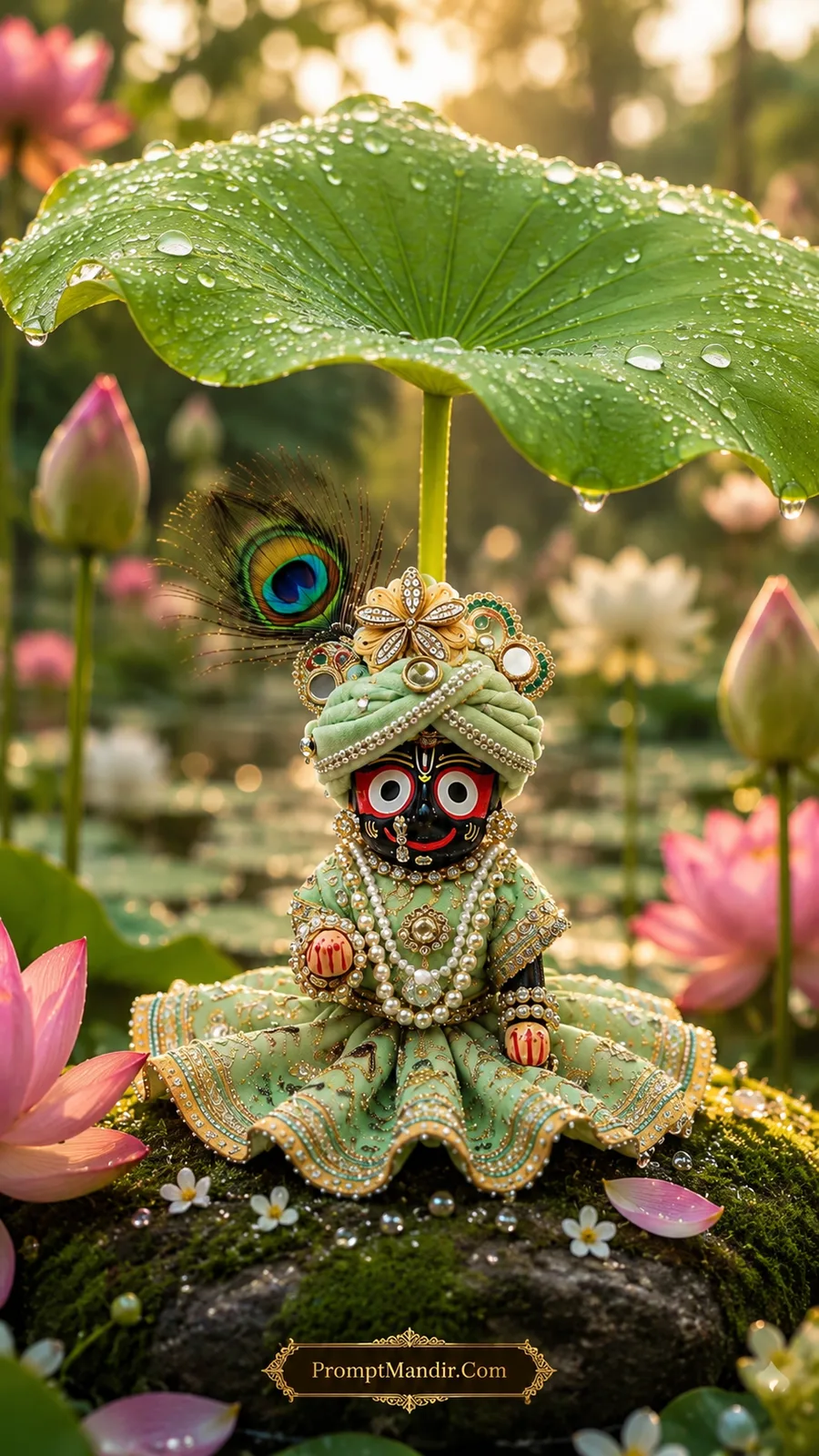
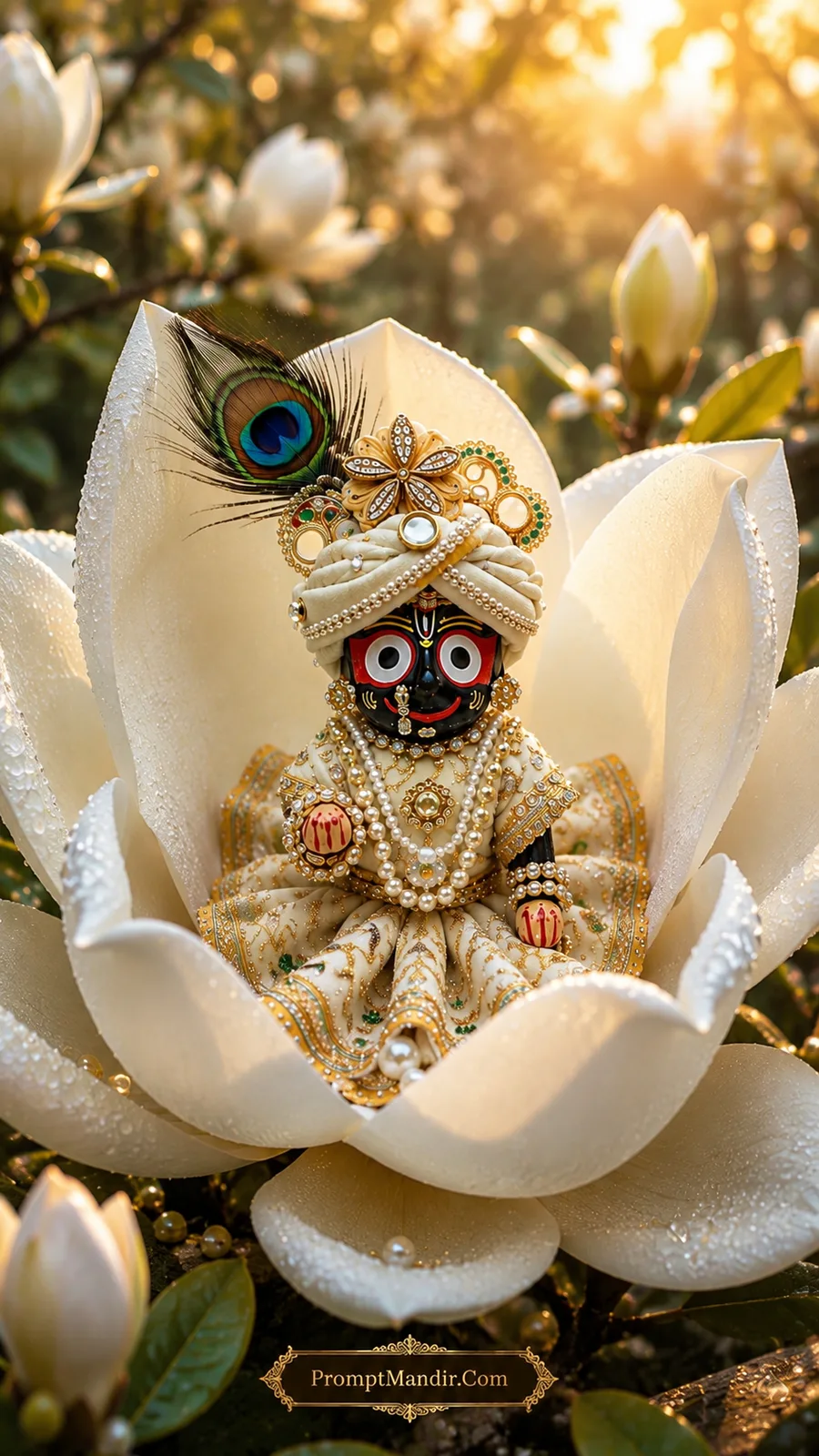
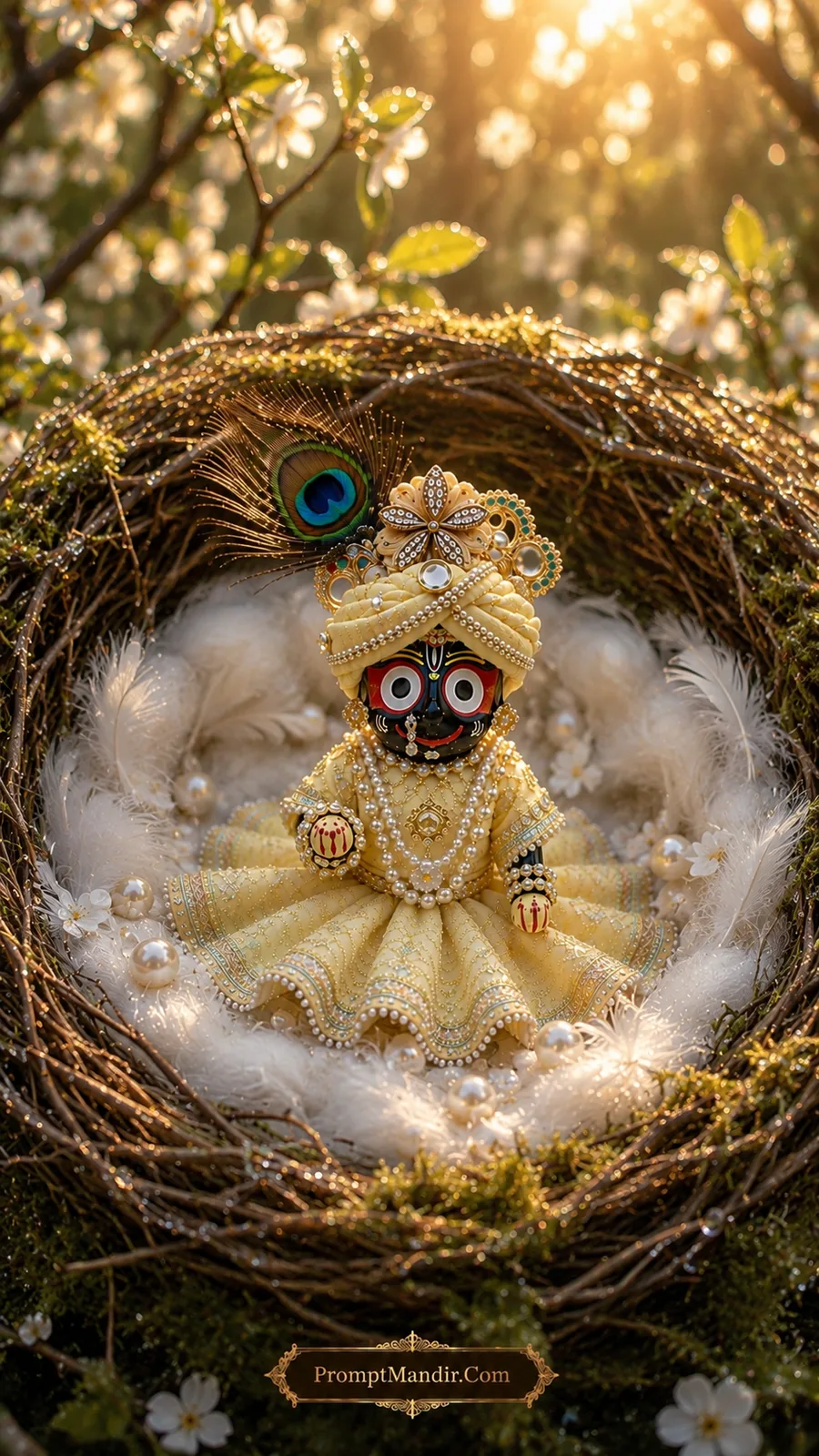
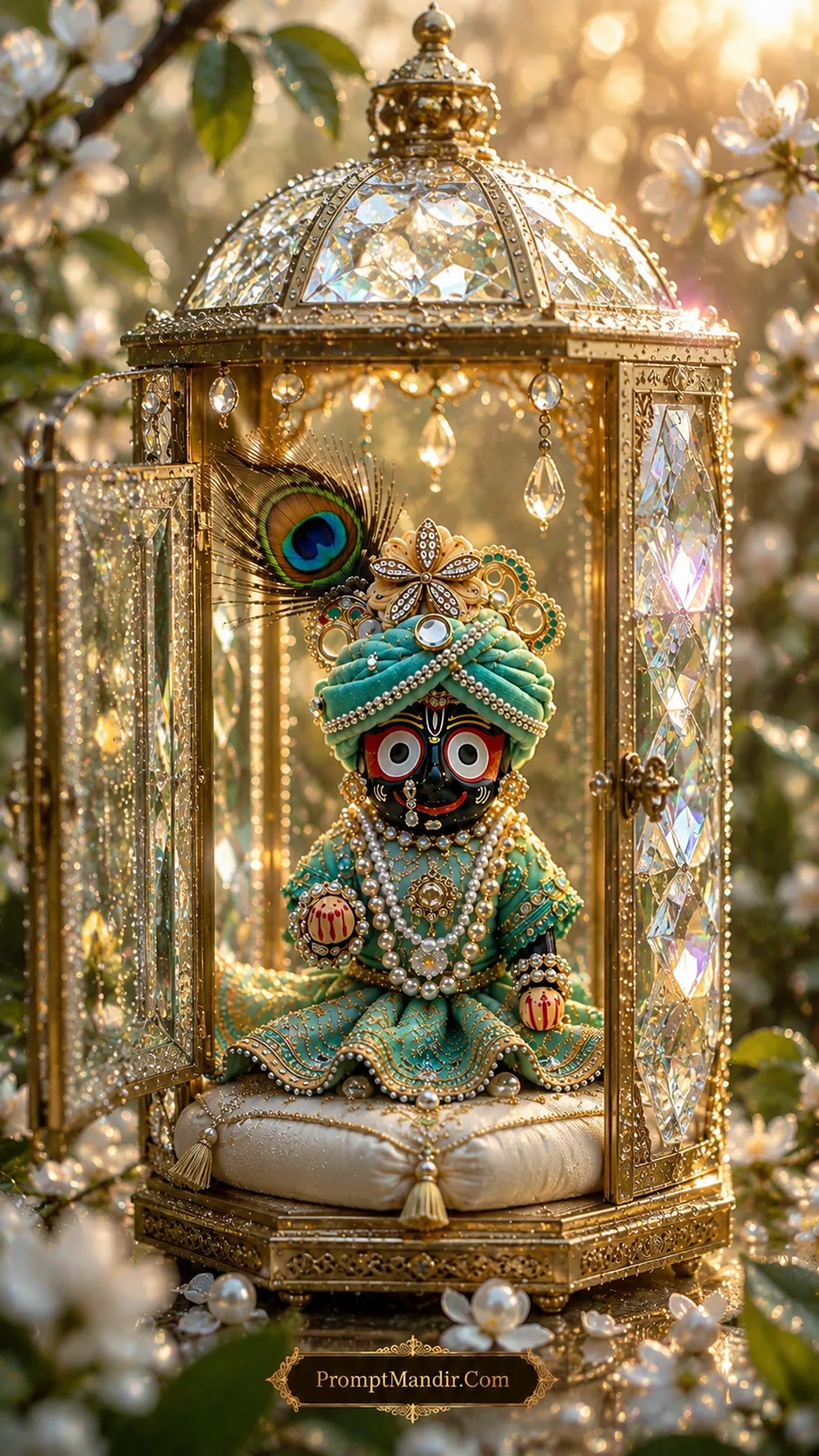
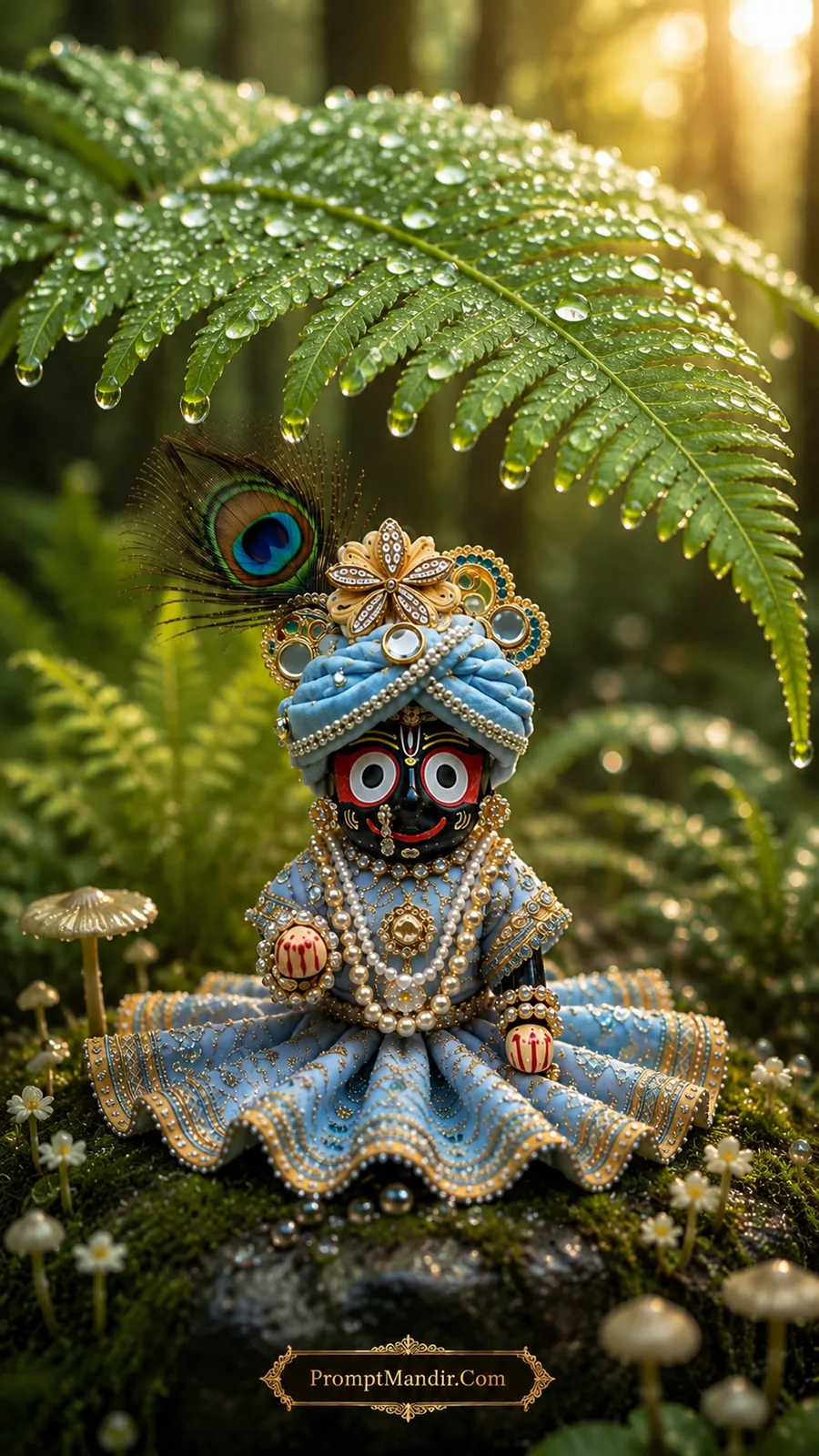
There is a version of Lord Jagannath that exists before the temple, before the chariots, before the vast crowds and the thunderous chants. It is a version few people talk about. A child. A baby, really. Sitting quietly in a lantern. Resting inside a magnolia flower. Shielded from the sun by a single curling lotus leaf. This is the gentle, intimate world of the Little Jagannath Collection.
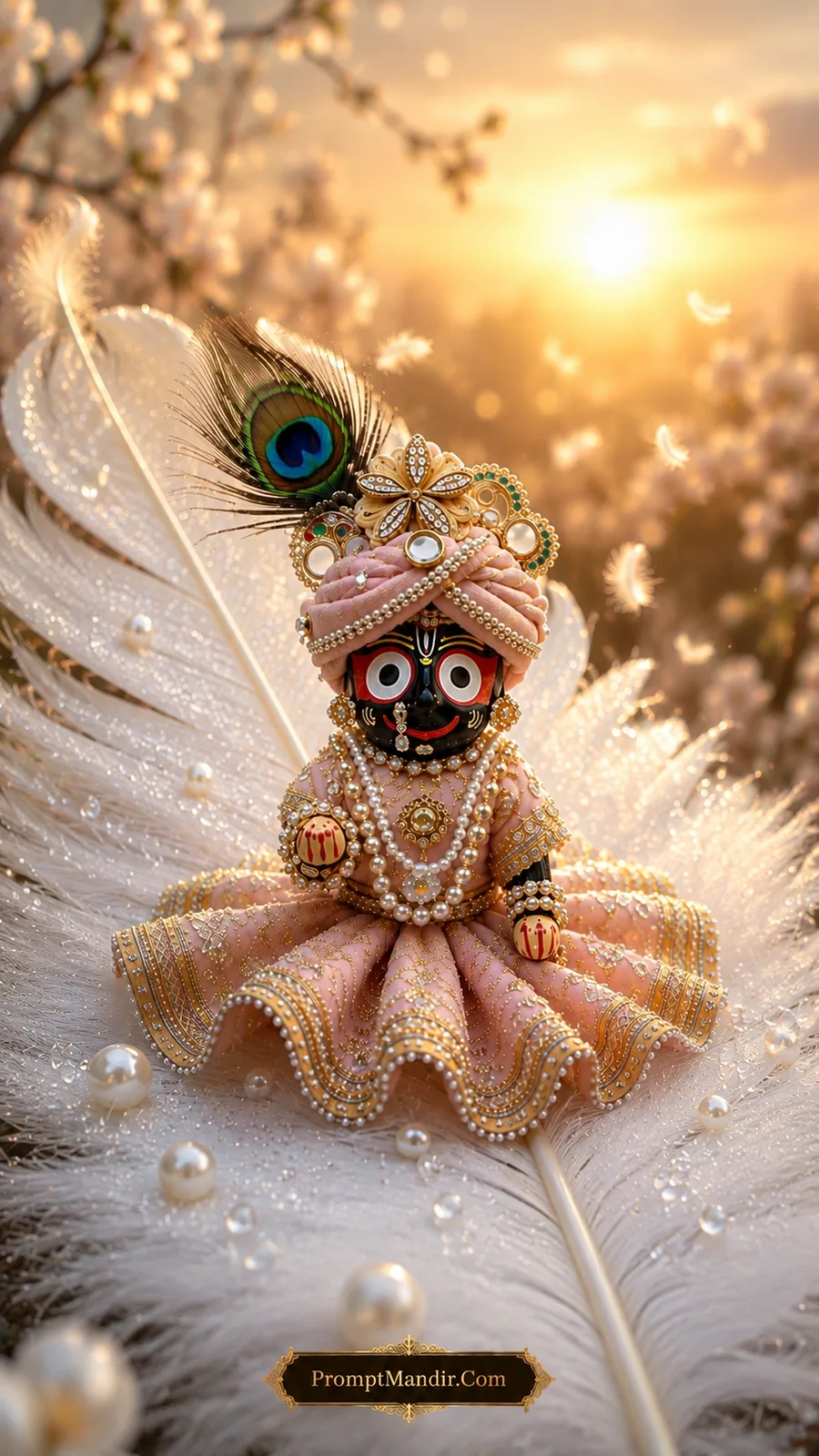
The Little Jagannath Collection is not about scale or grandeur. It is about the opposite. It takes the colossal deity of the Rath Yatra and shrinks him down to something you could cradle in your palm. The large, round eyes remain. The dark, polished face remains. The peacock feather and the silk turban remain. But everything else changes. The temple walls become flower petals. The roaring crowds become scattered pearls and morning dew. Each image in the Little Jagannath Collection is an invitation to come closer.
This shift in scale does something unexpected. It makes the god feel nearer. Not less powerful, but more personal. A baby Jagannath in a crystal lantern is not a god you approach with folded hands and formal prayers. He is a god you might smile at without meaning to. A god you might check on in the morning, just to see if the light is catching his silk outfit in that particular way. The Little Jagannath Collection is built on this intimacy.
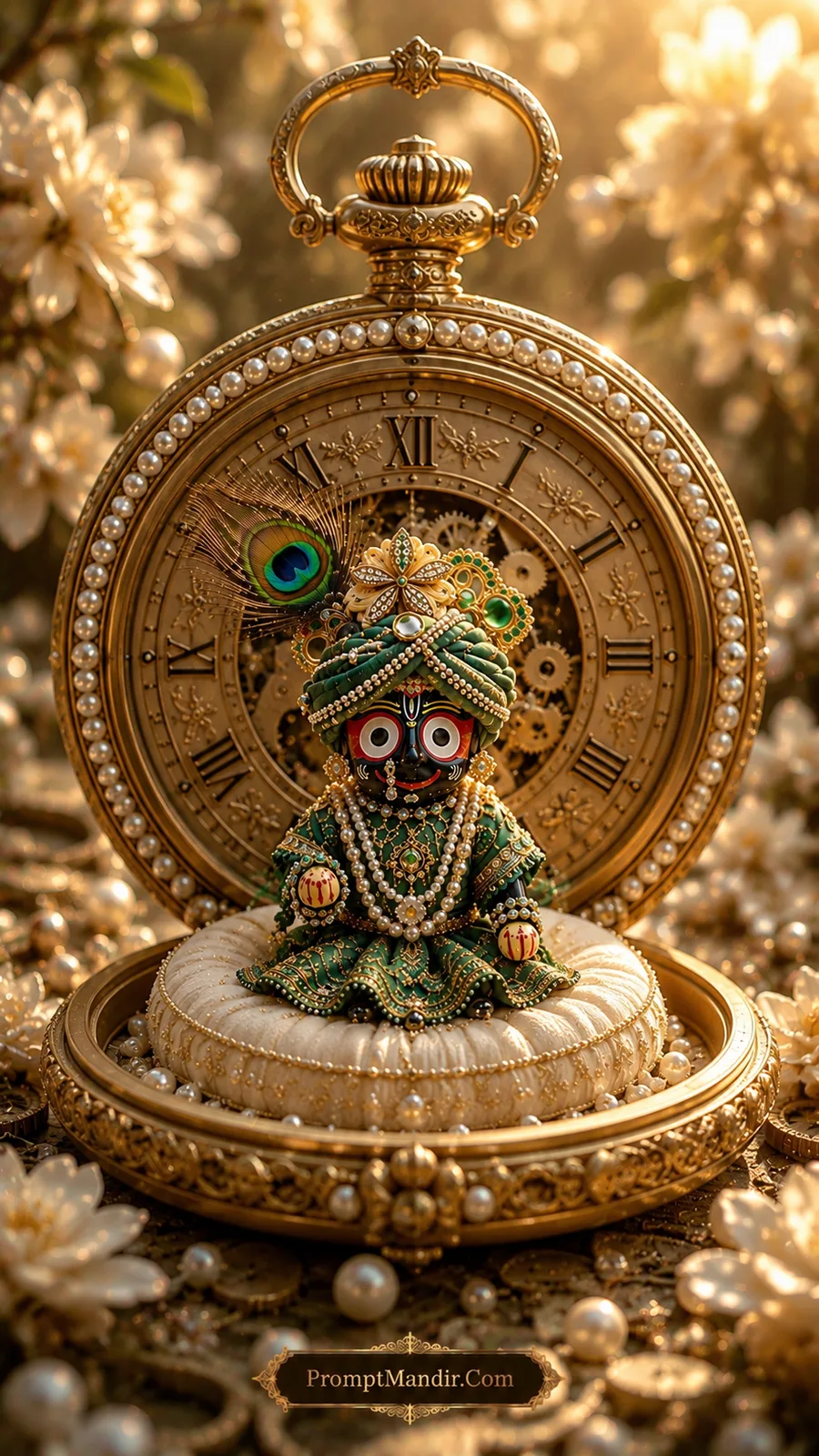
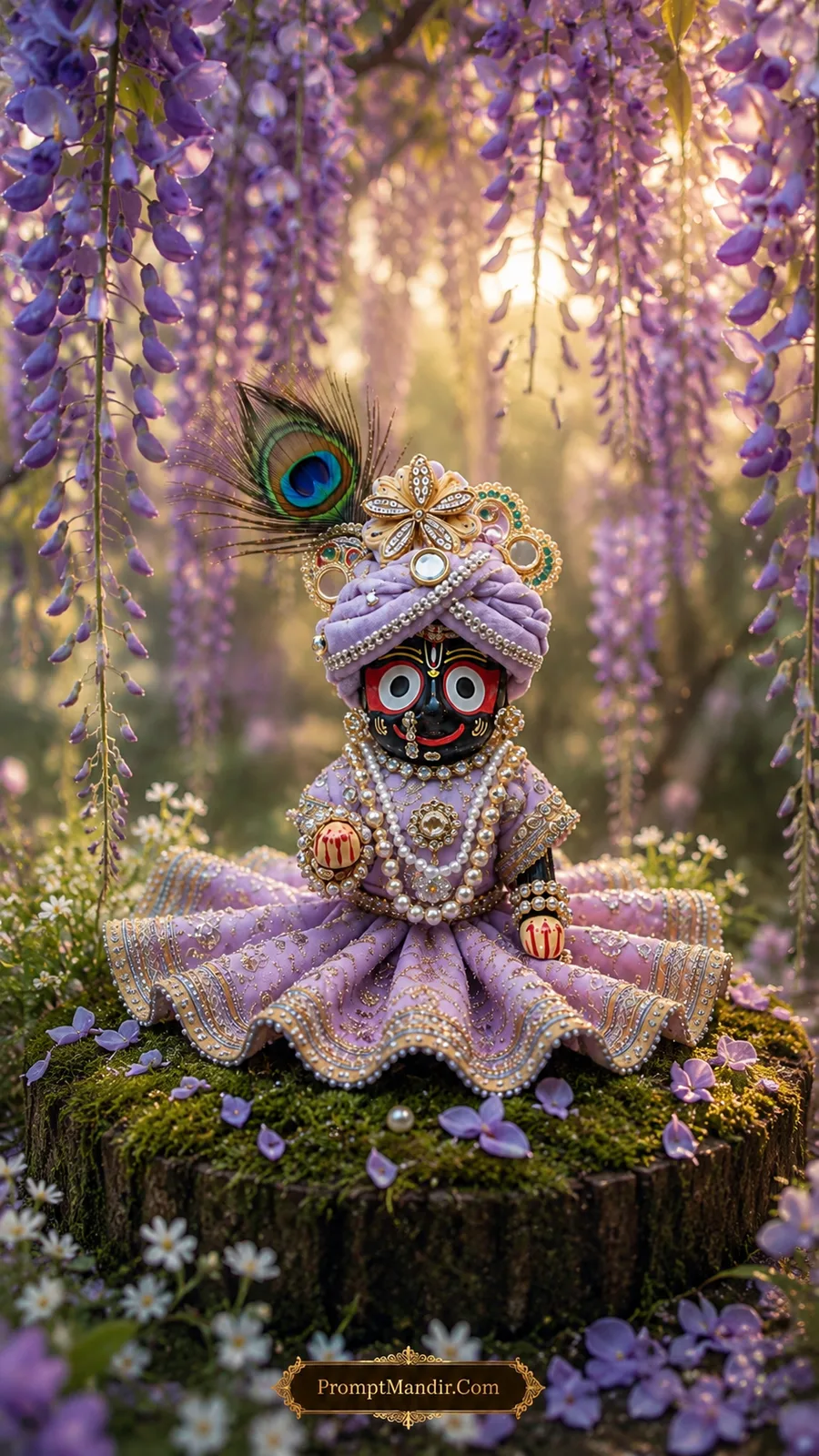
Every prompt in the Little Jagannath Collection is composed like a macro photograph. The depth of field is shallow. The background melts into creamy bokeh. The foreground holds tiny, precious details. A dewdrop on a lotus petal. A single pearl resting on velvet. The embroidery on a turban no bigger than a thumbnail. These are not images meant to be viewed from a distance. They demand you lean in close, as if the deity were right there on your desk, beside your tea. Writing for the Little Jagannath Collection requires attention not to vast architecture, but to texture.
VIEW PROMPT
VIEW PROMPT
VIEW PROMPT
VIEW PROMPT
VIEW PROMPT
VIEW PROMPT
VIEW PROMPT
VIEW PROMPT
VIEW PROMPT
VIEW PROMPT
VIEW PROMPT
Explore More AI Prompt Collections
Discover more AI prompt collections covering devotional artwork, spiritual illustrations, divine characters, temple-inspired scenes, cultural designs, and creative visual concepts.
Browse related categories to find fresh inspiration for generating unique AI images, wallpapers, posters, social media graphics, and digital artwork.


Prompt Customization Tips
Material precision is the foundation of the Little Jagannath Collection. Every surface in the frame tells a story. The silk of the baby’s turban must catch the light differently than the velvet of the cushion beneath him. The crystal of the lantern must refract, not just reflect. Dewdrops on a magnolia petal must magnify the delicate veins beneath them. When writing a prompt for the Little Jagannath Collection, name every material explicitly. Silk, pearl, crystal, velvet, moss, marble, gold thread. The AI needs to know what each surface is made of to render it convincingly.
The face of Baby Jagannath must remain authentic to the iconography of the Puri temple throughout the Little Jagannath Collection. The complexion is deep, polished black. The eyes are large, perfectly round, and white with dark pupils. The smile is wide and red. The tilak is traditional. These features cannot be softened into a generic cute baby face. The Little Jagannath Collection is not about making the deity look like an ordinary infant. It is about preserving the unmistakable iconography of Jagannath while scaling him down to a child’s size.
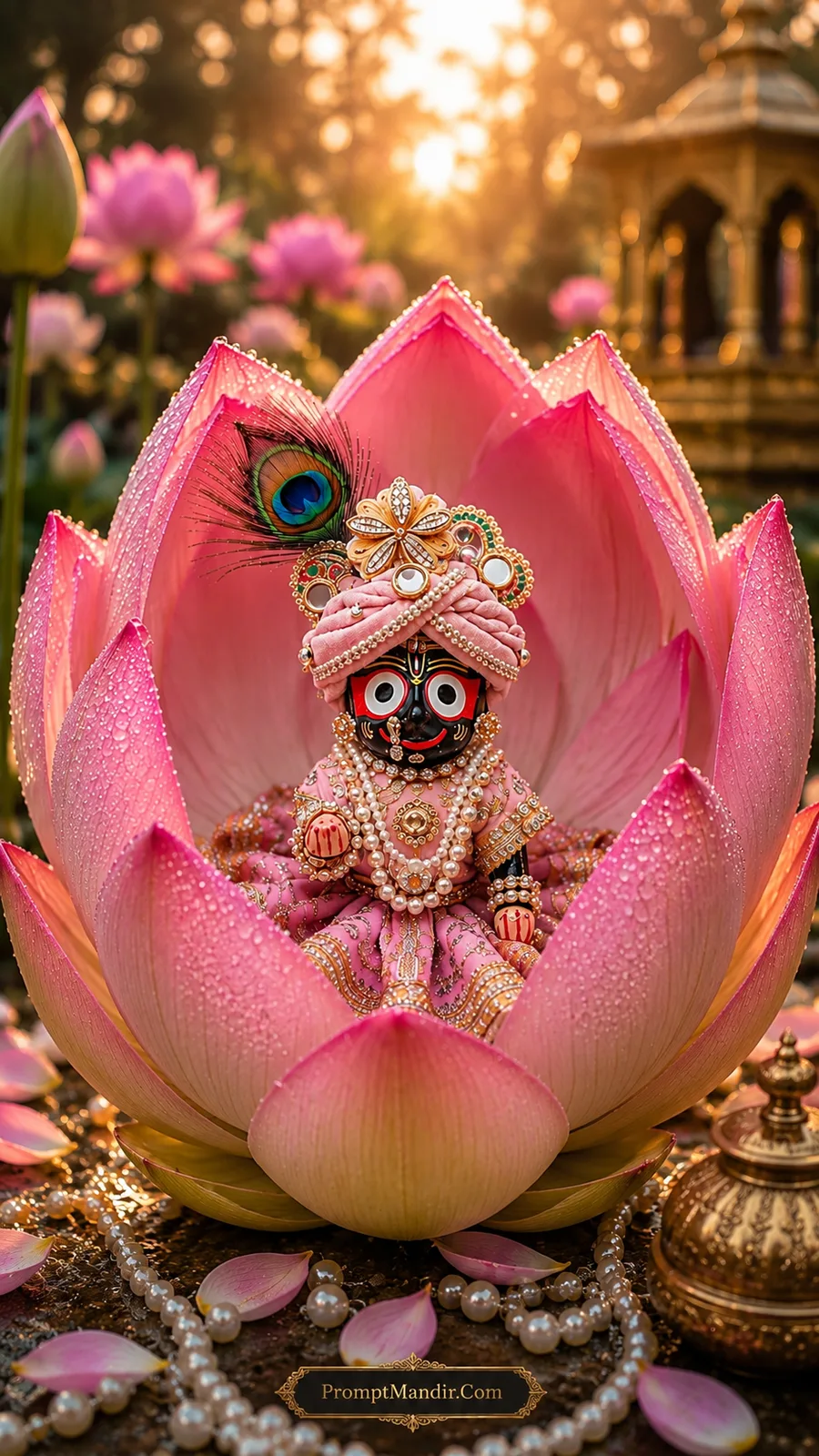
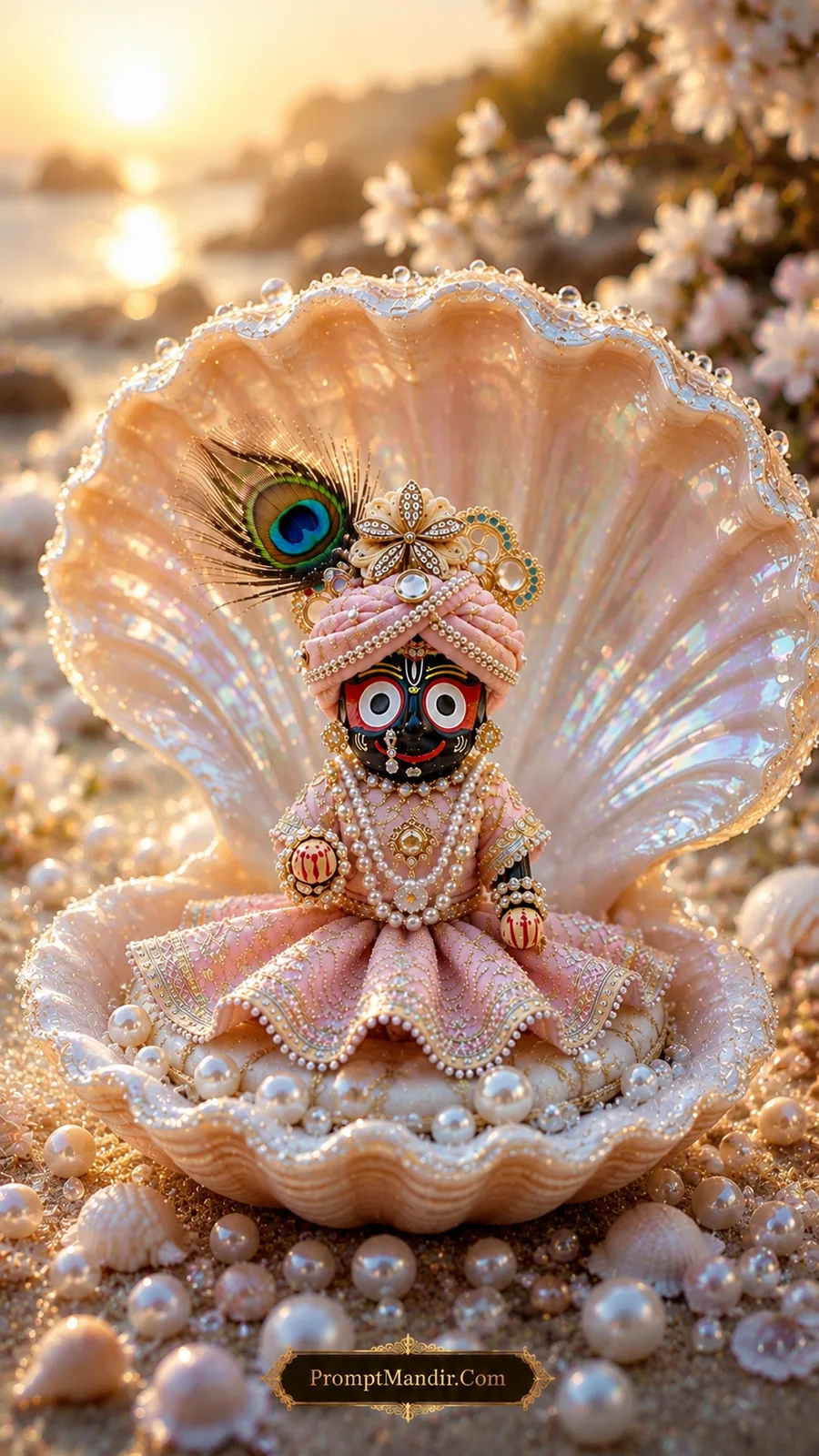
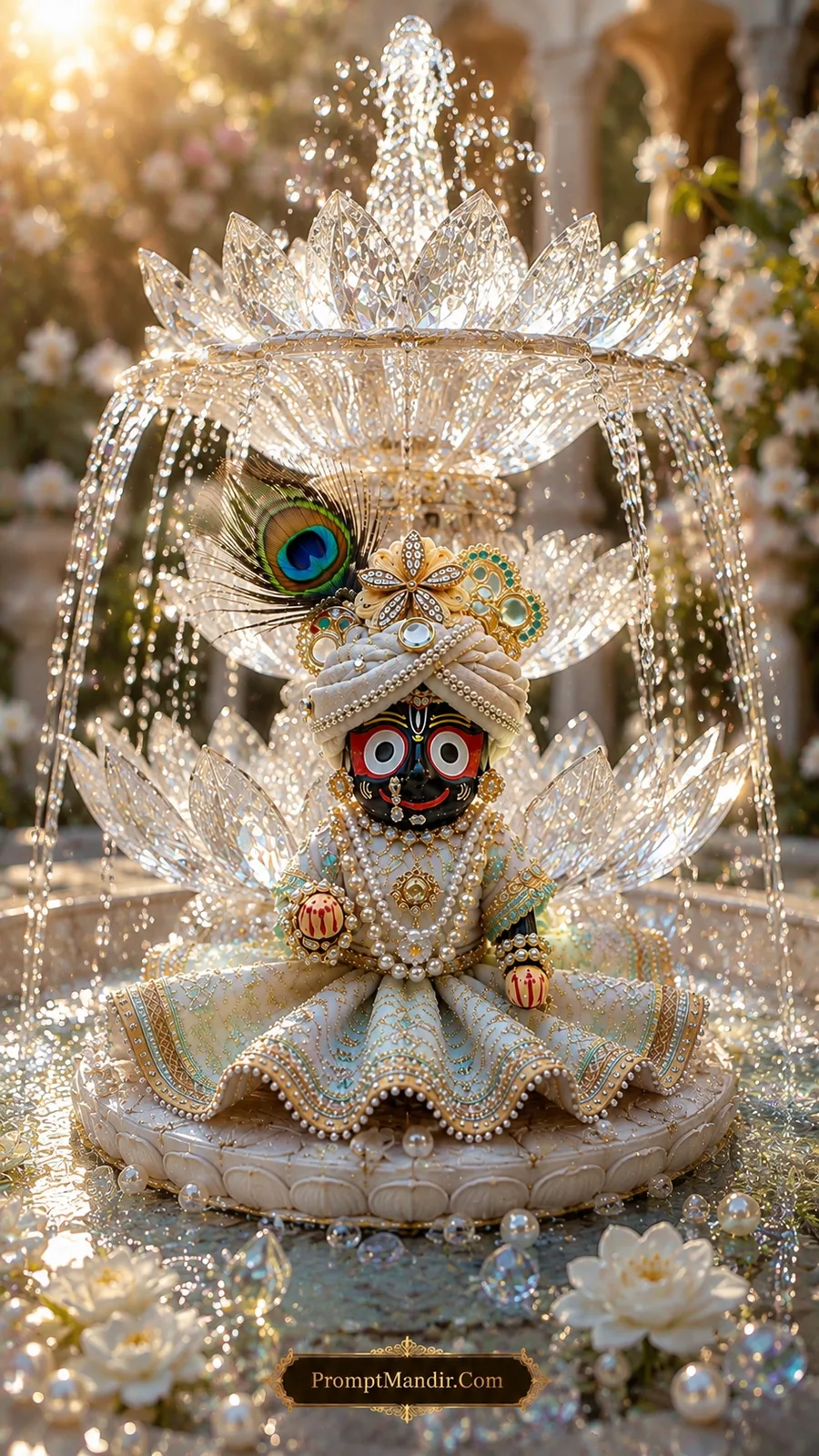
The setting in each Little Jagannath Collection prompt is a container. A crystal lantern with its glass door open. A giant magnolia flower with thick, velvety petals. A lotus leaf curving overhead like a canopy. A blooming pink lotus that cradles the deity in its center. A crystal lotus fountain with sparkling water. Each container serves the same purpose. It frames the deity, protects him, and adds a layer of visual luxury. When you write a Little Jagannath Collection prompt, describe the container in as much detail as the deity himself.
Light in the Little Jagannath Collection is always morning light. Golden, warm, and soft. It filters through garden leaves. It catches the edge of a crystal pendant. It makes dewdrops sparkle. It creates a gentle rim light around the baby’s silk turban. This is not the dramatic sunset of the Rath Yatra. It is the intimate, hopeful light of early morning, when the world is still quiet and the day has not yet made any demands. The Little Jagannath Collection uses this light to create a mood of peace.
The foreground in a Little Jagannath Collection image is populated with tiny, meaningful objects. A few scattered pearls. A delicate white petal. A strand of gold embroidery thread. A small brass accessory placed near the deity. These items are not clutter. They are anchors of realism. They give the eye something to discover. In the Little Jagannath Collection, the foreground should feel like a curated still life, each object chosen for its texture and its ability to catch the light.
Depth of field is a technical command as much as an aesthetic one in the Little Jagannath Collection. Ask for a shallow depth of field. An 85mm prime lens effect. The deity must be in razor-sharp focus. The background must dissolve into creamy bokeh. This mimics the look of high-end macro photography and ensures that Baby Jagannath remains the undisputed focal point. The viewer’s eye should have nowhere else to go.
The color palette of the Little Jagannath Collection shifts with each setting but maintains a consistent softness. Pastel mint greens. Ivory whites. Soft aqua. Pastel pink. Turquoise. These are not the saturated saffron and crimson of the Rath Yatra. The Little Jagannath Collection uses a gentler spectrum, suited to its quieter mood. Gold is still present, but it is antique and subdued, catching the morning light rather than blazing under a festival sun.
Frequently Asked Questions
What is the core idea behind the Little Jagannath Collection?
It is an exploration of intimacy and scale. The Little Jagannath Collection takes the same deity who appears colossal during the Rath Yatra and presents him as a small, precious infant resting in a flower, a lantern, or a garden. The goal of the Little Jagannath Collection is to create a feeling of personal, tender devotion.
How does the Little Jagannath Collection differ from the Jagannath Rath Yatra Collection?
The Rath Yatra Collection is about grandeur, crowds, chariots, and cosmic scale. The Little Jagannath Collection is about silence, closeness, and the texture of silk, crystal, and petals. One roars. The other whispers. Both belong to the same deity, but the Little Jagannath Collection offers a completely different emotional experience.
Why are materials like crystal, pearl, and velvet so important in the Little Jagannath Collection?
Because the scale is small, every surface becomes significant. A single dewdrop on a lotus petal takes on visual weight. The Little Jagannath Collection relies on material precision to create a sense of luxury and realism. The viewer must feel they could reach out and touch the velvet cushion or the cool crystal lantern.
Can the iconography of Baby Jagannath be changed in the Little Jagannath Collection to look more like a realistic human infant?
No. The iconography must remain authentic. The round eyes, the dark polished face, the red smile, and the tilak are essential markers of identity. The Little Jagannath Collection preserves these features while presenting the deity at a child’s scale.
What type of lighting works best for the Little Jagannath Collection?
Soft, warm, golden morning light. It should feel like the first hour after sunrise in a garden. The light should create gentle highlights on silk, pearls, and dew. Harsh shadows and dramatic contrast belong to a different collection, not the Little Jagannath Collection.
What role do the containers play in the Little Jagannath Collection?
Each container, whether a crystal lantern or a magnolia flower, frames the deity and adds a layer of protection and preciousness. The container suggests that this small god is a treasure, something to be kept safe and admired. In the Little Jagannath Collection, the container is as important as the figure it holds.
How should the background be described in a Little Jagannath Collection prompt?
As softly blurred with creamy bokeh. The background should suggest a garden, a lotus pond, or a temple pavilion without showing it in sharp detail. This keeps the focus on the deity and mimics the look of high-end macro photography, which is the signature style of the Little Jagannath Collection.
What foreground details enhance a Little Jagannath Collection composition?
Scattered pearls, white flower petals, tiny dew droplets, delicate brass accessories, and soft moss. These elements add texture and depth. They also create a sense of a curated, devotional still life within the Little Jagannath Collection image.
Is the Little Jagannath Collection suitable for children’s devotional spaces?
Yes. The small scale, soft colors, and gentle mood of the Little Jagannath Collection make it particularly appropriate for nurseries, children’s prayer rooms, and any space where a tender, approachable image of the divine is desired.
How does the Little Jagannath Collection connect to the larger tradition of Jagannath worship?
Jagannath worship already includes the idea of the deity as a beloved child. The Little Jagannath Collection extends that idea visually, placing the deity in settings that emphasize innocence, protection, and intimate care. It is a natural, heartfelt extension of the Jagannath tradition.
About This Little Jagannath Collection
Sometimes the greatest act of devotion is not a grand procession or a temple ceremony. Sometimes it is the quiet attention paid to something small. A baby sleeping in a flower. A god no bigger than a lantern, dressed in silk and pearls, waiting for the morning light to find him.
The Little Jagannath Collection is a series of prompts for those quiet moments. It shrinks the universe down to a single dewdrop on a lotus petal. It asks the viewer to come close, to notice the embroidery on a tiny turban, to count the pearls scattered on velvet. It is a reminder that the divine can be as present in the miniature as in the massive.
These are not images for the festival day. They are for the morning after. For the ordinary Tuesday when you need to be reminded that someone sacred is nearby, small enough to hold, patient enough to wait for you to finish your tea before you offer your first prayer. The Little Jagannath Collection is that reminder, wrapped in silk and morning light.