Hindu Divine Deities — One Palace, Many Gods
There is a palace that exists in no single temple. It is built from every sanctum, every shikhara, every marble step that has ever been polished by bare feet. Inside it, no deity competes for space. Each has a hall. Each has a throne. Each has enough silence around them to be seen properly. This palace is the setting of the Hindu Divine Deities collection.
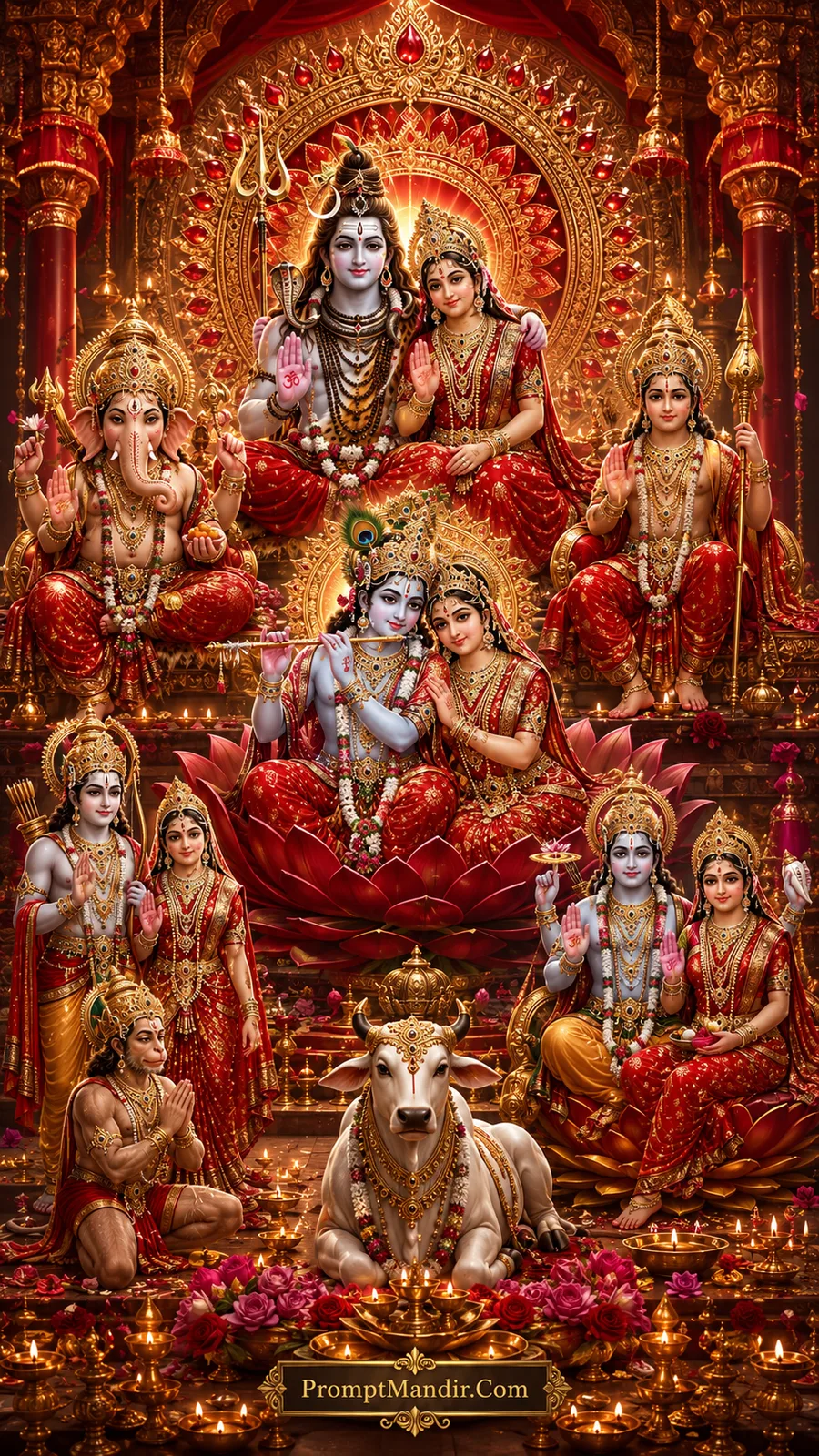
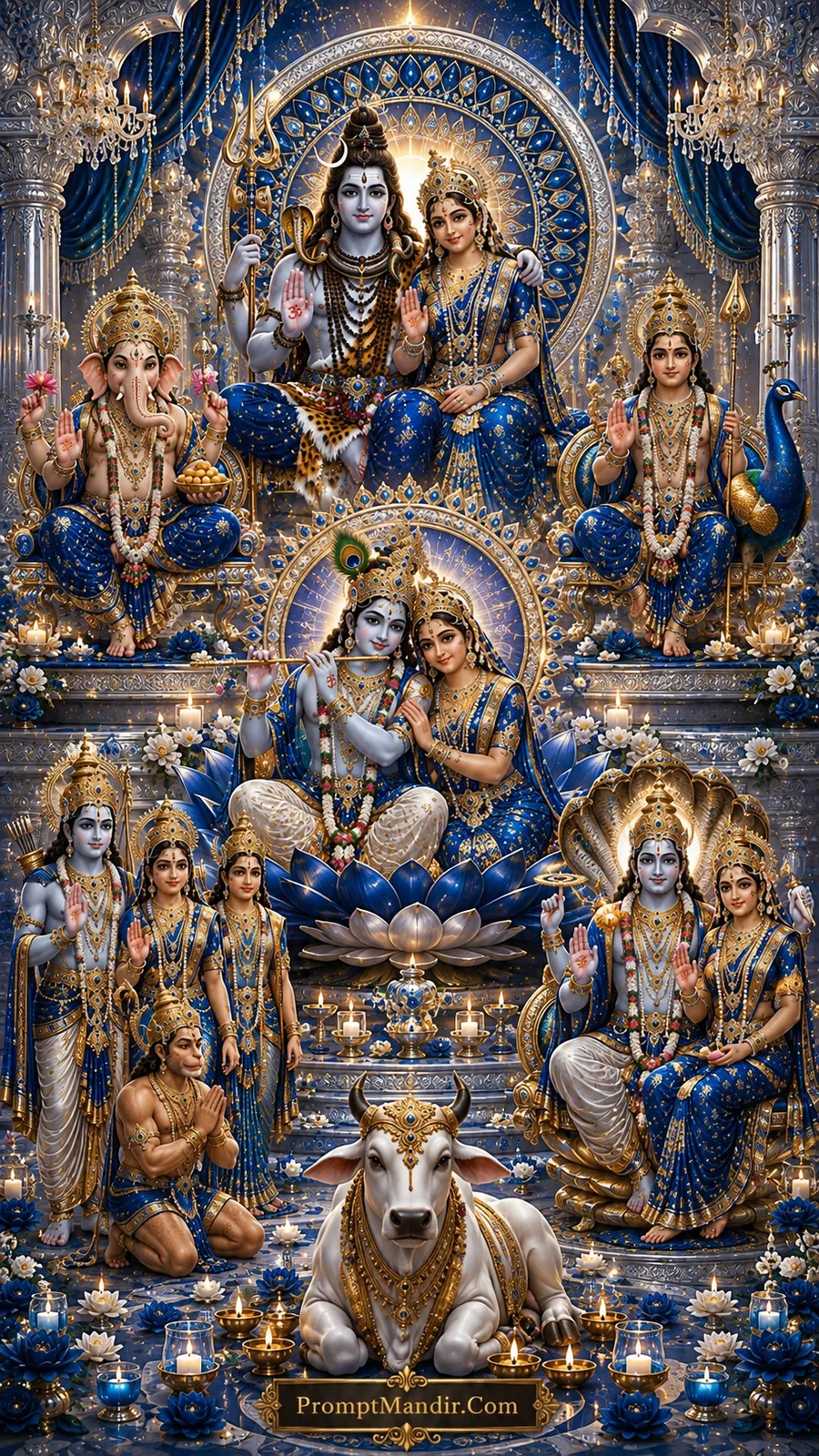
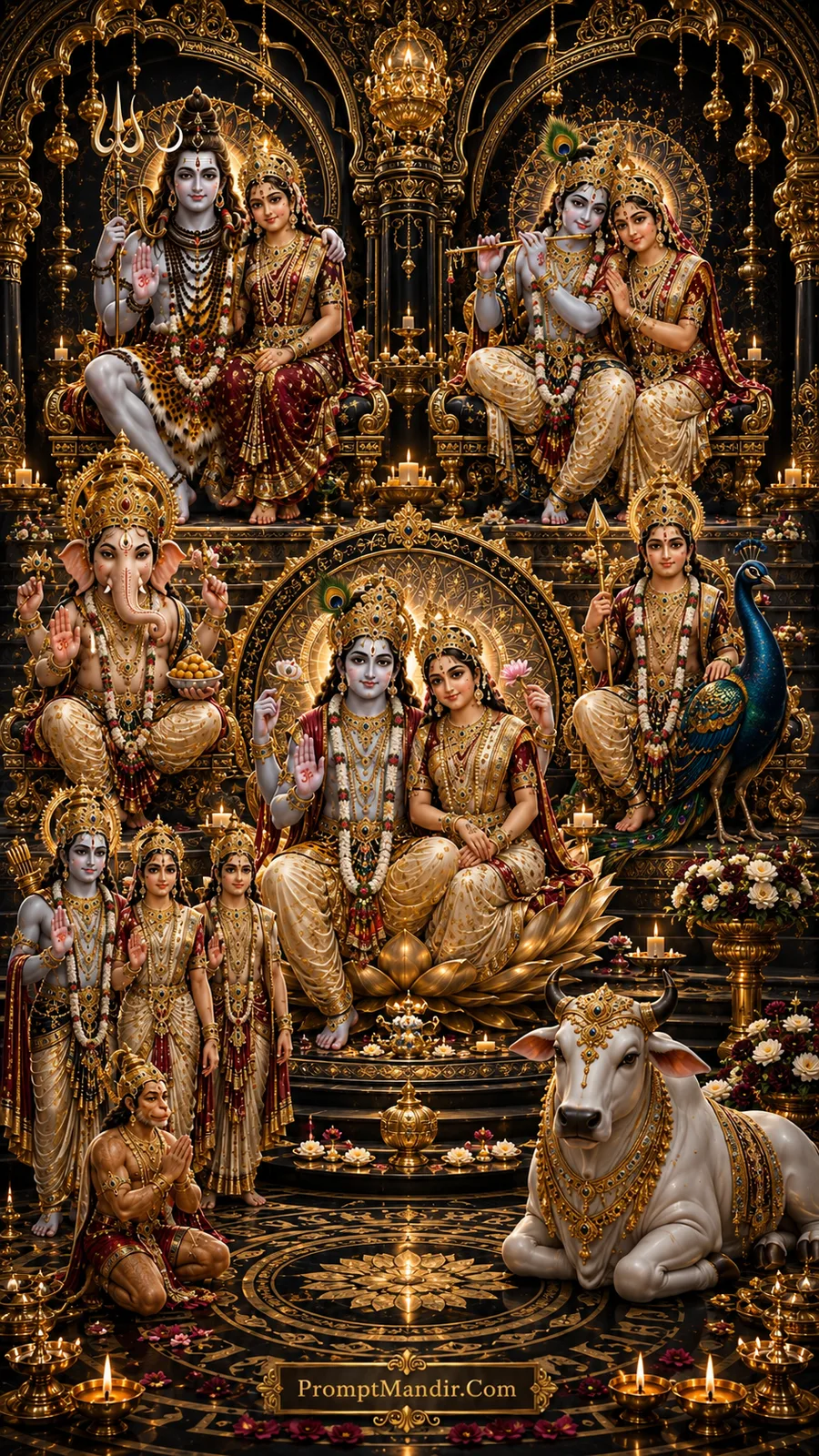
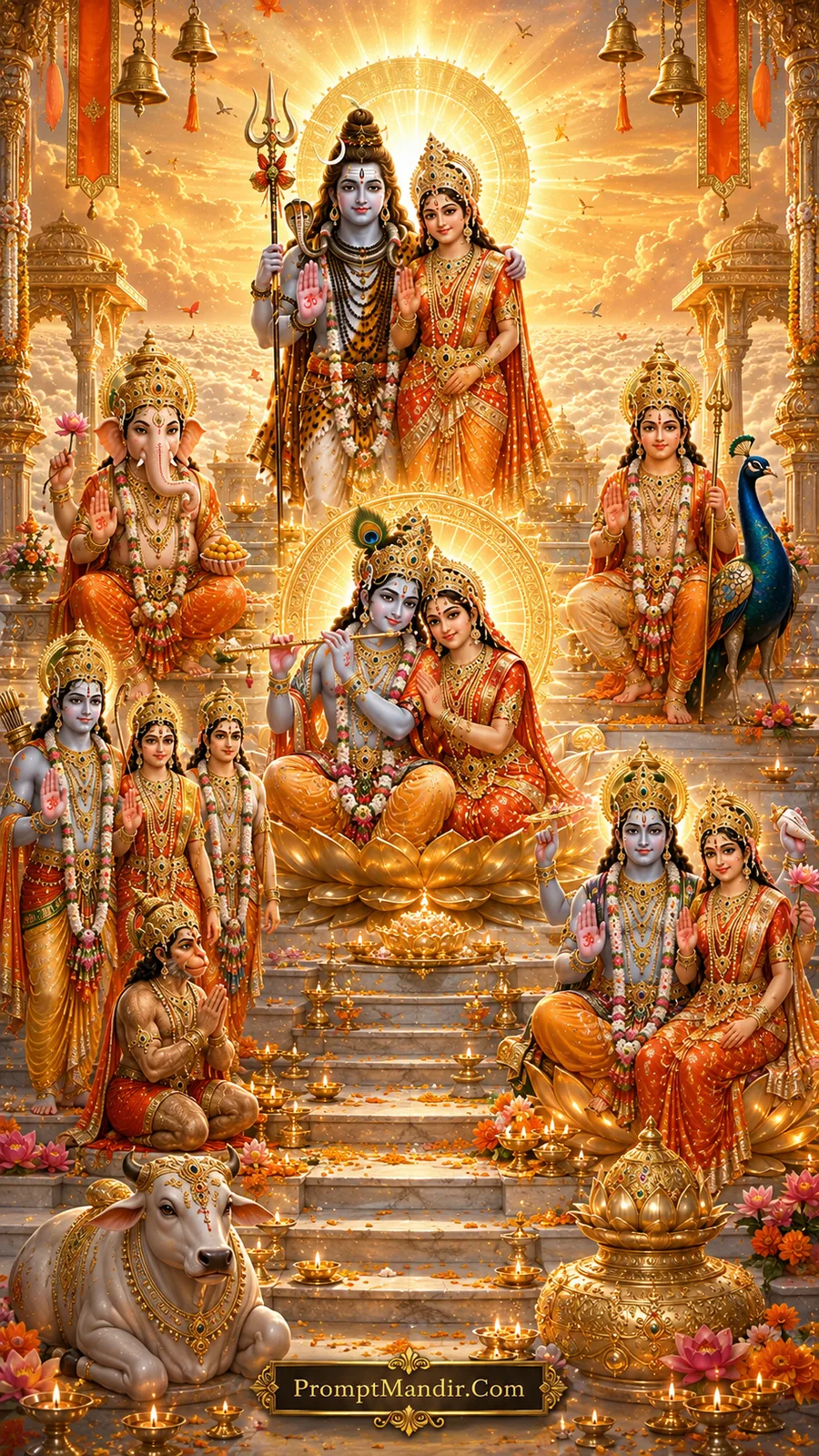
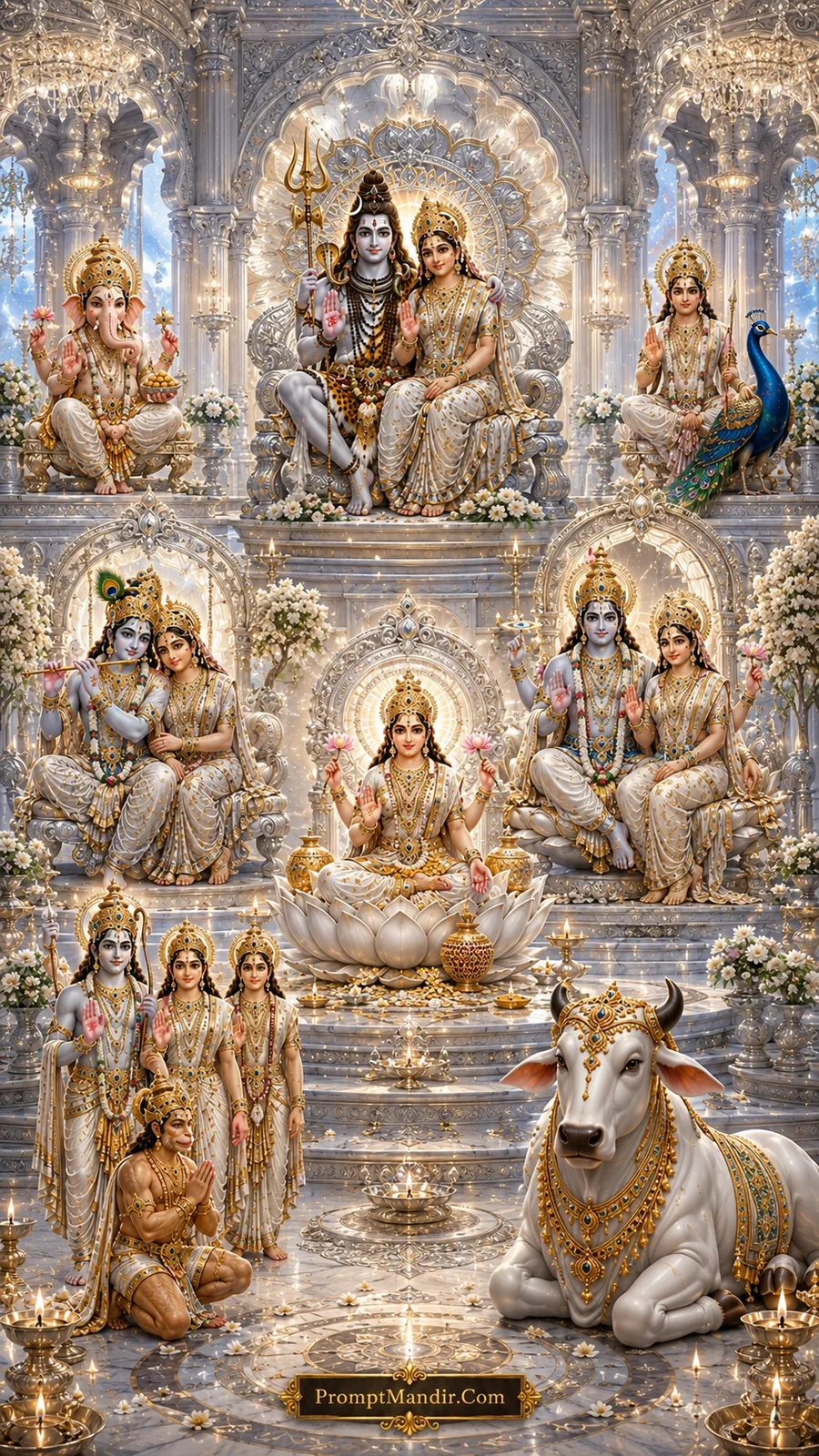
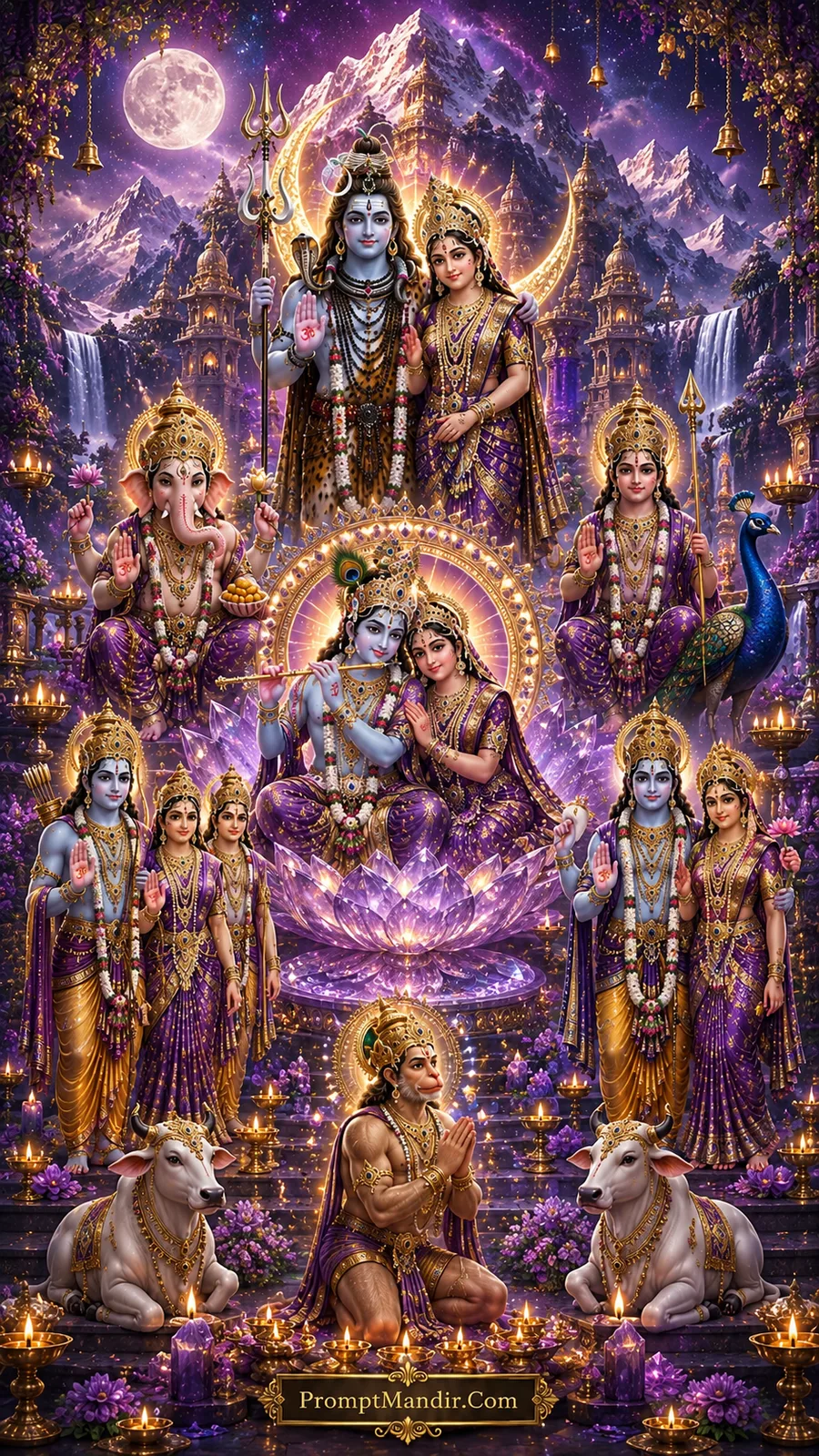
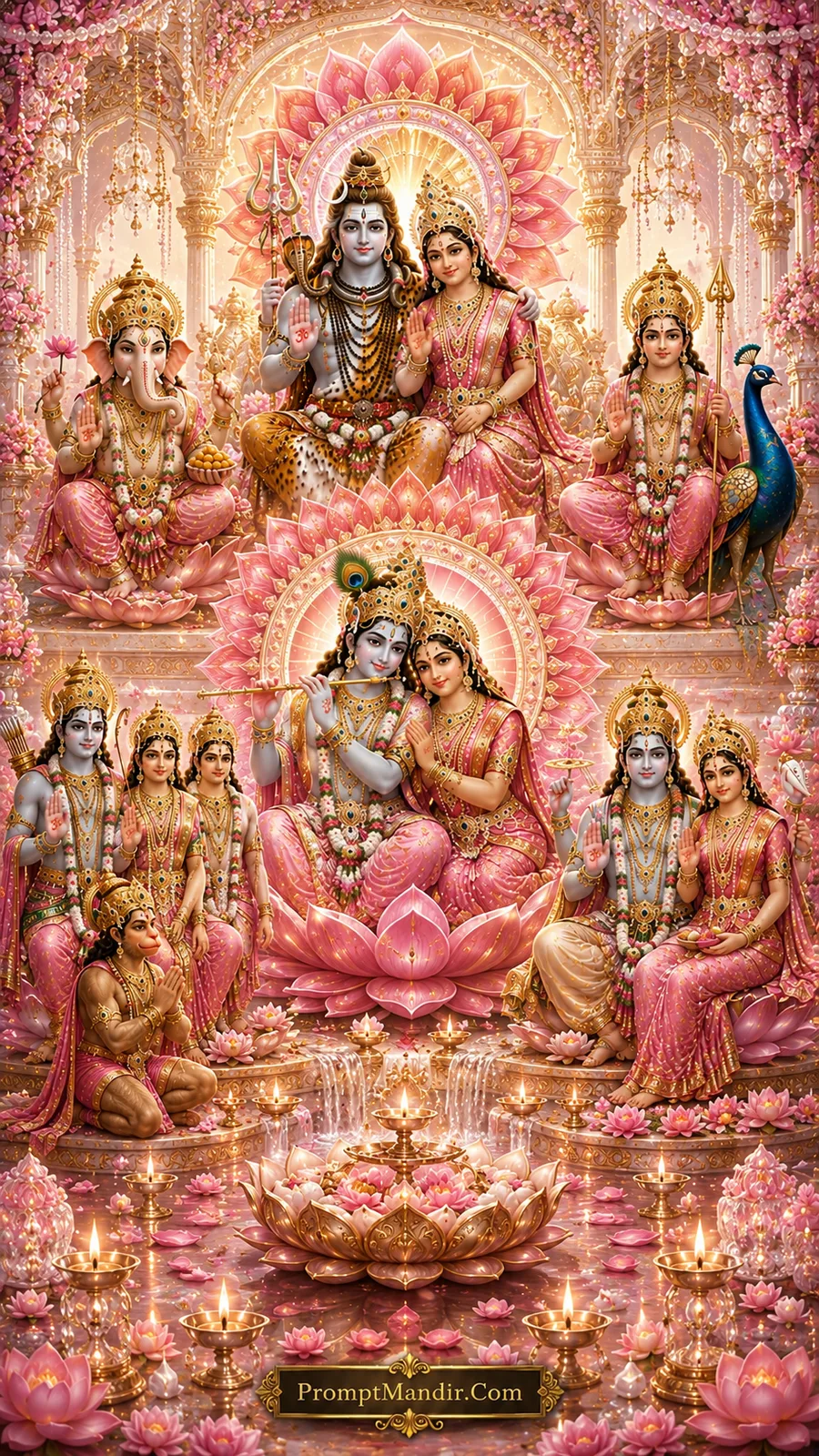
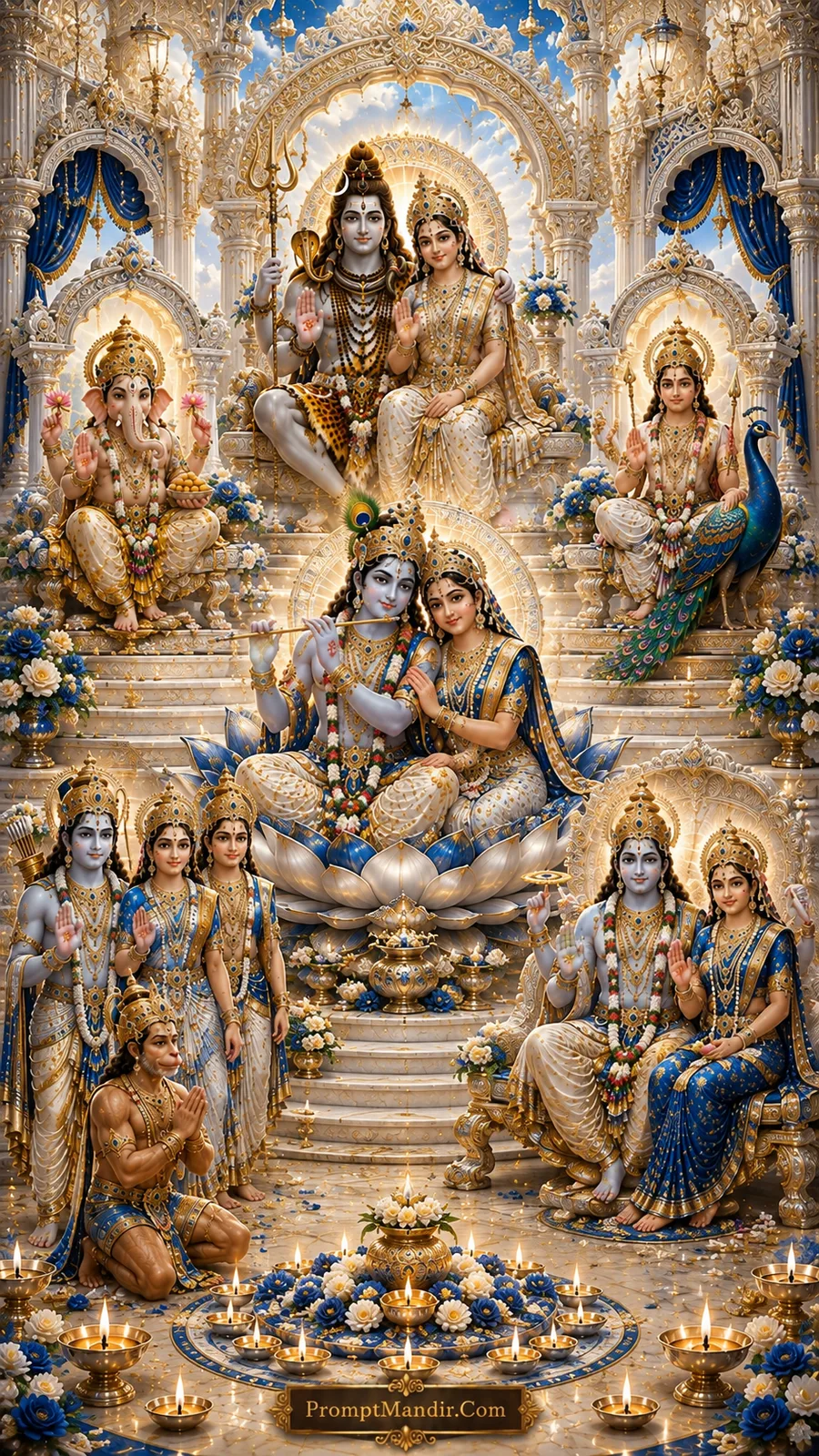
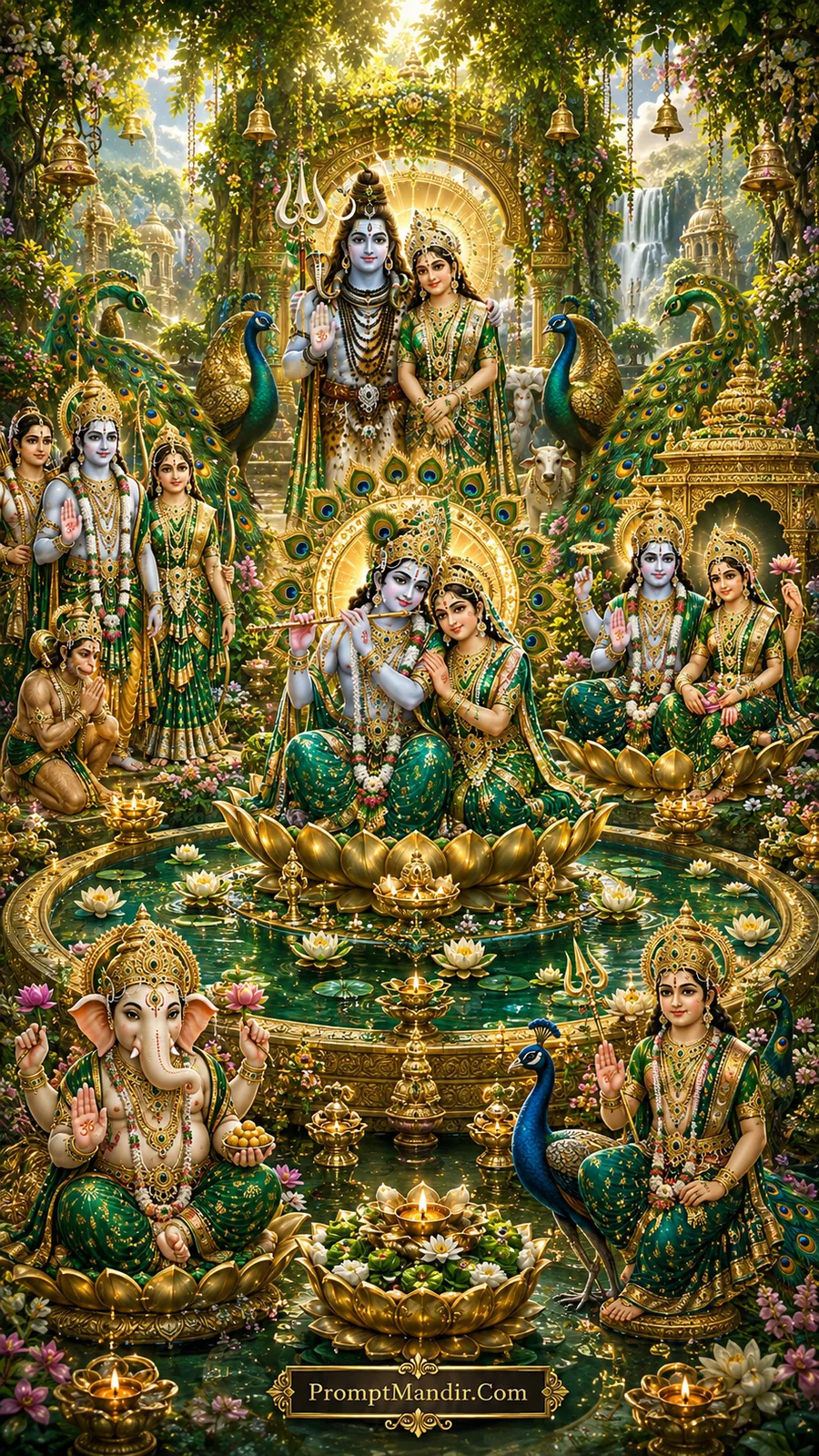
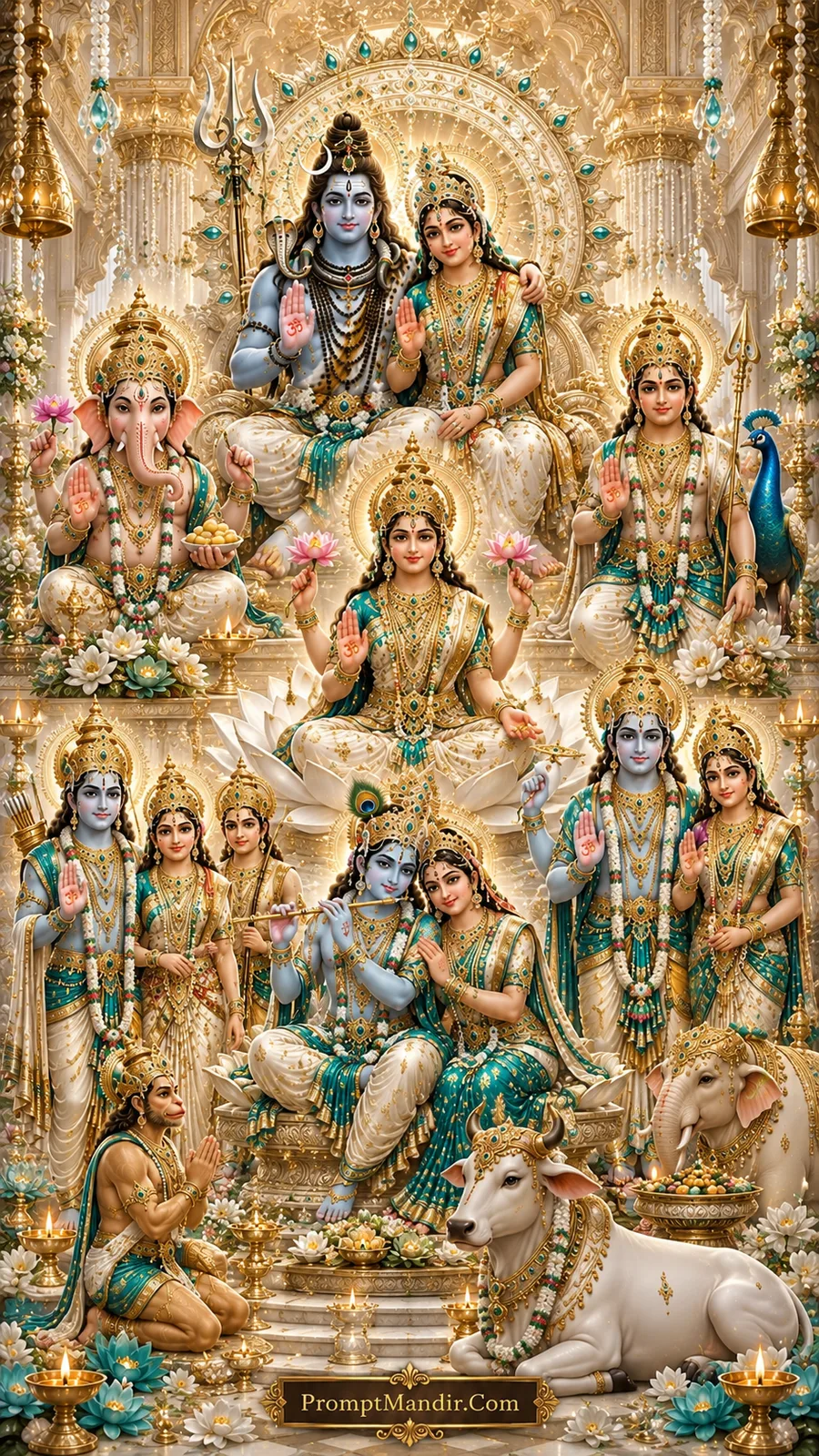
A Hindu Divine Deities image is not a crowded calendar page. It is an architectural composition. The deities are arranged like a royal court, each within their own carved chamber. Shiva and Parvati at the upper center, the first parents of the cosmos. Ganesha and Kartikeya on either side, their thrones balanced like wings. Radha and Krishna at the heart, seated on a layered lotus. Ram Darbar in one lower court. Vishnu and Lakshmi in the other. Nandi resting in the foreground, patient as ever.
The palette shifts with each Hindu Divine Deities prompt. Pearl cream and sapphire blue. Obsidian black and antique gold. Rose pink and champagne. Teal and turquoise. But the logic remains the same. The architecture is symmetrical. The halos are circular. The diyas are placed in rows. The lotus motifs repeat like a silent chant carved into stone.
What makes the Hindu Divine Deities collection so difficult and so rewarding is its demand for space. The prompt must insist on generous breathing room between every group. The moment the figures crowd together, the palace collapses into a poster. But when the spacing is right, the Hindu Divine Deities image becomes what it is meant to be. A darshan of the entire divine family, arranged with the care of a master architect and the devotion of a lifelong bhakt.
VIEW PROMPT
VIEW PROMPT
VIEW PROMPT
VIEW PROMPT
VIEW PROMPT
VIEW PROMPT
VIEW PROMPT
VIEW PROMPT
VIEW PROMPT
VIEW PROMPT
Explore More AI Prompt Collections
Discover more AI prompt collections covering devotional artwork, spiritual illustrations, divine characters, temple-inspired scenes, cultural designs, and creative visual concepts.
Browse related categories to find fresh inspiration for generating unique AI images, wallpapers, posters, social media graphics, and digital artwork.
Prompt Customization Tips
Spacing is the first law of the Hindu Divine Deities collection. Every prompt must state clearly that the deities are separated, each in their own architectural zone. The composition needs generous negative space. Without it, the image becomes congested and unreadable. The Hindu Divine Deities collection is built on the idea that divinity needs room to breathe.
The palace architecture in a Hindu Divine Deities prompt must be described as if it were the subject. Tall carved pillars. Ornate arches. Crystal chandeliers. Hanging bells. Polished marble floors that reflect the light. The palace is not a backdrop. It is the container that makes the gathering possible. The Hindu Divine Deities collection treats the architecture as sacred space, not decoration.
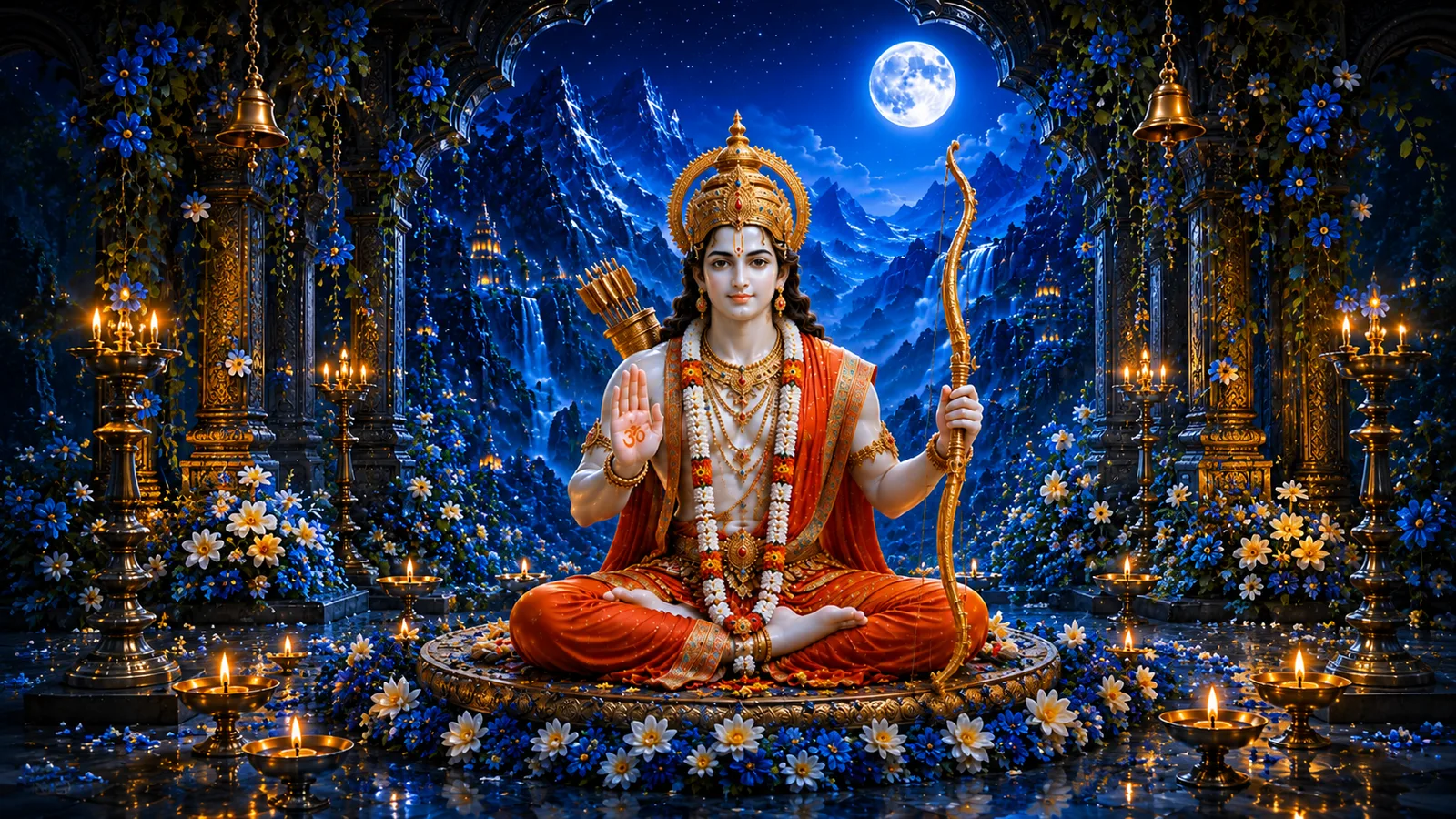
Every deity group in a Hindu Divine Deities composition must have a clear focal identity. Shiva and Parvati share a throne and a circular halo. Ganesha sits on his own pedestal. Kartikeya stands beside his peacock. Radha and Krishna are inseparable, layered on a lotus throne. Ram, Sita, and Lakshman form a distinct trio, with Hanuman kneeling before them. Vishnu and Lakshmi mirror the Ram Darbar on the opposite side. The Hindu Divine Deities prompt must name each group and define their position.
The halos in a Hindu Divine Deities artwork are not optional. Each major deity or divine couple should have a circular mandala or lotus-inspired halo behind them. These halos separate the sacred figures from the surrounding architecture. They create a visual rhythm. The Hindu Divine Deities collection uses halos the way a temple uses sanctum lamps. They mark the presence of the divine.
Lighting in the Hindu Divine Deities collection must be soft and even. The palace is filled with diyas, chandeliers, and the faint glow of dawn or dusk through the arches. There should be no harsh shadows. Every face must be clearly visible. The Hindu Divine Deities prompt asks for warm golden illumination balanced with cool blue or teal ambience. The result is a scene that feels both celestial and intimate.
The color palette of a Hindu Divine Deities image is never random. It is chosen to unify the entire composition. Sapphire blue with silver and champagne gold. Obsidian black with antique gold and deep burgundy. Pearl cream with rose pink and ivory. The palette appears in the clothing, the jewelry, the lotus flowers, the silk drapes, and the marble itself. The Hindu Divine Deities collection uses color to bind many figures into one harmonious vision.
The foreground in a Hindu Divine Deities composition is ceremonial. Lotus flowers, brass diyas, silver vessels, and scattered petals arranged with precision. If Nandi is present, he sits in the lower foreground, adorned with gold ornaments and garlands. The foreground is not cluttered. It is curated. The Hindu Divine Deities prompt must specify that every object belongs to the ritual space.
Frequently Asked Questions
What is the Hindu Divine Deities collection?
It is a series of luxurious devotional compositions that gather multiple Hindu deities inside a single celestial palace. The Hindu Divine Deities collection arranges Shiva, Parvati, Ganesha, Kartikeya, Radha, Krishna, Ram, Sita, Lakshman, Hanuman, Vishnu, and Lakshmi in separate architectural zones within one harmonious frame.
Why is spacing so important in the Hindu Divine Deities collection?
Because the collection is built on the idea of a royal palace, not a crowded altar. Every deity needs their own breathing room. The Hindu Divine Deities collection insists on generous negative space so that each divine figure remains clearly visible and distinct.
What is the role of the palace architecture in a Hindu Divine Deities prompt?
The architecture is the organizing principle. Tall pillars, carved arches, chandeliers, and polished floors create the chambers in which the deities are placed. The Hindu Divine Deities collection uses the palace to give structure to the gathering, separating each group while keeping them unified.
How are the deities arranged in a Hindu Divine Deities composition?
Shiva and Parvati occupy the upper center. Ganesha and Kartikeya frame them on the left and right. Radha and Krishna sit at the heart of the image. Ram Darbar and Vishnu-Lakshmi balance the lower sections. The Hindu Divine Deities collection follows this symmetrical, hierarchical arrangement in every prompt.
Why are halos important in the Hindu Divine Deities collection?
Halos mark the divine presence. They separate the sacred figures from the surrounding palace. The Hindu Divine Deities collection uses circular mandala halos behind every major deity or couple, creating a rhythmic visual structure and a sense of celestial authority.
What color palettes are used in the Hindu Divine Deities collection?
The collection moves through several palettes. Pearl cream and sapphire blue. Obsidian black and antique gold. Rose pink and champagne. Teal and turquoise. The Hindu Divine Deities collection uses these palettes to create different moods while maintaining the same architectural logic.
Can the Hindu Divine Deities collection include Nandi and the peacock?
Yes. Nandi often appears in the foreground, adorned with gold ornaments. Kartikeya’s peacock accompanies him on the upper right. The Hindu Divine Deities collection includes these sacred animals as part of the divine family, giving the composition warmth and life.
What lighting works best in a Hindu Divine Deities prompt?
Soft, even, and warm. The palace should glow with diyas and chandeliers, but no face should fall into harsh shadow. The Hindu Divine Deities collection asks for balanced illumination that highlights every deity’s expression and jewelry while preserving the celestial atmosphere.
Is the Hindu Divine Deities collection suitable for large-format printing?
Yes. The detailed architecture, symmetrical composition, and rich color palettes of the Hindu Divine Deities collection make it ideal for large devotional posters. The images are designed to be viewed slowly, with the eye traveling from one divine group to the next.
What should be avoided in a Hindu Divine Deities prompt?
Crowding. Distorted faces. Uneven lighting. Random placement of deities. Modern objects. The Hindu Divine Deities collection requires order, symmetry, and reverence. Anything that disrupts the palace’s visual harmony must be removed.
About This Hindu Divine Deities Collection
There is a moment in a large temple when you stand at the center and realize that every direction holds a god. To your left, a shrine. To your right, another. Above you, a shikhara reaching toward the sky. Before you, the flicker of a hundred lamps.
The Hindu Divine Deities collection is that moment, expanded into a single frame. It brings together the great deities of the Hindu tradition not as a crowd, but as a family. Each has their place. Each has their throne. Each glows with their own light.
These images are for those who want more than a single darshan. They want the whole pantheon, arranged with the care of a temple architect and the warmth of a home altar. The Hindu Divine Deities collection is a palace you can carry in your pocket, a gathering you can visit whenever you need to remember how vast and how close the divine truly is.