
Shiv Shakti Divine Darshan — Where the Divine Couple Walks Among Us
There is a version of Shiva and Parvati that most art keeps at a distance. They sit on golden thrones. They ride Nandi through the clouds. They hold court on Kailash with the Ganga thundering from Shiva’s hair. But there is another version. A quieter one. A version that does not announce itself with thunder and cosmic fire. It arrives barefoot. It carries a kanwar on its shoulder. It sits among villagers during a monsoon bhajan and claps in rhythm with the dholak.
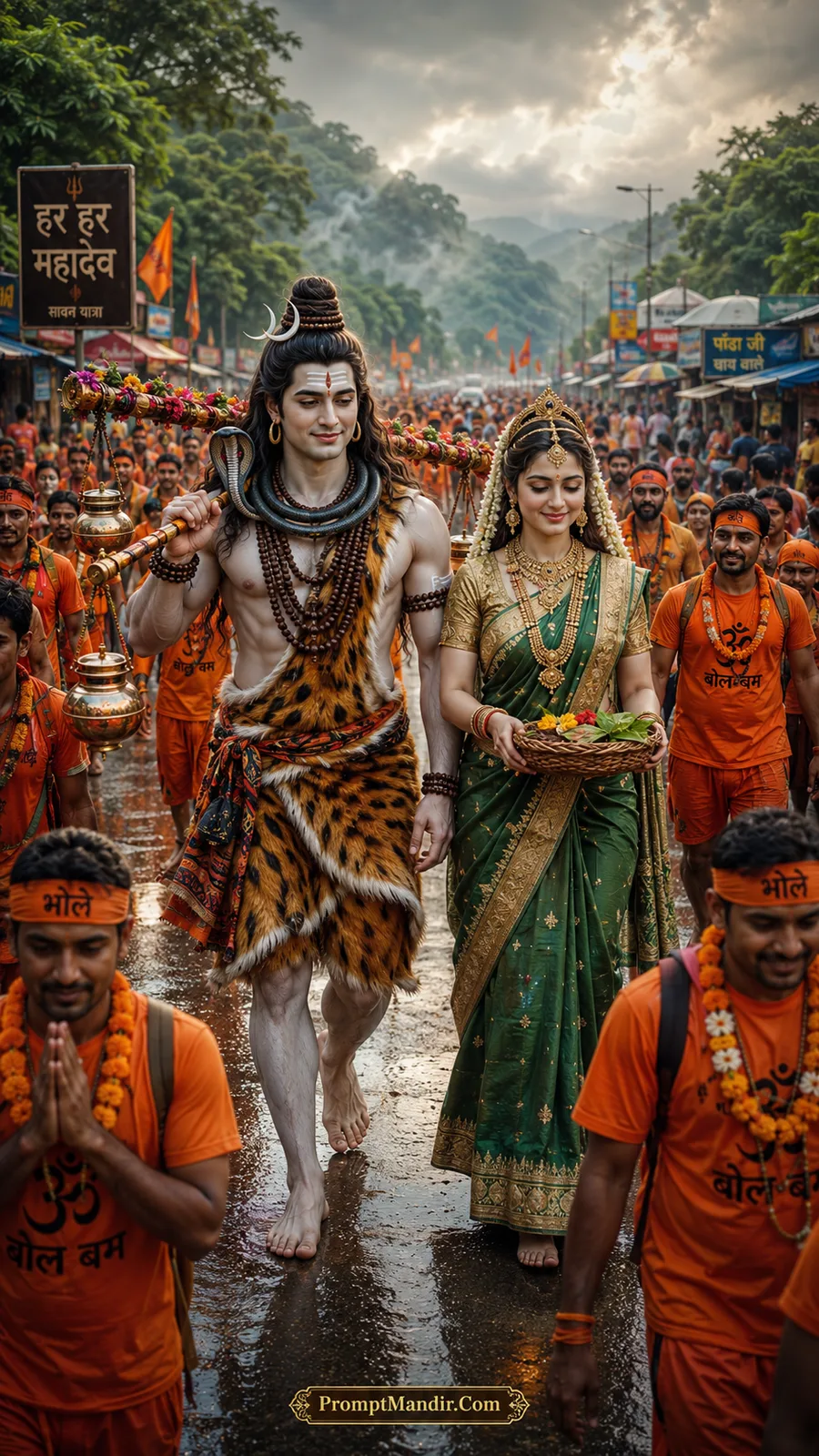
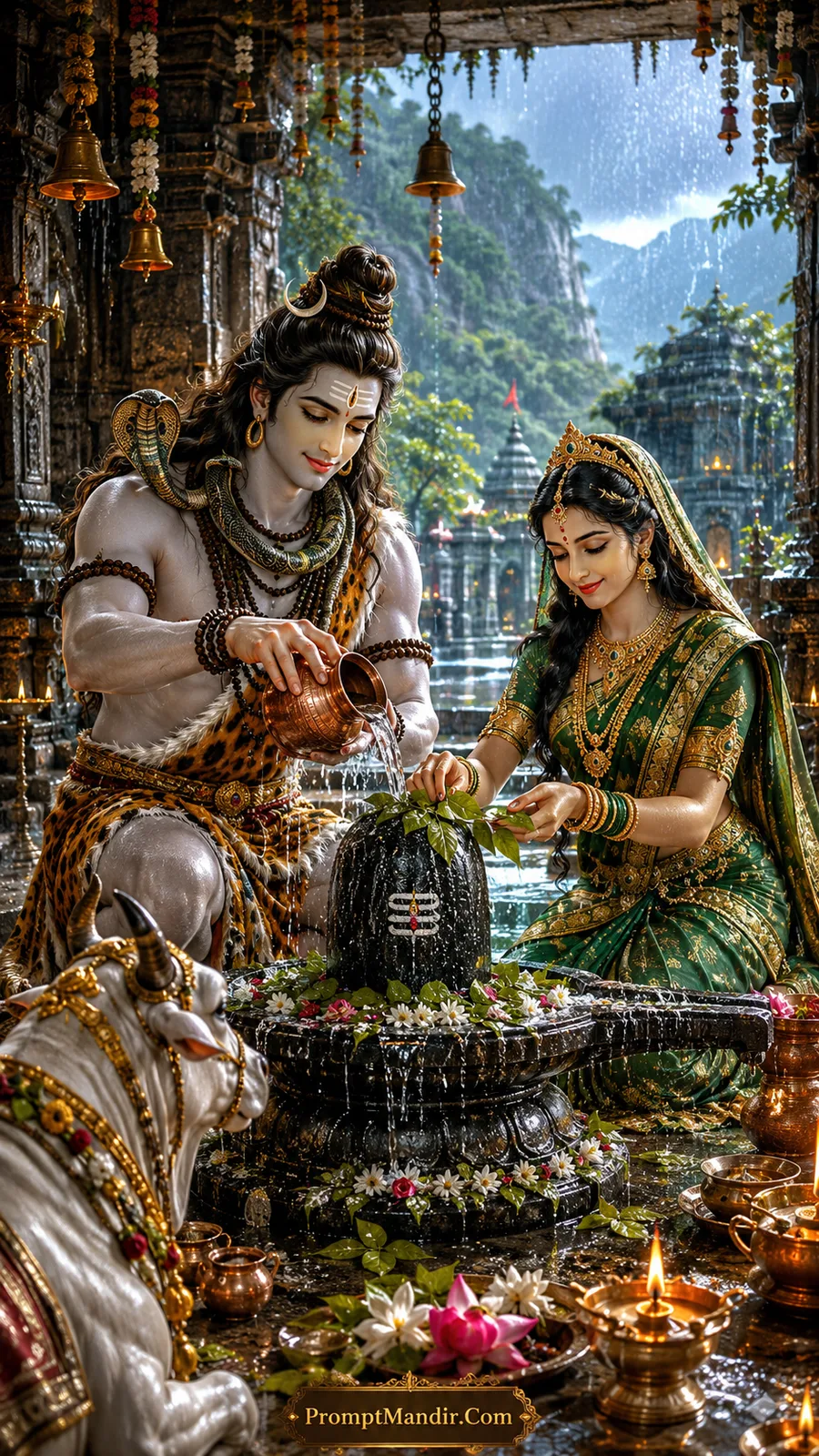
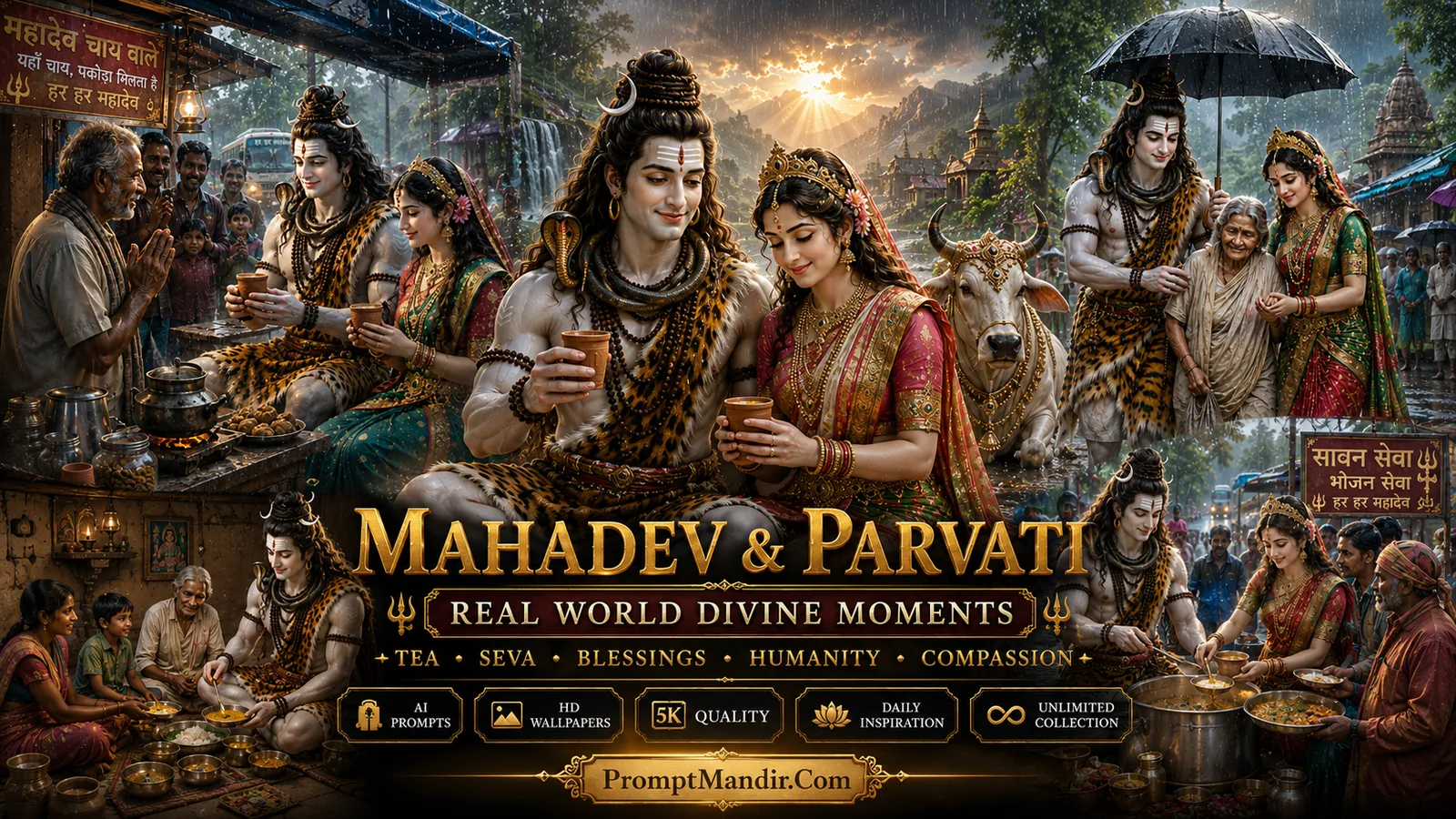
The Shiv Shakti Divine Darshan collection belongs to this second version. These are not images of gods demanding worship. They are images of the divine choosing to be ordinary. Shiva kneeling before a Shivling with a copper kalash in his hands. Parvati placing belpatra leaves one by one, her anklets catching the lamplight. The two of them walking with thousands of Kanwariyas on a rain-soaked road, indistinguishable from the pilgrims around them except for the peace in their eyes.
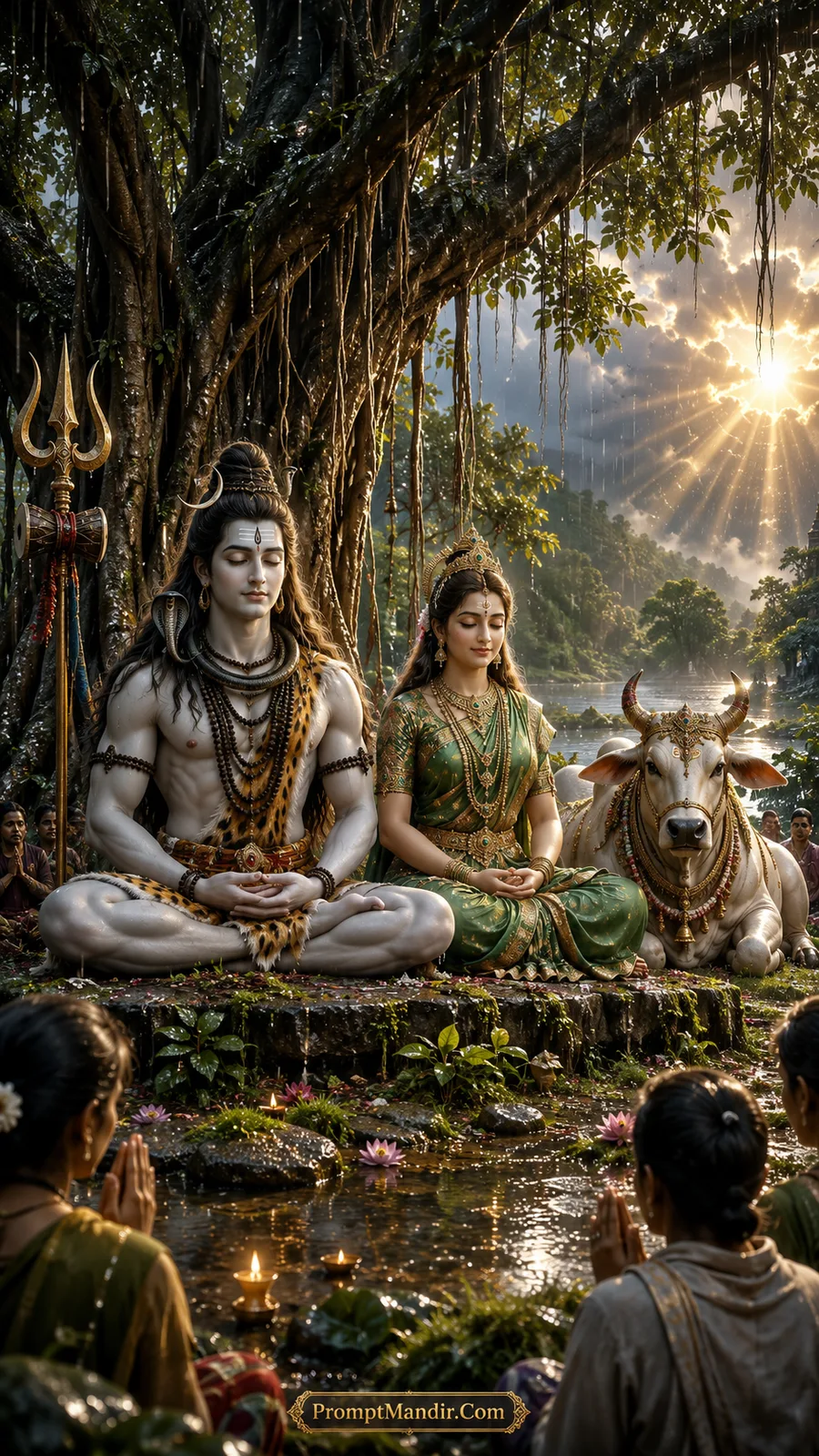
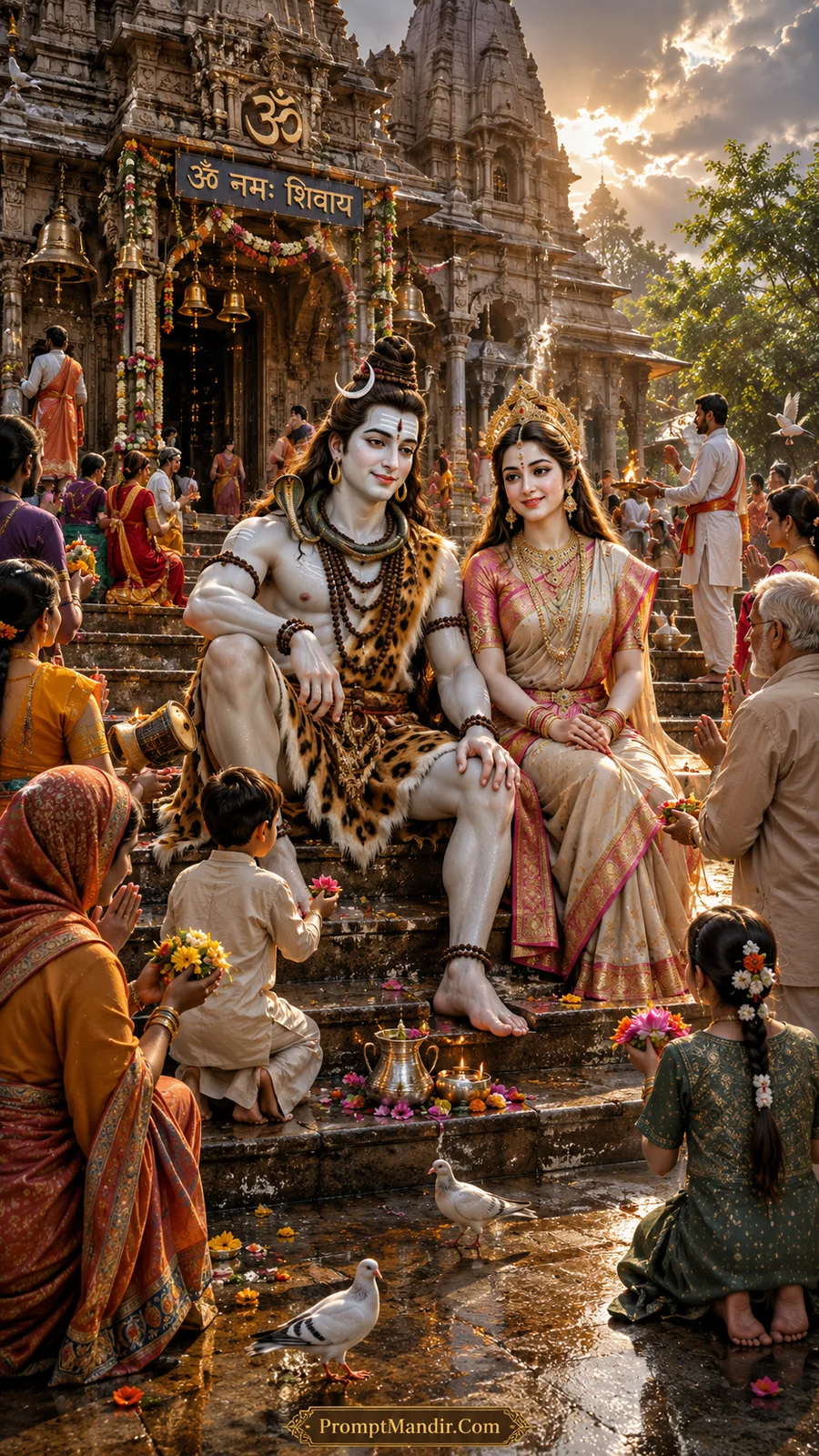
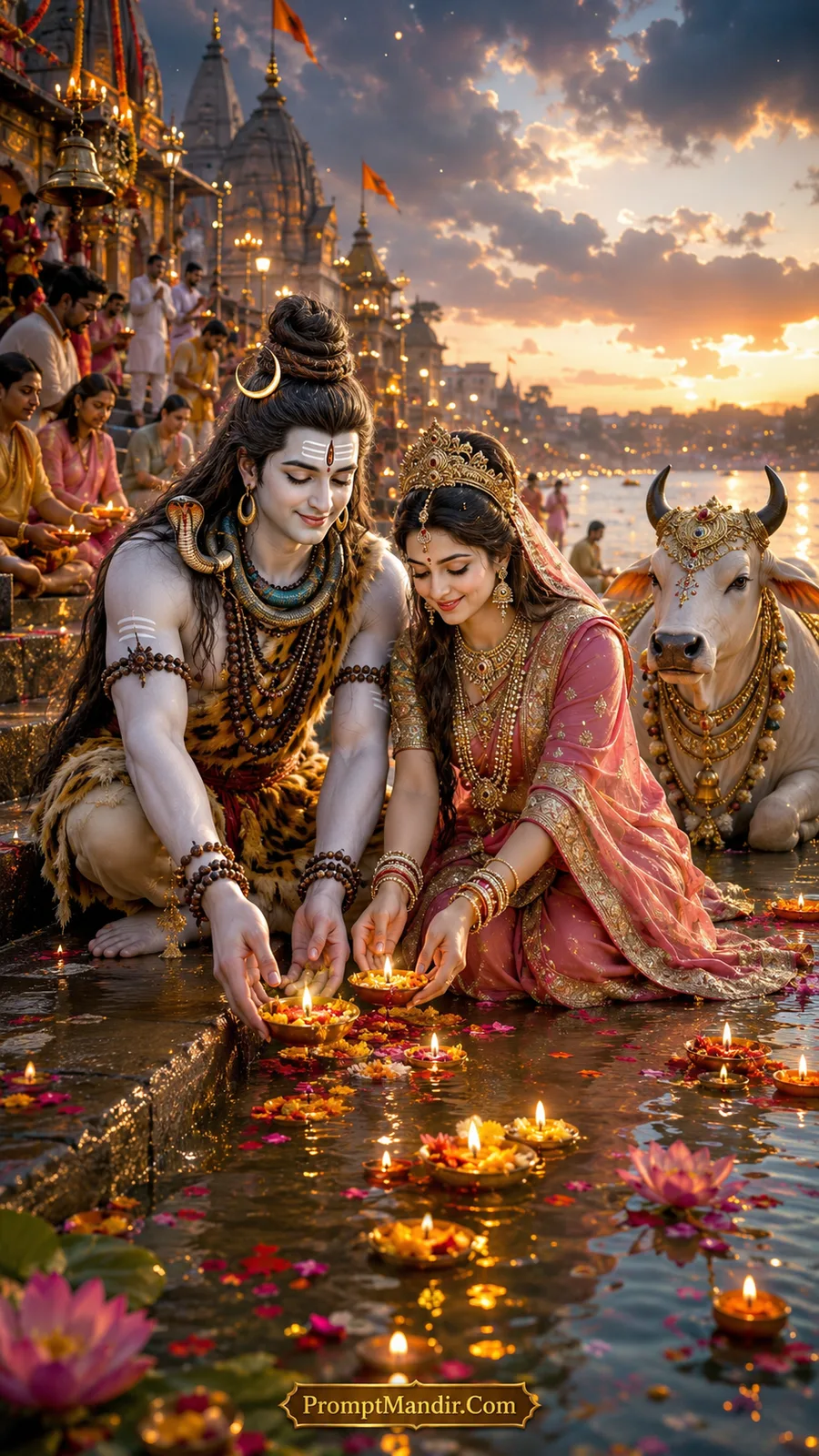
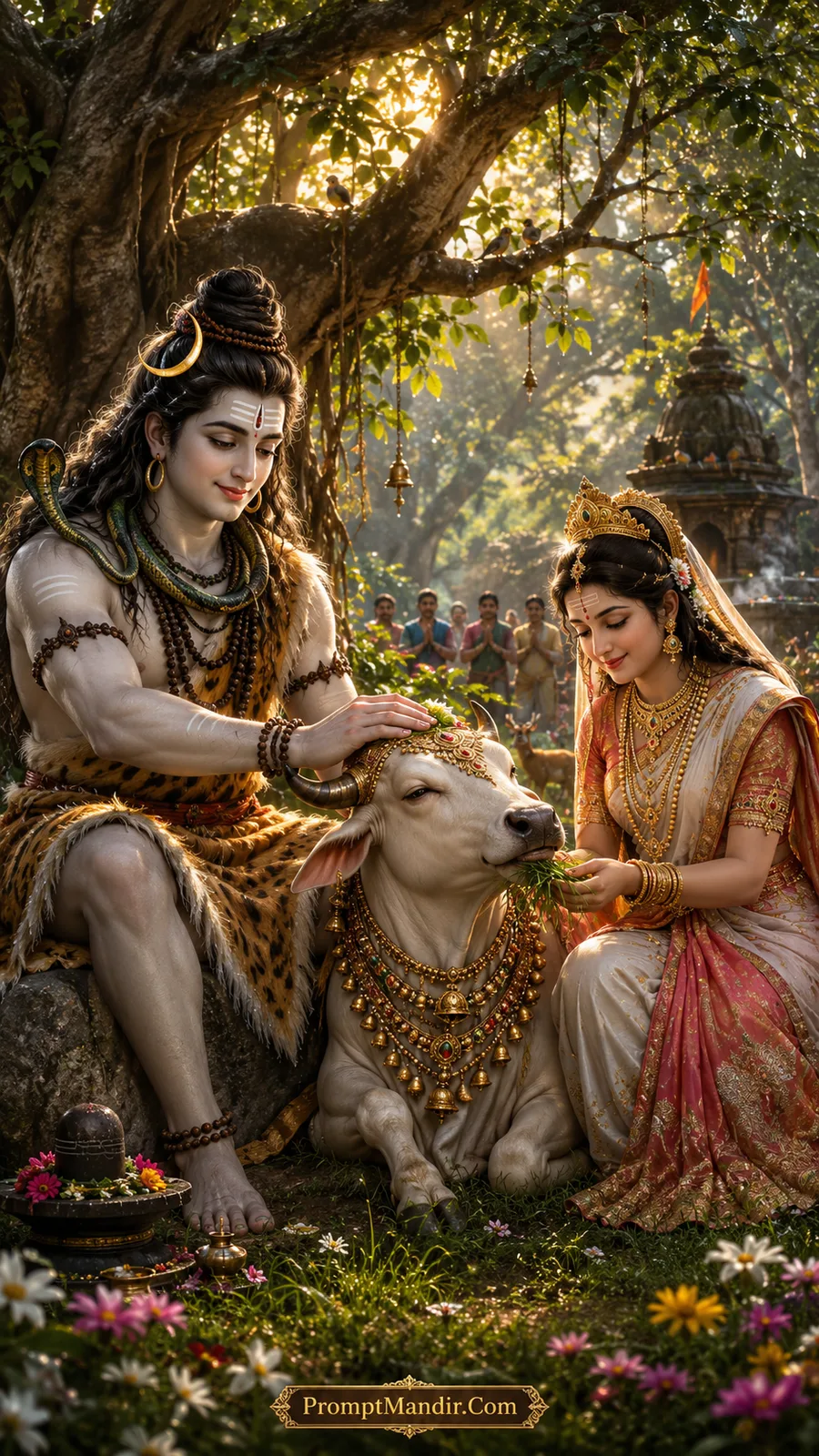
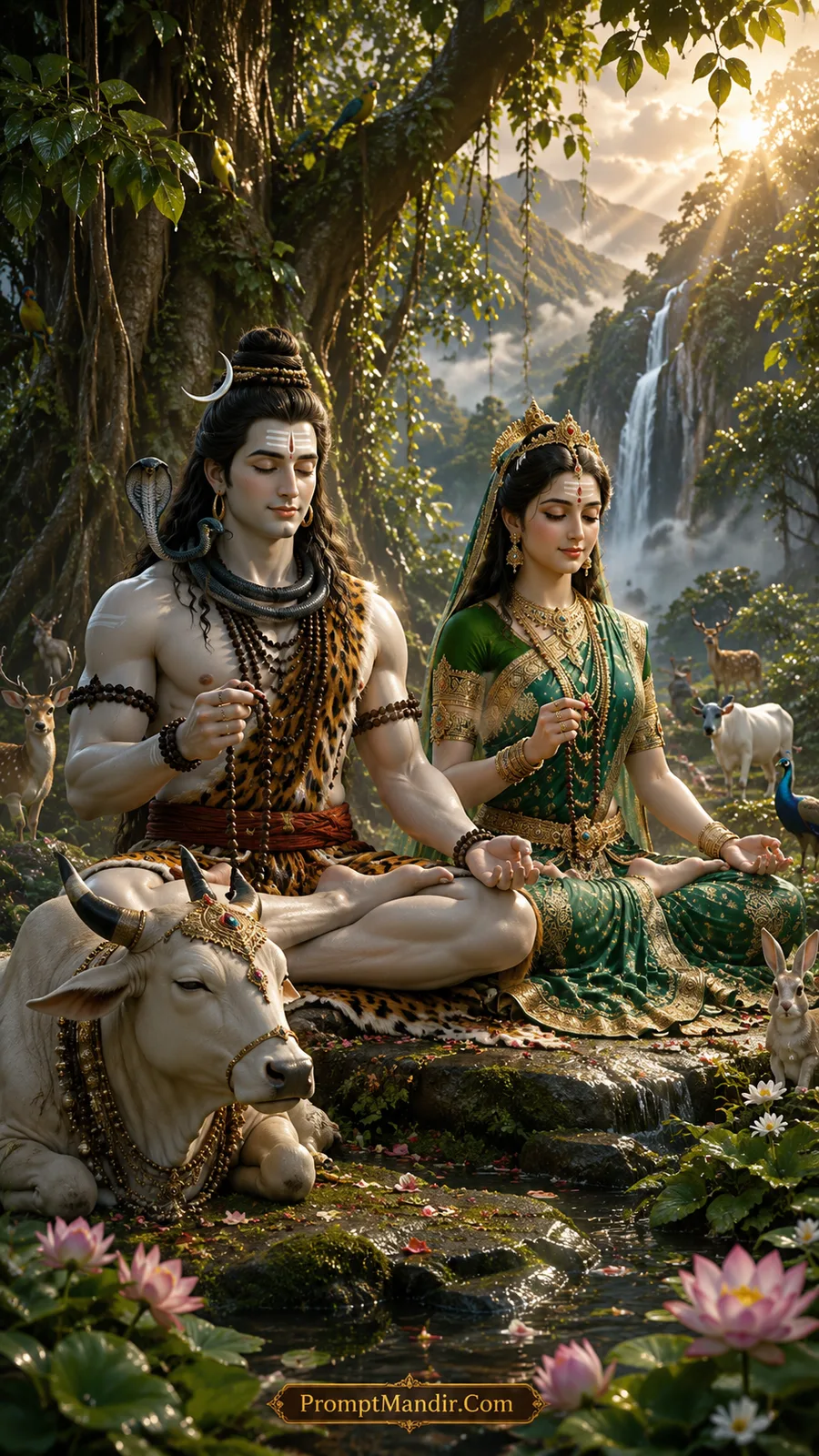
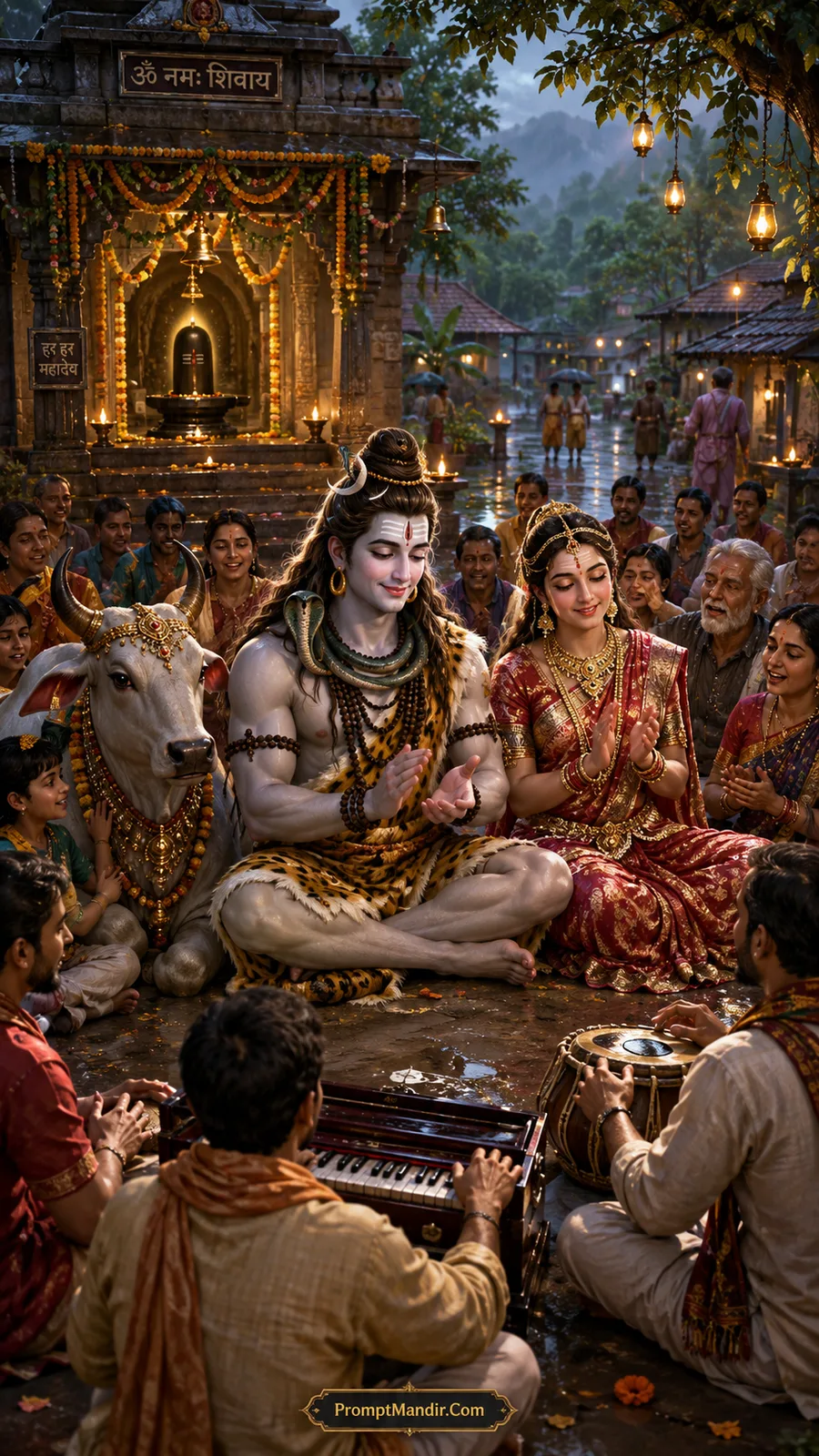
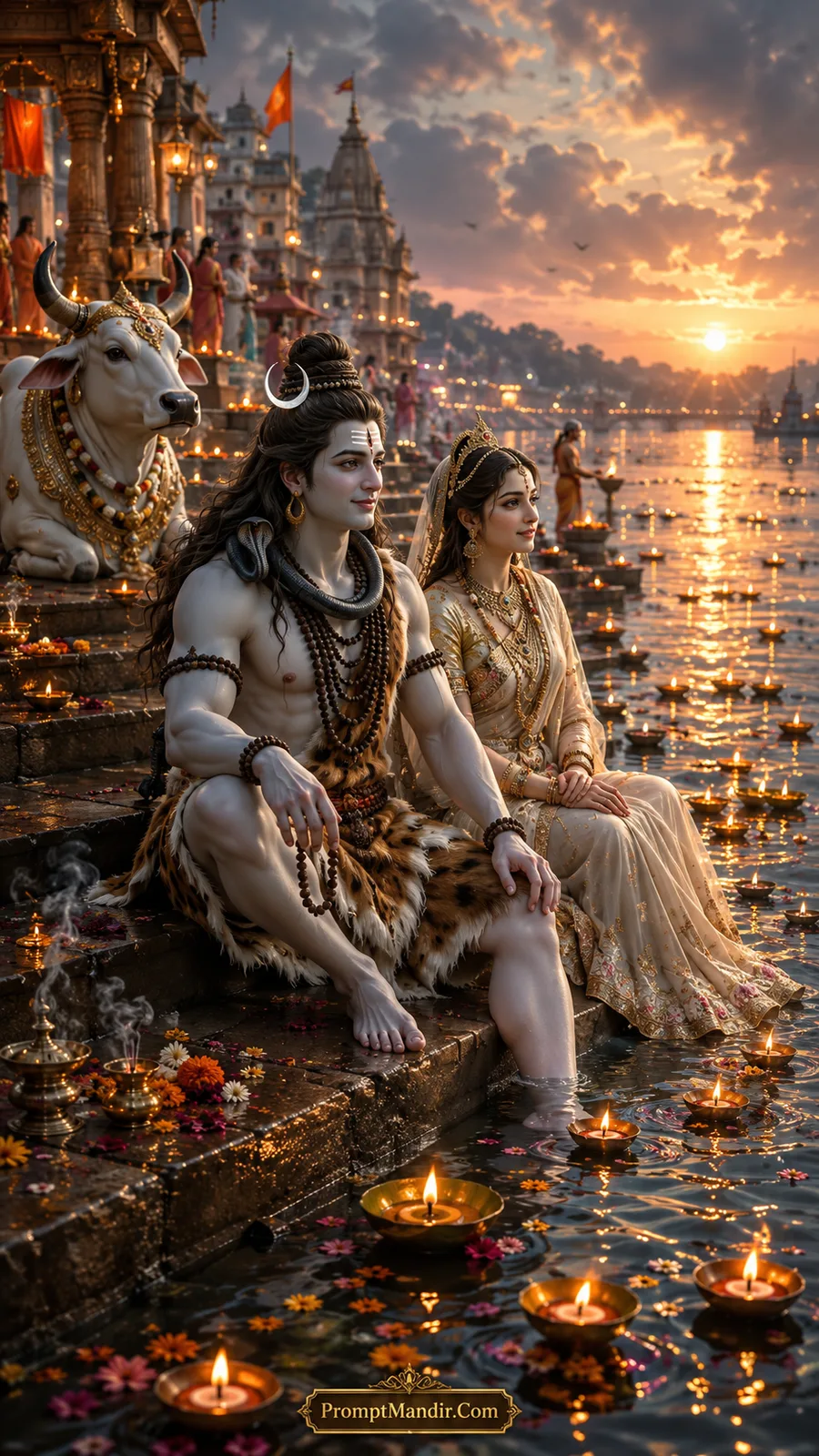
This is the radical intimacy of the Shiv Shakti Divine Darshan. The divine couple is not floating above the world. They are inside it. They meditate under a banyan tree while a light Sawan drizzle falls. They perform Deepdaan on the Ganga, releasing diyas into the river like any other couple offering evening prayers. They stroke Nandi’s forehead with the casual affection of old friends. They sit on wet temple steps and watch devotees climb toward the sanctum, their presence so natural that you might pass them without noticing.
The visual DNA of every Shiv Shakti Divine Darshan is locked. Shiva’s face remains constant. Parvati’s face remains constant. The anatomy, the jewelry craftsmanship, the hyper-realistic rendering, and the soft, cinematic lighting are all identical across the collection. What changes is the setting and the act. One image captures meditation. Another captures pilgrimage. Another captures a quiet evening of bhajans. Together, they build a world where the highest divine is also the most approachable.
VIEW PROMPT
VIEW PROMPT
VIEW PROMPT
VIEW PROMPT
VIEW PROMPT
VIEW PROMPT
VIEW PROMPT
VIEW PROMPT
VIEW PROMPT
VIEW PROMPT
Explore More AI Prompt Collections
Discover more AI prompt collections covering devotional artwork, spiritual illustrations, divine characters, temple-inspired scenes, cultural designs, and creative visual concepts.
Browse related categories to find fresh inspiration for generating unique AI images, wallpapers, posters, social media graphics, and digital artwork.
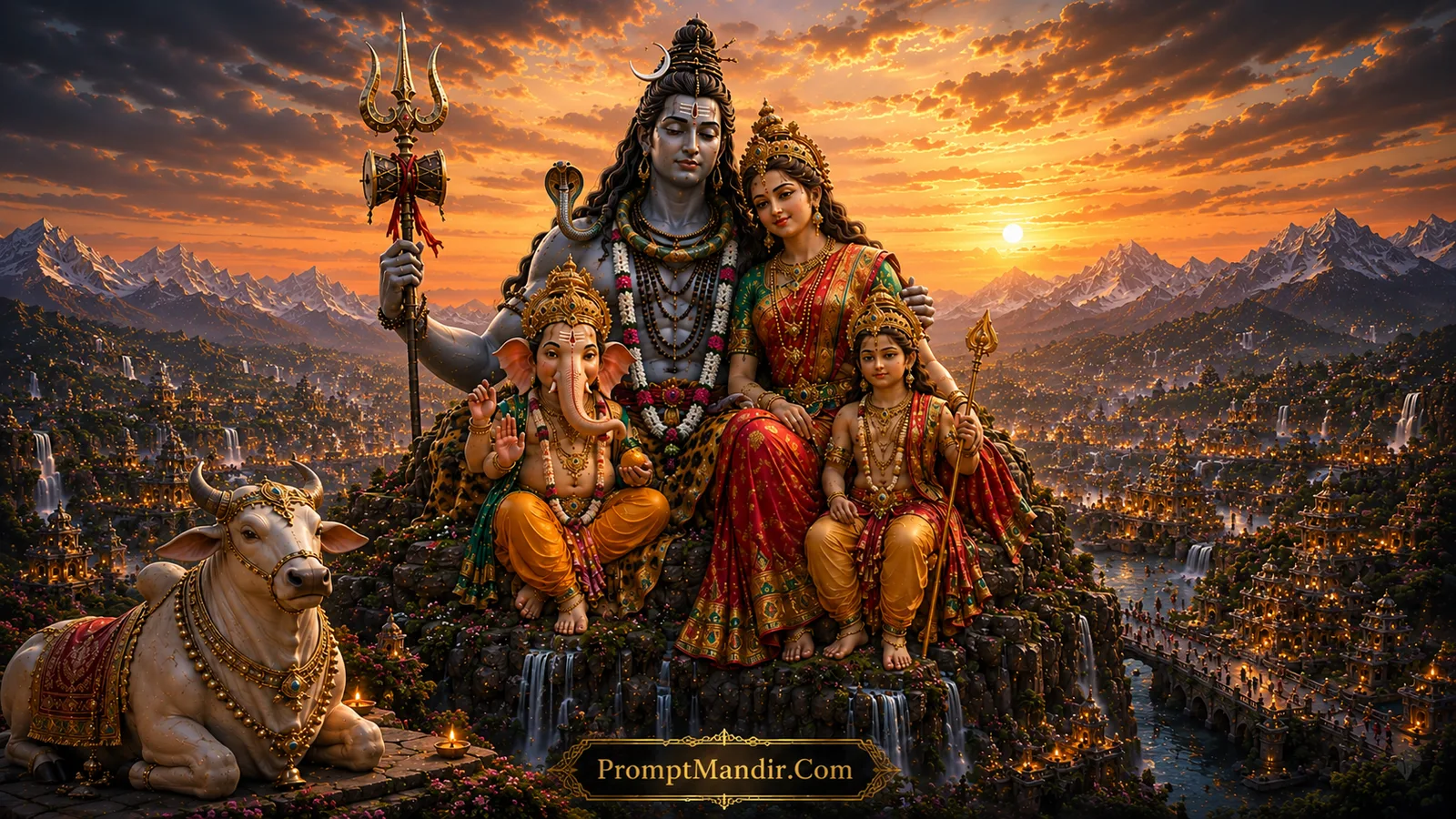
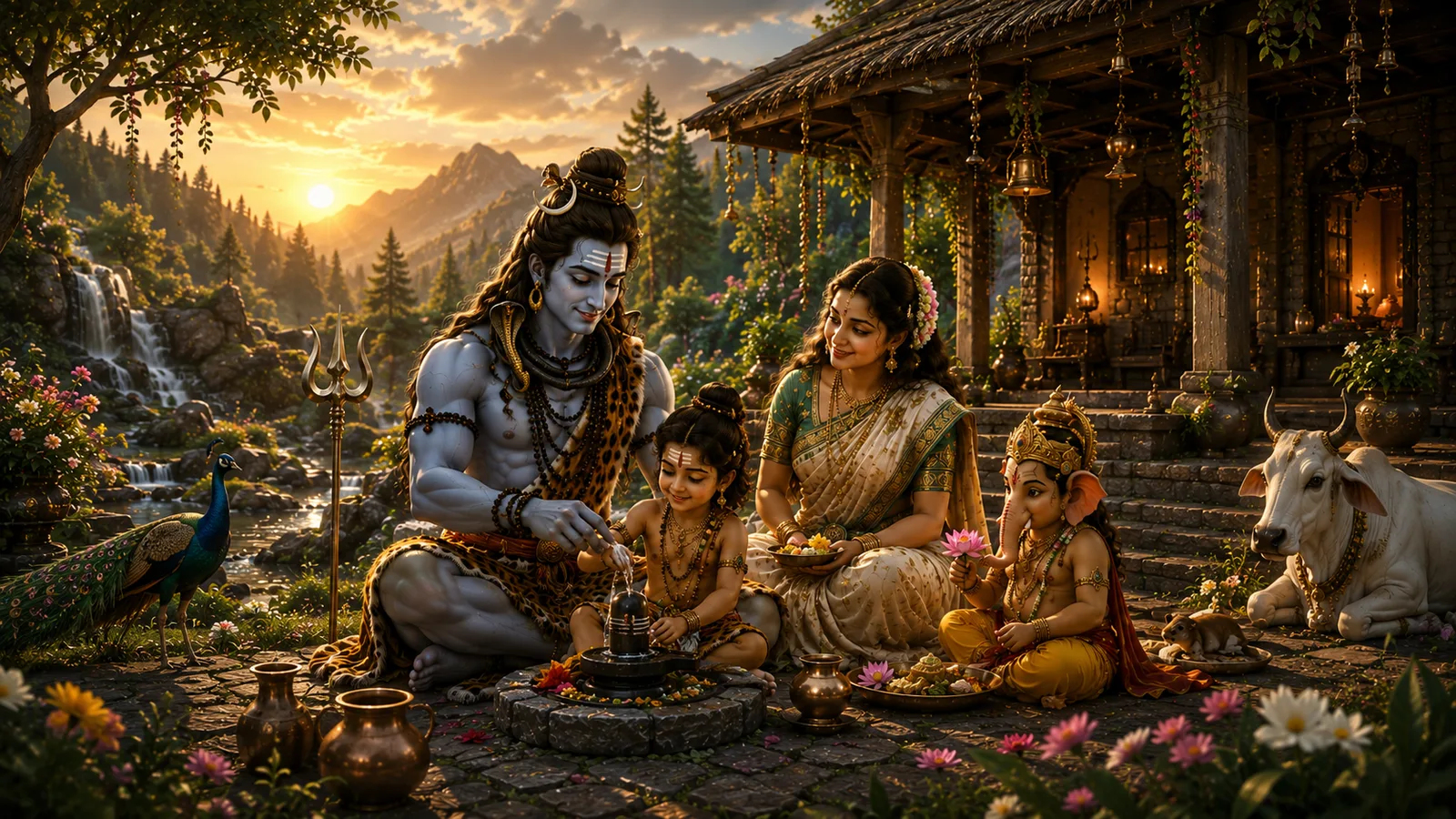
The faces of Shiva and Parvati are the unshakeable foundation of every Shiv Shakti Divine Darshan. They must not change across any prompt. Shiva’s features are youthful, calm, with flowing black hair, a gentle smile, and a glowing fair complexion. Parvati’s beauty is graceful, maternal, and serene. Every Shiv Shakti Divine Darshan prompt must begin by locking these facial identities before describing anything else.
Their presence among devotees is the emotional core of the Shiv Shakti Divine Darshan collection. They are not elevated on pedestals. They are not larger than the people around them. They sit among villagers during a bhajan. They walk barefoot with Kanwariyas. They kneel before a Shivling like ordinary pilgrims. The Shiv Shakti Divine Darshan communicates divinity through humility. Their posture, their gestures, and their proximity to others must feel completely natural and unassuming.
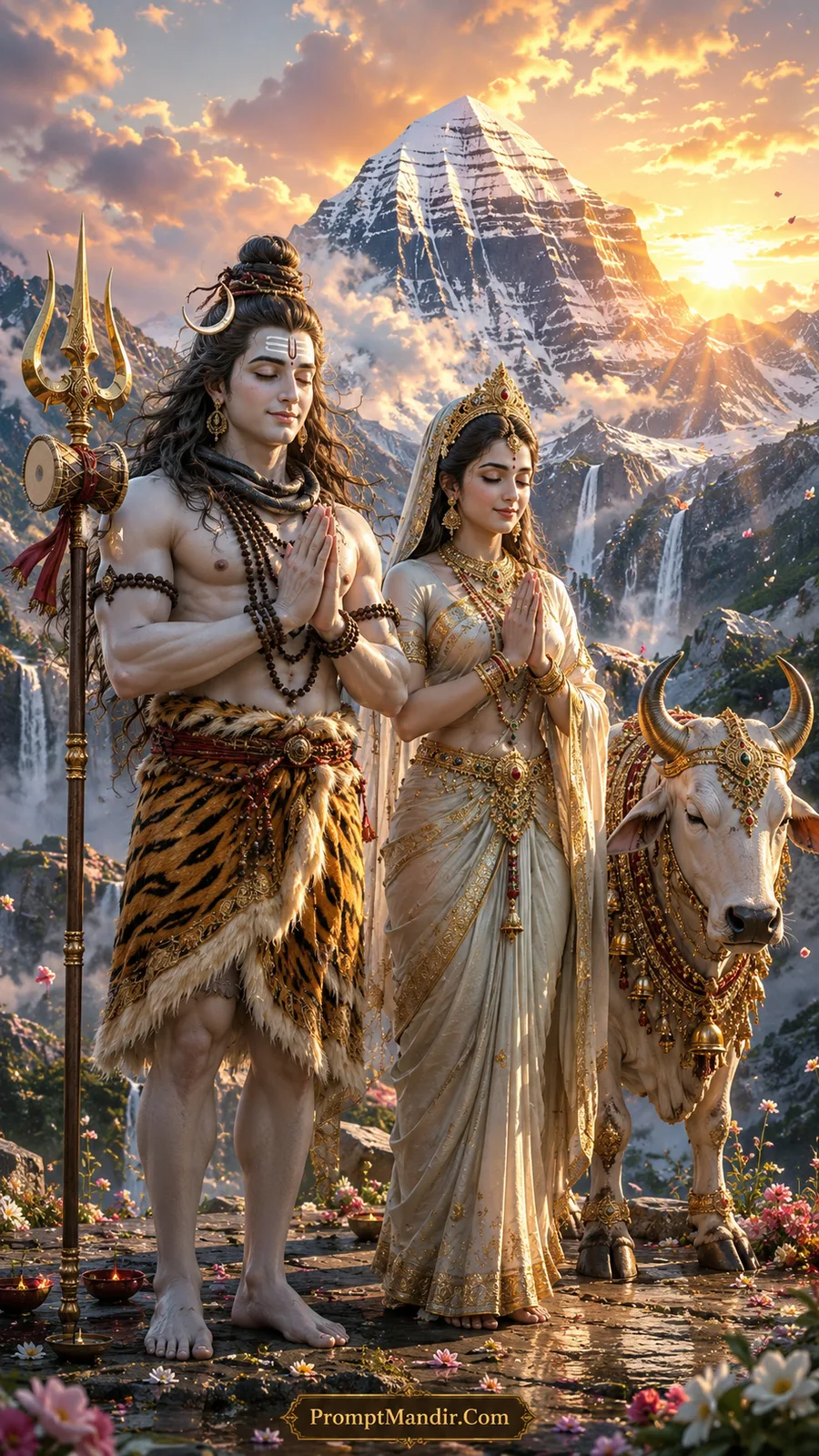
Nandi is a full character in the Shiv Shakti Divine Darshan, not a background detail. He rests beside them during meditation with folded legs and half-closed eyes. He kneels before them while Parvati feeds him fresh grass. He stands with them at dawn on Kailash, his head bowed in prayer. His ornaments are always luxurious. Golden bells, gemstones, and intricate carvings adorn him. But his expression is always peaceful, devoted, and emotionally present.
The atmosphere of every Shiv Shakti Divine Darshan is shaped by the month of Sawan. Gentle rain has just stopped or is still falling as a light drizzle. Leaves are covered with raindrops. Stone steps are wet and reflective. The ground holds small puddles that mirror the divine couple. The air is fresh, the mist is soft, and the greenery is lush. The Shiv Shakti Divine Darshan uses the monsoon not as weather, but as a mood of renewal and quiet devotion.
Lighting in the Shiv Shakti Divine Darshan is soft and volumetric. Golden morning or evening sunlight filters through rain clouds and ancient trees. God rays fall gently on the divine couple. Oil lamps glow in temples and on river ghats. The lighting should feel warm, cinematic, and deeply peaceful. There are no dramatic supernatural glows. Only the natural play of light through mist, leaves, and water.
The environments in the Shiv Shakti Divine Darshan are grounded and specific. A Himalayan stone temple with an ancient Shivling. The banks of the Ganga during Deepdaan. A village temple courtyard after a Sawan shower. A pilgrimage road lined with saffron flags and tea stalls. The steps of a sandstone temple crowded with devotees. Each setting is rendered with ultra-realistic detail but never overwhelms the central figures.
Devotees populate every Shiv Shakti Divine Darshan. They are present in the thousands on the pilgrimage road, in the hundreds on the ghats, and in small, intimate groups inside village temples. They sing bhajans, release diyas, climb temple steps, and offer flowers. Some recognize the divine couple and fold their hands with tears. Most do not notice at all. This mixture of recognition and obliviousness is what makes the Shiv Shakti Divine Darshan feel so achingly real.
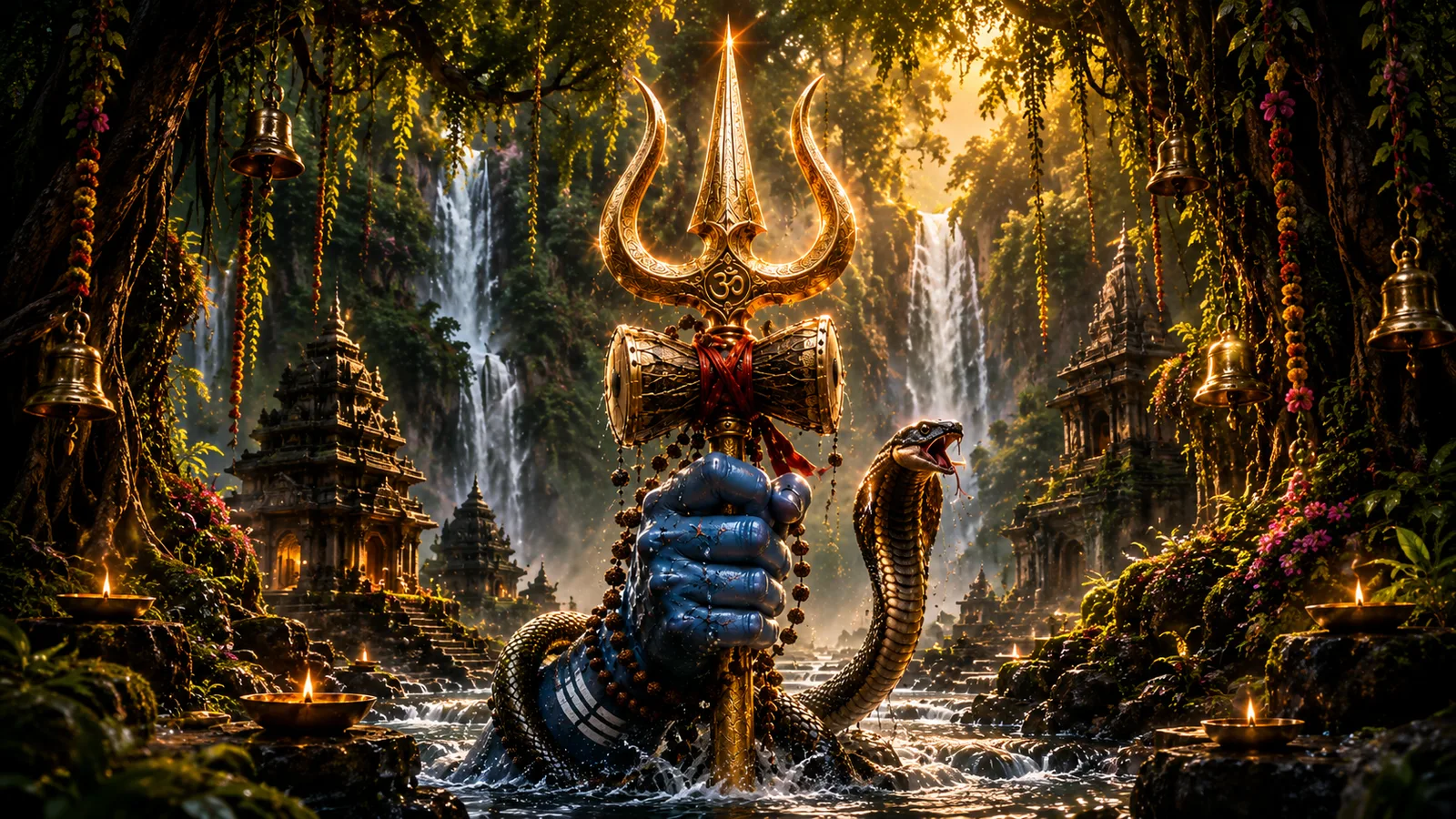
The props in a Shiv Shakti Divine Darshan are sacred but simple. A copper kalash. A traditional bamboo kanwar. Fresh belpatra leaves. Rudraksha malas. Brass diyas. Earthen oil lamps. Marigold garlands. A small Damru resting on Shiva’s knee. These objects are handled naturally. They are not displayed. They are used, held, carried, and offered with the same casual reverence that a devotee would bring to their own puja.
Frequently Asked Questions
What is the core philosophy of the Shiv Shakti Divine Darshan collection?
It is the radical closeness of the divine. The Shiv Shakti Divine Darshan collection does not show Shiva and Parvati as distant deities. It shows them as pilgrims, meditators, bhajan singers, and travelers who have chosen to be among their devotees as equals.
Are the faces of Shiva and Parvati consistent across all Shiv Shakti Divine Darshan prompts?
Yes. Every Shiv Shakti Divine Darshan prompt locks the facial identity, proportions, expressions, and rendering style. Shiva’s calm smile and flowing black hair remain identical. Parvati’s graceful beauty remains identical. Only the setting, the action, and the emotional context change.
What role does Nandi play in the Shiv Shakti Divine Darshan?
Nandi is a full emotional presence. He meditates beside them, receives their affection, and stands with them in prayer. In the Shiv Shakti Divine Darshan, Nandi is not a vehicle. He is family. His ornaments are luxurious, but his demeanor is always gentle and devoted.
Why is the month of Sawan so important to the Shiv Shakti Divine Darshan?
Sawan is the month of Shiva. The rains, the greenery, and the pilgrimage season all belong to him. The Shiv Shakti Divine Darshan uses the monsoon atmosphere to create a mood of freshness, devotion, and emotional renewal. The wet stone, the dripping leaves, and the soft mist are essential to the visual identity of the collection.
How are devotees depicted in the Shiv Shakti Divine Darshan?
They are present in large numbers but never overwhelm the divine couple. They sing, walk, offer flowers, and climb temple steps. Some recognize Shiva and Parvati. Most do not. This creates a powerful emotional tension in the Shiv Shakti Divine Darshan. The divine is present, and only the truly attentive notice.
What kind of lighting defines the Shiv Shakti Divine Darshan?
Soft, warm, and volumetric. Golden sunrise or evening light filtering through clouds and branches. Oil lamp illumination in temples. The Shiv Shakti Divine Darshan avoids harsh, dramatic, or supernatural lighting. The light must feel natural, peaceful, and quietly cinematic.
What props and offerings appear in the Shiv Shakti Divine Darshan?
Copper kalash, bamboo kanwars, belpatra leaves, rudraksha beads, brass and earthen diyas, marigold garlands, incense, and fresh flowers. These objects are not displayed as treasures. They are handled naturally, with the ease of daily worship.
How does the Shiv Shakti Divine Darshan handle the scale of Shiva and Parvati?
They are not gigantic. They are not floating. In the Shiv Shakti Divine Darshan, they are the same size as the devotees around them. Their divinity is expressed through their expressions, their stillness, and the quiet reverence of those who recognize them, not through impossible scale.
Can the Shiv Shakti Divine Darshan prompts be used for Sawan-themed content?
Yes. The entire collection is built around the atmosphere of Sawan. The rain, the pilgrimage, the bhajans, and the temple rituals are all directly connected to the holy month. The Shiv Shakti Divine Darshan is ideal for Sawan Somwar posts, wallpapers, and devotional posters.
What should be avoided in a Shiv Shakti Divine Darshan prompt?
No floating figures. No cosmic backgrounds. No supernatural auras or dramatic miracles. No gigantic scale. The Shiv Shakti Divine Darshan is grounded, intimate, and emotionally real. Anything that breaks that grounded intimacy does not belong.
About This Shiv Shakti Divine Darshan Collection
The greatest mystery of Shiva is not how he destroys the universe. It is how he walks among us without being noticed. He carries a kanwar on his shoulder. He sits in the back of a village bhajan. He releases a diya into the Ganga and watches it float away like any other pilgrim. Parvati walks beside him, her saree hem wet from the rain, a basket of belpatra in her hands.
The Shiv Shakti Divine Darshan collection is a quiet invitation to look more closely. To scan the crowd on the pilgrimage road. To glance at the couple sitting under the banyan tree. To notice the man with the copper kalash kneeling before the Shivling. Because they are here. Not in the sky. Not on a throne. Here, in the rain, among us.
These prompts are not about generating images of gods. They are about generating the feeling that the divine has just passed by, so close you could have touched their feet, so ordinary you might have missed them entirely. The Shiv Shakti Divine Darshan is a reminder that darshan is not always about looking up. Sometimes it is about recognizing what is already beside you.