
Maa Brahmacharini Divine Art Collection — What a Goddess Leaves Behind
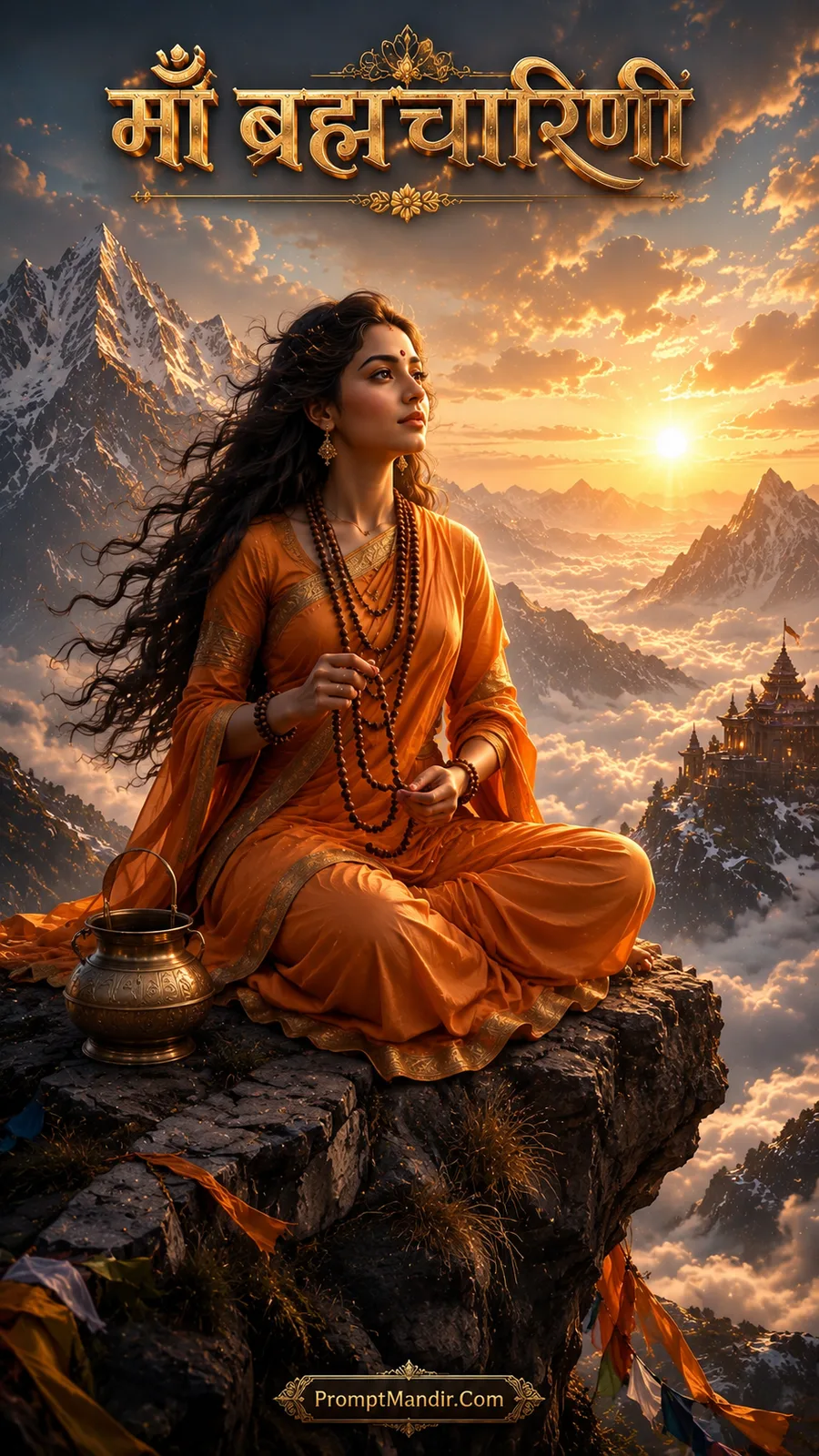
Before she became the warrior who rode into battle, she walked. Barefoot. Through mountain passes that had no names. Past trees that had never seen a human shadow. She carried a kamandalu in one hand and a rosary in the other. She asked for nothing. That is the quiet, fierce truth at the heart of the Maa Brahmacharini Divine Art Collection.
Maa Brahmacharini is the goddess of the long, quiet road. The one who does penance not for herself, but for a truth she has not yet spoken aloud. There are no palaces in her story. No armies. No golden thrones. There is only the high Himalayas, the cold stone, and an unwavering decision to keep walking, keep chanting, keep burning inward. Every prompt in the Maa Brahmacharini Divine Art Collection is built around that stillness.
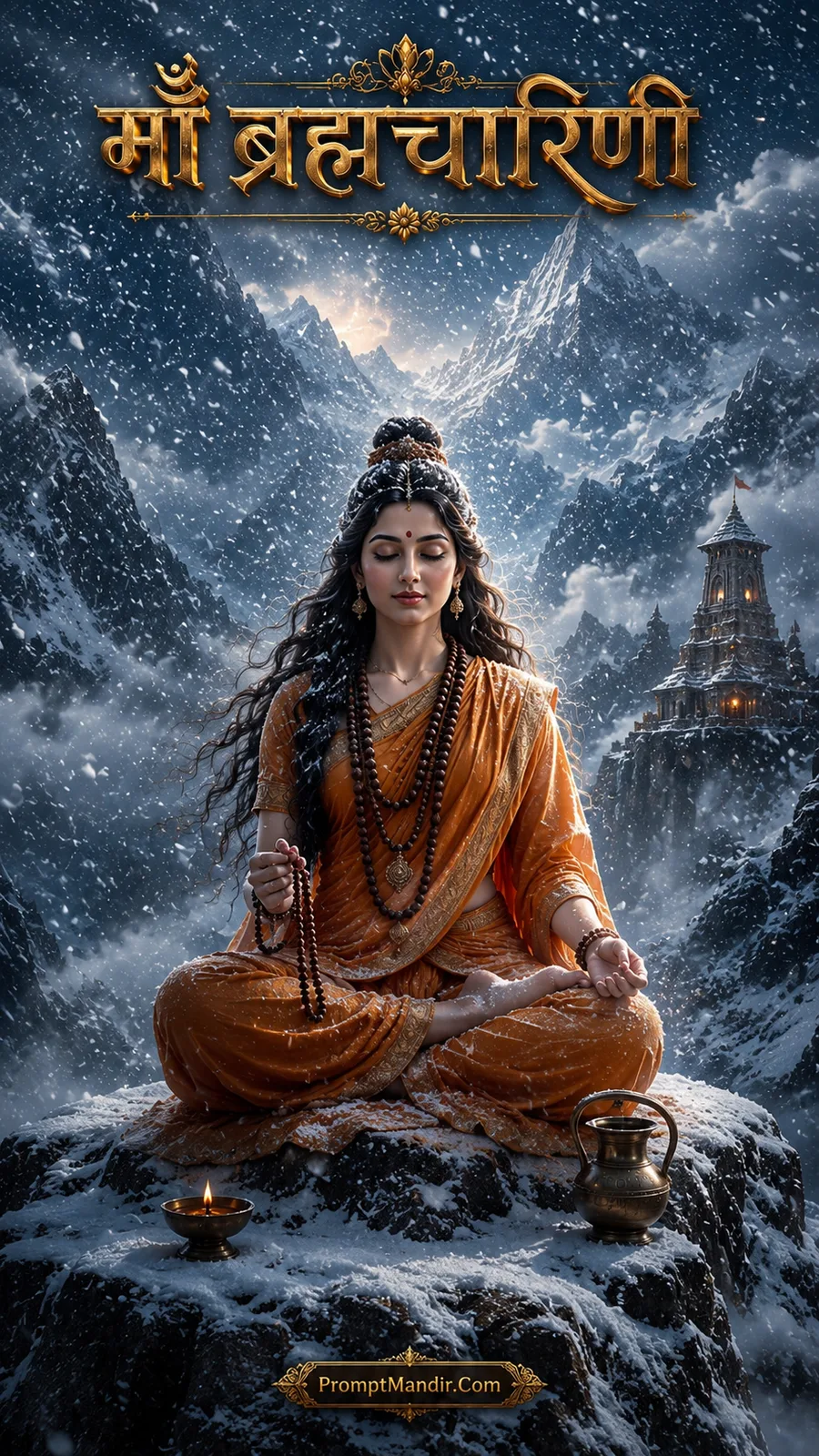
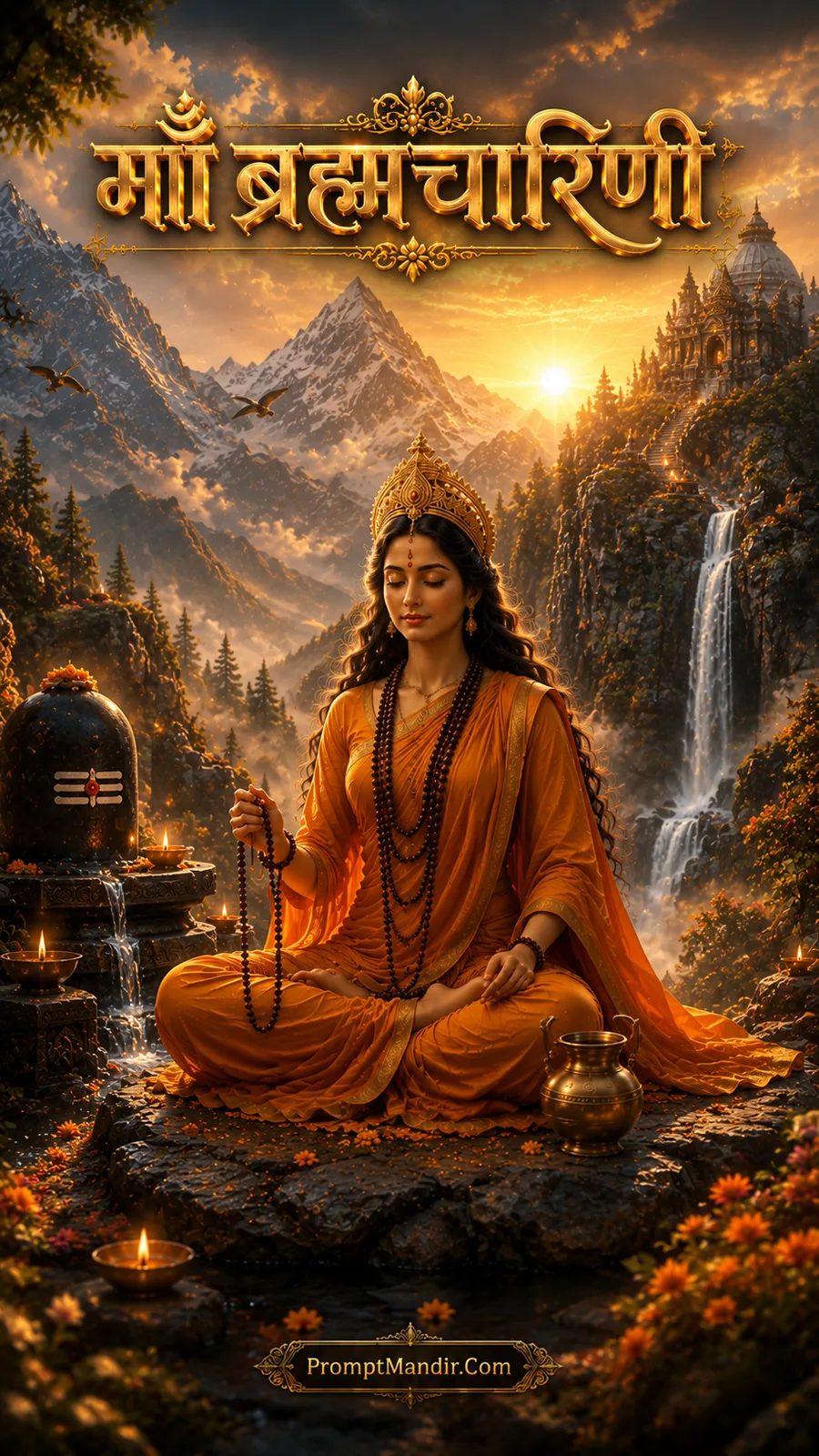
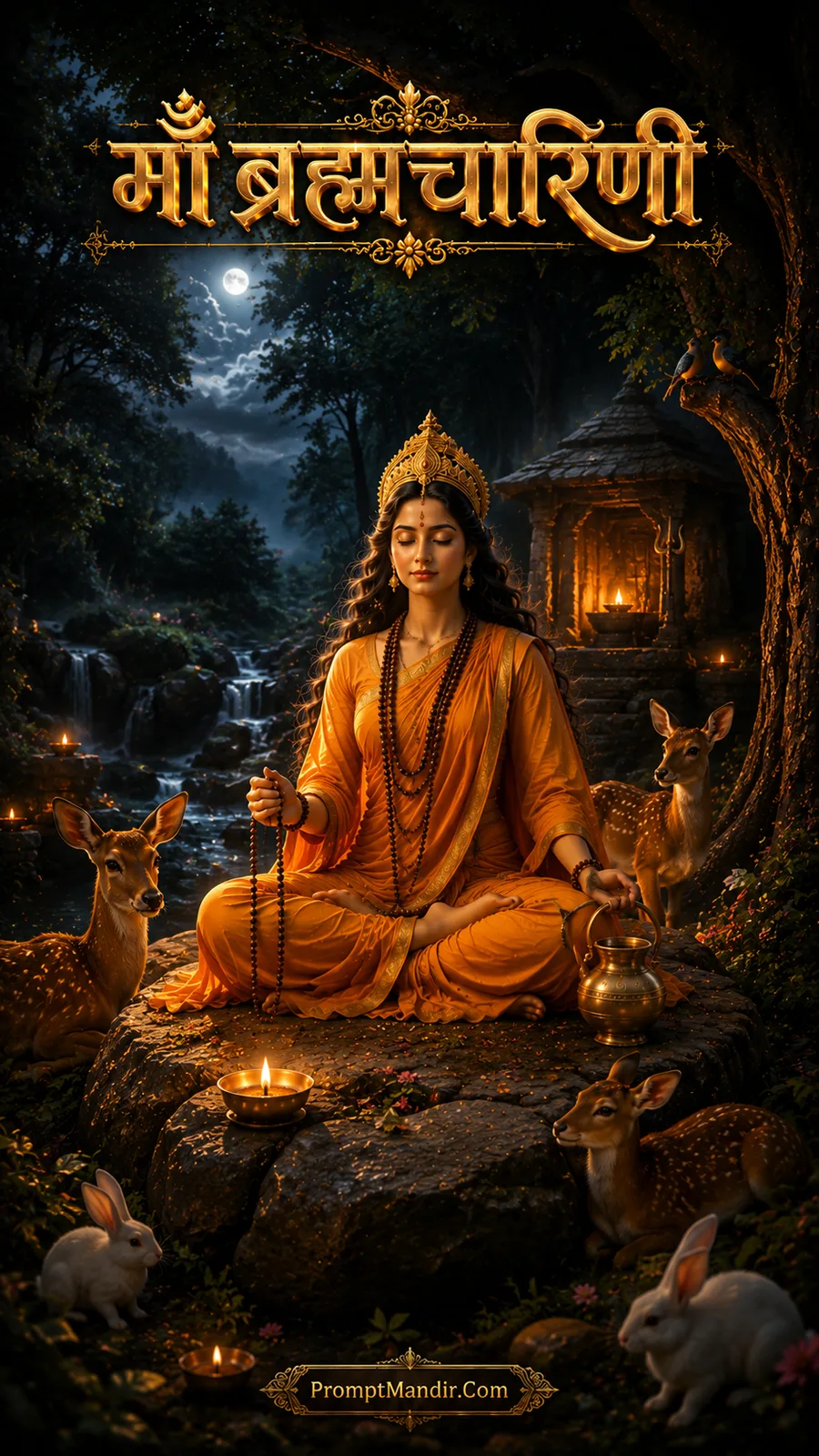
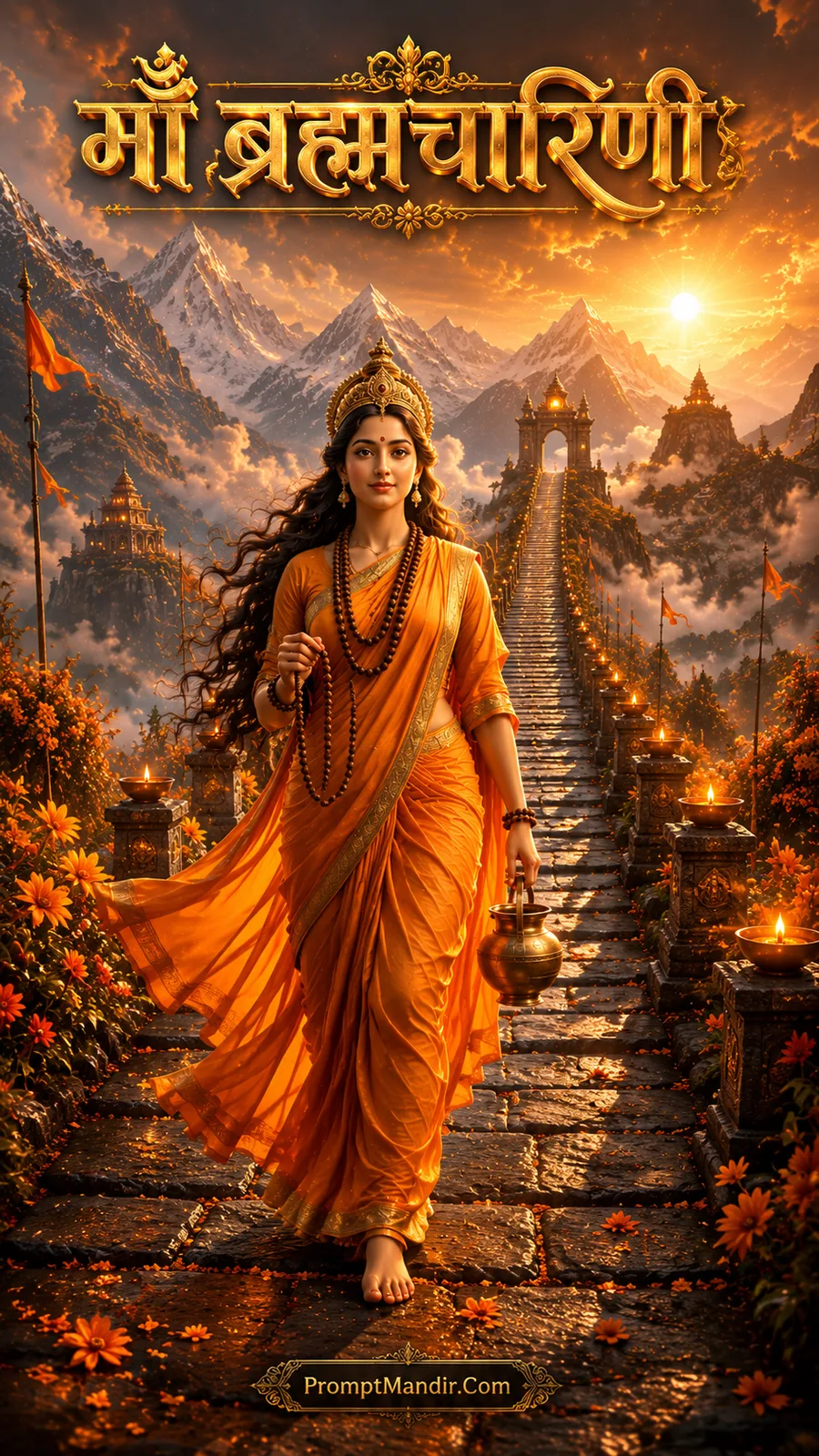
This collection does not attempt to dramatize what needs no drama. Instead, it places her where she has always belonged. A temple courtyard at dawn, wet with dew and silent prayer. A snow-covered ledge where the wind is the only voice. An ancient stone path that winds toward a shrine still hidden by mist. A forest at night, where deer sleep beside her without fear. These are the images the Maa Brahmacharini Divine Art Collection brings to life.
These are not grand spectacles. They are resting places. Moments where the goddess stops, breathes, and the mountains lean in to listen. The prompts in the Maa Brahmacharini Divine Art Collection ask you to think differently about devotion. Not as a performance. But as a presence. A slow, steady fire that does not need to be seen to be felt.
VIEW PROMPT
VIEW PROMPT
VIEW PROMPT
VIEW PROMPT
VIEW PROMPT
VIEW PROMPT
VIEW PROMPT
VIEW PROMPT
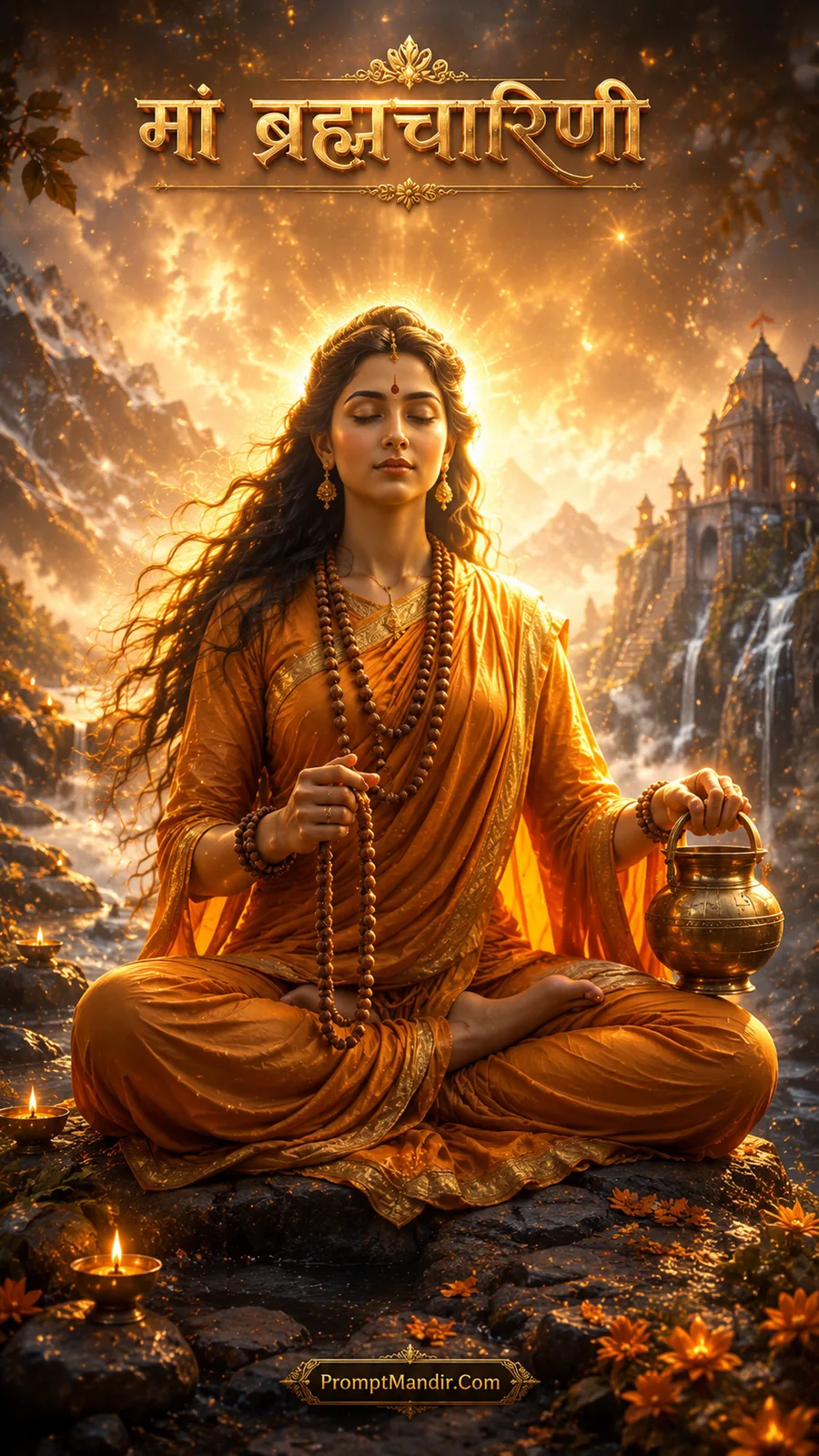
VIEW PROMPT
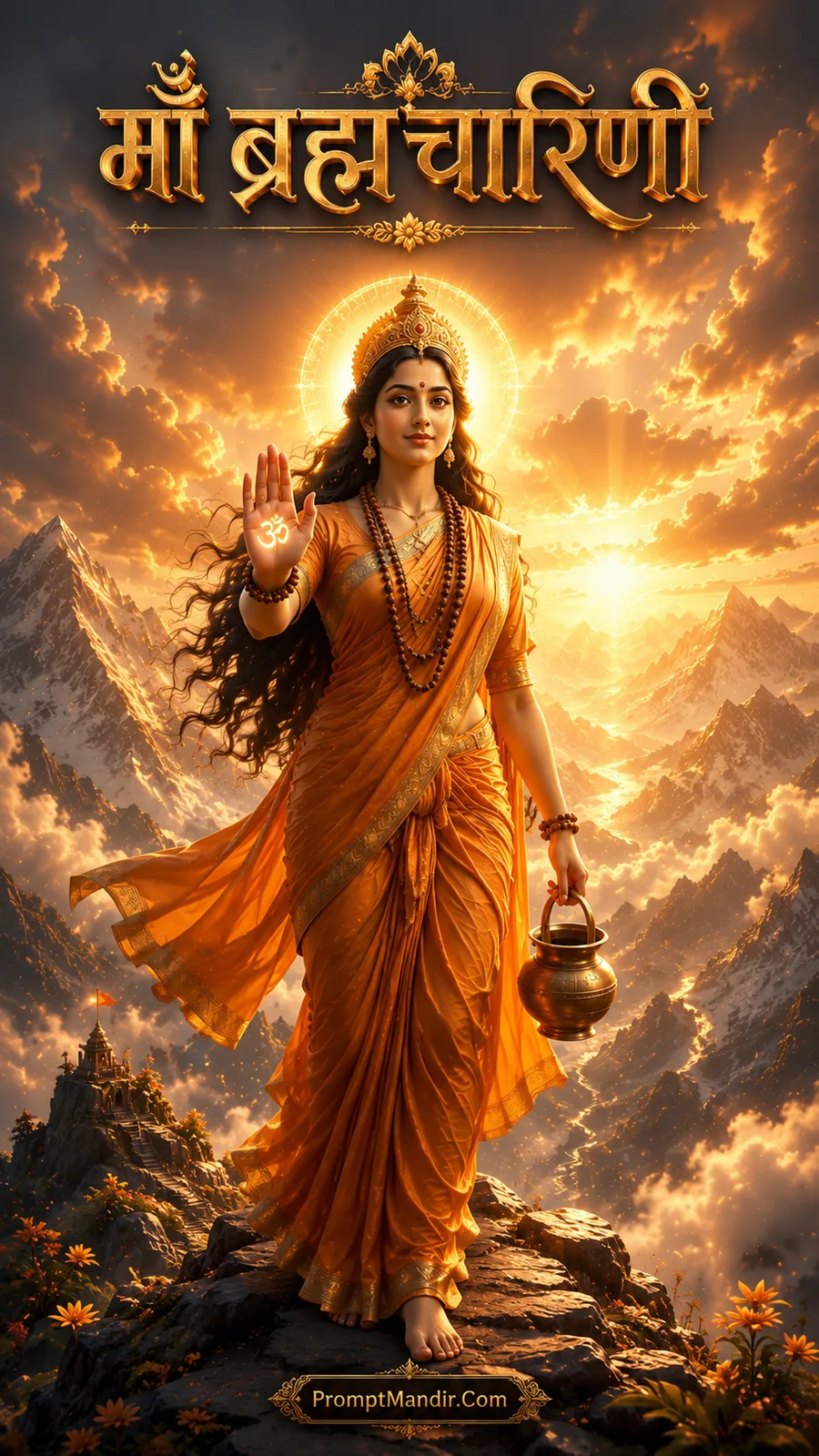
VIEW PROMPT
Explore More AI Prompt Collections
Discover more AI prompt collections covering devotional artwork, spiritual illustrations, divine characters, temple-inspired scenes, cultural designs, and creative visual concepts.
Browse related categories to find fresh inspiration for generating unique AI images, wallpapers, posters, social media graphics, and digital artwork.
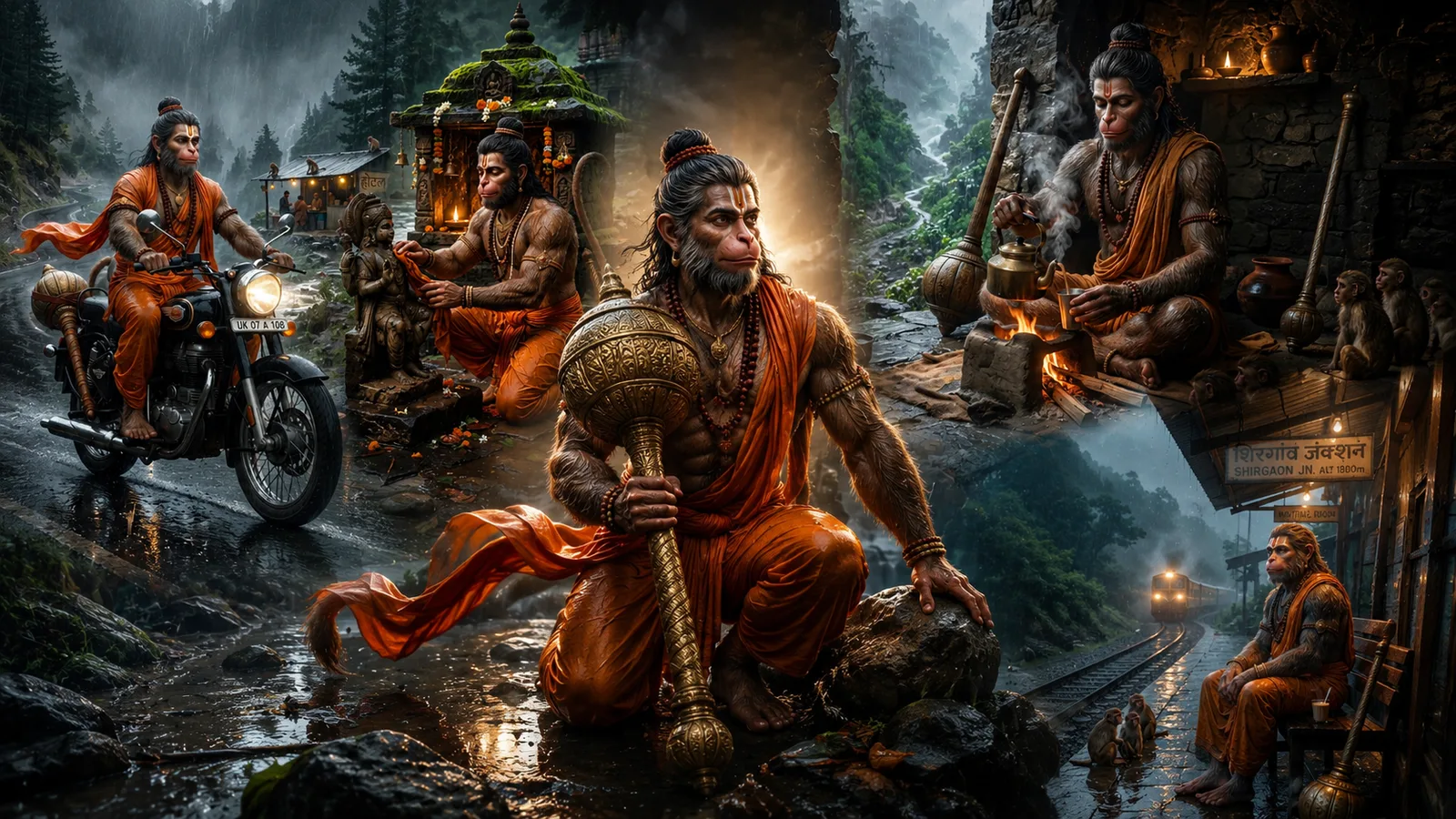
Hanuman Monsoon Prompts
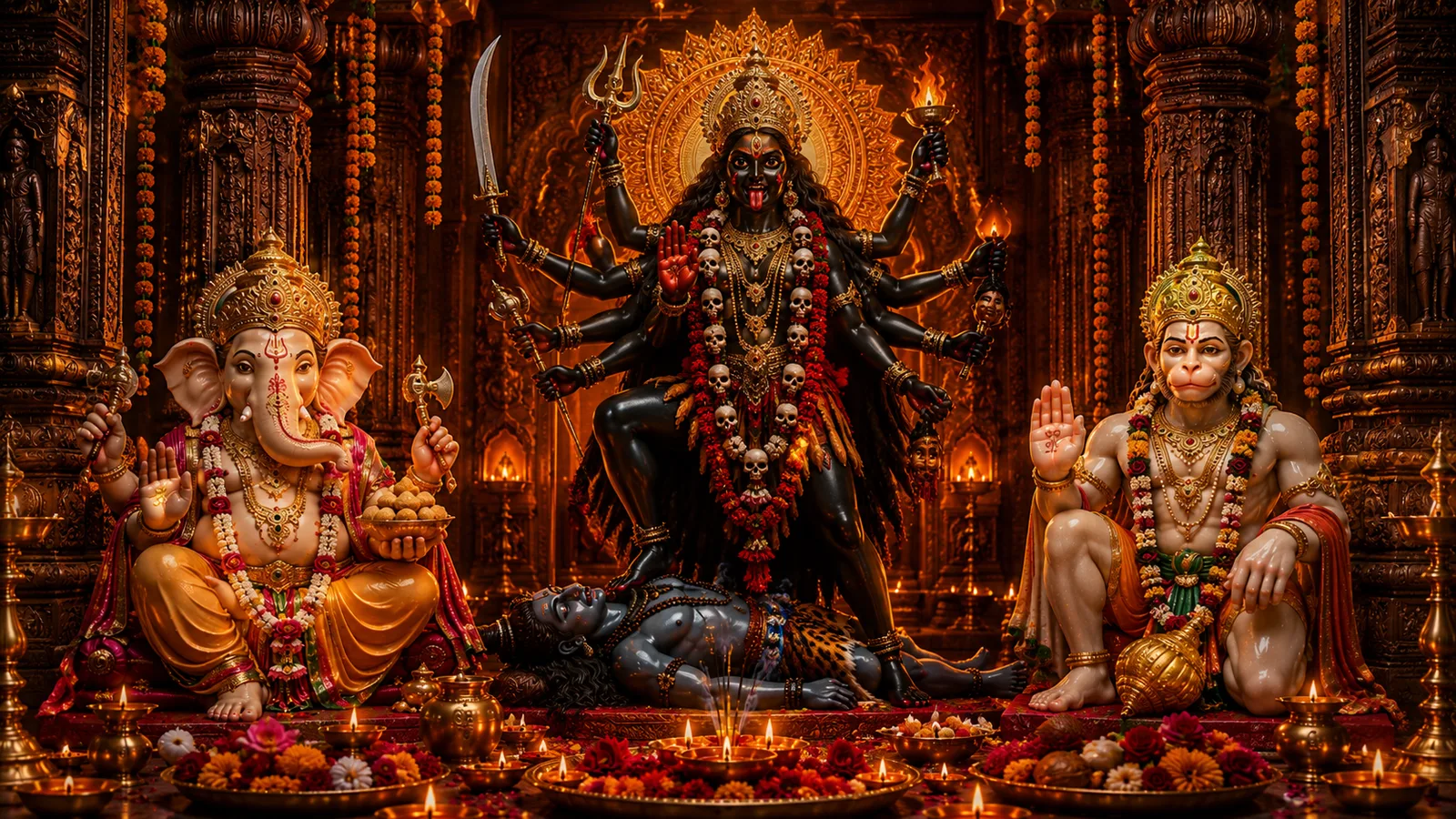
Devotional Marble Deity Temple
Prompt Customization Tips
The kamandalu is not a prop in the Maa Brahmacharini Divine Art Collection. It is the simplest possible vessel, and that is the point. When you write it into a prompt, do not treat it as jewelry. It is brass. It is functional. It holds water from a stream she passed an hour ago. Its presence in the frame tells the viewer that this goddess carries only what she needs, and she needs almost nothing.
Her saree is saffron, and that color has a job in the Maa Brahmacharini Divine Art Collection. Saffron is not decorative here. It is the uniform of someone who has left everything behind. In a prompt, describe it with words like “simple,” “flowing,” and “unadorned except for a thin gold border.” The fabric should look like it has been worn on a long journey. Not torn, not dirty, but lived in. The gold border catches the light, but barely.
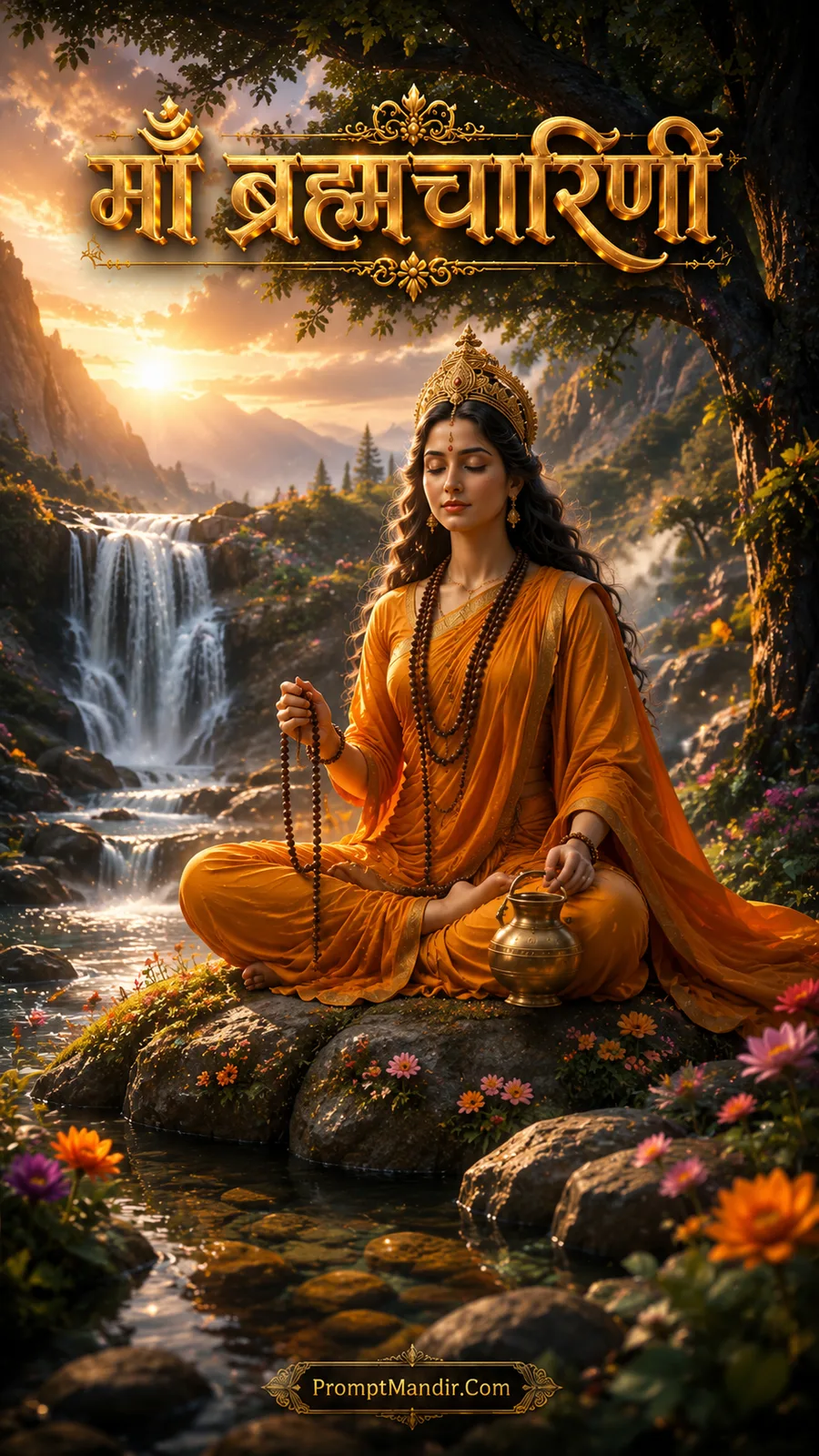
Now consider the landscape in a Maa Brahmacharini Divine Art Collection scene. The Himalayas are not a backdrop. They are her only witness. The snow-covered peaks, the drifting mist, the small wildflowers growing stubbornly in the cracks of ancient stone — these are the congregation. When you write the setting, give it the same attention you would give a temple interior. The mountains have been standing there longer than any shrine. They know her.
Light is the hidden storyteller in the Maa Brahmacharini Divine Art Collection. A golden sunrise over a temple courtyard suggests hope and clarity. A cold winter storm with a single break of light in the clouds suggests endurance. Moonlight through forest branches, mixed with the warm glow of a single oil lamp, suggests the deep interior silence of meditation. Choose the light based on what stage of the inner journey you want to capture.
Her face in the Maa Brahmacharini Divine Art Collection must be calm but not empty. Ask for “soft divine expression,” “eyes gently closed or half-open,” and “a subtle compassionate smile.” Avoid exaggerated emotion. She is not performing peace. She is inhabiting it. The stillness in her face should feel earned, not pasted on. It is the stillness of someone who has sat through the storm and found the quiet on the other side.
The body language in the Maa Brahmacharini Divine Art Collection is austere. Whether seated in Padmasana or walking barefoot on an ancient stone path, she occupies little space. Her ornaments are minimal. Rudraksha malas. A simple jap mala in her hand. Perhaps a single piece of brass. The prompt should specify “minimal traditional ornaments” and “barefoot.” These details are theological, not aesthetic. They remind the viewer that she is in a state of tapasya.
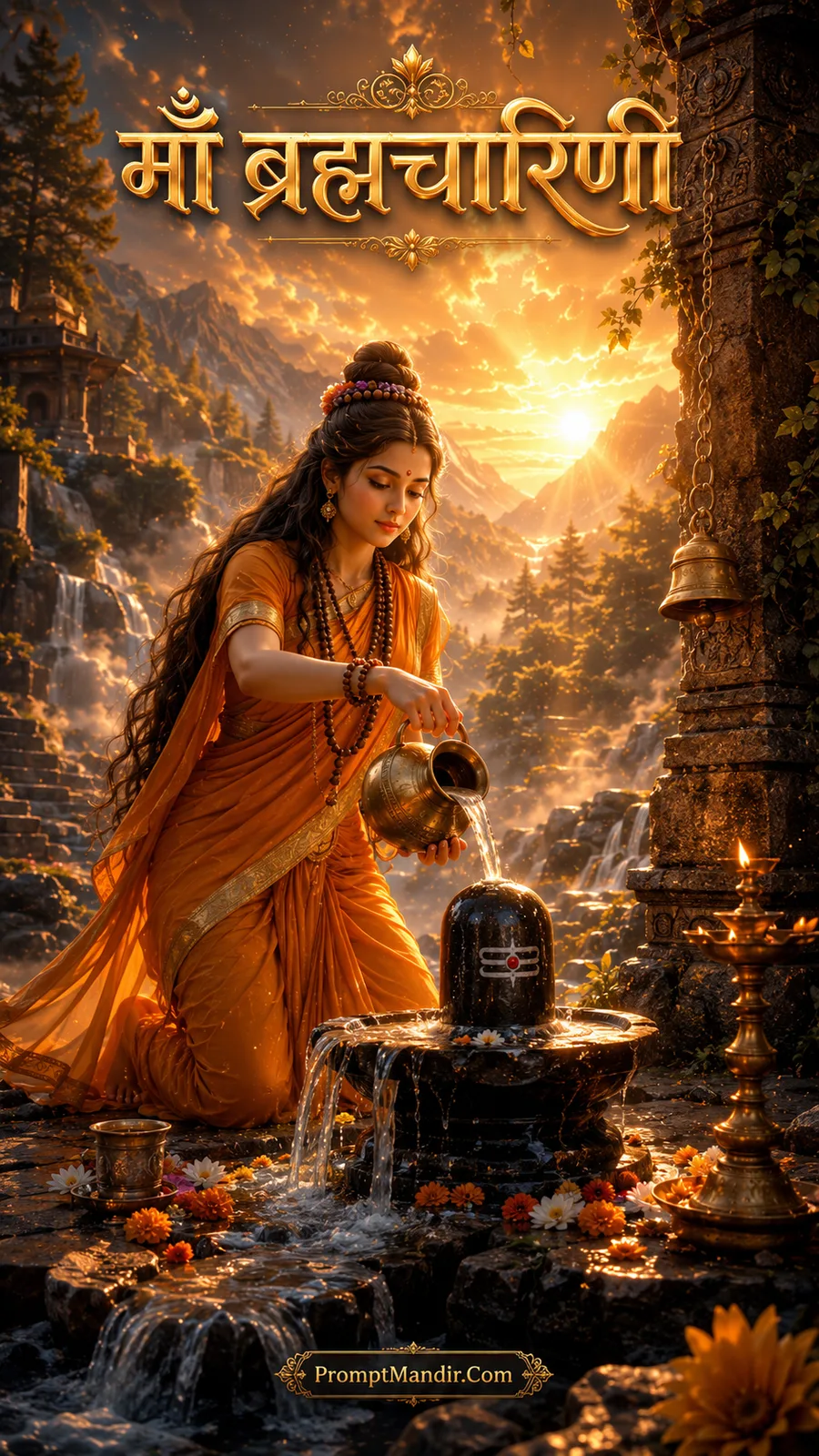
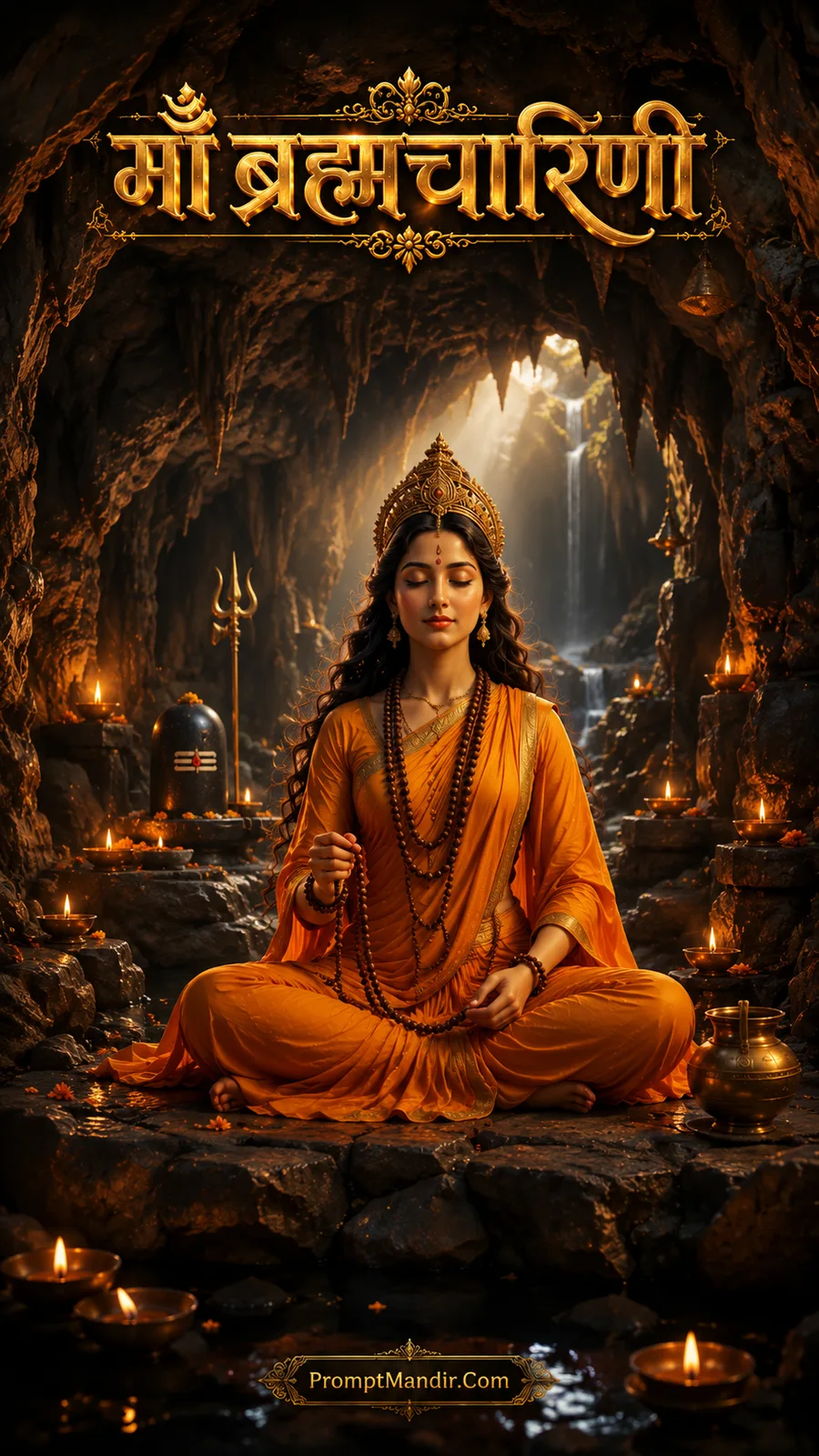
When you place her beside a Shiva Lingam in a Maa Brahmacharini Divine Art Collection prompt, do not make it grand. An “ancient stone Shivling” placed naturally in the landscape feels more sacred than a heavily decorated shrine. She kneels. She pours water. The act is small, humble, and specific. The prompt should focus on the gesture, not the spectacle. This is an offering between the goddess and the stone. The viewer is a quiet witness.
Frequently Asked Questions
Who is Maa Brahmacharini in the Navdurga tradition?
She is the second form of Goddess Durga, worshipped on the second day of Navratri. Her name means one who follows brahmacharya — a path of penance and devotion. She is not a warrior yet. She is the phase of stillness and accumulation of inner power that comes before the battle. Her symbol is the kamandalu and the rudraksha mala.
Why is the kamandalu such an important object in the Maa Brahmacharini Divine Art Collection?
The kamandalu is a water pot carried by sages and ascetics. It holds only what is essential. For Brahmacharini, it represents a life stripped of excess. In a Maa Brahmacharini Divine Art Collection prompt, placing the kamandalu beside her instantly communicates that she is on a pilgrimage, not in a palace. It grounds the image in renunciation.
What does the saffron saree signify in the Maa Brahmacharini Divine Art Collection?
Saffron is the color of the seeker. It signals that the wearer has left behind worldly attachments. In this collection, the saree should not look like festival silk. It should look like the garment of someone who has been walking for a long time. The gold border is thin and quiet, not ornate.
How do I make the Himalayan landscape in the Maa Brahmacharini Divine Art Collection feel real and not like a painted backdrop?
Use specific geography. Mention “snow-covered peaks,” “alpine forests,” “cascading waterfalls,” and “morning mist drifting between the valleys.” Add small, living details — wildflowers growing beside the path, a deer resting near a stream. The landscape should feel inhabited by small, peaceful lives.
Why is she often depicted barefoot in the Maa Brahmacharini Divine Art Collection?
Because she is walking a sacred path. Bare feet touch the earth directly. They are humble. They feel the cold stone and the wet grass. In a prompt, specifying bare feet is a way of saying she is physically connected to her journey. It is not a fashion choice. It is a spiritual statement.
Can I use night settings for the Maa Brahmacharini Divine Art Collection artwork?
Yes, and they are powerful. A forest at night, lit only by moonlight and a single diya, communicates deep inner stillness. The darkness is not threatening. It is protective. The animals around her — deer, rabbits, birds — are not frightened. They sleep. That is the detail that tells the viewer this is a safe, sacred darkness.
How do I show devotion in the Maa Brahmacharini Divine Art Collection without making the image too busy?
Focus on a single gesture. Kneeling beside a Shiva Lingam and pouring water from a kamandalu is enough. You do not need a crowd, a priest, or a decorated temple. The quiet act of offering, performed alone, is more intimate and visually stronger than any elaborate ritual.
What is the best way to depict her facial expression in the Maa Brahmacharini Divine Art Collection?
Calm and inward. She is not smiling at the viewer. She is not looking at the viewer at all in most compositions. Her eyes are either closed in meditation or softly gazing downward at the offering before her. The peace on her face should look like something she has cultivated, not something she was born with.
How do I balance the saffron of her saree with the rest of the color palette in the Maa Brahmacharini Divine Art Collection?
Surround the saffron with cool tones. White snow, grey stone, deep green pines, and the muted brass of her kamandalu. The warm saffron becomes a focal point not because it shouts, but because everything else whispers. The gold border picks up the light from the diyas or the sunrise, tying the composition together.
Is the Maa Brahmacharini Divine Art Collection suitable for Navratri-themed content?
Yes, and it is designed with that rhythm in mind. Each prompt captures a different aspect of Brahmacharini’s tapasya — meditation, walking, offering, stillness. They can be used as a daily visual reflection during the nine nights, one facet of her journey for each night you need to return to the silence.
About This Maa Brahmacharini Divine Art Collection
There is a kind of strength that does not shout. It sits very still. It walks very slowly. It carries only a water pot and a string of beads. Maa Brahmacharini is that strength.
This collection does not show her in her final, blazing form. It shows her in the becoming. The long days of silence. The cold mountain mornings. The simple act of pouring water over stone. The endless forest nights where the only warmth is the prayer on her lips.
The Maa Brahmacharini Divine Art Collection is for those who are in their own season of quiet. For those who are walking a path that no one else can see yet. These prompts are not about creating spectacle. They are about capturing the particular, fierce stillness of a goddess who knows that the greatest battles are won long before they begin, in the cold, in the silence, with nothing but devotion.