
Shiv Hanuman Divine Collection — When the Teacher and the Devotee Sit Together
There is a moment in every true teaching when the words stop. The master looks at the student. The student looks at the master. And in that silence, everything that needed to be said is already understood. The Shiv Hanuman Divine Collection lives inside that silence.
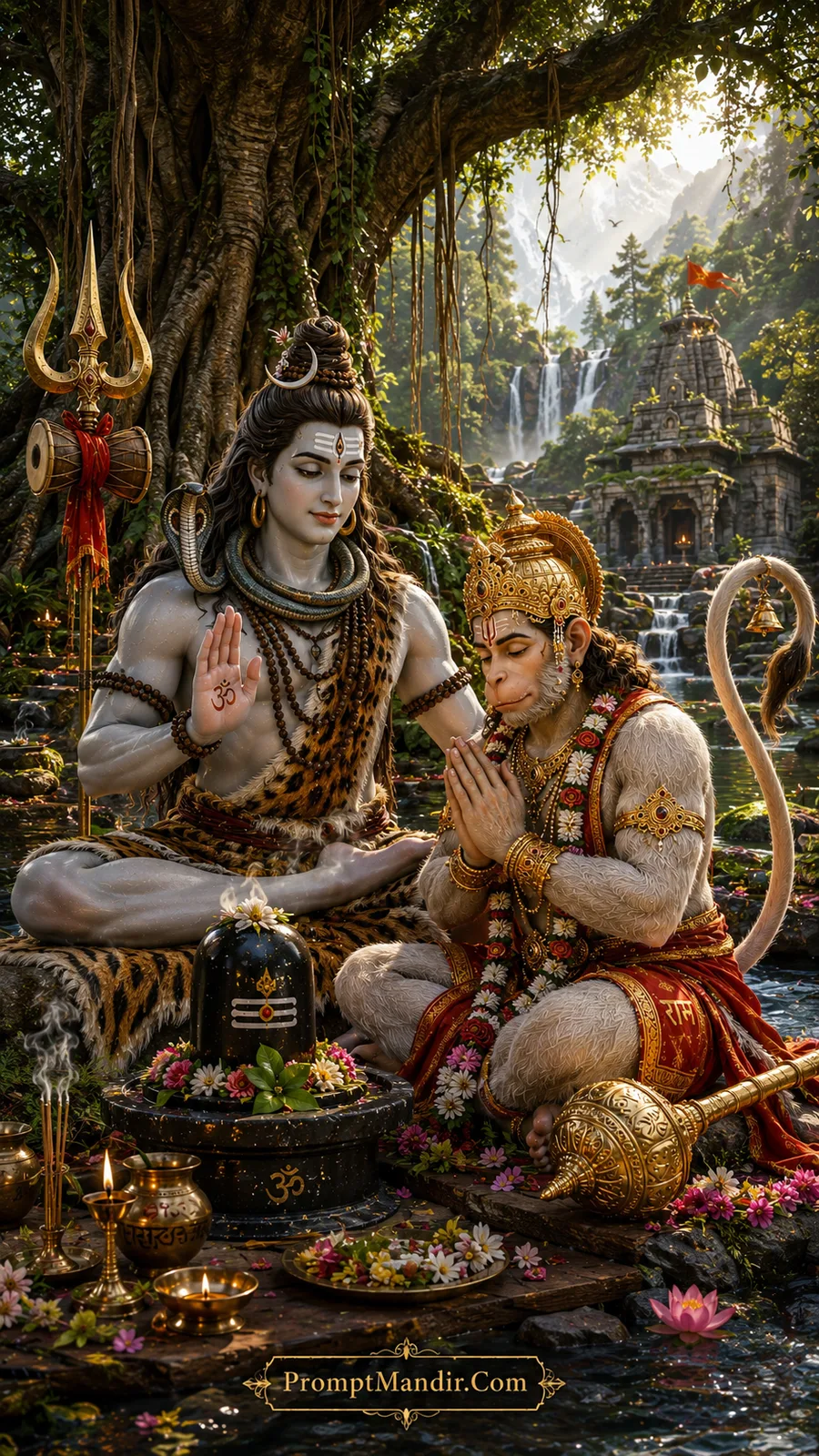
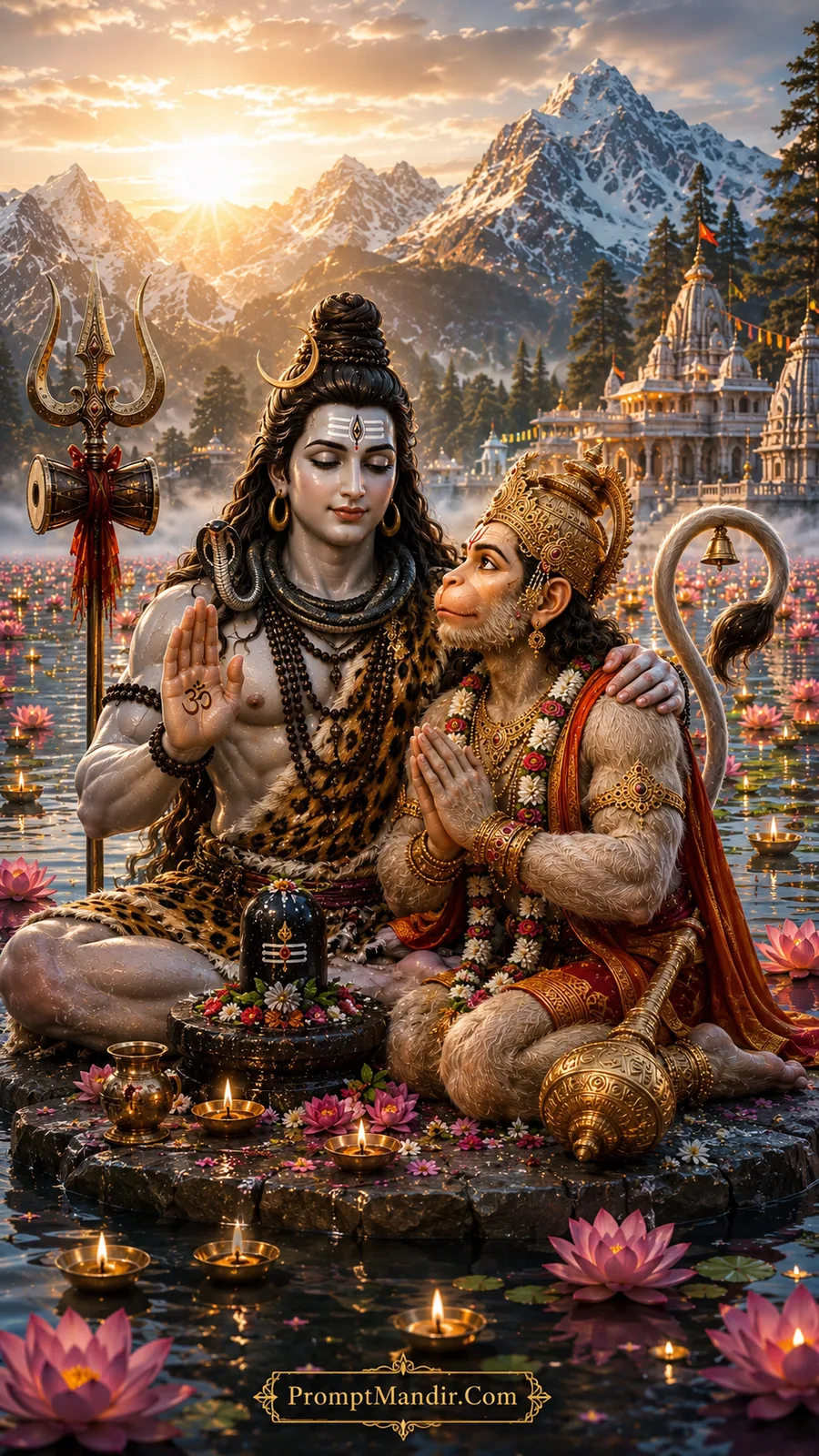
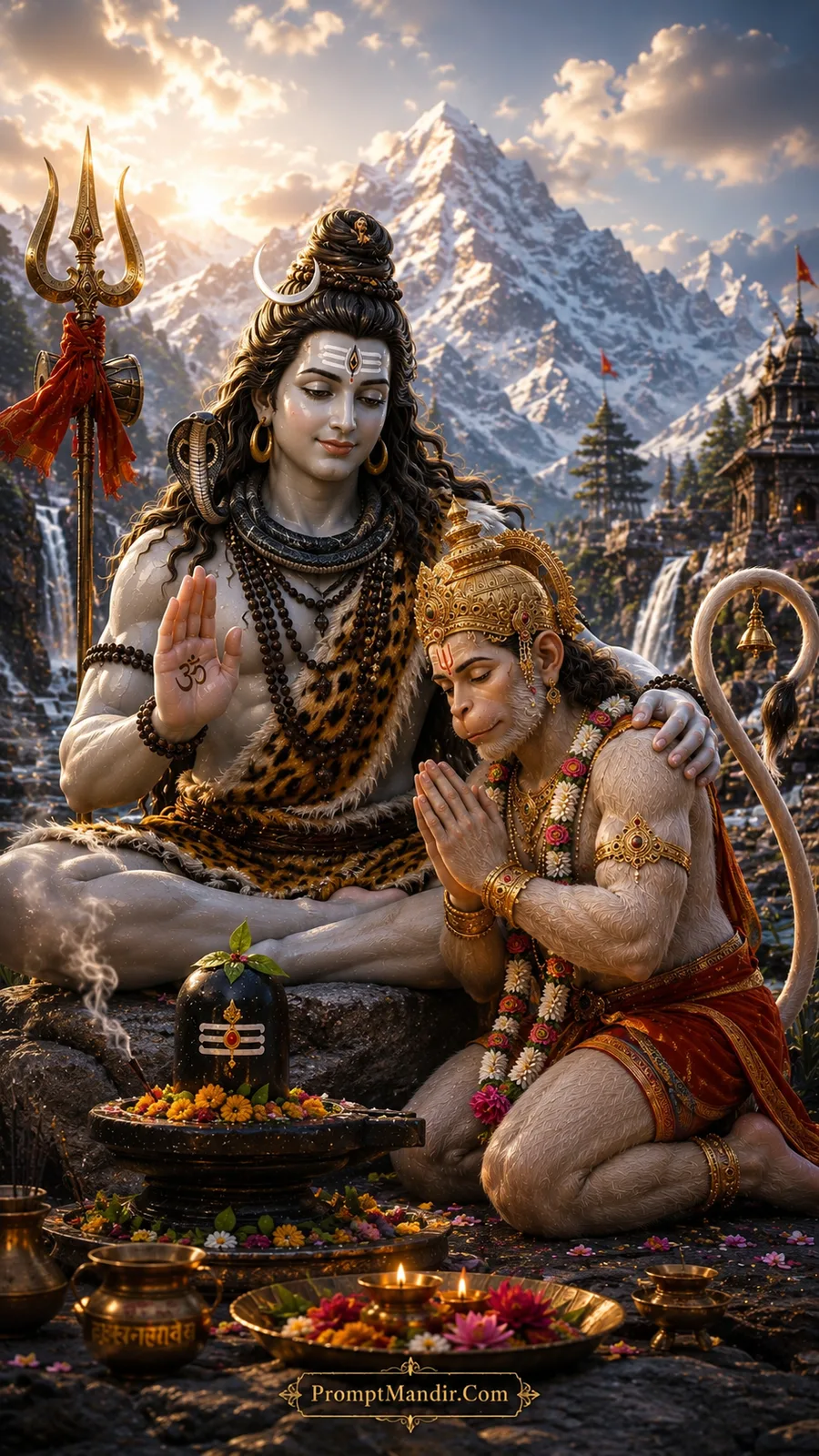
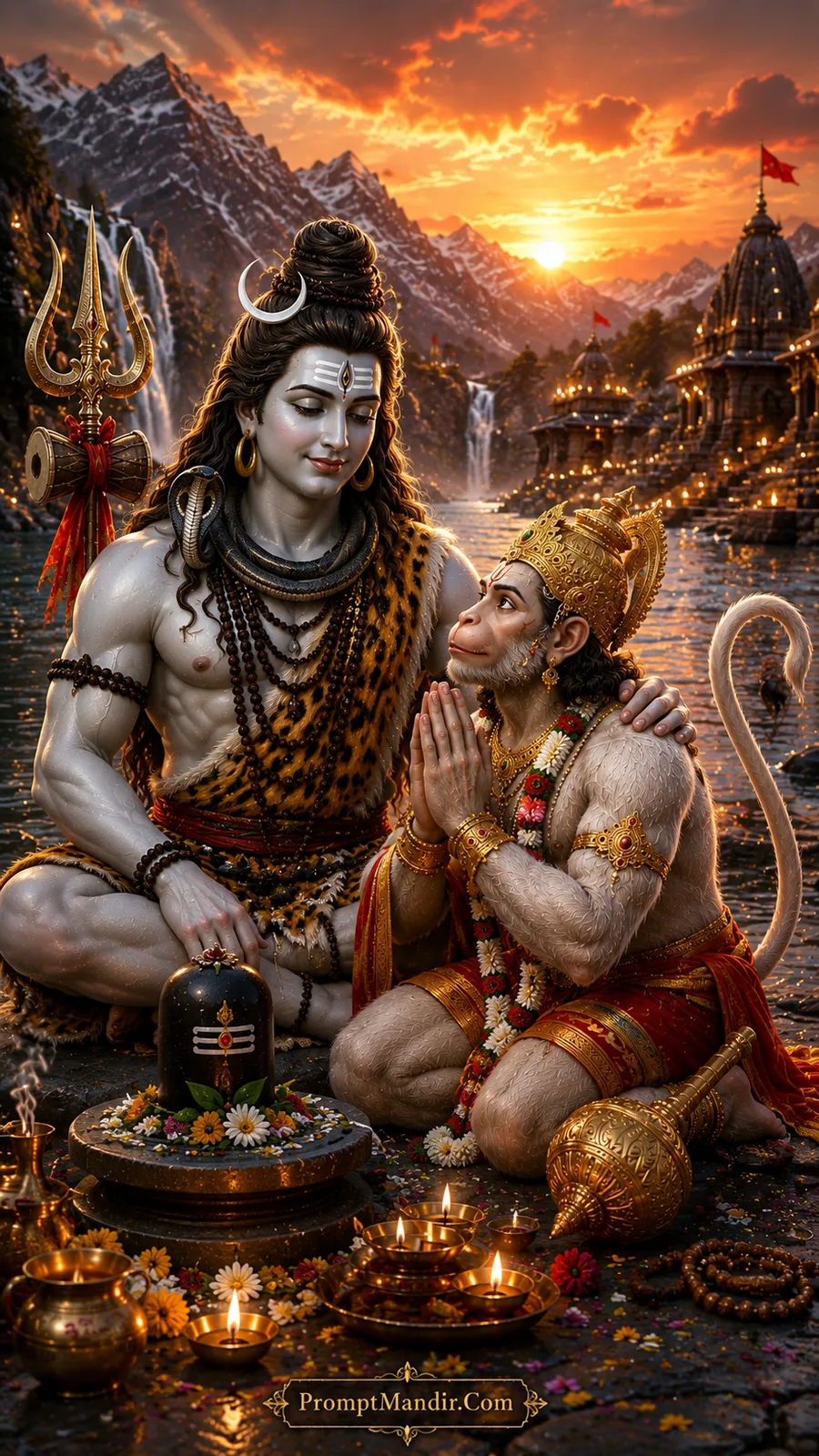
This is not a collection of two powerful deities standing shoulder to shoulder in battle. It is a collection of the quiet hours between them. The hours when Shiva, the Adiyogi, becomes the teacher. And Hanuman, the perfect servant of Ram, becomes the student. It happens in a stone temple during Rudrabhishek, Hanuman pouring sacred water over the Shivling while Shiva watches with eyes full of warmth. It happens on an ancient mountain pathway, the two of them walking together, Shiva’s hand resting on Hanuman’s shoulder. It happens in a cave, the Guru blessing the Shishya. It happens on a lotus lake at sunrise. Under a banyan tree in a Himalayan forest. On the ghats of Kashi during the evening Ganga Aarti. On the stone steps of a temple during the blue hour.
The Shiv Hanuman Divine Collection captures these moments with extraordinary precision. The Shivling is always present, decorated with bilva leaves and fresh flowers. The diyas glow. The incense rises. The Himalayas stand in the distance, silent witnesses. Shiva’s hand is often raised in blessing or resting gently on Hanuman’s shoulder. Hanuman’s hands are folded, or he kneels, or he looks up with an expression of complete surrender.
This is the bond that the scriptures speak of. Not a bond of equals, but a bond of grace. The one who knows giving to the one who is ready to receive. The Shiv Hanuman Divine Collection is an offering of that sacred transmission.

VIEW PROMPT

VIEW PROMPT
VIEW PROMPT
VIEW PROMPT

VIEW PROMPT
VIEW PROMPT

VIEW PROMPT

VIEW PROMPT

VIEW PROMPT
VIEW PROMPT
Explore More AI Prompt Collections
Discover more AI prompt collections covering devotional artwork, spiritual illustrations, divine characters, temple-inspired scenes, cultural designs, and creative visual concepts.
Browse related categories to find fresh inspiration for generating unique AI images, wallpapers, posters, social media graphics, and digital artwork.



The relationship is the subject of every Shiv Hanuman Divine Collection image. Shiva is the teacher, calm, still, generous with his presence. Hanuman is the student, humble, attentive, radiant with devotion. The prompts must specify their body language. Shiva’s hand resting on Hanuman’s shoulder. Hanuman’s hands folded or raised in offering. Their eyes meeting or Hanuman’s eyes lowered in respect. The Shiv Hanuman Divine Collection communicates through posture and gaze.
The Shivling is the spiritual anchor in many Shiv Hanuman Divine Collection images. It is a polished black stone, decorated with fresh bilva leaves, white flowers, and marigold petals. Brass diyas, copper kalash, incense holders, and rudraksha beads surround it. Hanuman often interacts with the Shivling, pouring water over it from a golden vessel or kneeling before it. The Shiv Hanuman Divine Collection places the Shivling at the center of their shared worship.
The landscapes in the Shiv Hanuman Divine Collection are always the Himalayas. Snow-covered peaks, cascading waterfalls, lush pine forests, ancient stone temples with saffron flags, and crystal-clear lotus lakes. The Himalayas are the natural home of Shiva, and Hanuman is his honored guest. The Shiv Hanuman Divine Collection uses the mountain landscape to create a sense of sacred isolation.
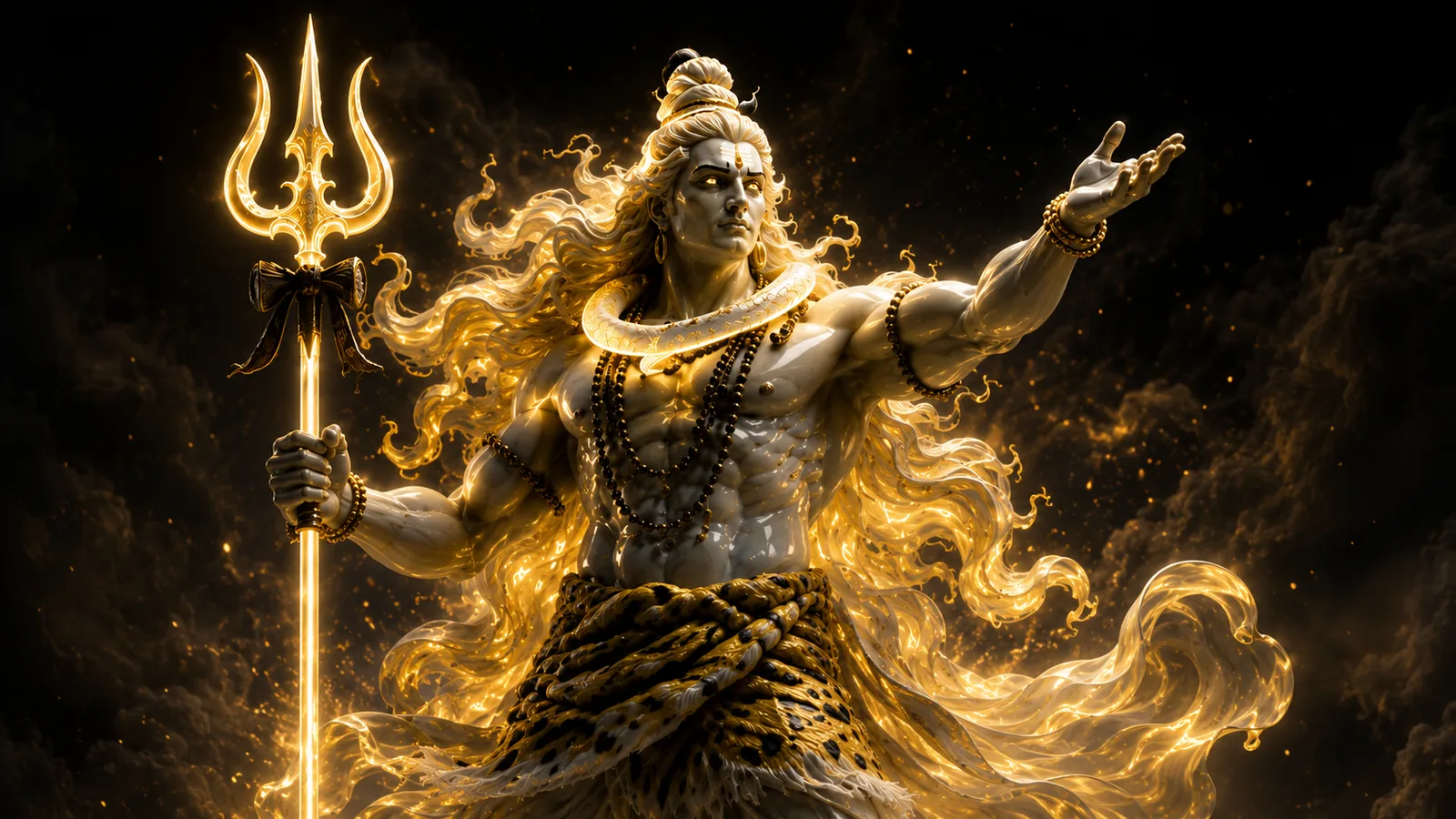
Shiva’s appearance in the Shiv Hanuman Divine Collection is consistent. Ash-white skin, long matted hair tied in a high jata with the crescent moon. The sacred tripundra on his forehead. The serpent Vasuki coiled around his neck. Multiple rudraksha malas layered on his chest. A tiger-skin garment draped around his waist. The golden trident with damru always nearby. The Shiv Hanuman Divine Collection renders Shiva as the eternal yogi.
Hanuman’s appearance in the Shiv Hanuman Divine Collection is equally detailed. An ornate golden crown studded with gemstones. Layered flower garlands, usually marigold. Rich traditional ornaments, armlets, bracelets, anklets. A red or saffron dhoti with golden borders. His golden gada rests beside him or is carried naturally. His tail curves gracefully behind him. The Shiv Hanuman Divine Collection presents Hanuman as the royal devotee.
The temple settings in the Shiv Hanuman Divine Collection are ancient and intricately carved. Massive stone pillars, engraved walls, hanging brass bells, rows of glowing oil lamps. The temple during Rudrabhishek. The cave shrine with naturally formed stalactites. The grand stone steps during blue hour. The ghats of Kashi during Ganga Aarti. The Shiv Hanuman Divine Collection uses temple architecture to create a sense of sacred enclosure.
Lighting in the Shiv Hanuman Divine Collection is warm and cinematic. Golden sunrise light filtering through the Himalayan mist. Warm oil lamp illumination inside the temple. The soft blue of twilight balanced by the glow of diyas on the ghats. Natural daylight entering the cave and mixing with warm lamp light. The Shiv Hanuman Divine Collection uses light to create an atmosphere of intimate devotion.
The color palette in the Shiv Hanuman Divine Collection is rich and earthy. The grey of ancient stone, the deep green of pine forests, the white of snow-covered peaks, the gold of ornaments and diya flames, the red and saffron of Hanuman’s garments, the black of the polished Shivling. The Shiv Hanuman Divine Collection is grounded in natural, temple-inspired colors.
Frequently Asked Questions
What is the Shiv Hanuman Divine Collection?
It is a series of premium devotional illustrations capturing the sacred bond between Lord Shiva and Lord Hanuman. The Shiv Hanuman Divine Collection focuses on quiet moments of teaching, blessing, and worship in Himalayan settings.
What is the core relationship depicted in the Shiv Hanuman Divine Collection?
The Guru-Shishya relationship. Shiva is the teacher, Hanuman is the student. The Shiv Hanuman Divine Collection shows Shiva blessing, guiding, and accepting Hanuman’s devoted service.
Where are the Shiv Hanuman Divine Collection images set?
In the Himalayas. Stone temples, mountain pathways, sacred caves, lotus lakes, forest clearings, and the ghats of Kashi. The Shiv Hanuman Divine Collection uses these sacred landscapes as the backdrop for divine instruction.
What role does the Shivling play in the Shiv Hanuman Divine Collection?
It is the spiritual center. Hanuman performs Rudrabhishek, pouring sacred water over the Shivling. It is decorated with bilva leaves and flowers. The Shiv Hanuman Divine Collection places the Shivling at the heart of their worship.
How is Shiva depicted in the Shiv Hanuman Divine Collection?
As the calm, compassionate teacher. Ash-white skin, matted hair with crescent moon, rudraksha malas, serpent around neck, tiger-skin garment. Often with his hand raised in blessing or resting on Hanuman’s shoulder.
How is Hanuman depicted in the Shiv Hanuman Divine Collection?
As the humble, devoted student. Ornate golden crown, flower garlands, red or saffron dhoti, golden gada nearby. His hands are folded, or he kneels, or he looks up with complete surrender.
What lighting is used in the Shiv Hanuman Divine Collection?
Warm, cinematic lighting. Golden sunrise, oil lamp glow, blue twilight mixed with diya light, natural daylight entering caves. The Shiv Hanuman Divine Collection uses light to create intimacy and reverence.
Is the Shiv Hanuman Divine Collection suitable for wallpapers?
Yes. The vertical 9:16 aspect ratio, rich textures, and emotionally powerful compositions make each Shiv Hanuman Divine Collection image ideal for a premium mobile wallpaper.
Can the Shiv Hanuman Divine Collection be printed?
Absolutely. The ultra-detailed digital painting and rich, natural colors make each image suitable for large-format devotional prints.
What is the overall mood of the Shiv Hanuman Divine Collection?
Quiet devotion. The Shiv Hanuman Divine Collection is about the silent transmission of grace from teacher to student, set against the timeless beauty of the Himalayas.
About This Shiv Hanuman Divine Collection
The greatest teachings are not spoken. They are transmitted in the space between a master’s gaze and a student’s heart. The Shiv Hanuman Divine Collection is a portrait of that transmission.
It places Shiva and Hanuman together in the sacred Himalayas. In a temple during Rudrabhishek, water flowing over the Shivling. On a mountain path, walking side by side. In a cave, the Guru blessing the Shishya. On a lotus lake at dawn. Under a banyan tree. On the ghats of Kashi as the Ganga Aarti fills the evening with light.
In every image, the story is the same. The one who has everything to give, giving. The one who has everything to learn, receiving. The Shiv Hanuman Divine Collection is an invitation to witness that sacred exchange, and perhaps, to find yourself sitting quietly at the feet of the teacher, ready to listen.