
Hanuman Spiritual Artwork — The Murti That Lives
A photograph can capture a temple. It can show you the stone, the diyas, the flowers. But a photograph cannot make you feel the weight of centuries pressing down on a single shrine. It cannot make you hear the bhajans carried on a cold mountain wind. It cannot make you smell the sindoor, the rain-soaked earth, the incense that has been burning since before sunrise.
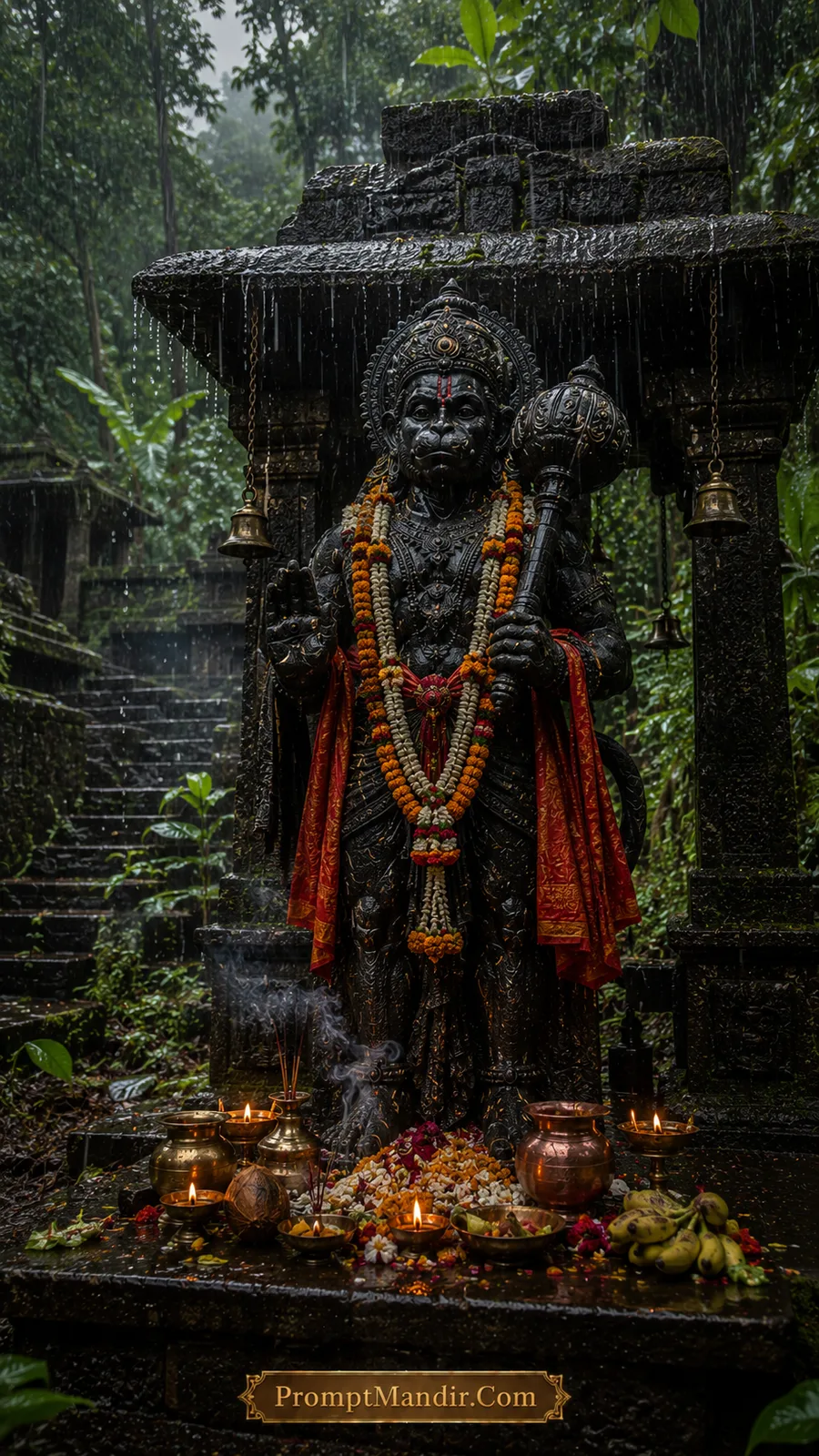
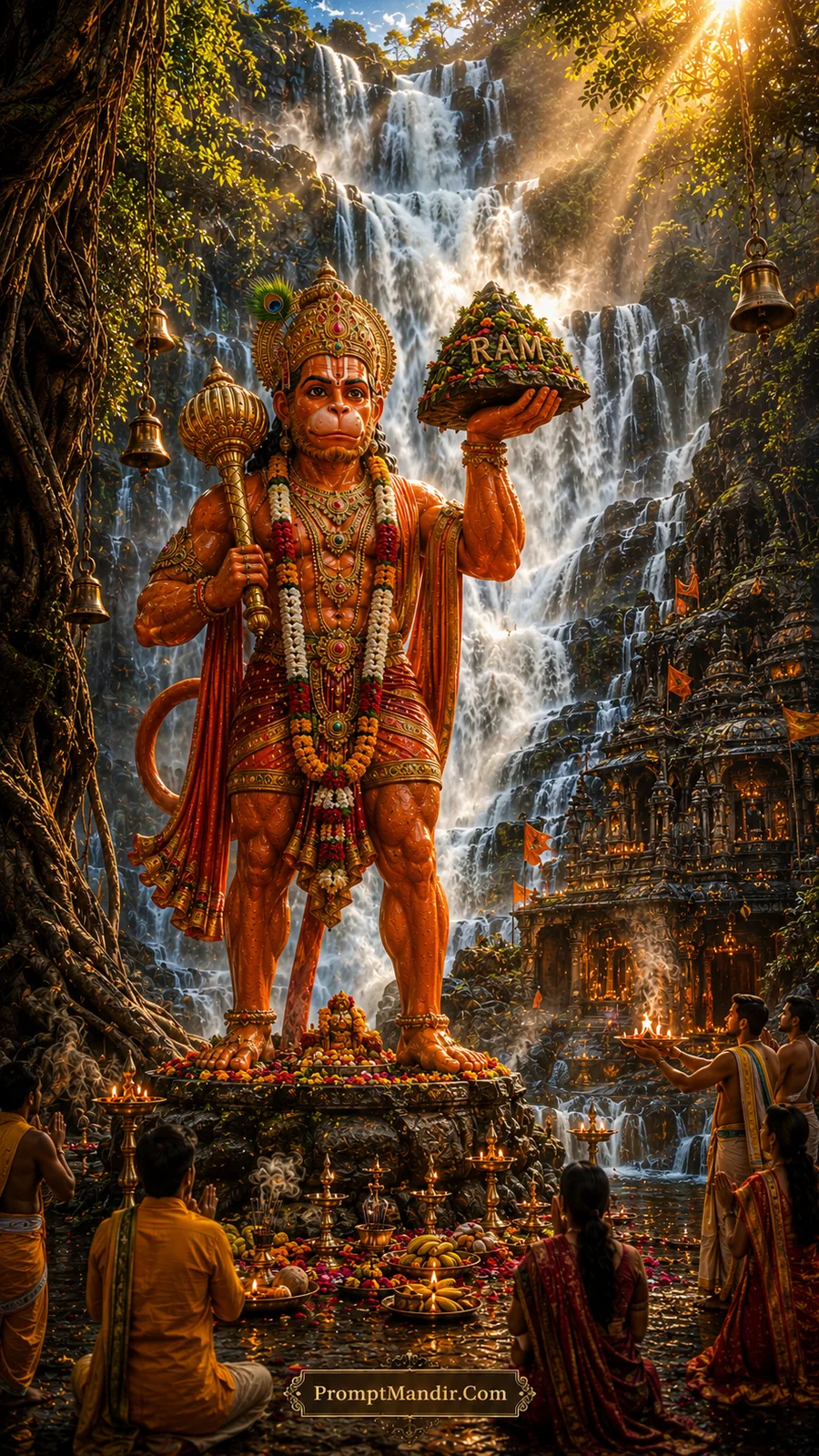
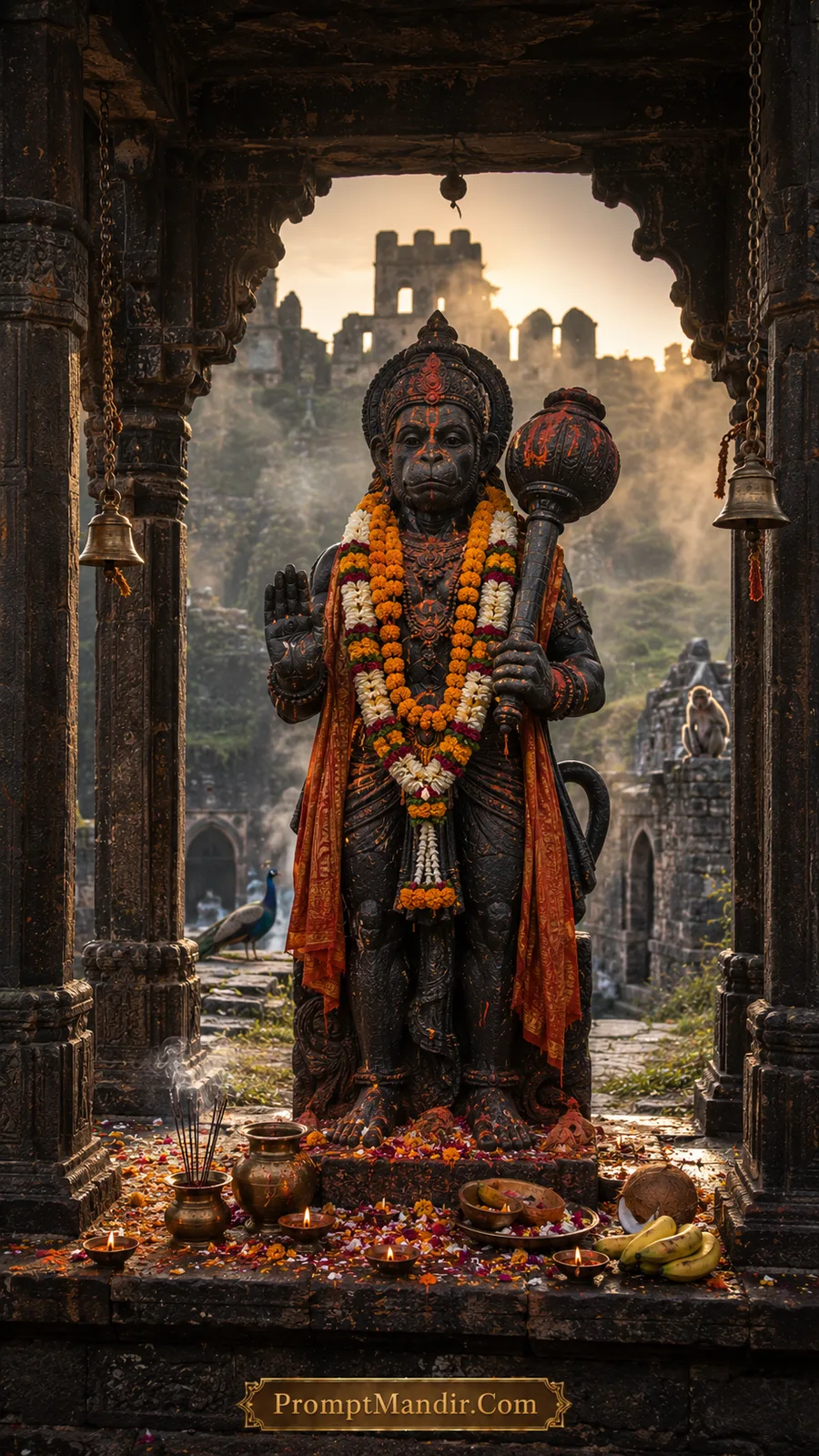
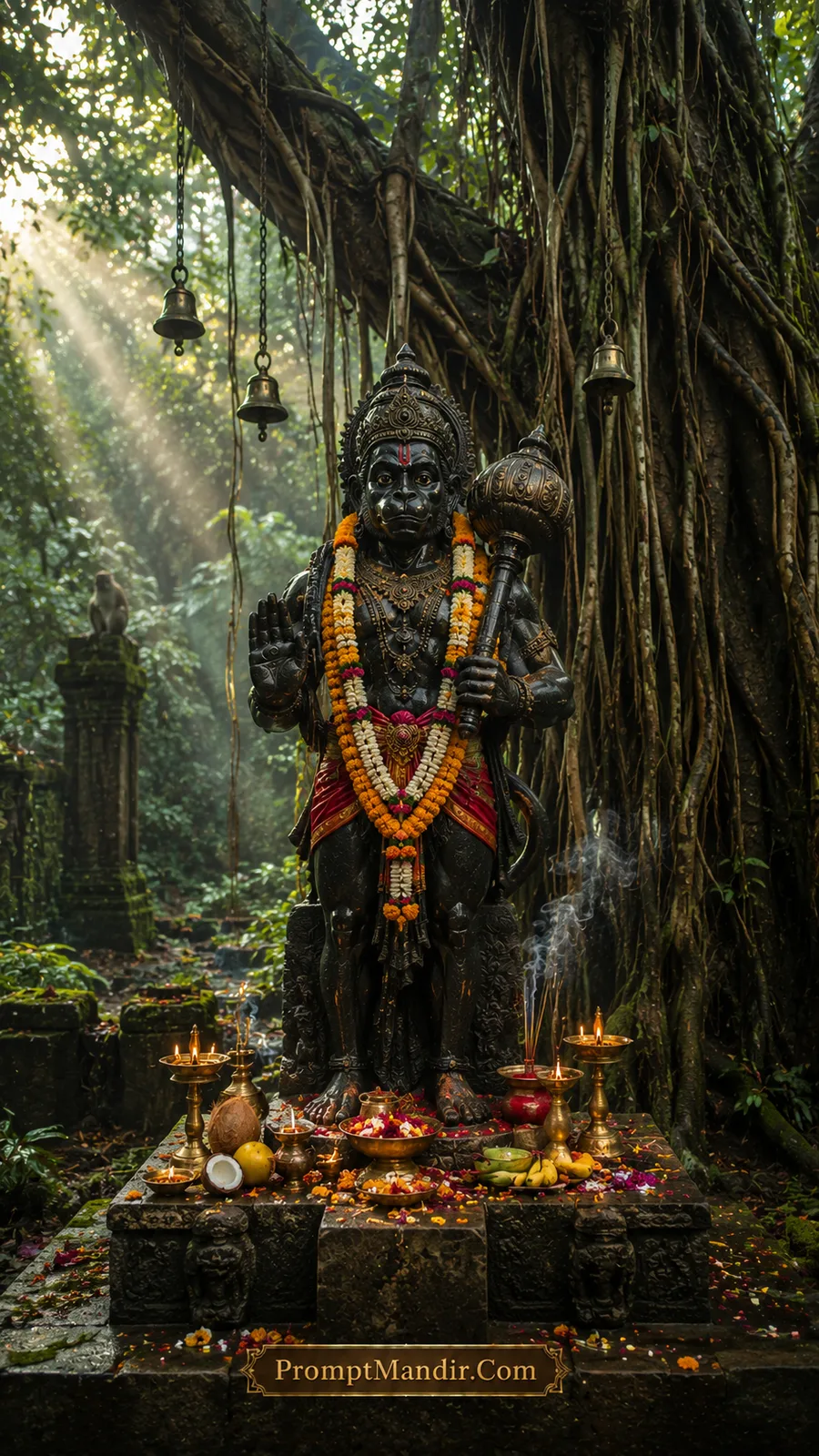
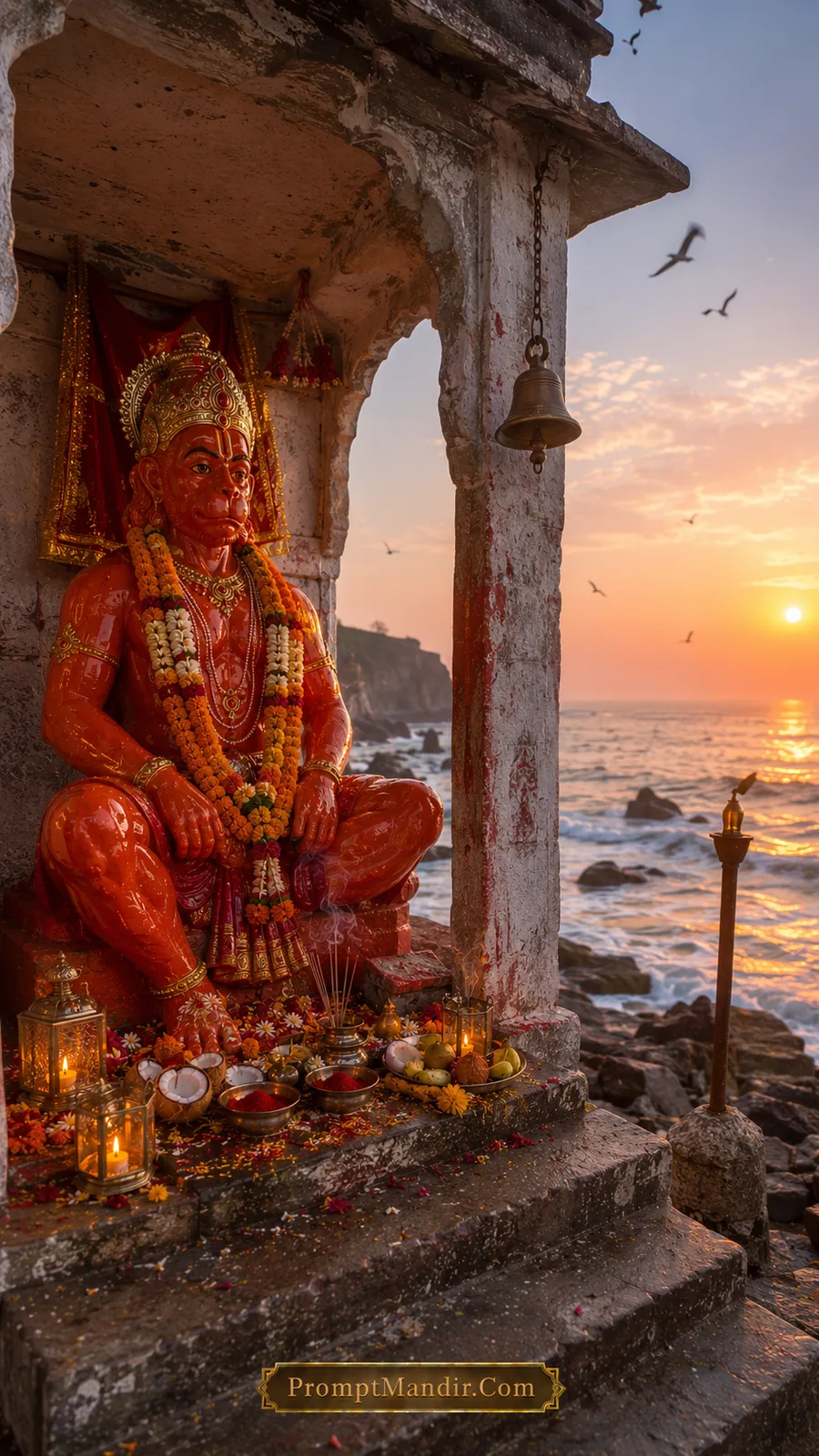
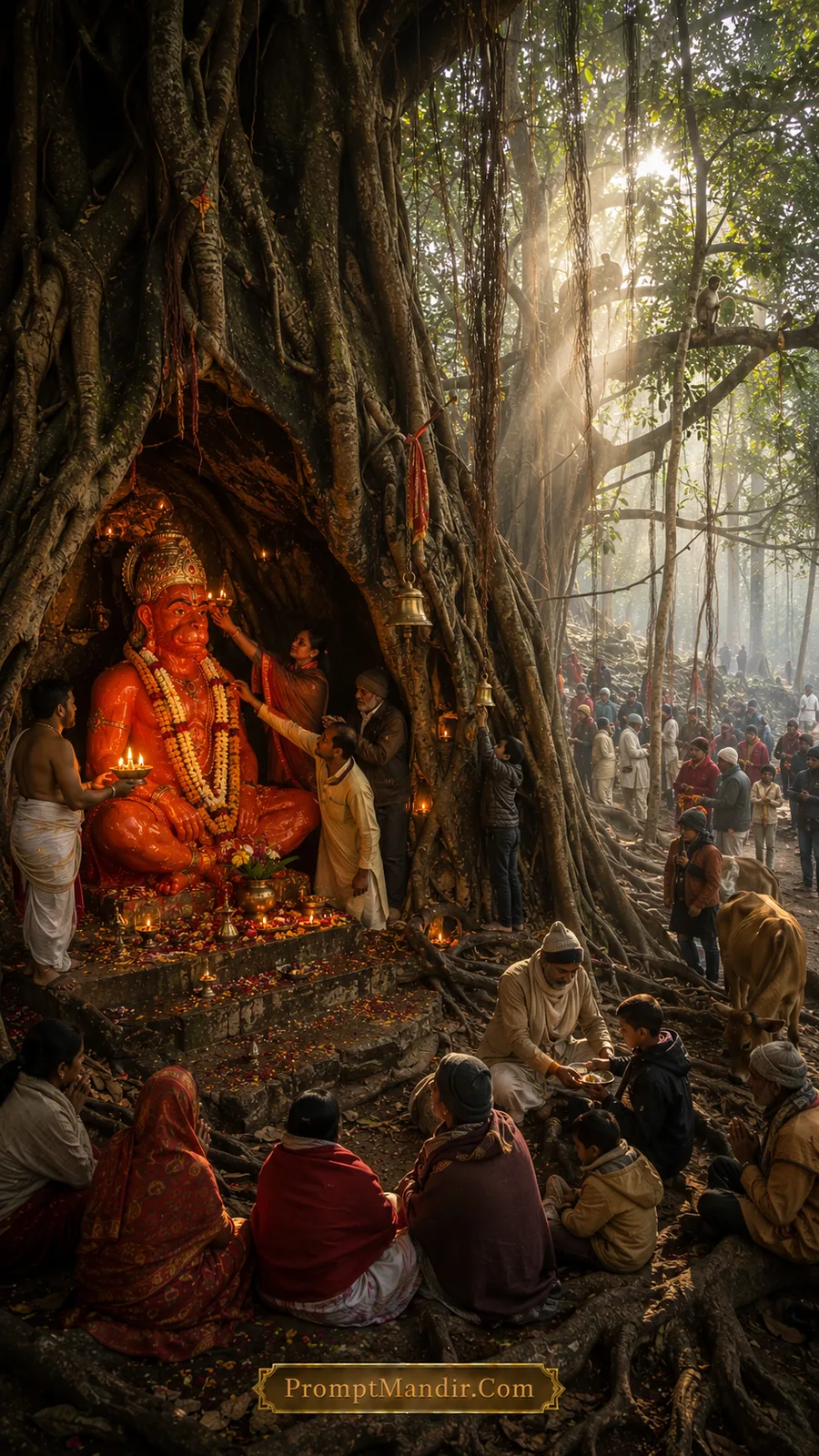
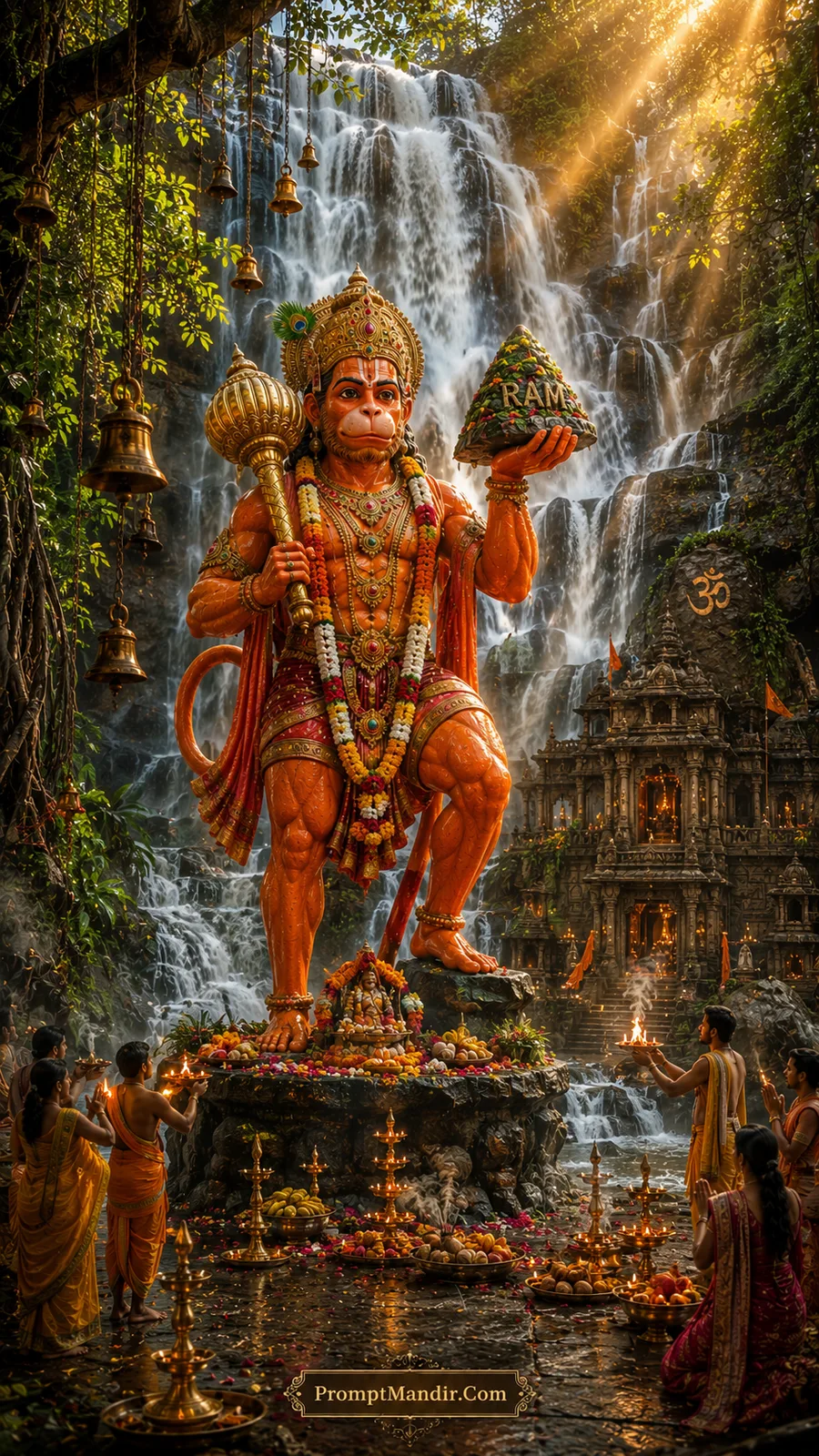
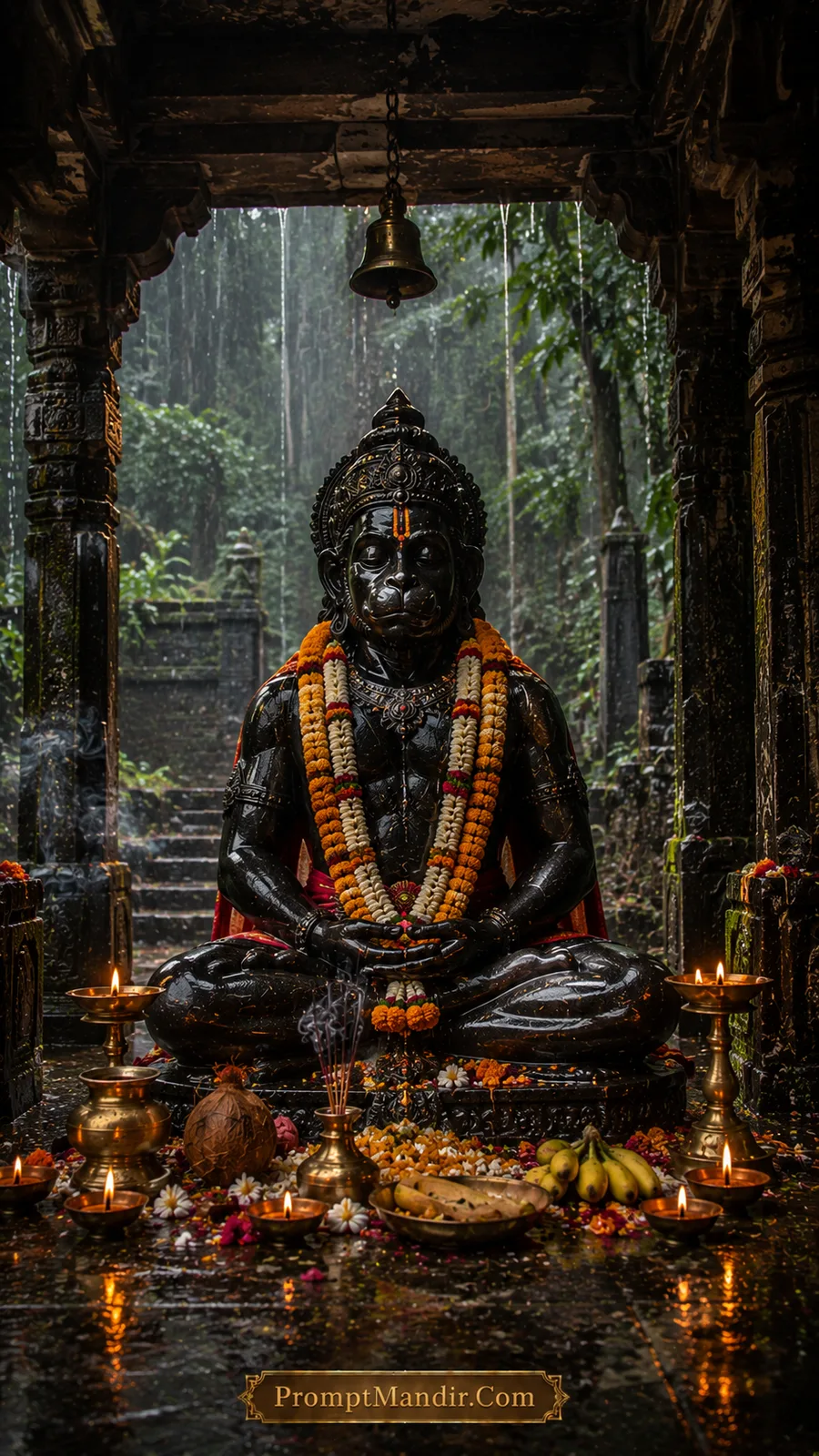
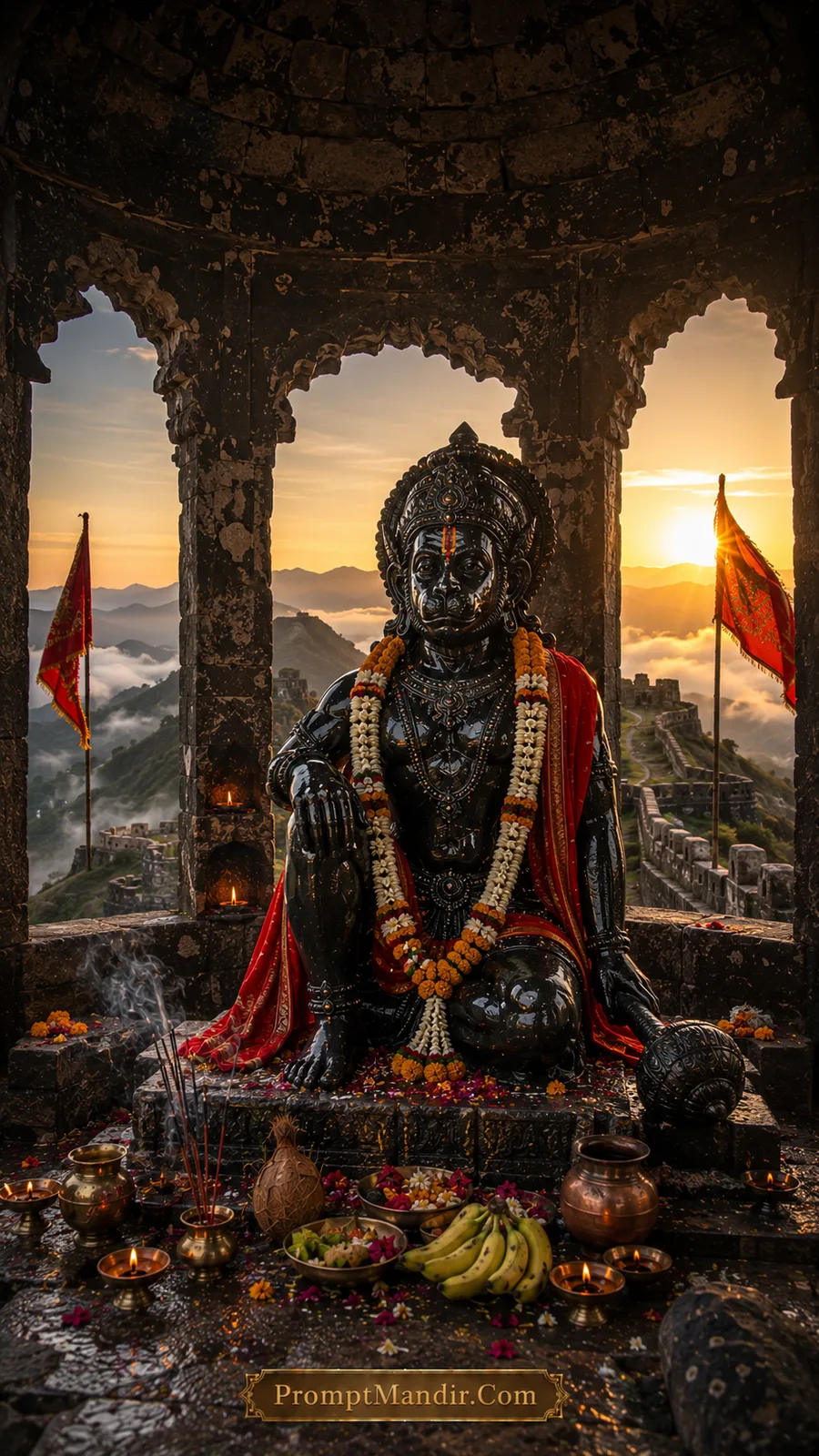
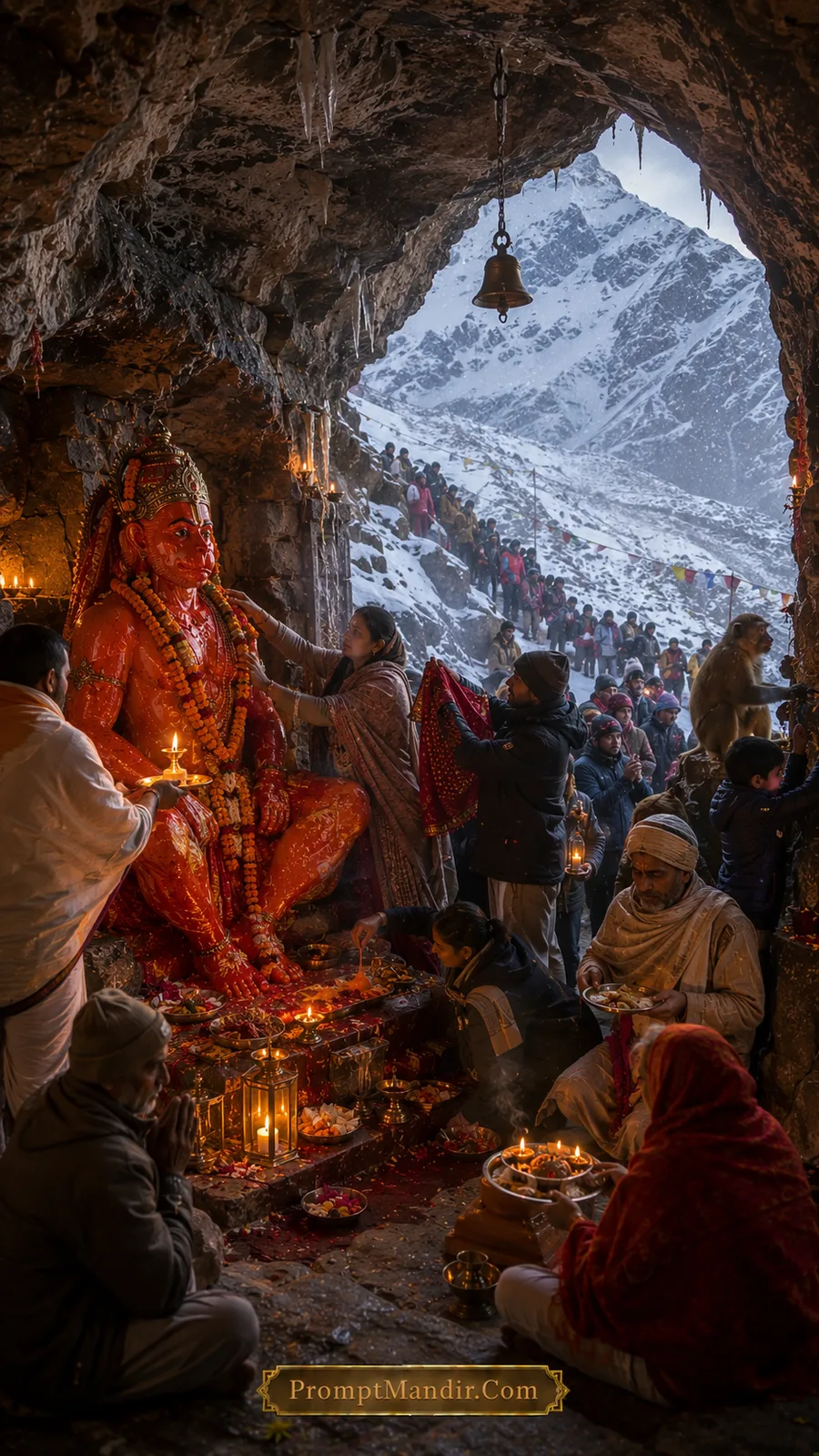
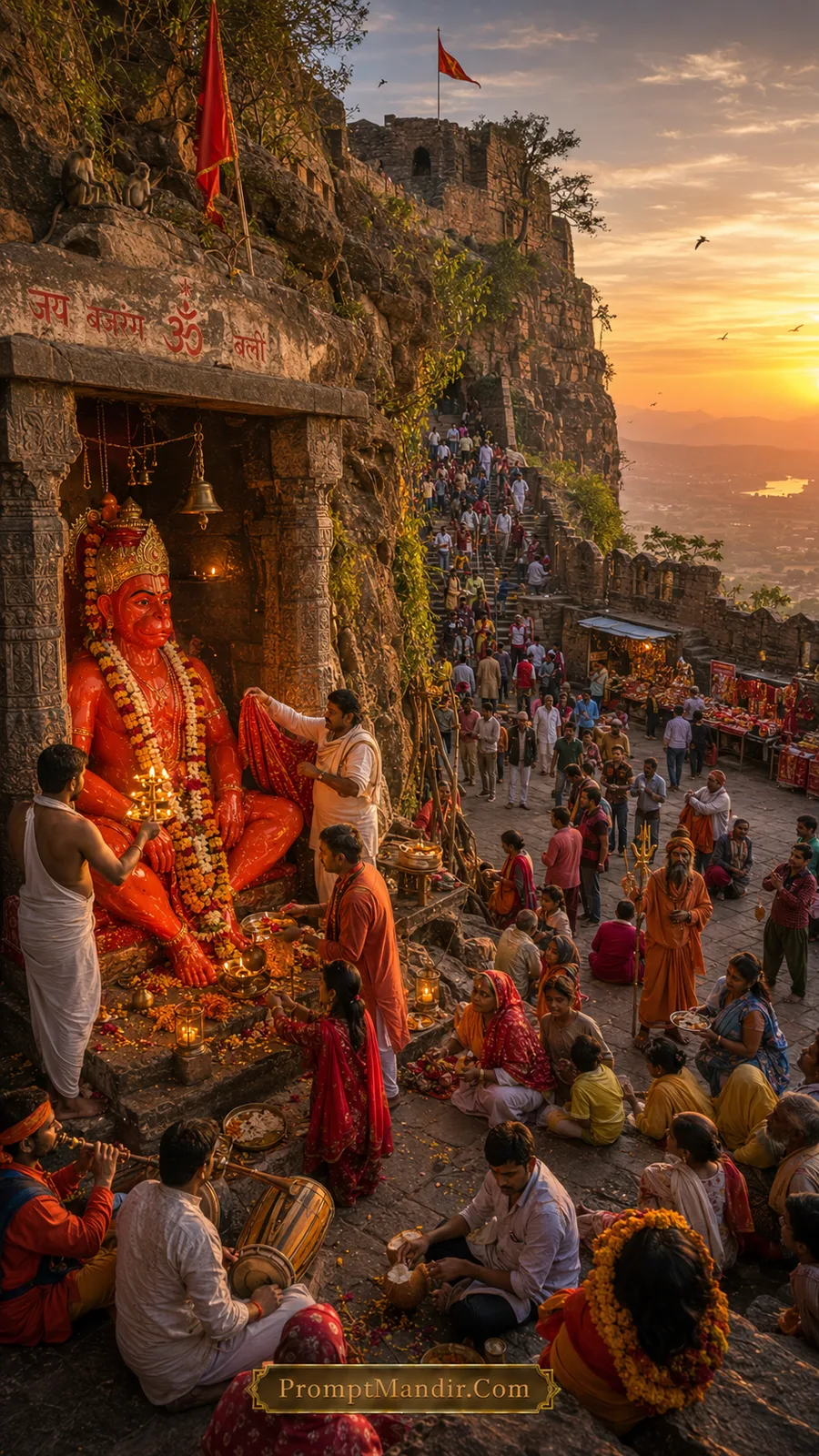
That is what the Hanuman Spiritual Artwork collection is for. It is not a series of portraits. It is a series of places. Real places, or places that feel so real you will want to visit them. A hidden temple carved into the ruins of a 400-year-old hill fort in the Aravalli mountains. A shrine deep in the jungle where a polished black stone murti sits alone while monsoon rain pours outside. A tiny seaside temple on a rocky cliff where fishermen come before dawn. A cave behind a waterfall where village women gather on the full moon to sing bhajans and perform abhishekam.
In every Hanuman Spiritual Artwork, the murti is the heart. But the murti is never alone. It is surrounded by the living faith of ordinary people. A priest performing aarti. A grandmother applying fresh sindoor with her fingers. A young man breaking a coconut on the stone floor. Children running between ruined fort pillars. The Hanuman Spiritual Artwork collection is about the relationship between the deity and the devotee, the ancient stone and the living hand that cares for it.
VIEW PROMPT
VIEW PROMPT
VIEW PROMPT
VIEW PROMPT
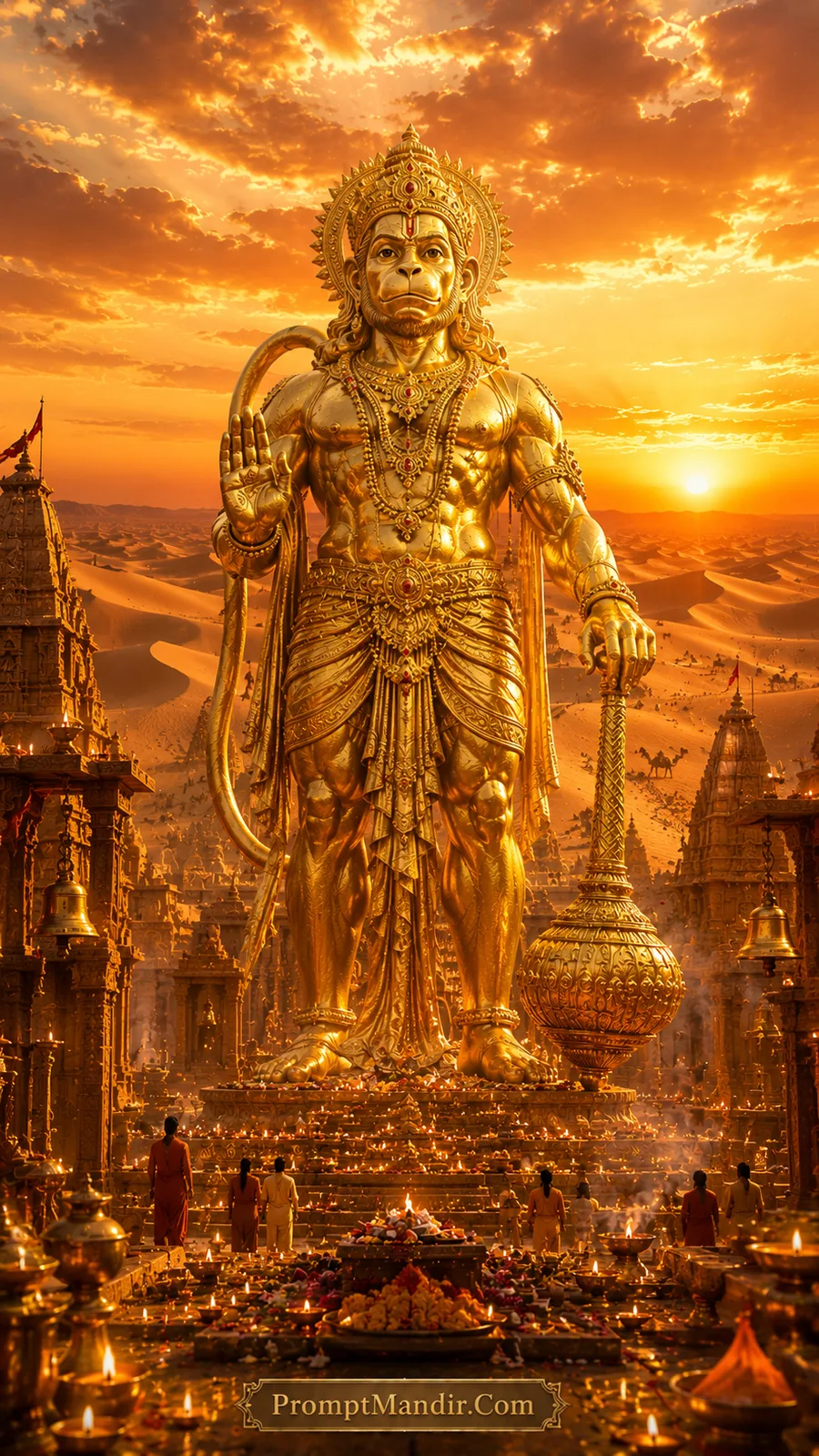
VIEW PROMPT
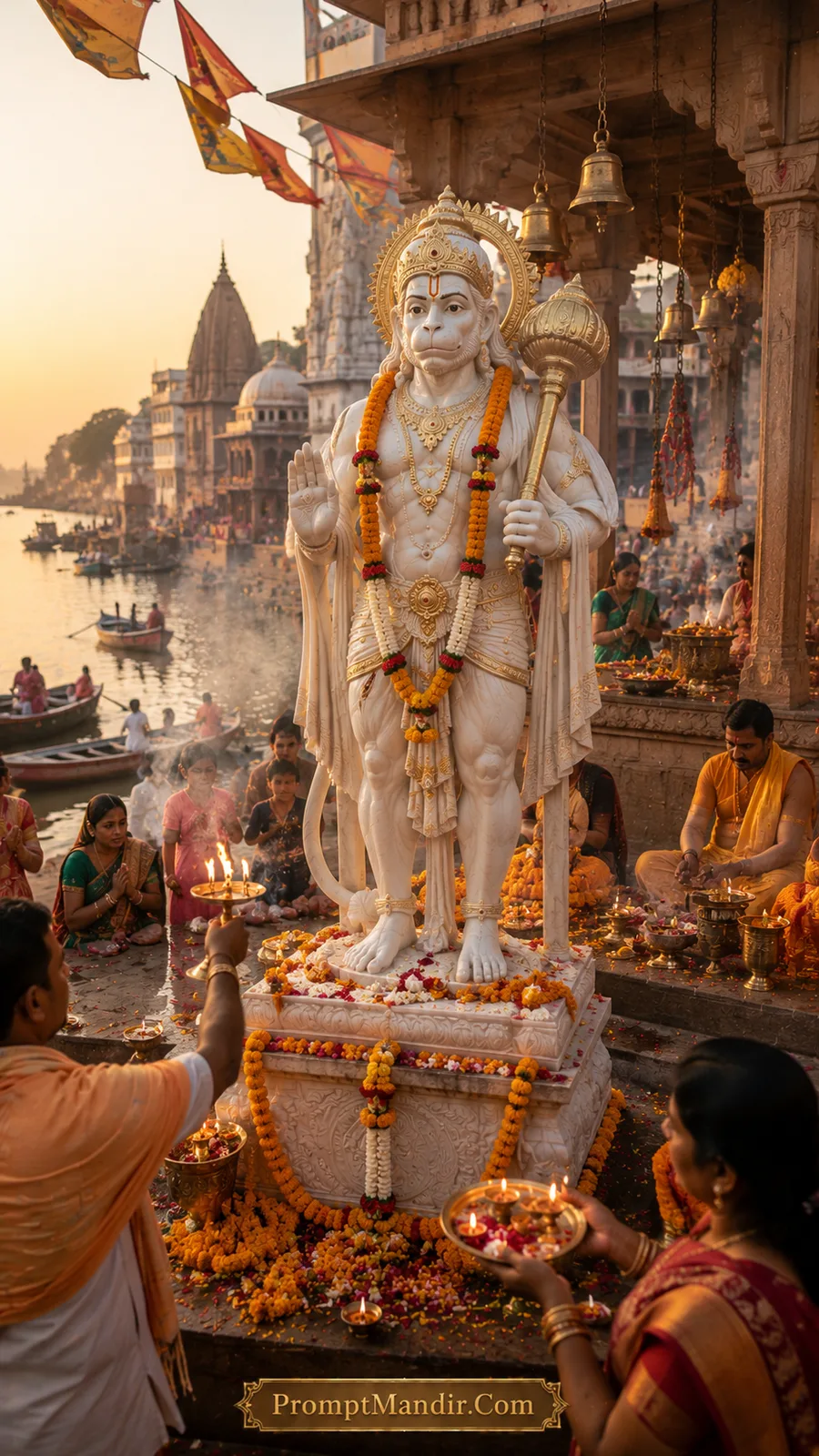
VIEW PROMPT
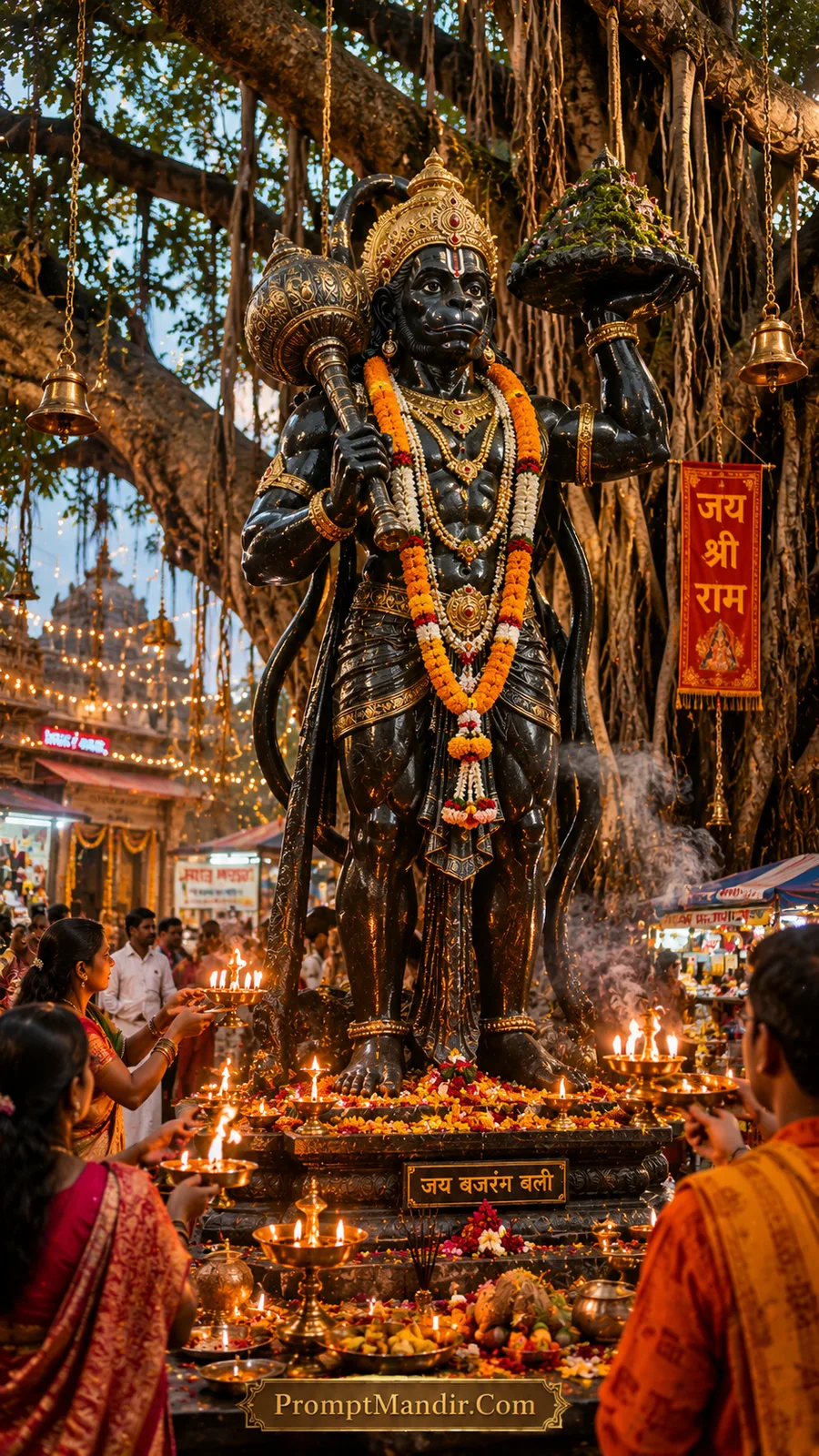
VIEW PROMPT
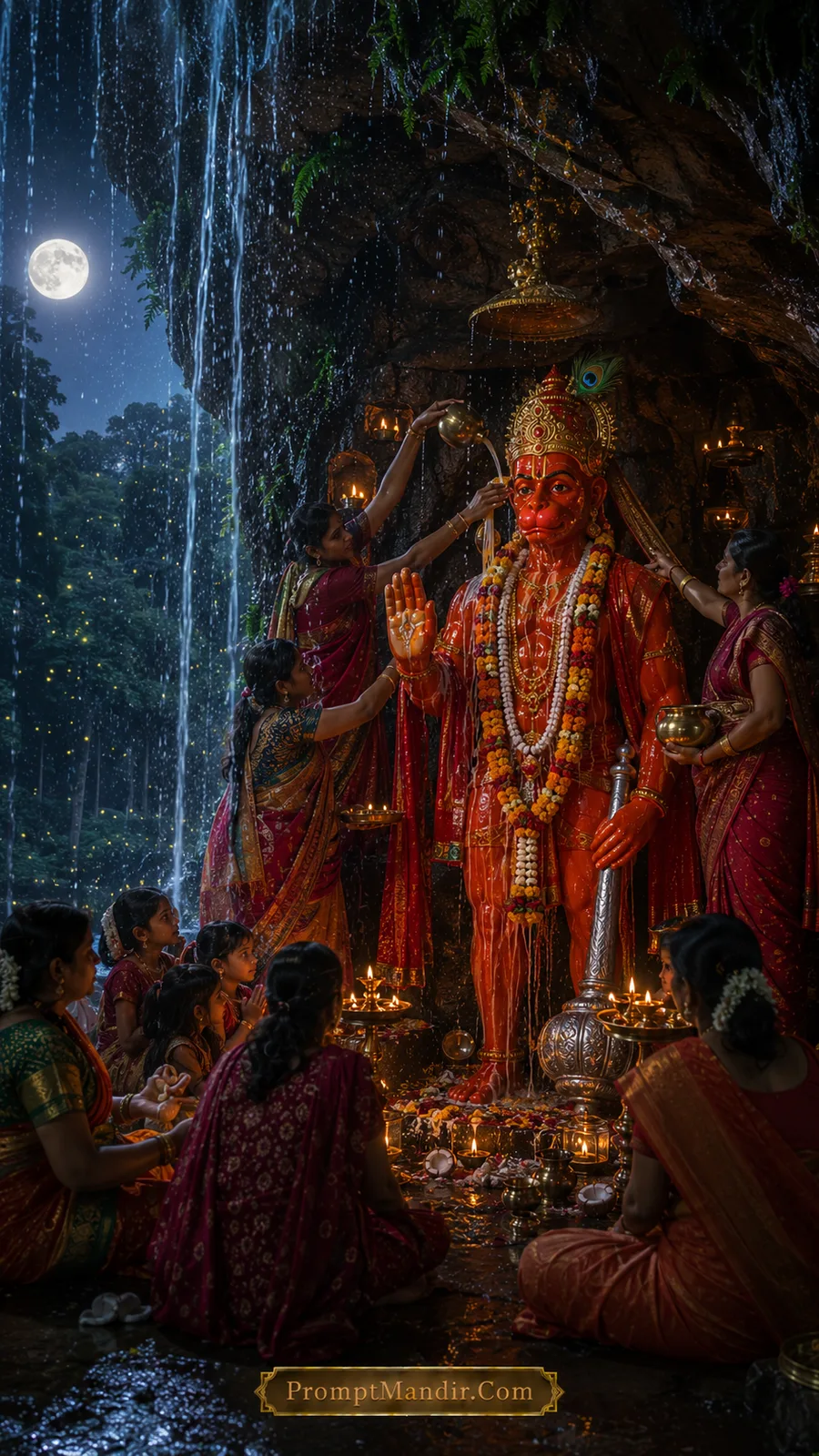
VIEW PROMPT
VIEW PROMPT
VIEW PROMPT
VIEW PROMPT
VIEW PROMPT
VIEW PROMPT
VIEW PROMPT
VIEW PROMPT
VIEW PROMPT
VIEW PROMPT
VIEW PROMPT
VIEW PROMPT
VIEW PROMPT
Explore More AI Prompt Collections
Discover more AI prompt collections covering devotional artwork, spiritual illustrations, divine characters, temple-inspired scenes, cultural designs, and creative visual concepts.
Browse related categories to find fresh inspiration for generating unique AI images, wallpapers, posters, social media graphics, and digital artwork.
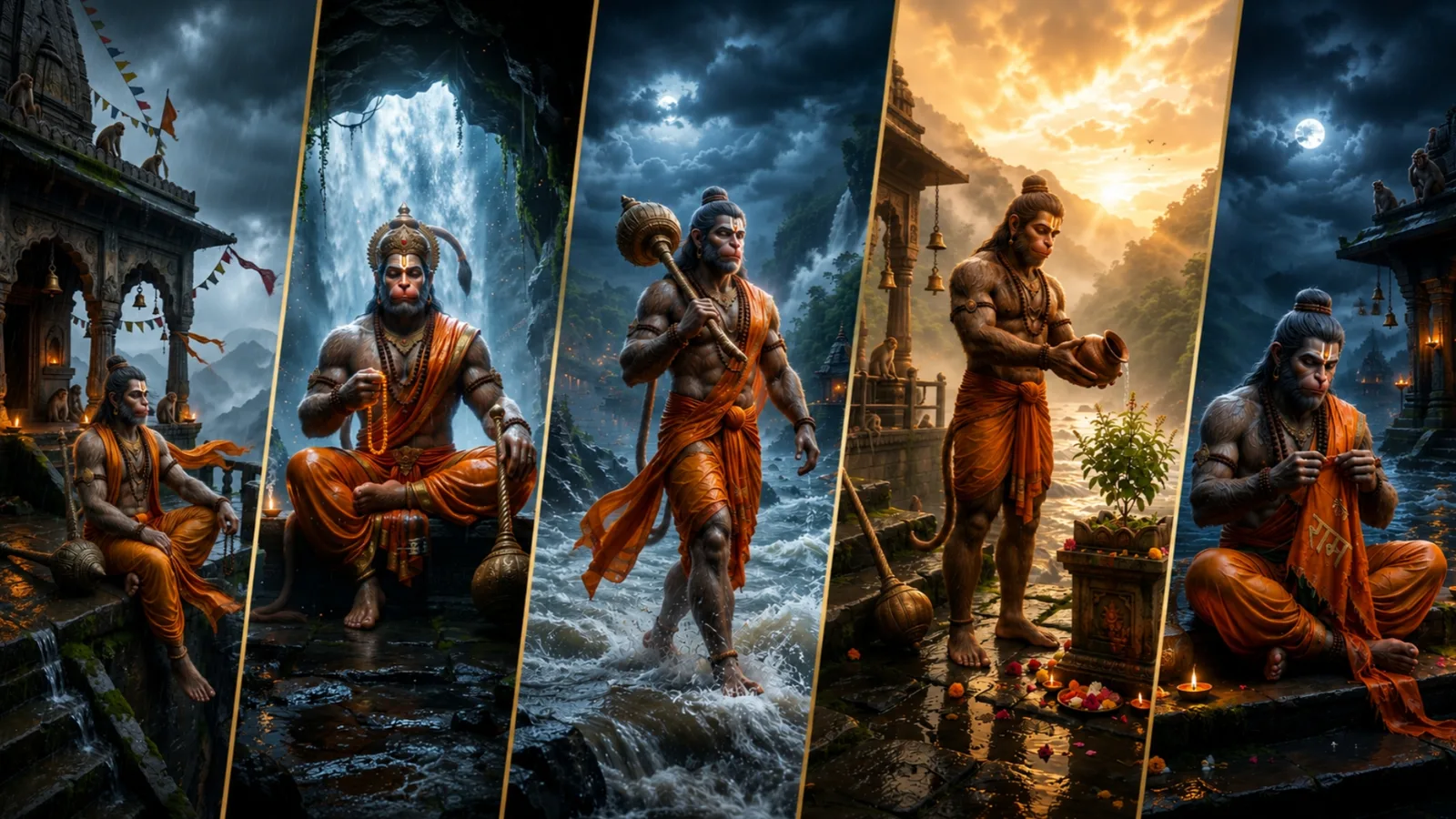
Hanuman Divine Prompts
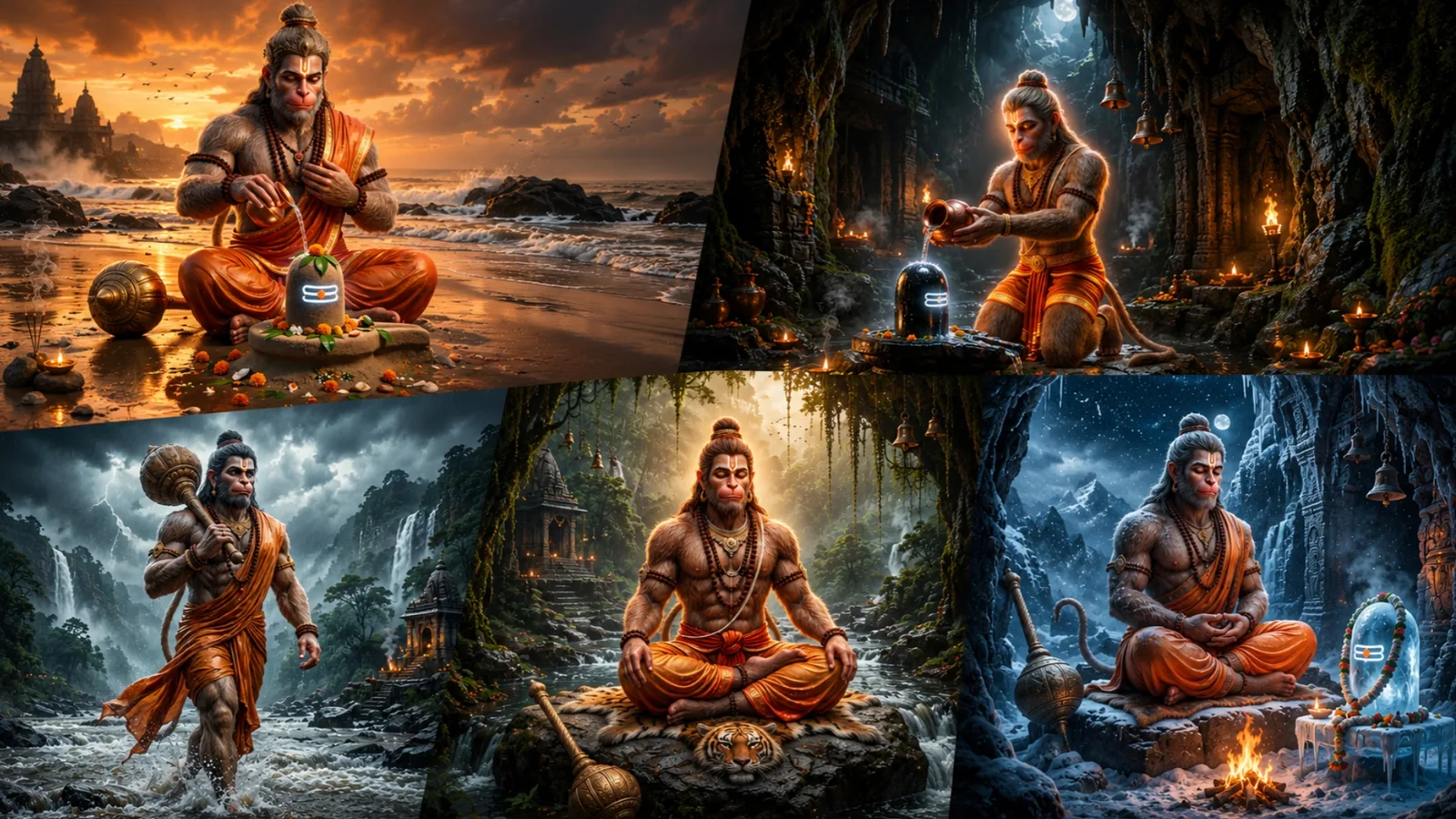
Hanuman Shiv Bhakti Prompts
Hanuman Silver White Pose
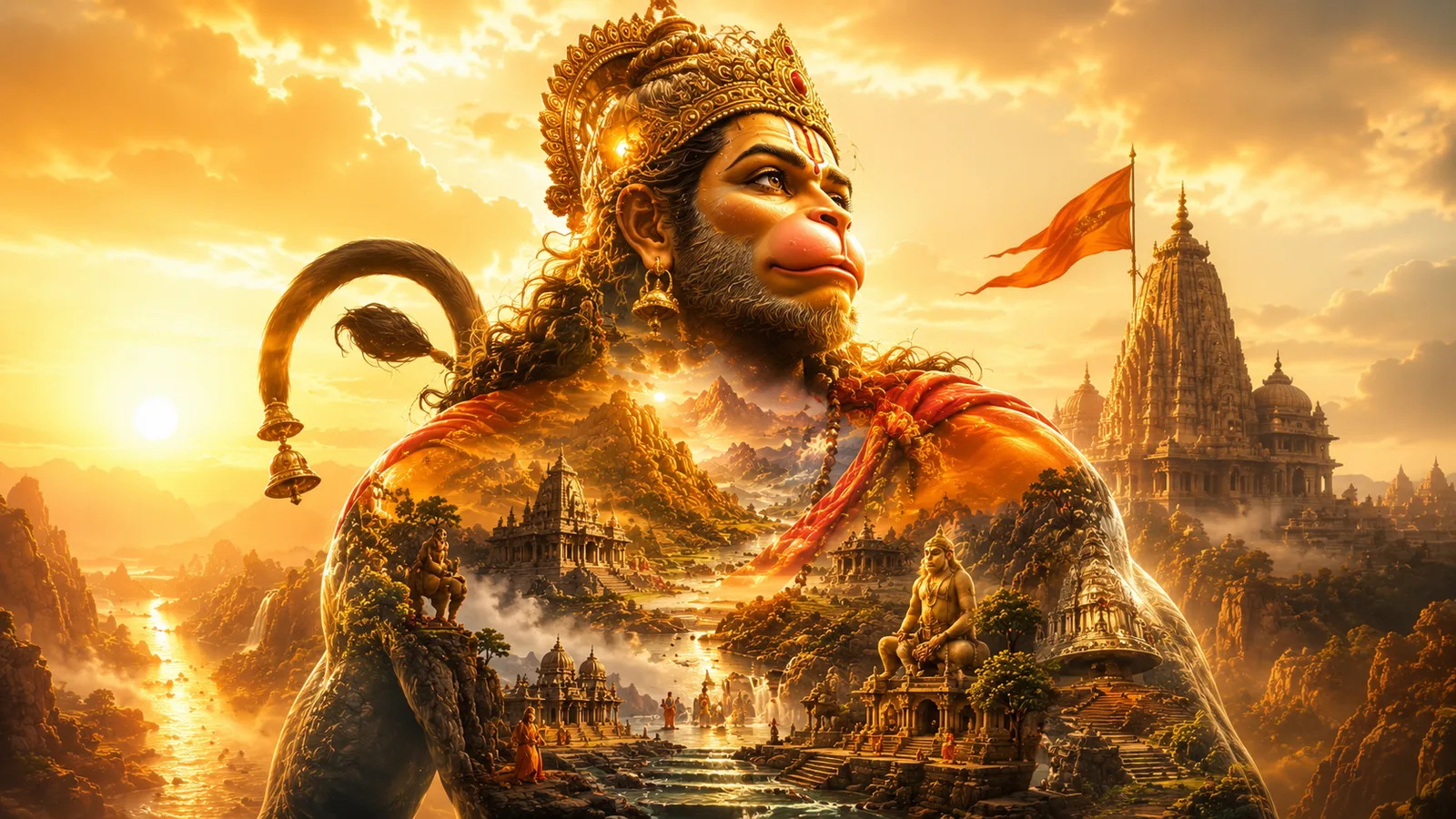
Hanuman Double Exposure
Prompt Customization Tips
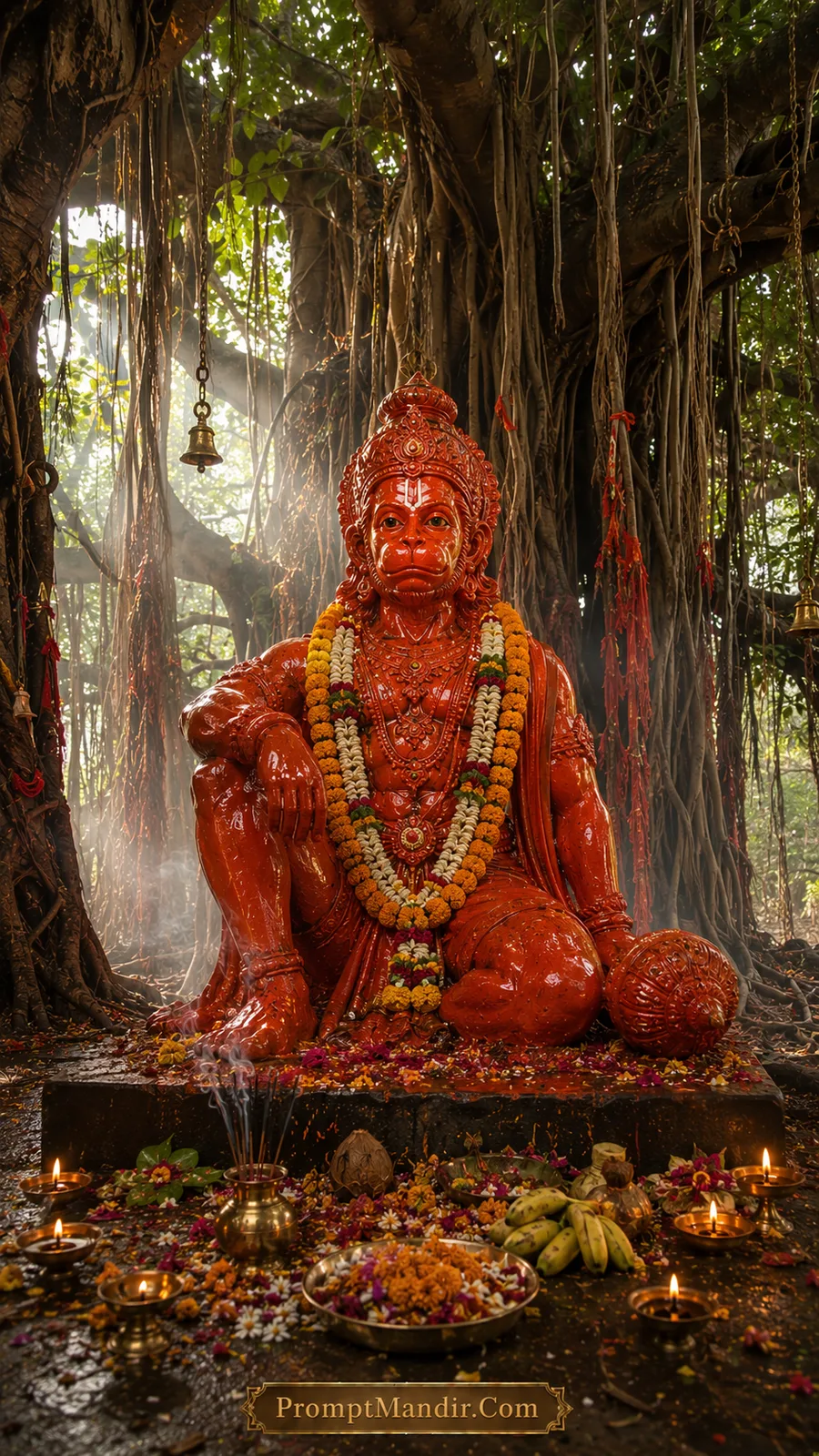
The murti in the Hanuman Spiritual Artwork collection is always authentic. It is not a giant, a fantasy, or a digital sculpture. It is a temple idol with realistic proportions, covered in the materials of real worship. Thick, glossy vermilion sindoor chola. Polished black stone with a mirror-like reflective surface developed through decades of oil offerings and ghee rituals. The Hanuman Spiritual Artwork prompts specify these materials in detail because the texture of the murti tells the story of its worship.
The environment in every Hanuman Spiritual Artwork is a character in its own right. A 400-year-old abandoned hill fort with massive stone walls covered in wild vines. A dense rainforest where heavy monsoon rain pours continuously. A sea cliff where powerful waves crash against the rocks below. A cave hidden behind a 50-foot waterfall, accessible only by walking through the water. The Hanuman Spiritual Artwork collection is as much about these places as it is about the deity who resides in them.
Weather is essential to the Hanuman Spiritual Artwork collection. Heavy monsoon rain, cold mountain fog, sea spray, the mist from a crashing waterfall. The weather makes the temple feel alive and vulnerable. It also makes the act of worship more meaningful. A diya that stays lit despite the storm is not just a flame. It is a small victory of devotion over the elements. The Hanuman Spiritual Artwork prompts use weather to heighten the emotional stakes.
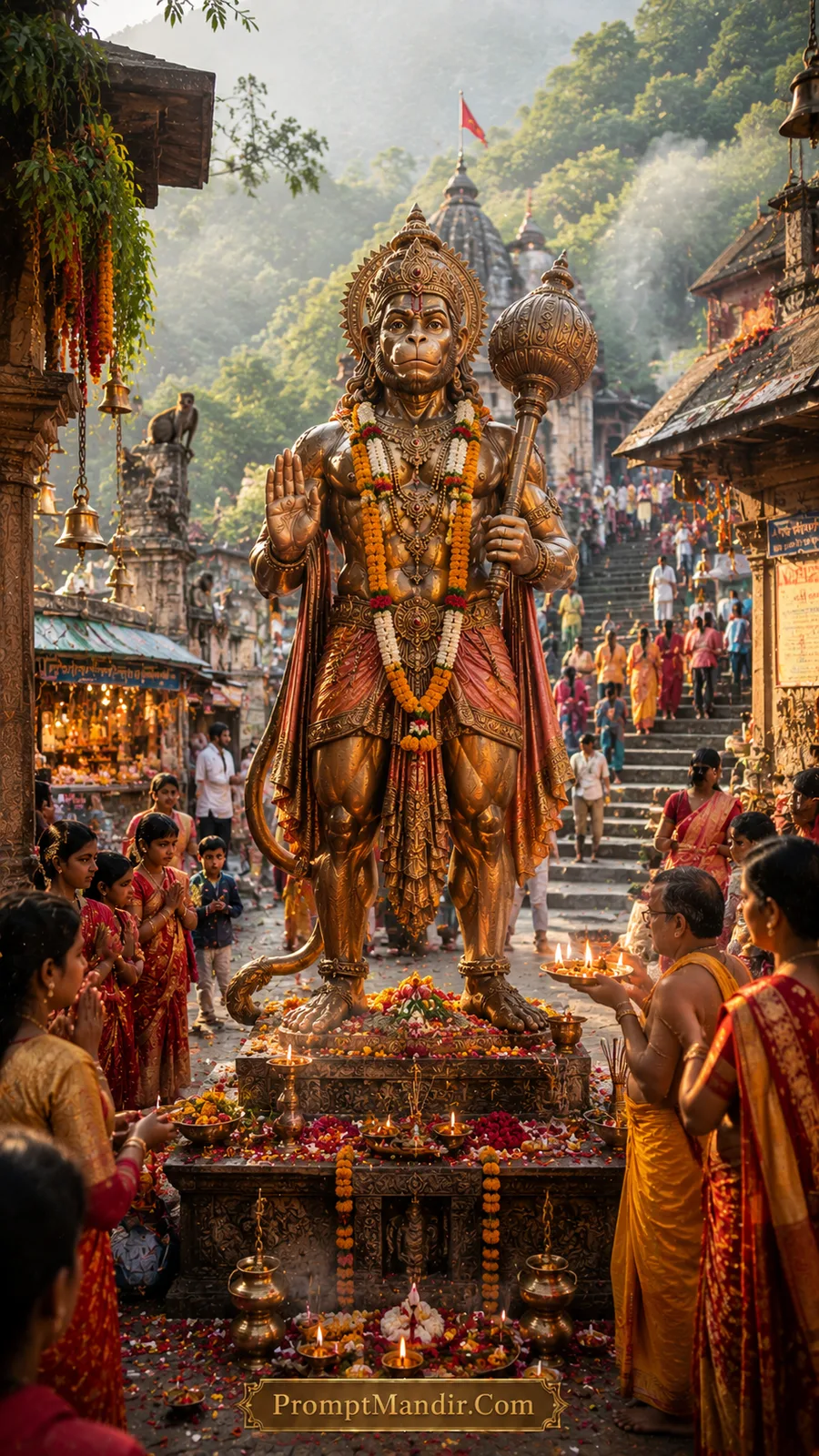
The presence of devotees is what makes the Hanuman Spiritual Artwork collection unique. These are not empty temples. They are filled with people. A priest in saffron performing aarti with a five-wick brass lamp. A devotee pouring liquid sindoor from a brass cup onto the murti’s feet. Women singing bhajans in a circle, clapping hands. A sadhu blessing people with a raised hand. Children receiving prasad. The Hanuman Spiritual Artwork prompts are crowd scenes, but they are intimate crowd scenes. Every person is doing something specific and believable.
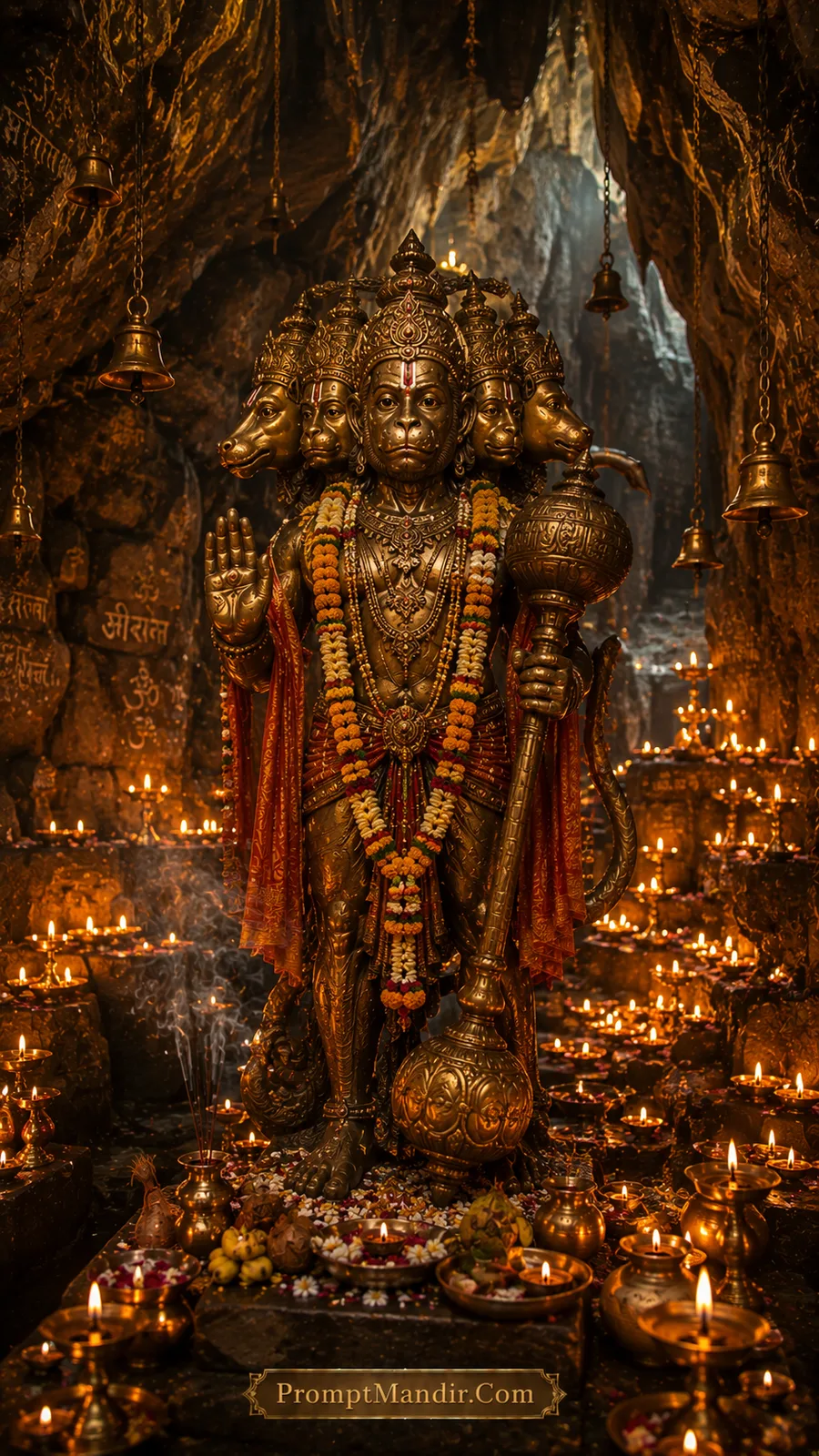
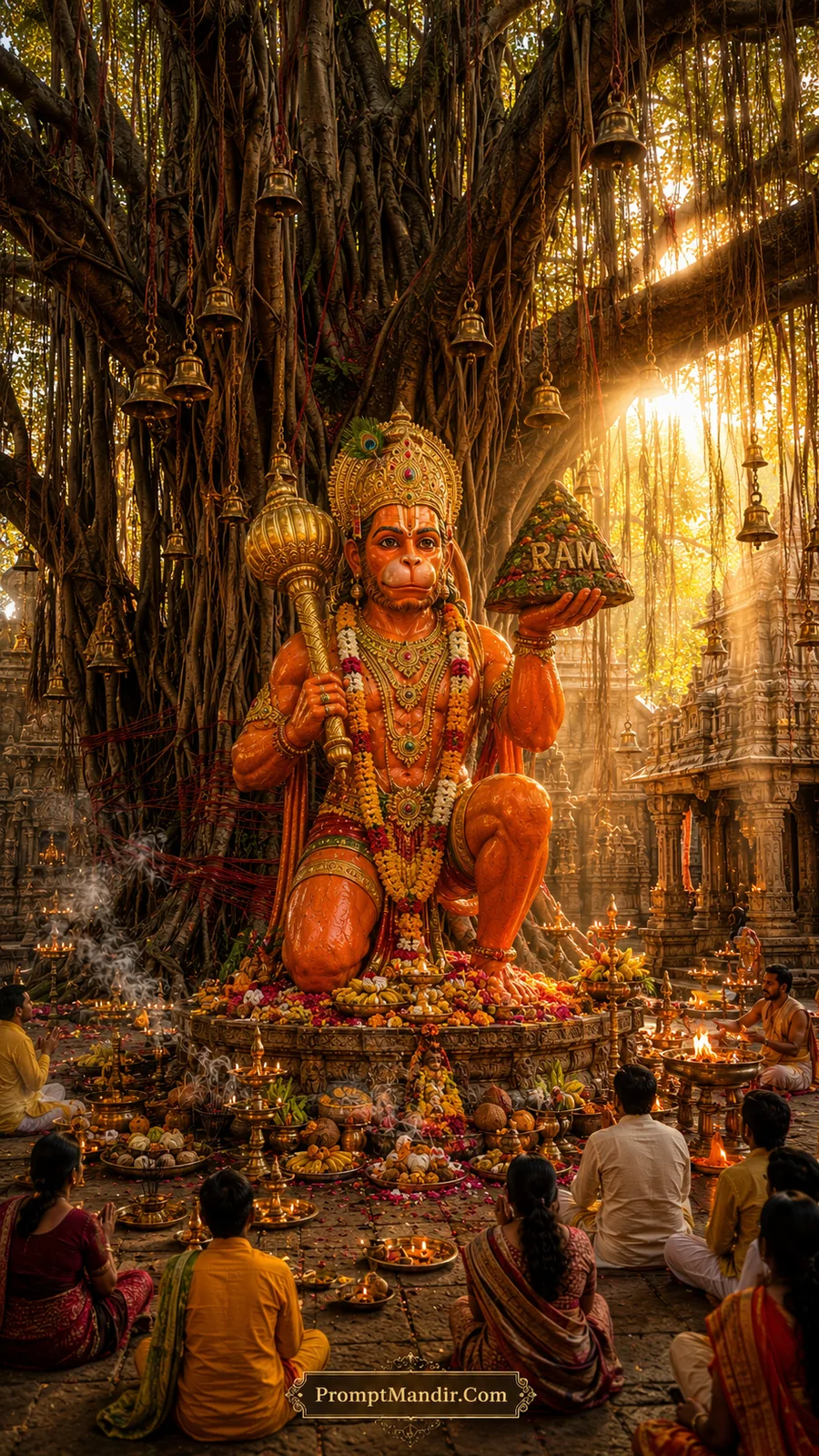
The offerings around the murti are described with precision. Fresh marigold garlands, jasmine malas, bright red cloth, coconuts, bananas, incense sticks, brass kalash, copper vessels, scattered flower petals. These are not random decorations. They are the evidence of recent worship. The Hanuman Spiritual Artwork prompts specify that the offerings look fresh, as if someone came before sunrise, performed puja, and quietly left.
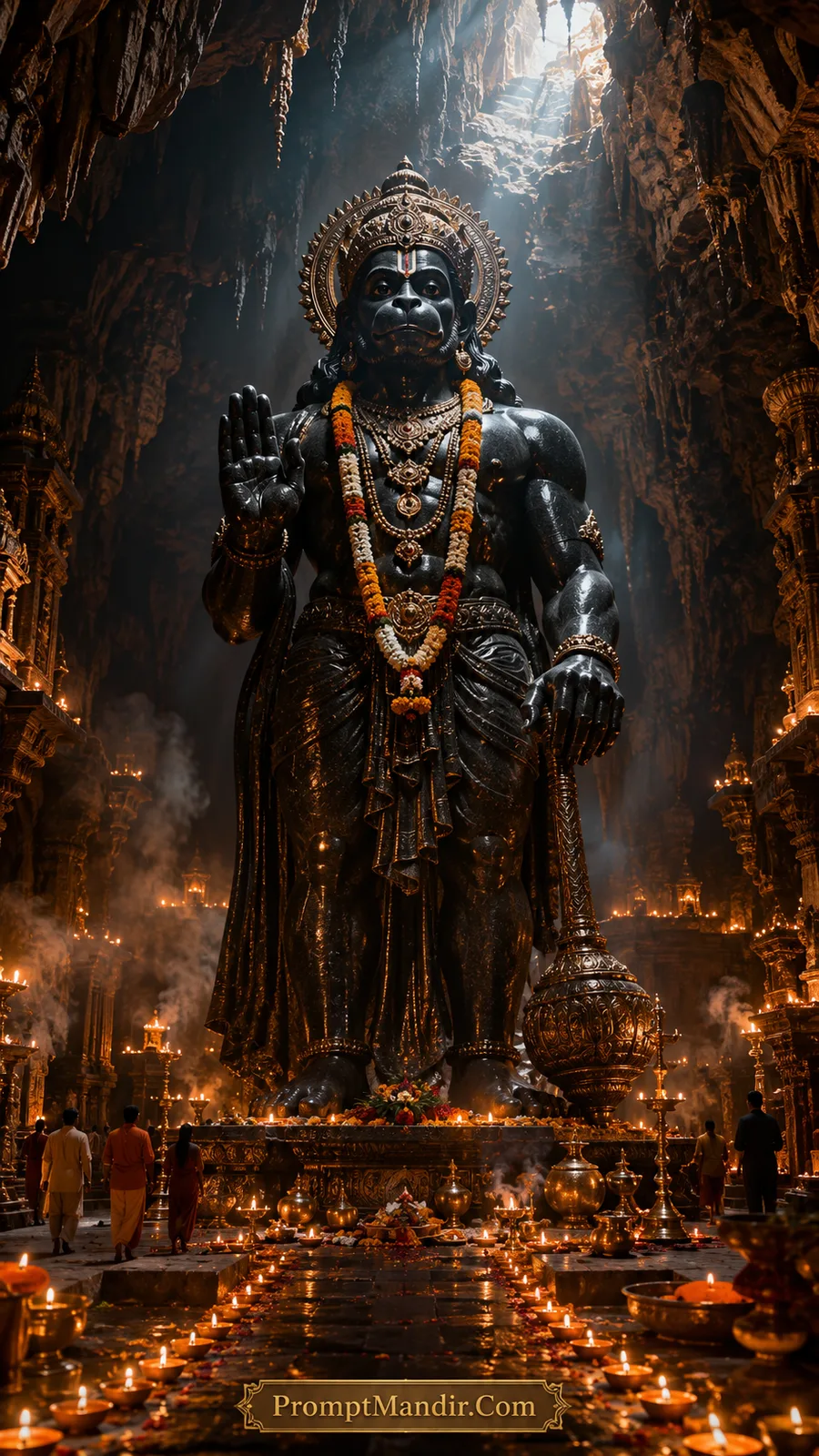
Lighting in the Hanuman Spiritual Artwork collection is always a blend of natural and sacred sources. Golden sunset light entering through a temple entrance. Soft diffused monsoon daylight filtering through rain clouds. Bright moonlight through a cave ceiling opening. The warm orange glow of dozens of brass diyas. Incense smoke catching the light. The Hanuman Spiritual Artwork prompts use this blend to create atmosphere. The light tells you what time it is, what the weather is like, and how the space feels.
The sound is implied but deeply felt. A drummer and shehnai player in the temple courtyard. Bhajans being sung softly in a cave. The crash of ocean waves. The roar of a waterfall. The continuous drumming of monsoon rain on stone. The Hanuman Spiritual Artwork prompts describe the sources of sound so that the viewer can imagine the full sensory experience. These are not silent images.
Scale and distance are carefully managed in the Hanuman Spiritual Artwork collection. The murti occupies a significant portion of the frame, but the surrounding architecture and landscape are always visible. The ancient fort walls, the jungle canopy, the endless ocean horizon. This creates a sense of place. The murti belongs to this specific temple, on this specific mountain, on this specific evening. The Hanuman Spiritual Artwork prompts are site-specific devotions.
Frequently Asked Questions
What is the Hanuman Spiritual Artwork collection?
It is a series of ultra-photorealistic, location-based devotional scenes featuring Lord Hanuman murtis in real, lived-in temple environments. The Hanuman Spiritual Artwork collection focuses on the relationship between the deity, the sacred space, and the devotees who worship there.
How is the Hanuman Spiritual Artwork collection different from other Hanuman prompt collections?
Other collections focus on Hanuman as a living figure, in battle, training, or performing acts of service. The Hanuman Spiritual Artwork collection focuses on Hanuman as a murti, a sacred idol being worshipped in a specific, highly detailed environment.
What kind of murtis appear in the Hanuman Spiritual Artwork collection?
Temple murtis covered in glossy vermilion sindoor chola, polished black stone murtis with mirror-like reflective surfaces, and weathered stone murtis with natural moss and age. The Hanuman Spiritual Artwork prompts always specify authentic temple proportions.
What locations are featured in the Hanuman Spiritual Artwork collection?
A hill fort ruin in the Aravalli mountains, a jungle temple during monsoon, a seaside cliff shrine, a cave behind a waterfall, a temple beneath a giant banyan tree, and a remote forest shrine. The Hanuman Spiritual Artwork collection is a pilgrimage through diverse sacred landscapes.
Why are devotees present in the Hanuman Spiritual Artwork collection?
Because the murti is not an object. It is the center of a living tradition. The priest, the grandmother applying sindoor, the women singing bhajans, the children receiving prasad. The Hanuman Spiritual Artwork prompts include these figures to show that devotion is an action, not just a feeling.
What kind of offerings appear in the Hanuman Spiritual Artwork collection?
Fresh marigold and jasmine garlands, bright red cloth, coconuts, bananas, incense, brass kalash, copper vessels, scattered flower petals, and prasad. The Hanuman Spiritual Artwork prompts specify that the offerings look fresh and recently placed.
What is the lighting style in the Hanuman Spiritual Artwork collection?
A blend of natural light and sacred flame. Golden sunset, soft monsoon daylight, bright moonlight, and the warm orange glow of dozens of brass diyas. The Hanuman Spiritual Artwork prompts use light to create a specific time, weather, and mood.
What role does weather play in the Hanuman Spiritual Artwork collection?
Weather creates atmosphere and challenge. Monsoon rain, sea spray, waterfall mist, cold mountain fog. The weather makes the temple feel alive and the act of worship more urgent. The Hanuman Spiritual Artwork prompts use weather to deepen the emotional impact.
Is the Hanuman Spiritual Artwork collection suitable for Instagram and social media?
Yes. The prompts are specifically designed for a vertical 9:16 reel format with ultra-photorealistic quality. The Hanuman Spiritual Artwork collection is built to be visually arresting, emotionally powerful, and highly shareable.
What is the deeper purpose of the Hanuman Spiritual Artwork collection?
To capture the feeling of being at a real temple. The smell of incense, the sound of bhajans, the sight of a sindoor-covered murti glowing in the light of a hundred diyas. The Hanuman Spiritual Artwork collection is about presence. The presence of the deity, and the presence of the devotee who came before dawn to offer flowers.
About This Hanuman Spiritual Artwork Collection
Some temples are famous. They have websites, donation counters, and queues that stretch for miles. And then there are the other temples. The ones hidden behind waterfalls. The ones tucked into ruined hill forts. The ones on lonely sea cliffs where only fishermen stop to pray.
The Hanuman Spiritual Artwork collection is about those other temples. It is about the murtis that are not photographed for calendars. The ones covered in thick, uneven layers of sindoor, applied by hand, renewed every Tuesday and Saturday by someone who walked up a mountain to do it.
These images are not about perfection. They are about presence. The presence of the murti, the presence of the devotee, the presence of centuries of worship that have soaked into the stone. The Hanuman Spiritual Artwork collection is an invitation to visit these places. To stand in the cave behind the waterfall. To sit in the jungle temple while the monsoon pours outside. To climb the stone steps of the old fort and receive darshan as the sun sets over the Aravalli hills.
The bell is ringing. The diyas are lit. Hanuman is waiting.