
Maa Durga Cinematic — Not Every Battle Is Fought with a Sword
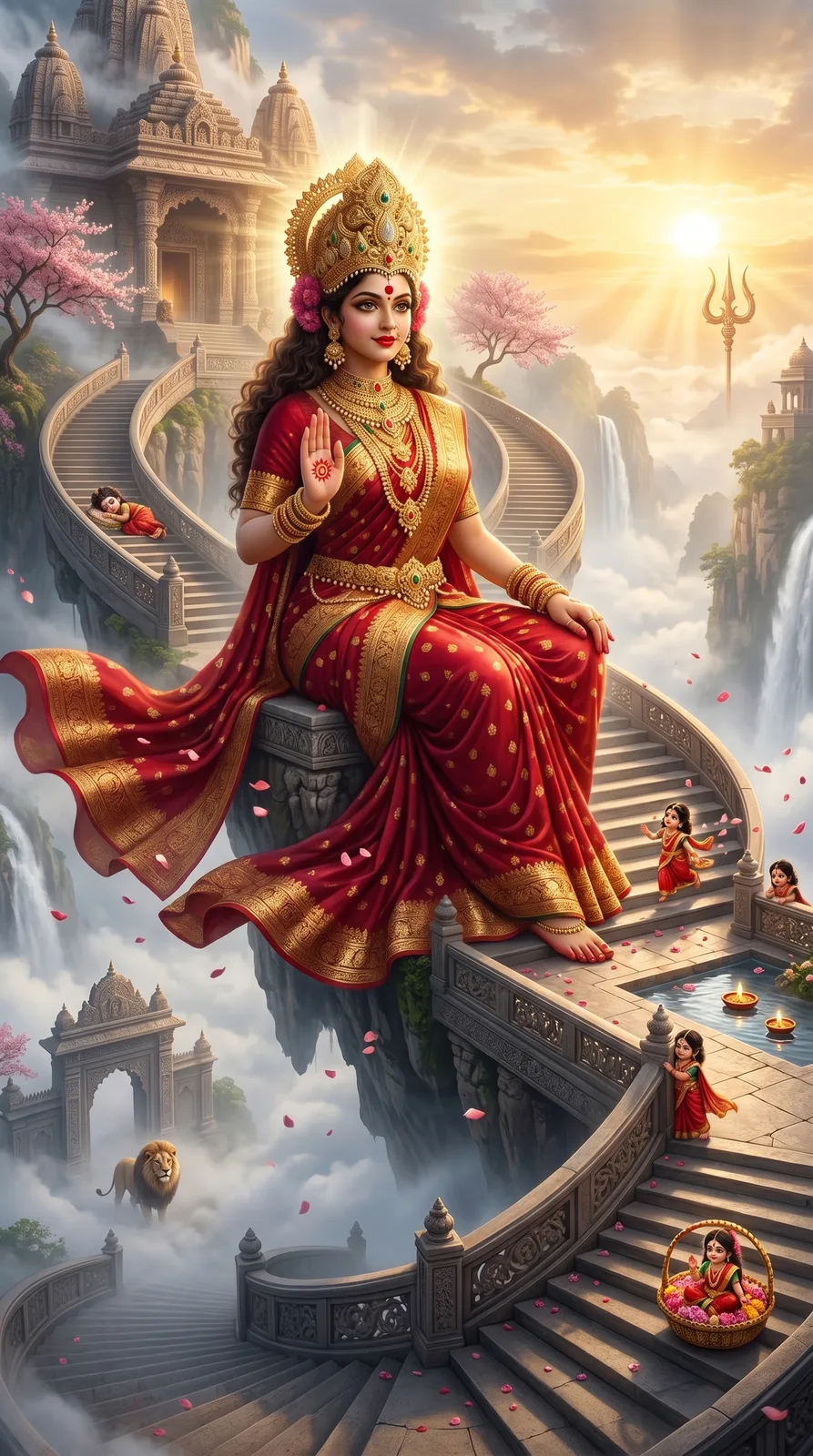
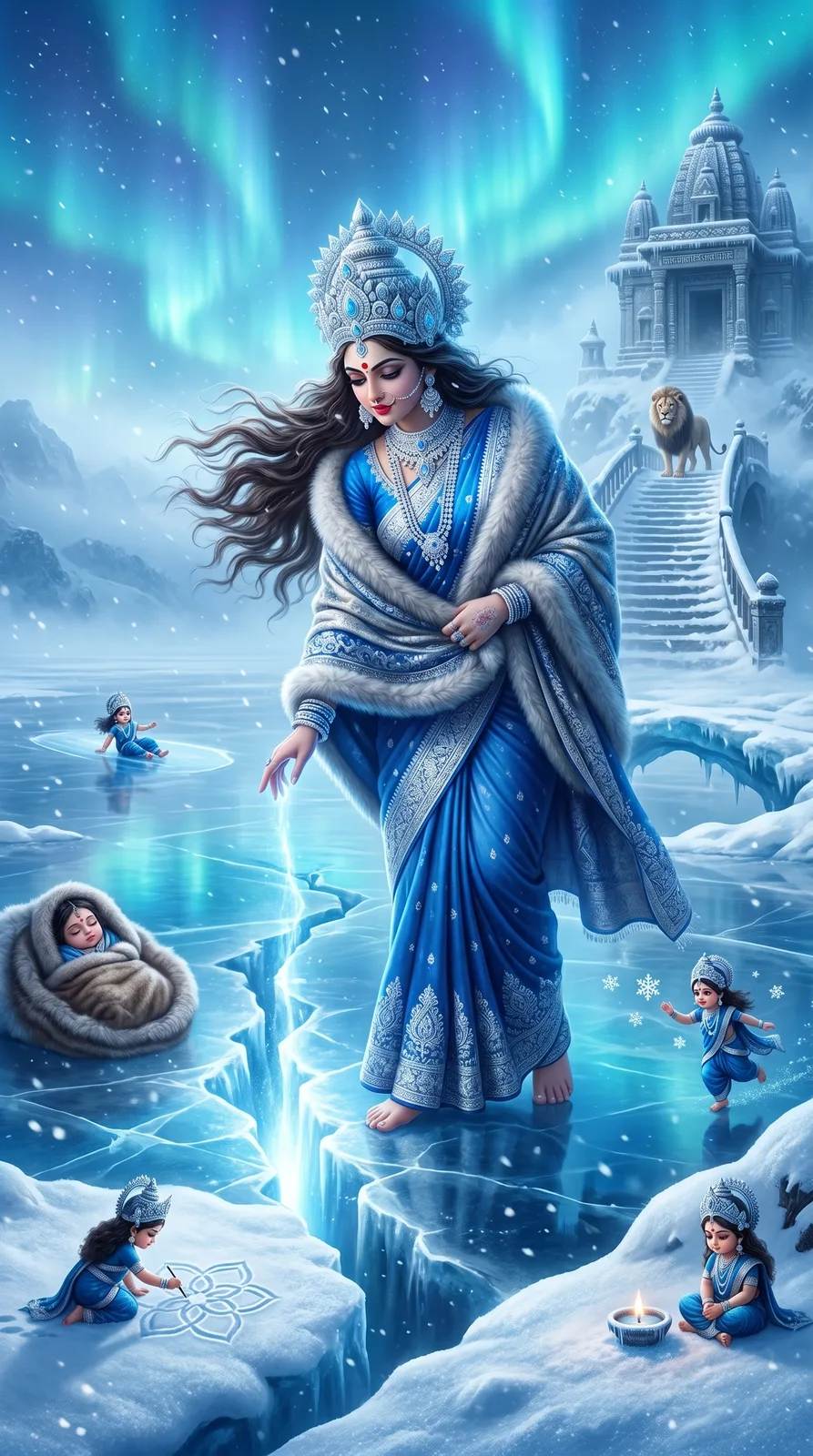
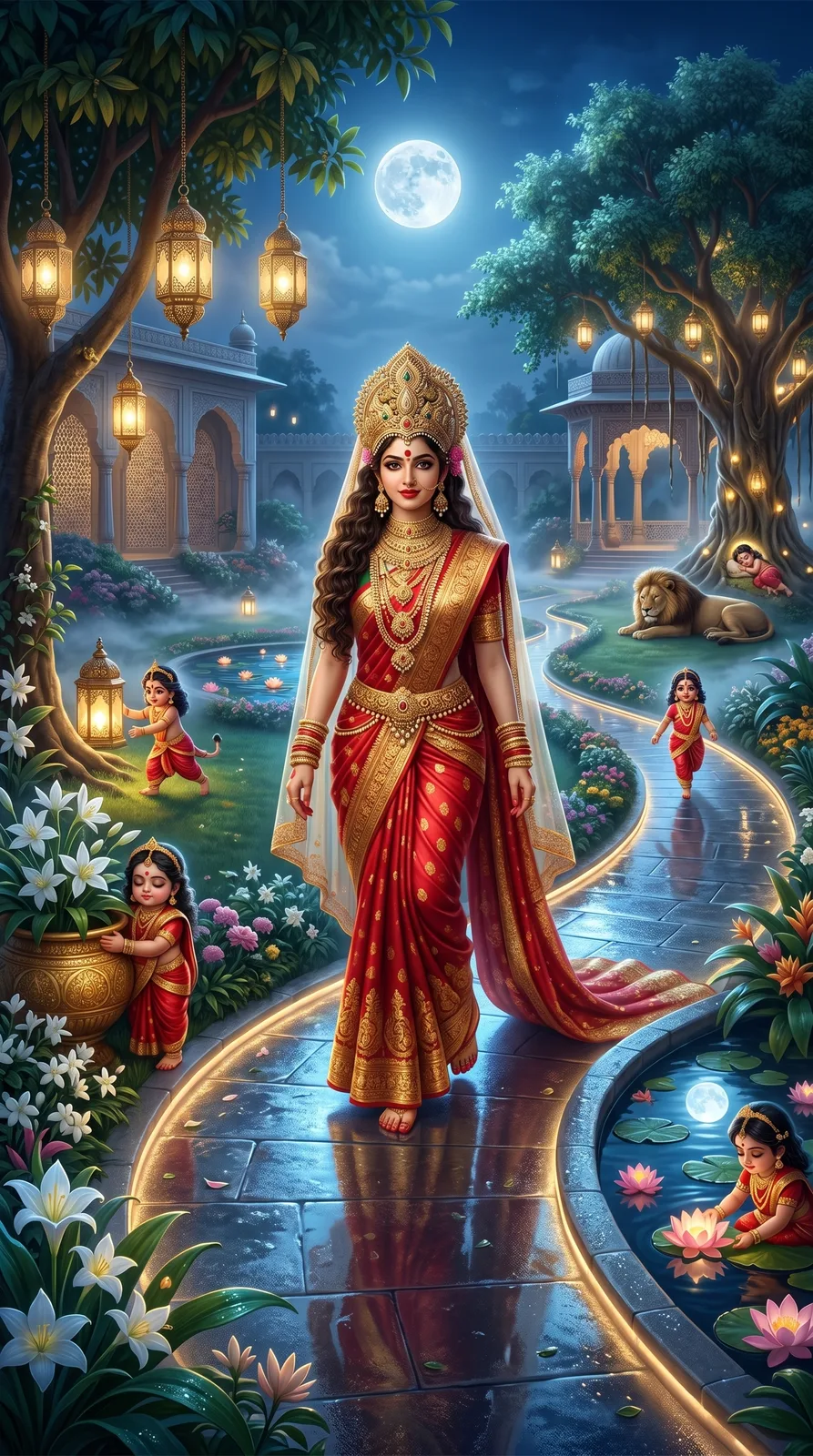
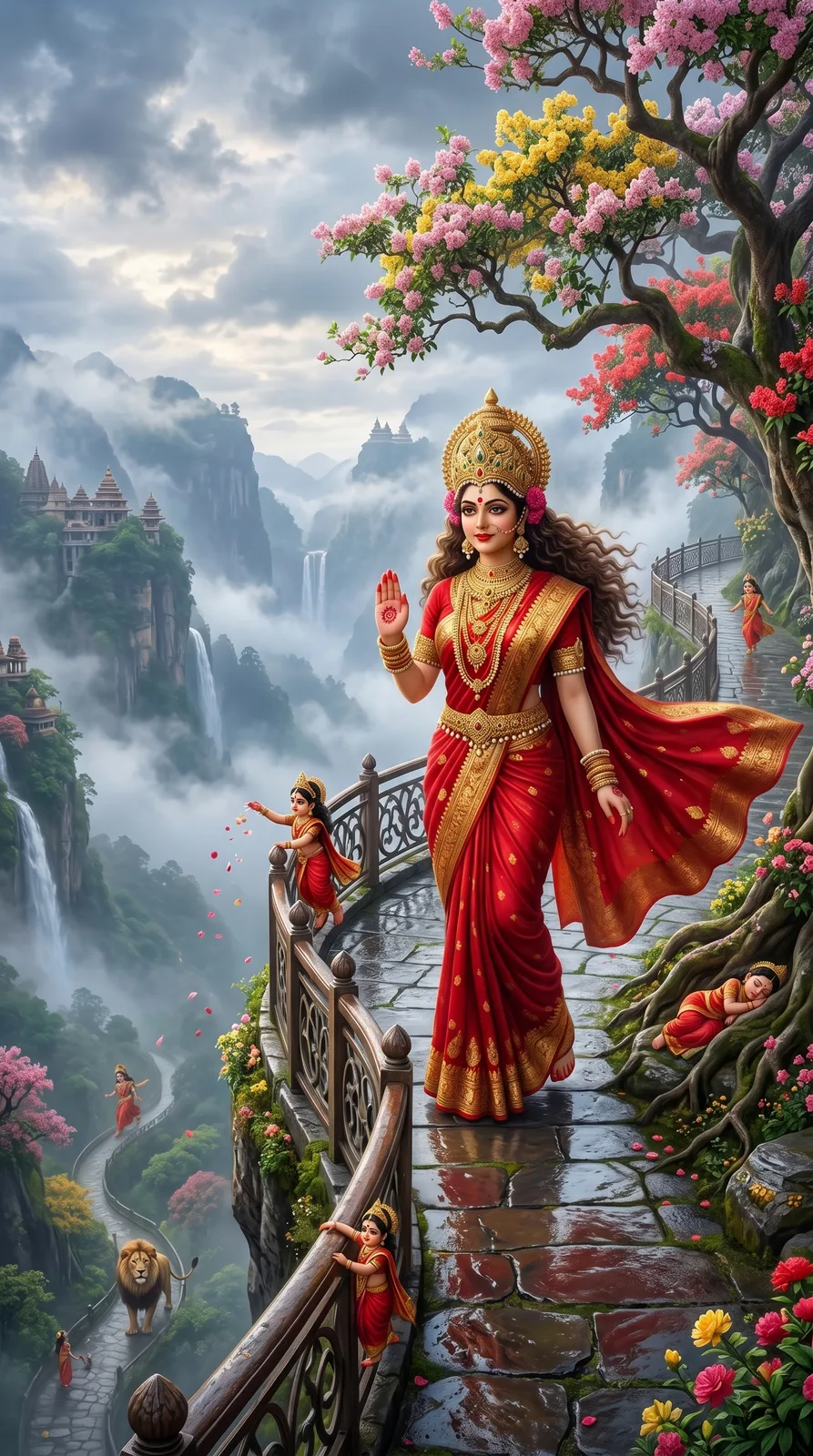
The first thing to understand about a Maa Durga cinematic prompt is that the goddess does not need to be at the center of the frame to be the center of the story. She can be a figure on a frozen lake, bending to touch a crack in the ice. She can be a silhouette on a storm cliff, her saree wrenched sideways by the wind. She can be a quiet presence in a moonlit garden, her reflection trailing across a wet stone pathway. The point is not the pose. The point is the world she has entered, and the way that world responds to her.
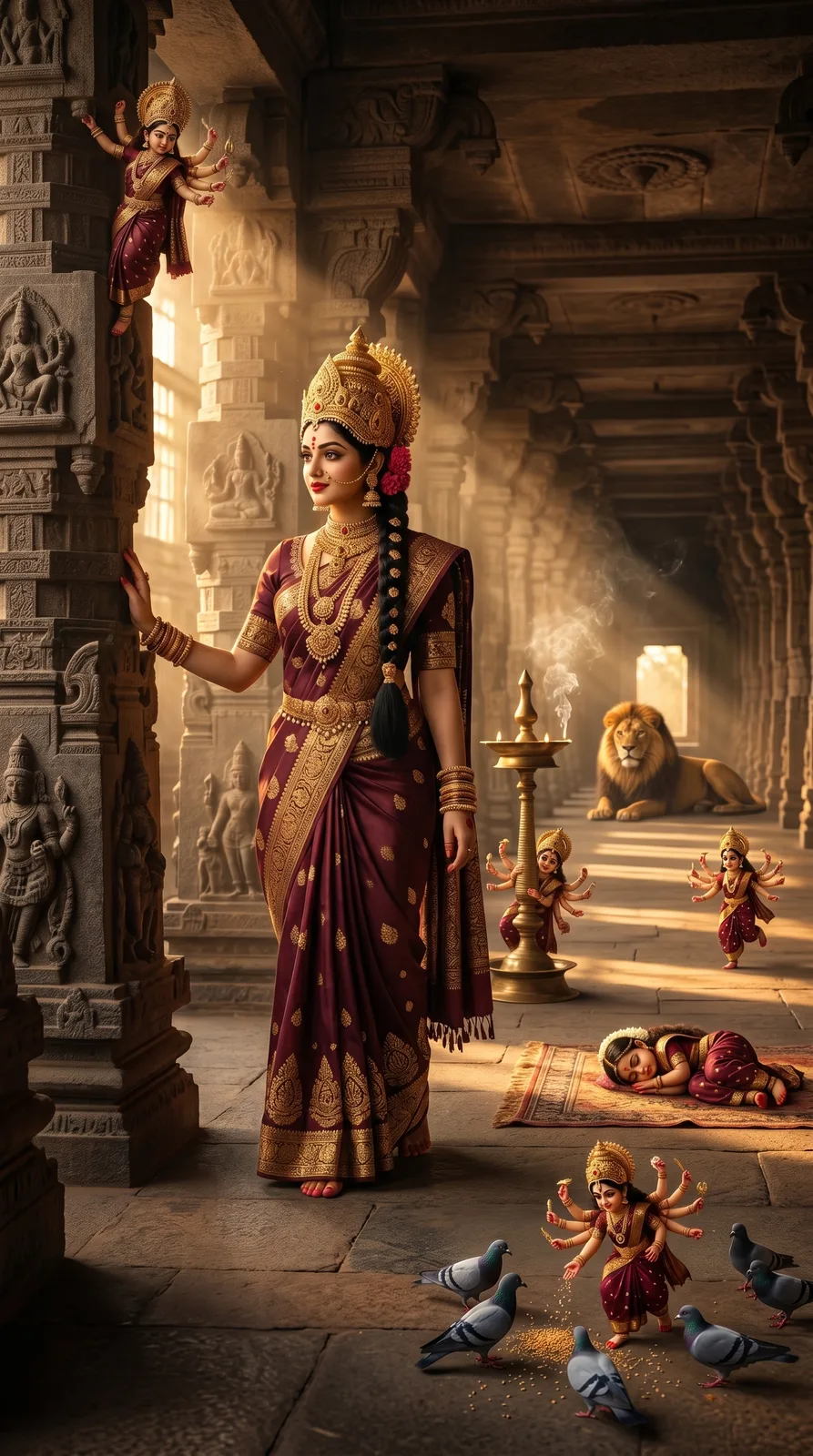
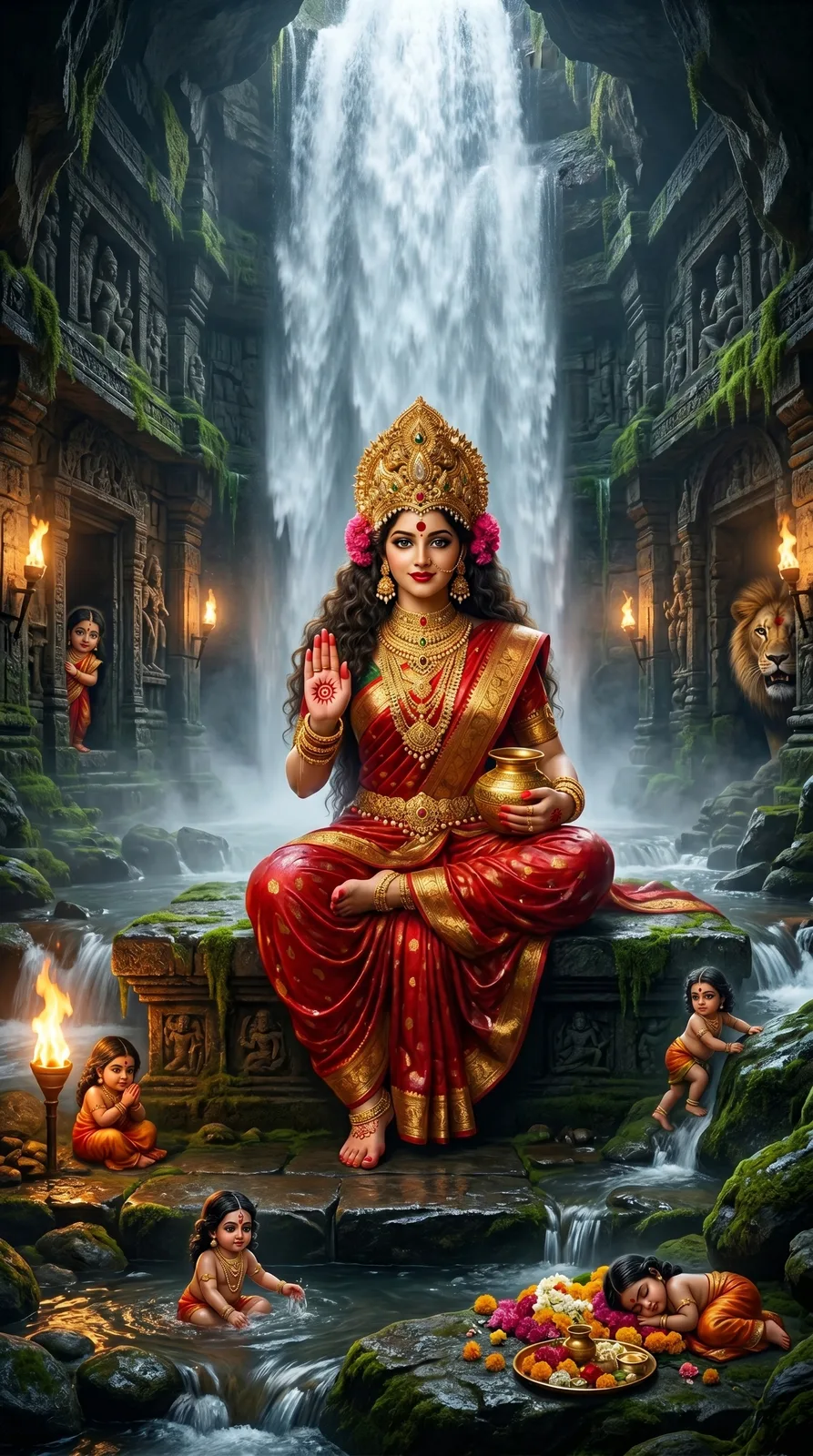
These Maa Durga cinematic prompts are built on a single conviction. The environment is not a backdrop. It is a character. A frozen Himalayan lake under an aurora sky. A waterfall cave lit by torchlight. A South Indian temple corridor where dust floats in shafts of golden sun. The goddess moves through these spaces not as a statue on display, but as someone who belongs there. Someone the landscape recognizes.
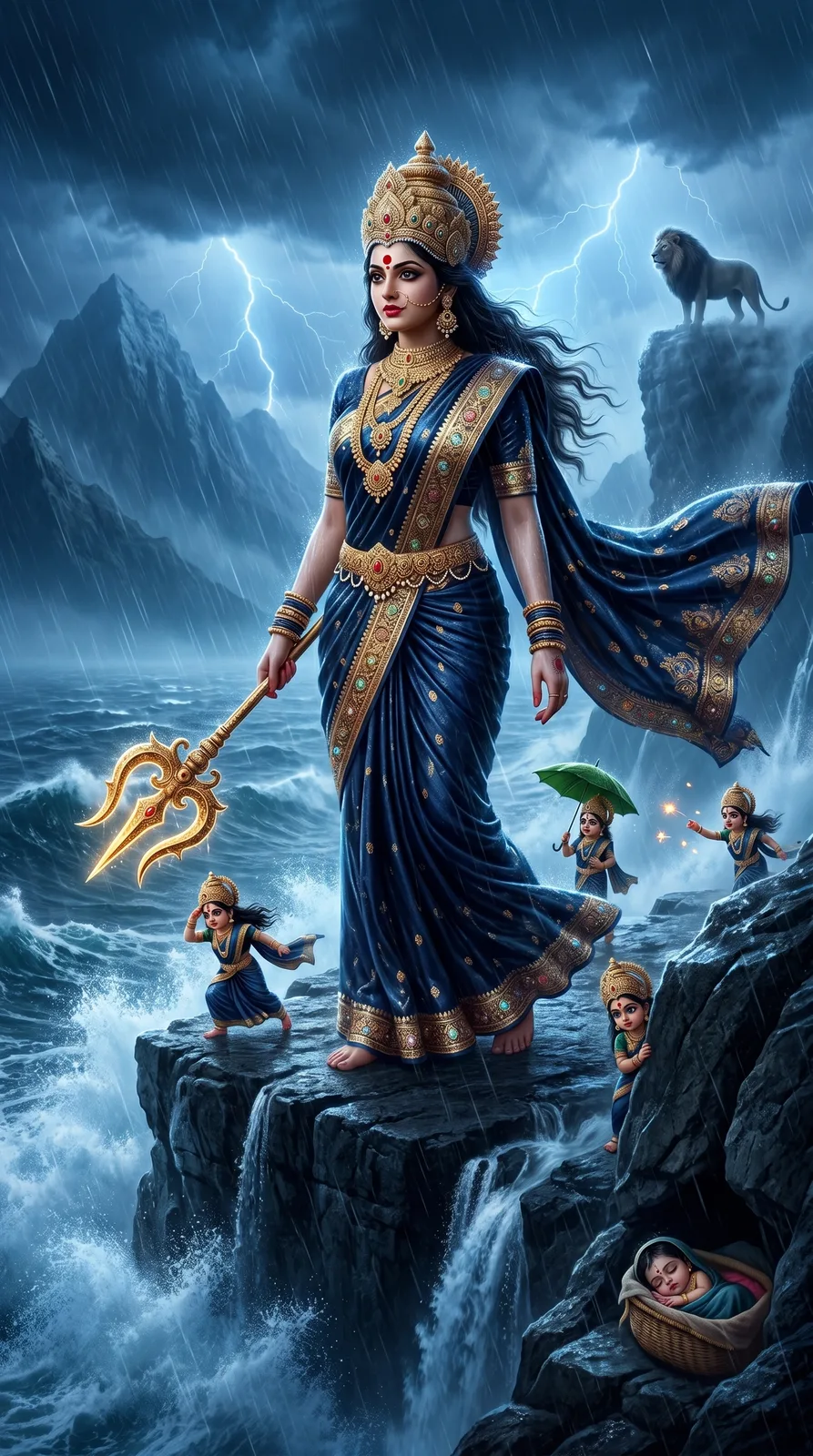
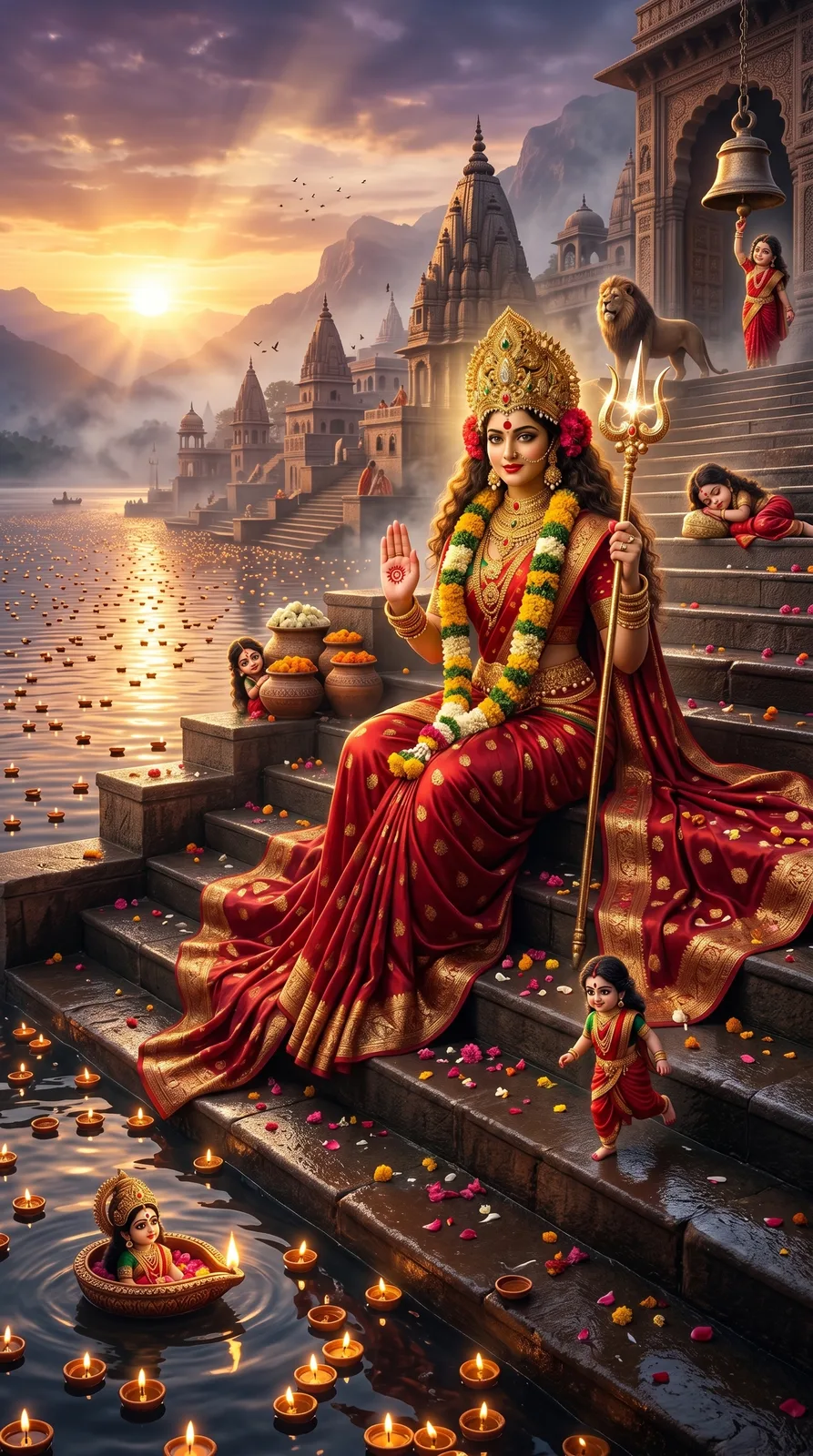
What ties all of these Maa Durga cinematic compositions together is the insistence on realism with just enough fantasy to make the heart stop. The ice must reflect. The wet stone must shine. The wind must have direction. The lion is never beside her. He is far away, guarding a lower gate or sleeping under a distant pavilion. He is a presence, not a prop.
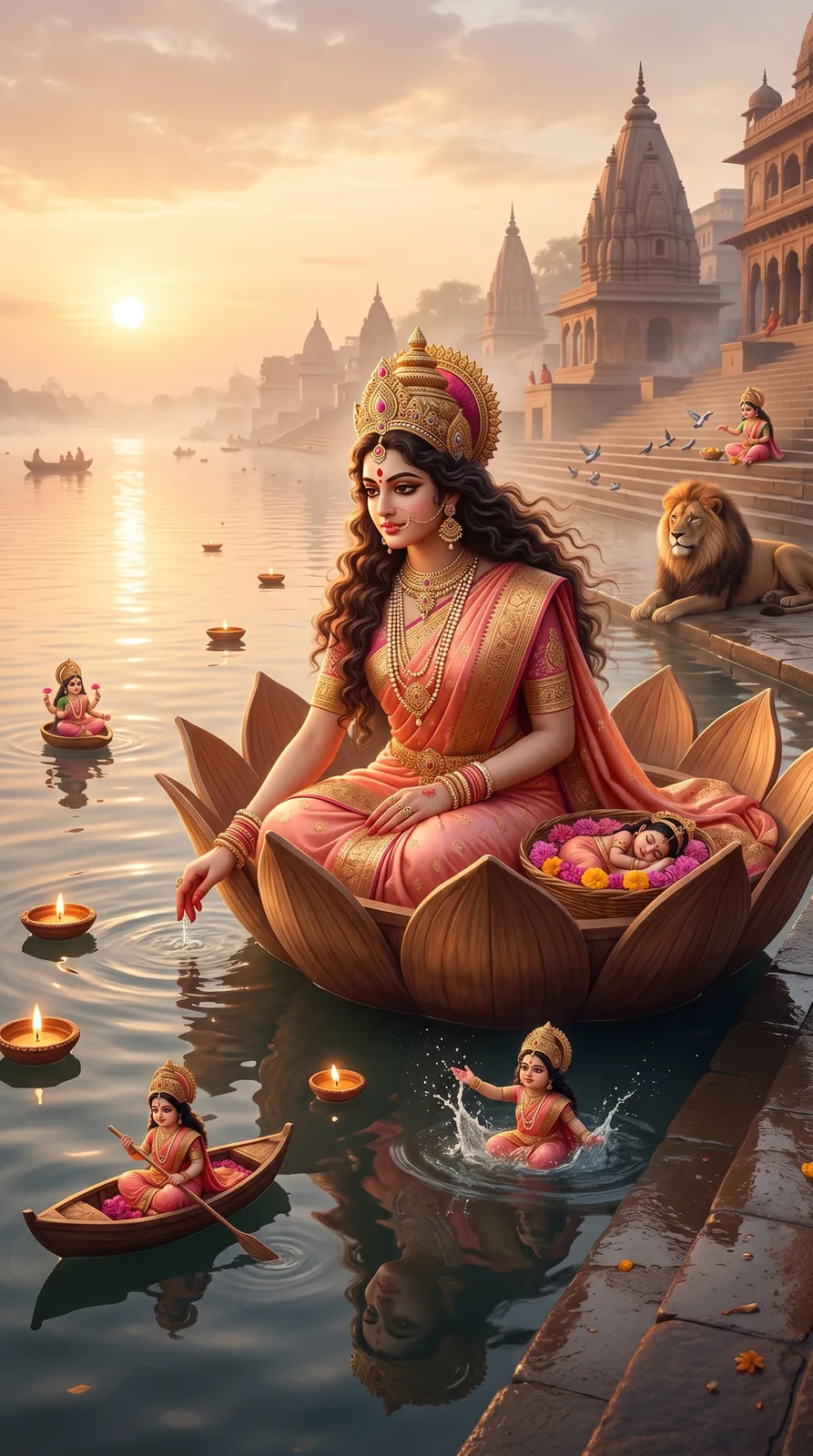
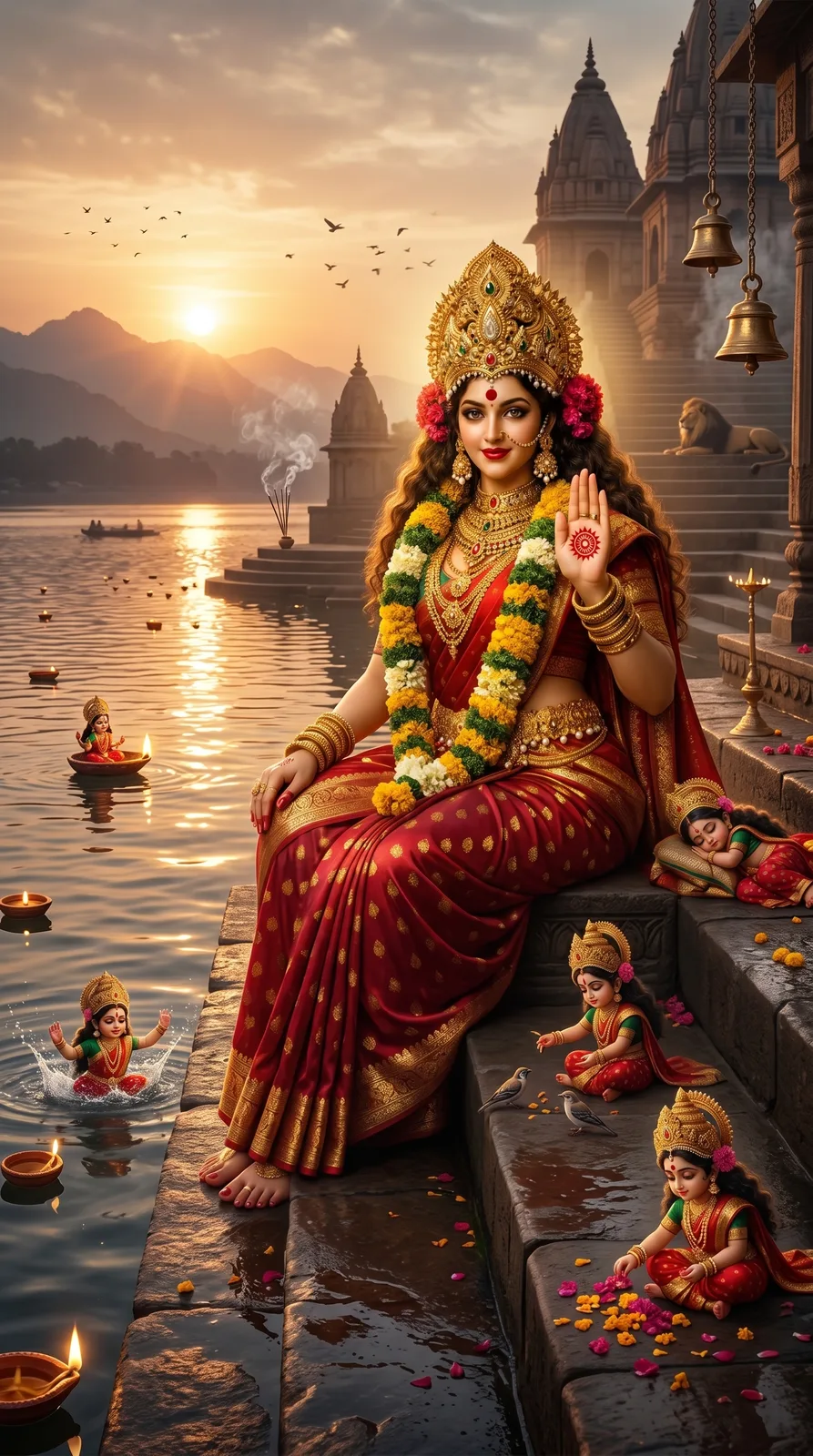
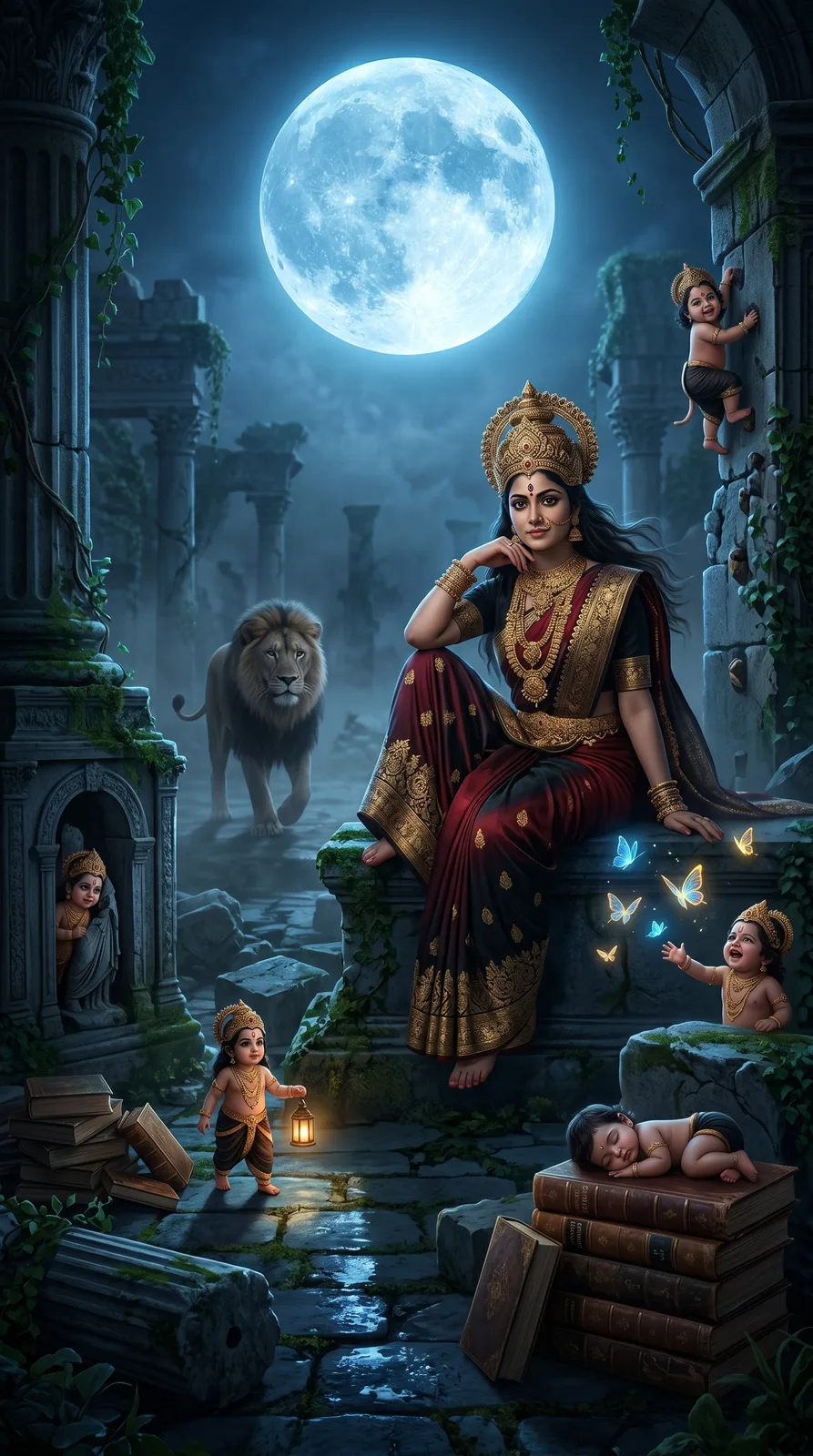
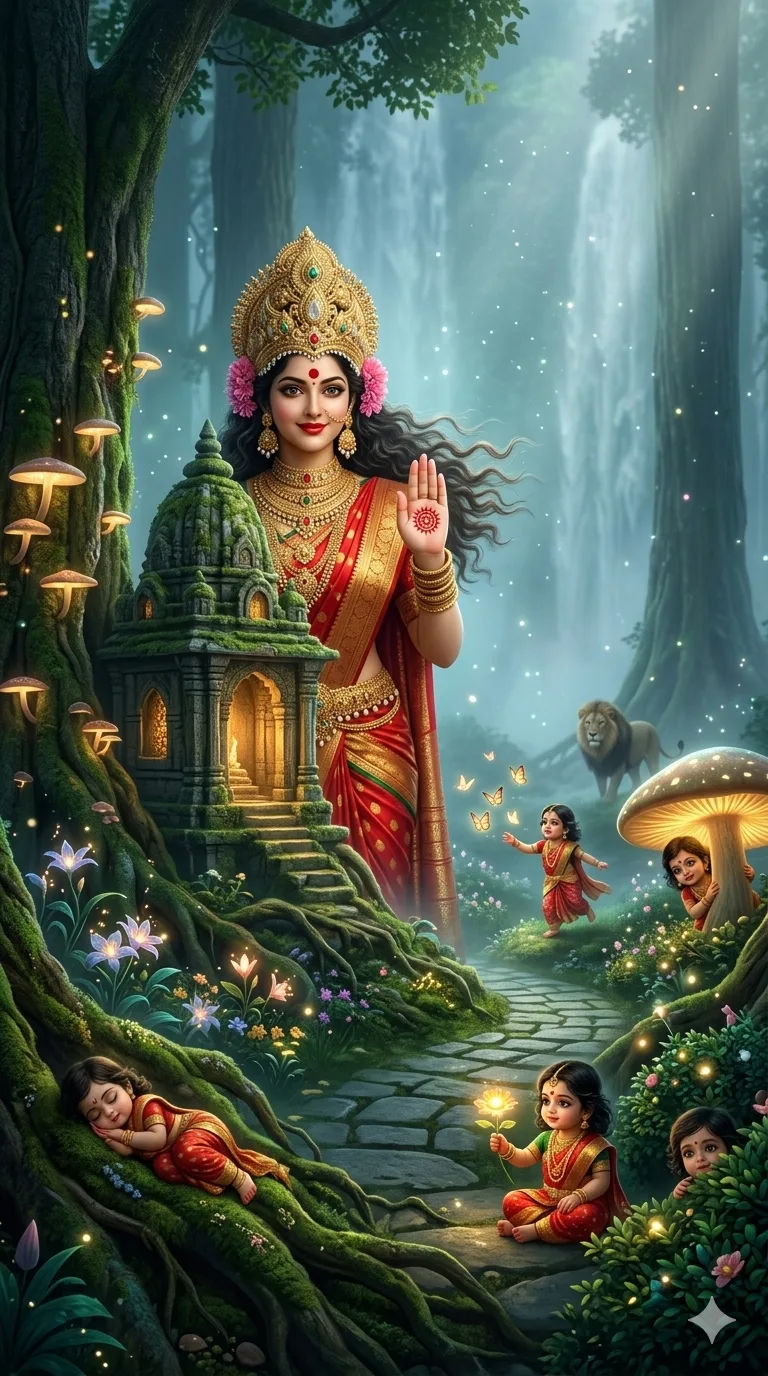
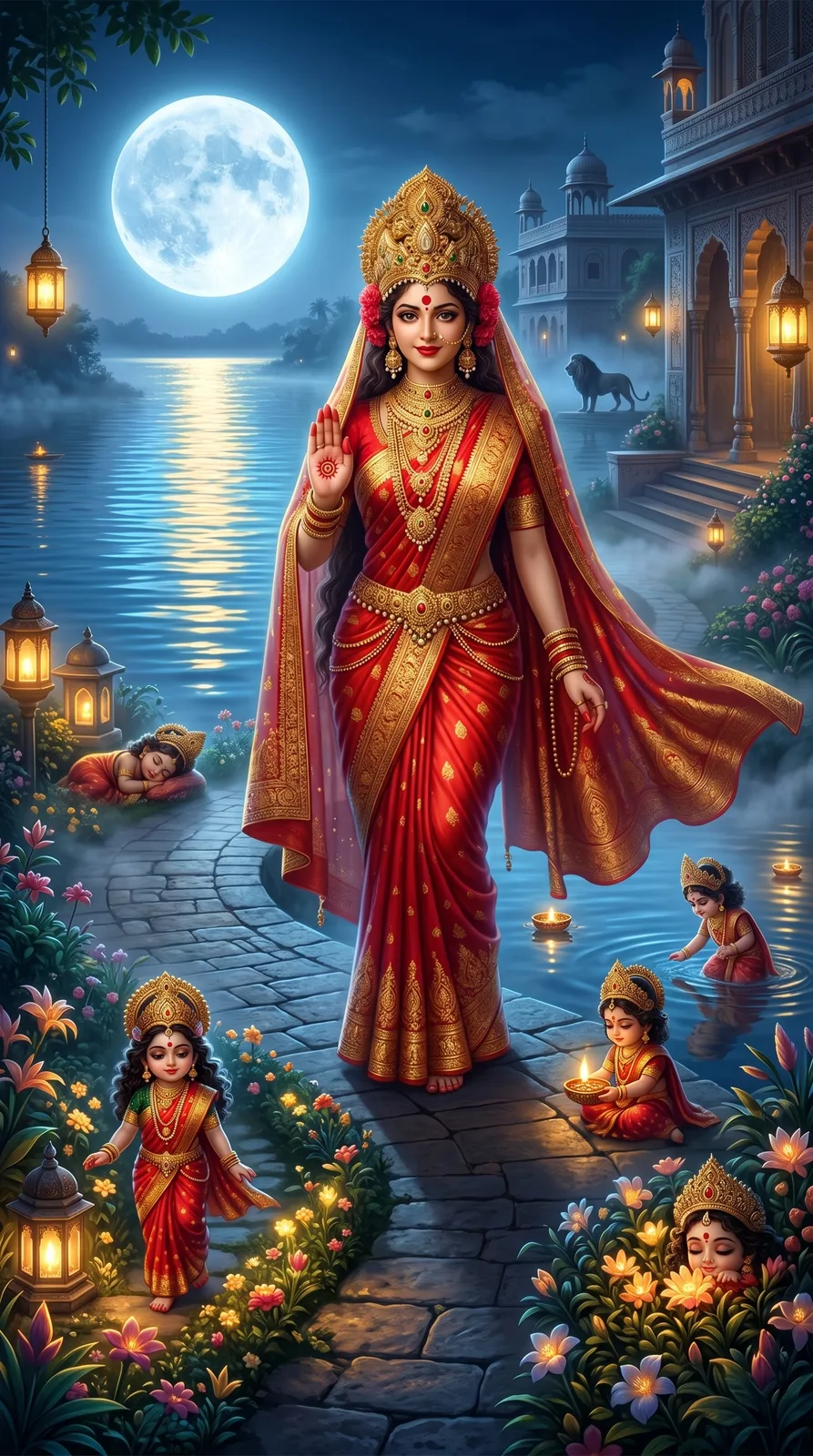
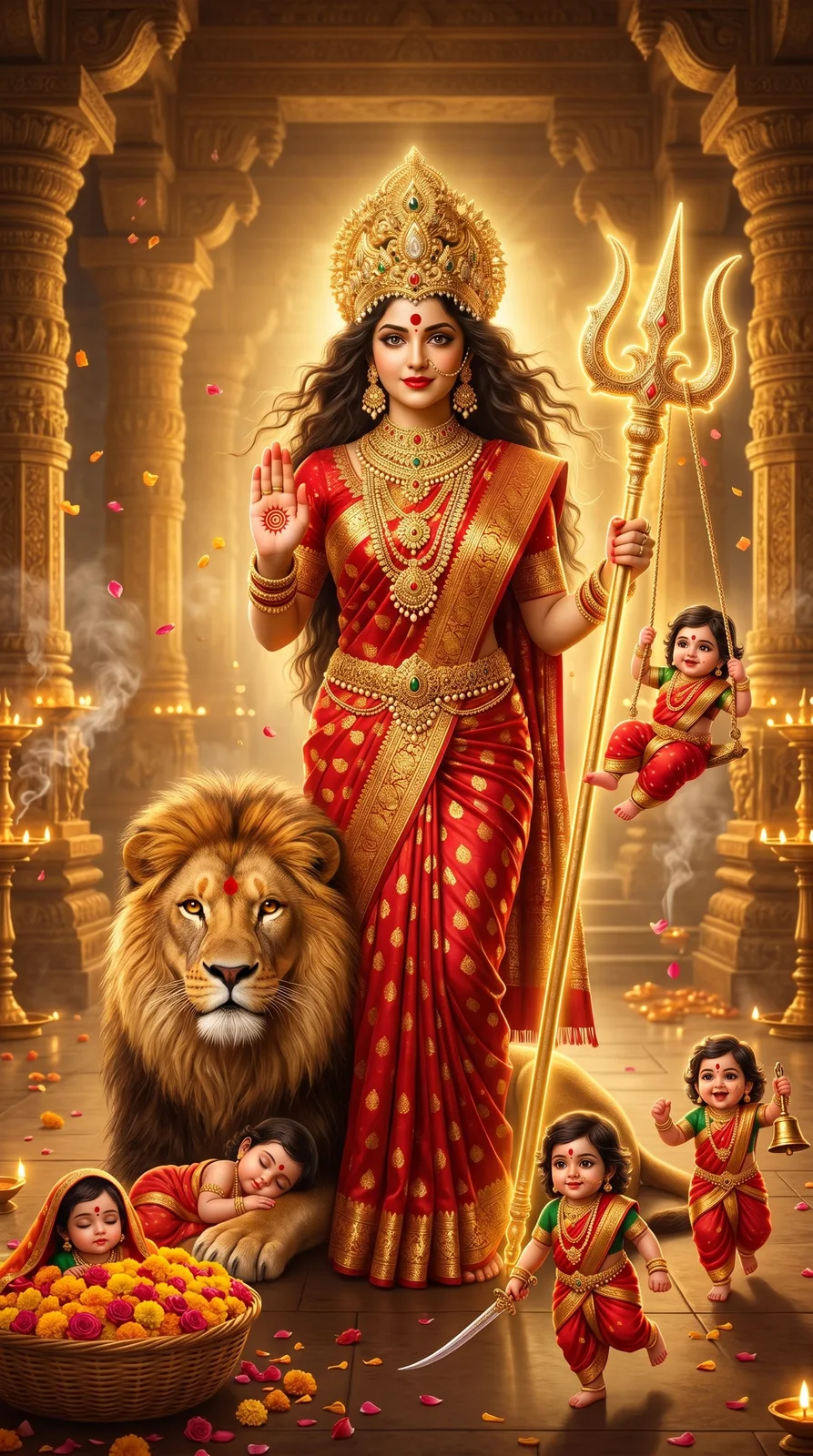
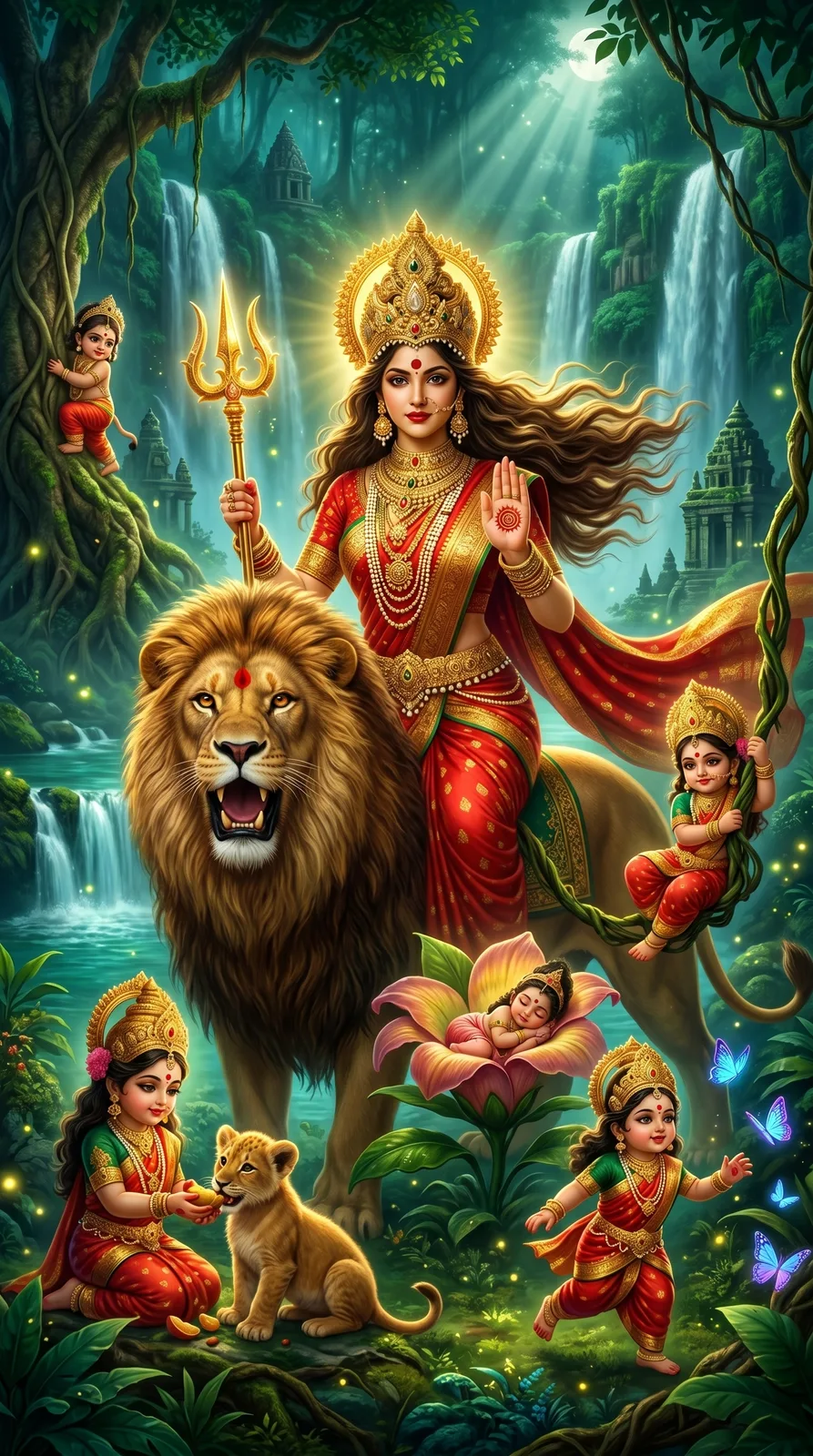
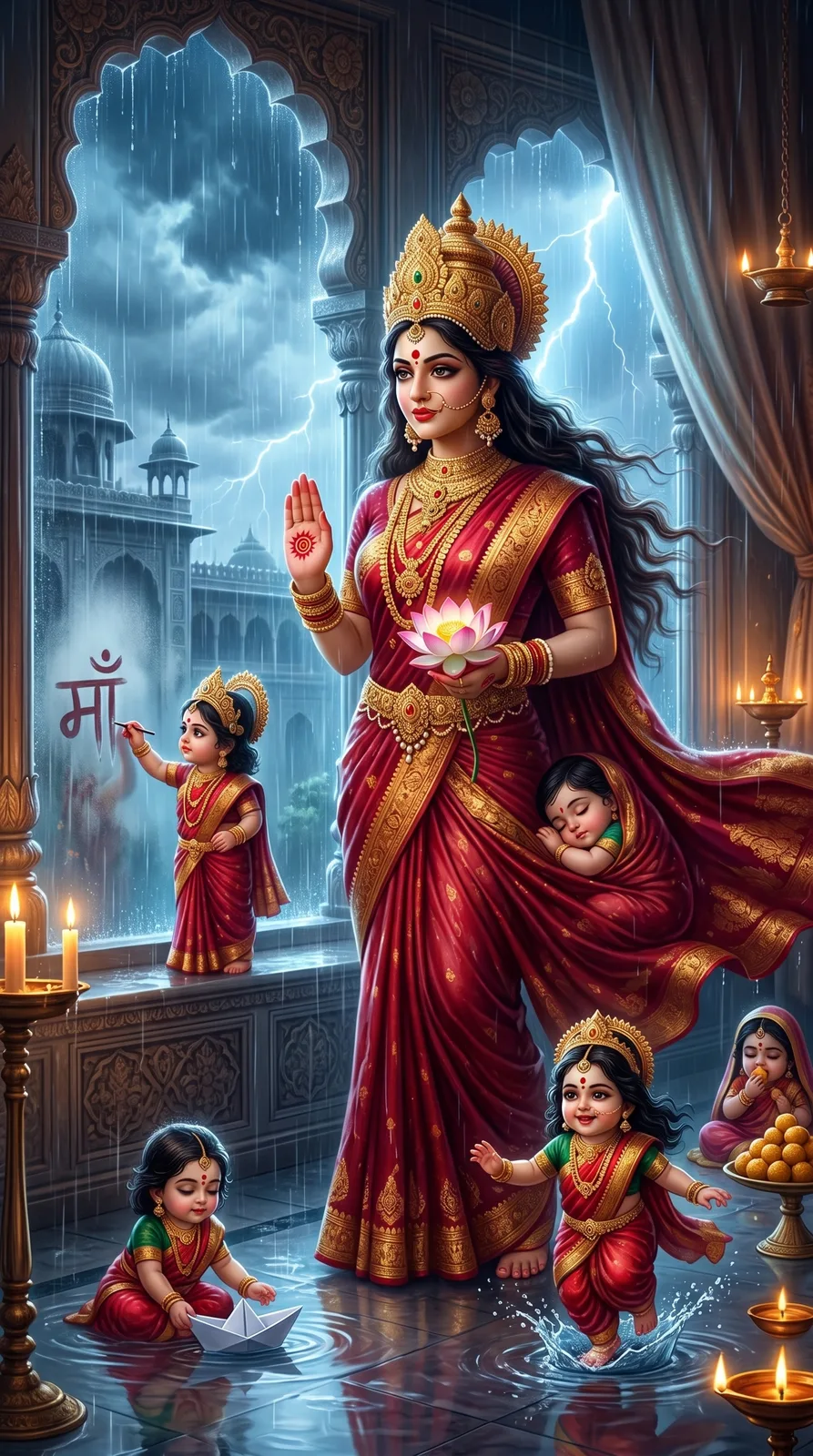
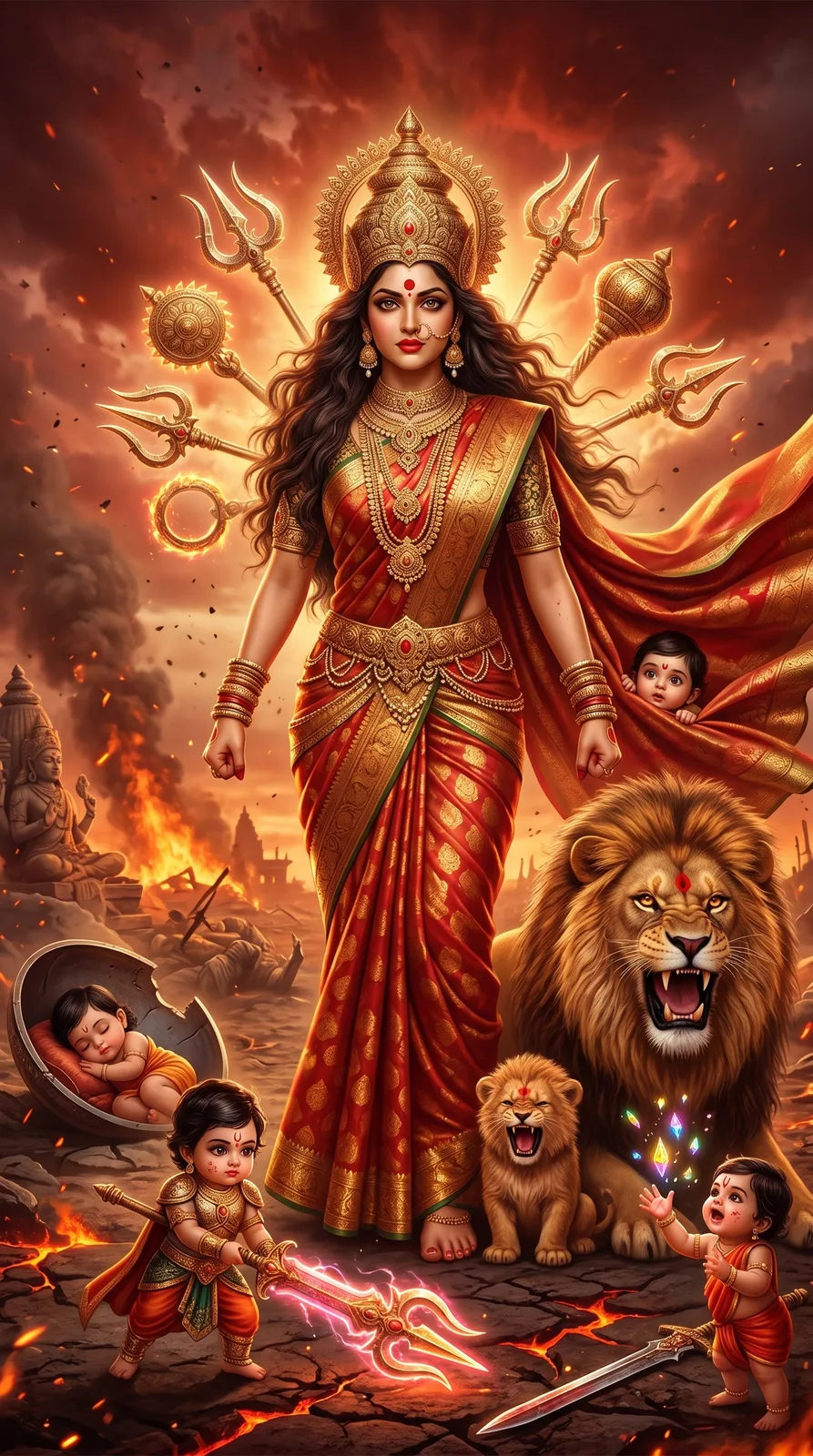
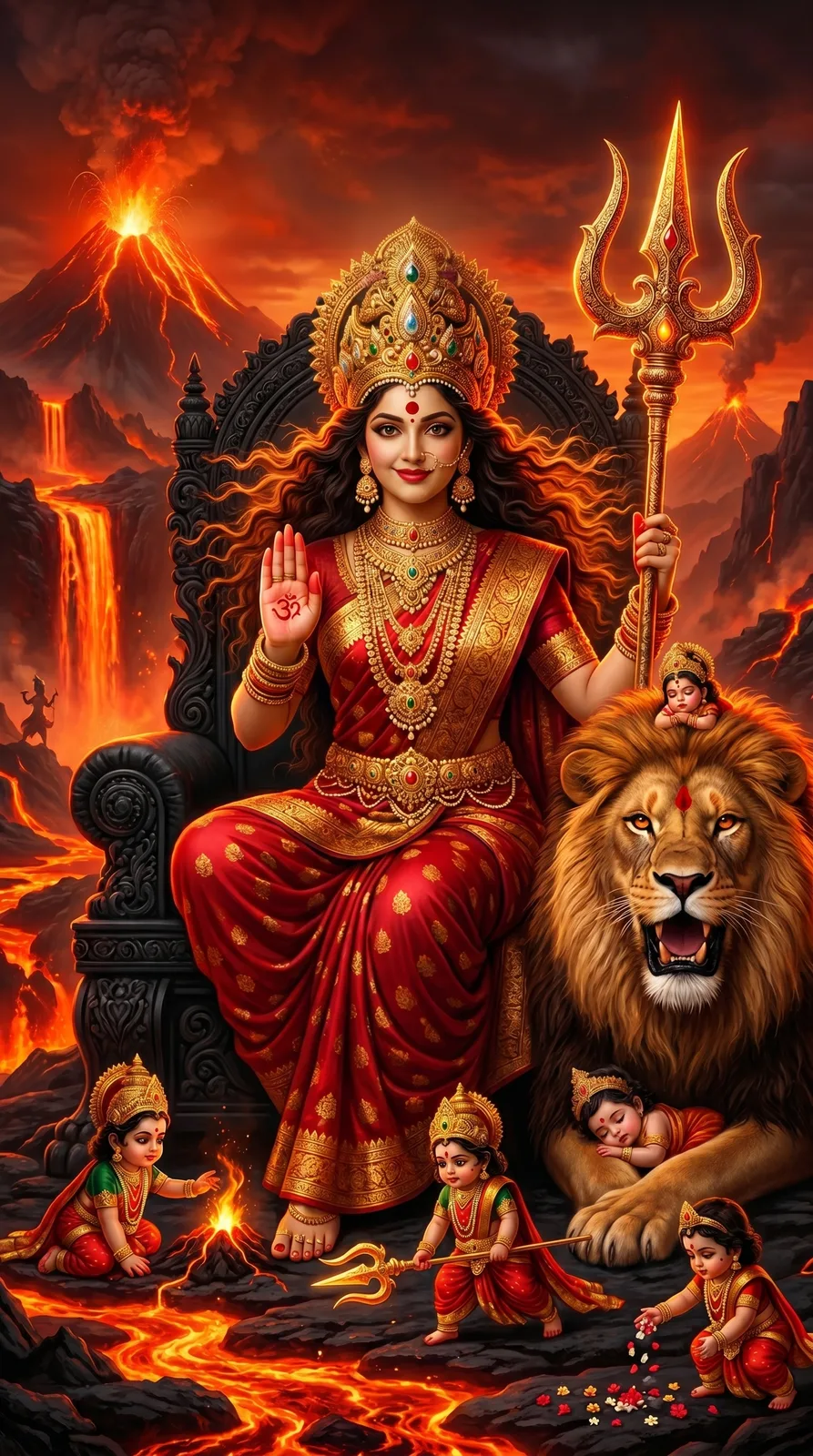
The tiny baby Durgas scattered through each Maa Durga cinematic scene are not whimsy. They are reminders that the goddess was once a child, and that her energy is everywhere, in every corner of every world she walks through. One sleeping on a staircase corner. One chasing petals in the wind. One hiding near a temple railing. One floating a diya in a water stream. One sitting inside a flower basket. These small figures make the gigantic architecture feel inhabited, warm, and alive.
Writing a Maa Durga cinematic prompt means thinking like a director, not a painter. You choose the lens. You choose the weather. You choose whether her hand rests on her knee or touches ancient stone. Then you let the world do the rest.
VIEW PROMPT
VIEW PROMPT
VIEW PROMPT
VIEW PROMPT
VIEW PROMPT
VIEW PROMPT
VIEW PROMPT
VIEW PROMPT
VIEW PROMPT
VIEW PROMPT
VIEW PROMPT
VIEW PROMPT
VIEW PROMPT
VIEW PROMPT
VIEW PROMPT
VIEW PROMPT
VIEW PROMPT
VIEW PROMPT
Explore More AI Prompt Collections
Discover more AI prompt collections covering devotional artwork, spiritual illustrations, divine characters, temple-inspired scenes, cultural designs, and creative visual concepts.
Browse related categories to find fresh inspiration for generating unique AI images, wallpapers, posters, social media graphics, and digital artwork.
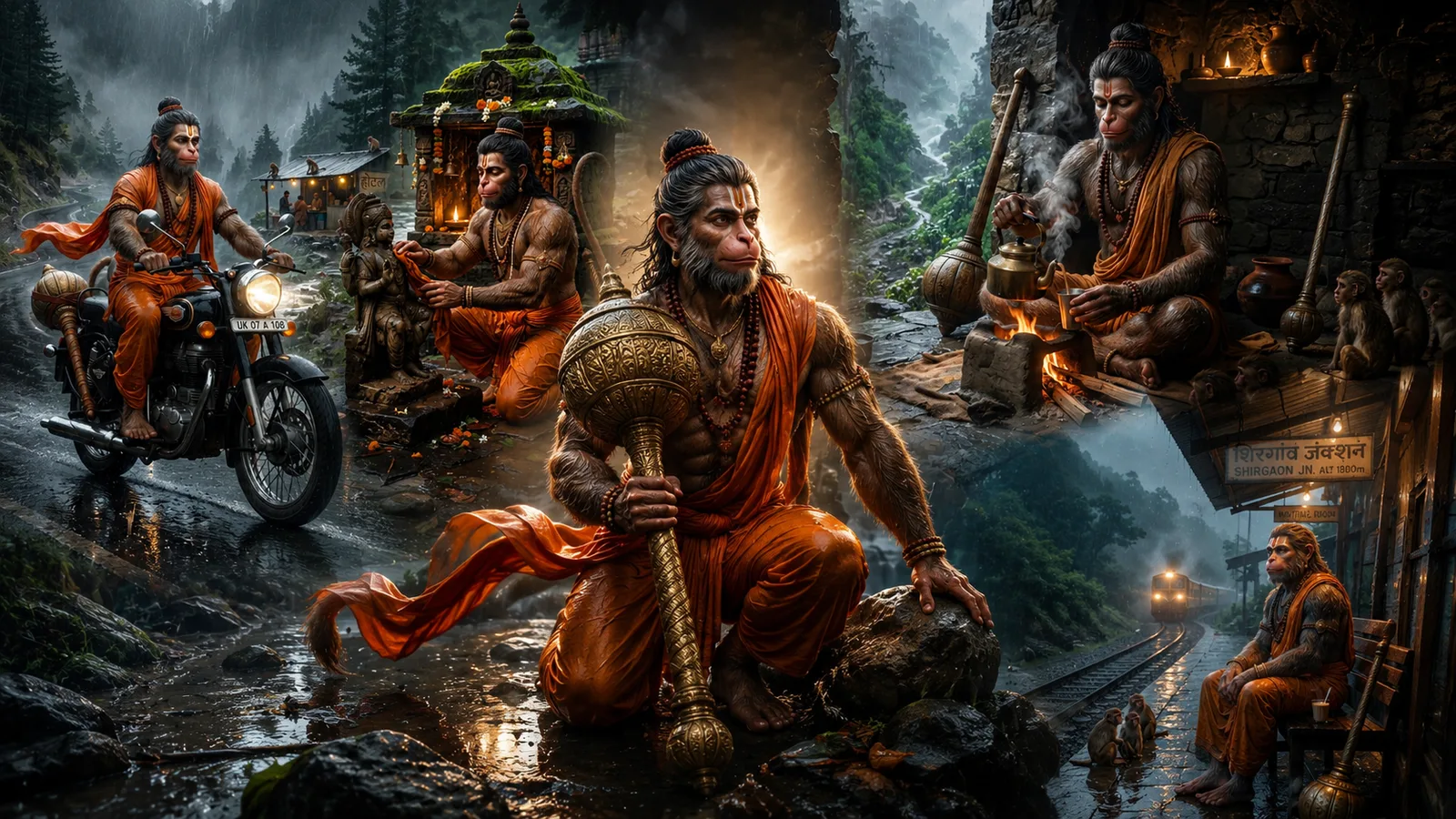
Hanuman Monsoon Prompts
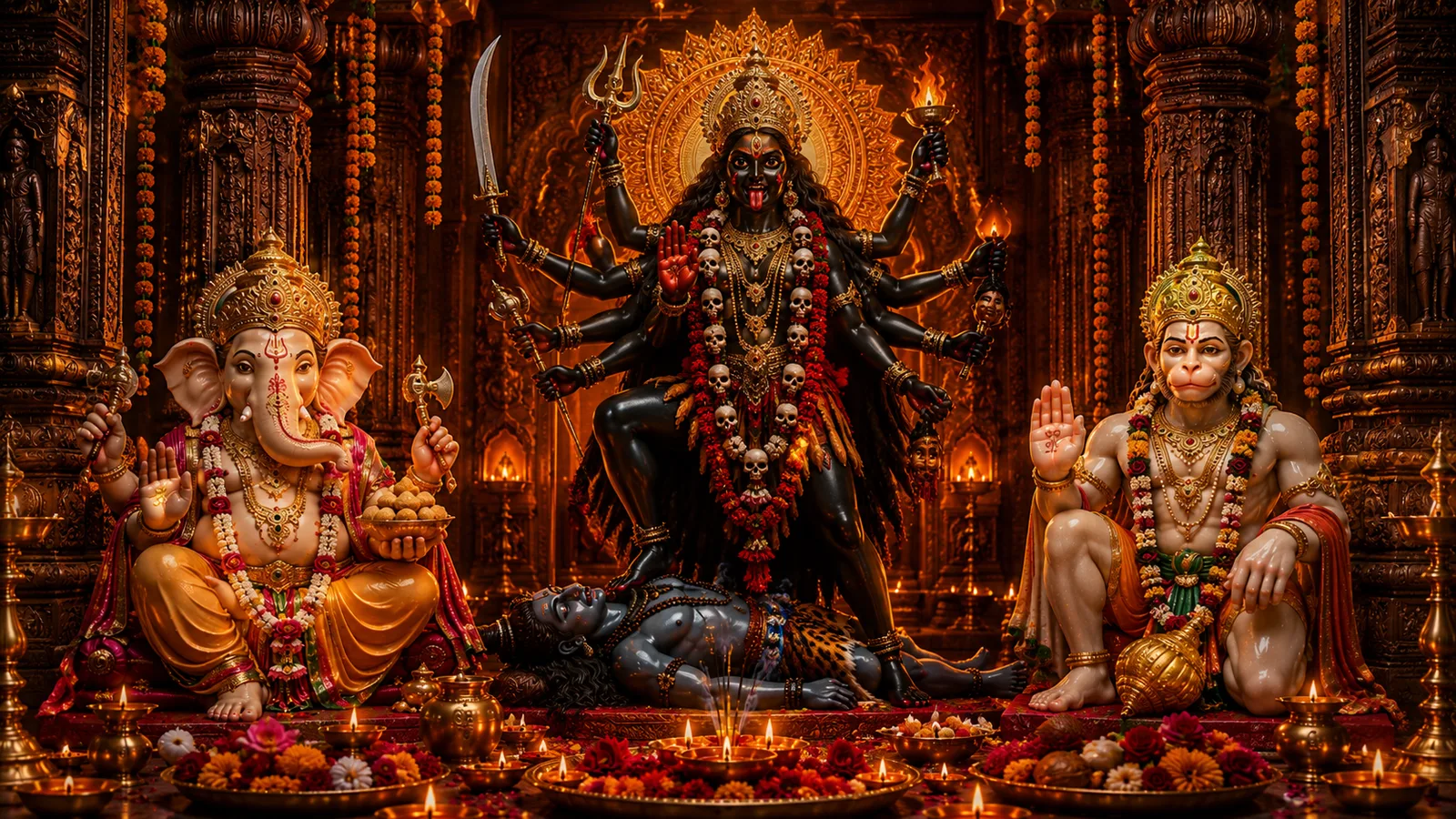
Devotional Marble Deity Temple

Prompt Customization Tips
The environment must dominate in a Maa Durga cinematic prompt. That is the first rule. The landscape is not a framed view behind her. It is the entire stage. Use words like “gigantic floating temple stairs,” “deep cloud valleys,” “giant waterfalls disappearing into fog,” and “curved cinematic stairways.” The goddess should feel naturally integrated into the architecture, not centered artificially.
The saree in a Maa Durga cinematic scene is a storytelling device. It must not sit still. It should flow dramatically across multiple giant stone stairs, move violently in storm wind, or trail softly behind her on a moonlit pathway. Ask for “realistic fabric spread,” “realistic wet textures,” or “dramatic cinematic fabric movement.” The saree connects her body to the environment.
The lion in a Maa Durga cinematic composition is never beside her. This is crucial. Place him “far below near the lower temple gate inside fog,” “partially visible behind giant cave rocks,” or “sleeping naturally near a far garden pavilion.” He is small in scale but clearly visible as guardian energy. His distance from the goddess makes the world feel vast and real.
Lighting defines the emotional register of a Maa Durga cinematic prompt. Golden sunrise cinematic lighting with volumetric fog rays for the floating cliff temple. Torchlit cave atmosphere with mist for the waterfall cave. Dark blue storm lighting with rain reflections for the ocean cliff. Warm golden temple light with floating dust particles for the sun temple corridor. Blue-golden moonlight glow for the garden. Cold blue cinematic glow with snow atmosphere for the frozen lake. Each light source tells a different story.
The architecture in a Maa Durga cinematic prompt must feel ancient, massive, and slightly impossible. Floating mountain temples, giant carved South Indian corridors, hidden waterfall caves, storm-battered cliffs, and moonlit palace gardens. The scale should be overwhelming. Tiny baby Durgas climbing pillars or running through corridors reinforce this scale by giving the eye something small to measure against.
The facial identity must remain consistent across all Maa Durga cinematic prompts. Use the same reference description for every scene. “Luxurious hyper-realistic divine beauty, realistic facial structure, expressive eyes, rich crown, curly hair, and realistic divine aura.” Do not change the face. The environment changes. The goddess remains.
Baby Durga placement in a Maa Durga cinematic scene must feel organic, not pasted. One sliding on ice. One warming hands near a torch. One struggling against strong wind. One climbing a carved pillar. One playing beside a lantern. One sleeping inside a fur cloth. These are not afterthoughts. They are the soul of the composition.
Water in a Maa Durga cinematic prompt must feel wet. Frozen lakes with glowing ice reflections. Waterfall caves with mist and reflective stones. Ocean cliffs with crashing waves. Temple corridors with damp stone. Moonlit gardens with reflective ponds. Use words like “ultra realistic reflections,” “wet reflective stones,” and “realistic water physics.”
The overall rendering style for a Maa Durga cinematic artwork is hyper-realistic with fantasy elements blended seamlessly. “Fantasy realism mixed with realism,” “masterpiece quality,” “8k,” and “premium cinematic realism” should appear in every prompt. The goal is to make the impossible feel like it was photographed.
Frequently Asked Questions
What makes a Maa Durga cinematic prompt different from a standard Durga artwork?
A standard artwork places the goddess at the center with a decorative background. A Maa Durga cinematic prompt makes the environment the dominant storytelling element. The goddess is integrated into a vast, realistic world. The scale is monumental. The lighting is dramatic. The scene feels like a frame from an epic film.
Why should the lion be placed far from the goddess in a Maa Durga cinematic composition?
Distance creates scale. When the lion rests near a lower temple gate far below, the viewer understands how massive the architecture is. It also makes the lion feel like a real guardian rather than a symbolic prop pasted beside the throne. The separation adds depth and realism.
How should the saree be described in a Maa Durga cinematic prompt?
It must interact with the environment. On a frozen lake, it should have fur lining and silver embroidery. On a storm cliff, it should have realistic wet textures and violent wind movement. In a moonlit garden, it should trail softly behind her. The saree is not static decoration. It is fabric caught in weather.
What role do the baby Durgas play in a Maa Durga cinematic scene?
They humanize the scale. A gigantic floating temple feels even larger when a tiny figure is sleeping on its staircase corner. They also bring warmth and tenderness to scenes that might otherwise feel cold or overwhelming. They remind the viewer that the goddess was once a child, and that her presence is everywhere.
How do I choose the right lighting for a Maa Durga cinematic prompt?
Match the light to the emotional tone. Cold blue with snow for isolation and stillness. Golden sunrise with fog for hope and arrival. Torchlit cave with mist for mystery and sanctuary. Dark storm with lightning for power and defiance. Moonlight with lanterns for peace and reflection.
Can I change the facial identity of the goddess across different Maa Durga cinematic prompts?
It is better to keep it consistent. Use the same facial description — “luxurious hyper-realistic divine beauty, realistic facial structure, expressive eyes, rich crown, curly hair” — across all prompts. This creates a unified visual identity while the environments change dramatically.
What kind of architecture works best in a Maa Durga cinematic scene?
Ancient, massive, and slightly impossible. Floating mountain temples. Carved stone corridors that stretch into darkness. Waterfall caves with hidden shrines. Storm-battered cliffside palaces. The architecture should feel like it was built by gods, not humans.
How do I ensure the environment dominates the Maa Durga cinematic composition?
Use words like “the environment must dominate the frame,” “massive cinematic scale,” and “the landscape should feel gigantic around her.” Specify that the goddess should be naturally integrated, not centered artificially. The world is the main subject. She is its most important inhabitant.
What is the best way to handle water in a Maa Durga cinematic prompt?
Be specific about the type of water and its behavior. Frozen lake with glowing cracks. Waterfall with mist and spray. Ocean with crashing white foam. Rain with reflective wet stone. Each type of water interacts with light differently. Describe those interactions.
Is this style suitable for cinematic posters and high-end prints?
Yes. The combination of hyper-realistic textures, dramatic lighting, and monumental scale makes Maa Durga cinematic artworks ideal for large-format prints, cinematic posters, and premium devotional displays. The 9:16 vertical format is designed for phone wallpapers and portrait-oriented prints.
About This Maa Durga Cinematic Collection
A temple is not the only place a goddess can be found. She is also on the frozen lake at dawn, bending to touch a crack in the ice. She is in the storm, standing at the edge of a cliff while the wind tears at her saree. She is in the moonlit garden, walking slowly past lantern trees and reflective ponds.
The Maa Durga cinematic collection is built on the idea that the goddess does not need a throne. She needs a world. A world vast enough to hold her power, detailed enough to feel real, and quiet enough to let her presence speak.
These Maa Durga cinematic prompts are invitations to build that world. To choose the weather. To place the lion in the distance. To scatter tiny baby Durgas across the architecture. To let the light decide the mood. The goddess is already there, waiting. All you have to do is describe the landscape, and she will walk into it.