Divine Independence Day — Where Devotion Meets the Flag
Independence Day in India is not a quiet affair. It is the sound of flags snapping in the wind, the smell of marigold and rain-washed earth, the sight of children running through narrow streets with their faces painted saffron, white, and green. But beneath the noise, there is a deeper truth. This land was not built only by speeches and marches. It was carried by faith.
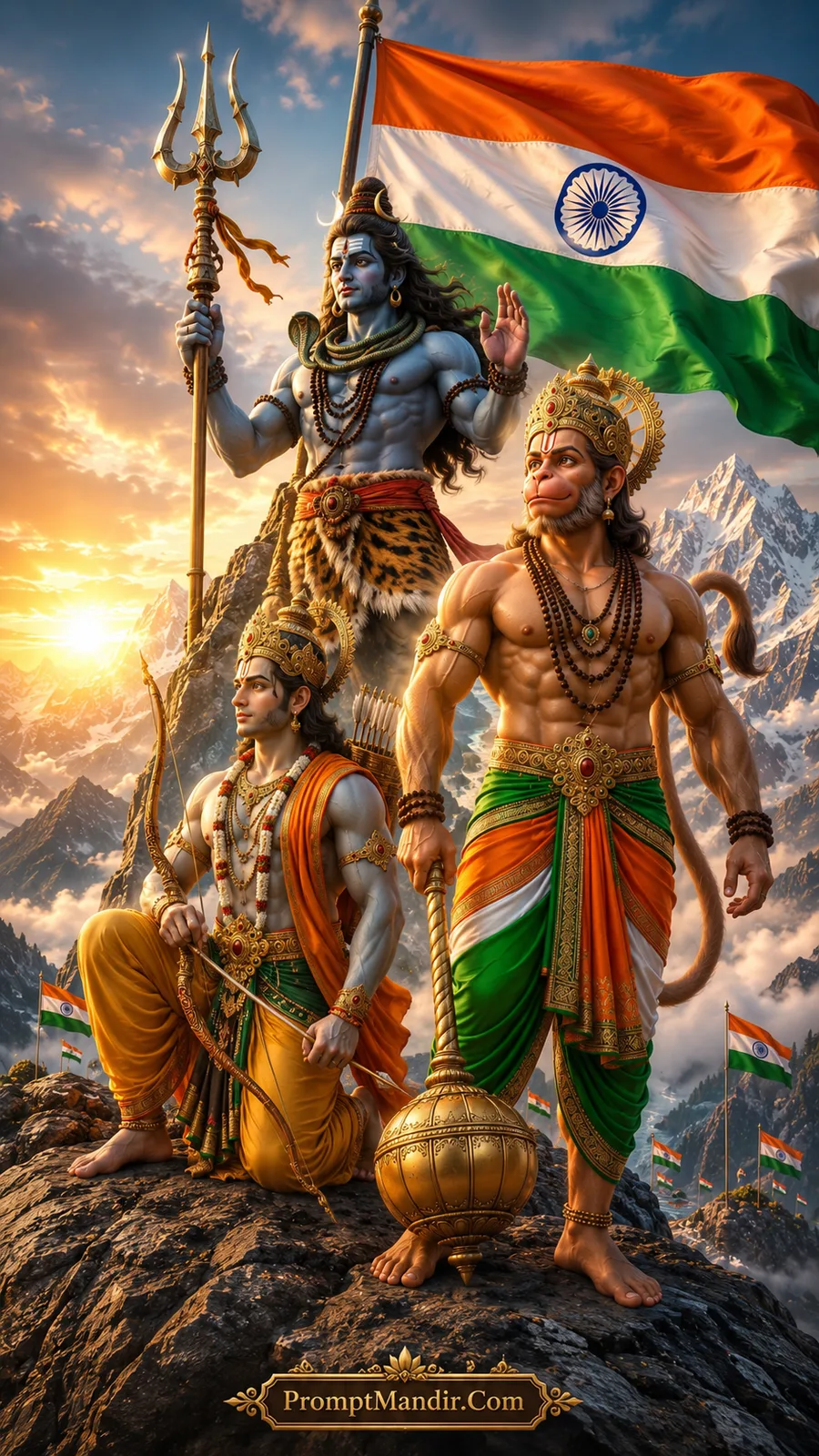
The Divine Independence Day collection places that faith at the center of the celebration. Here, Lord Mahadev, Shri Ram, and Lord Hanuman do not appear as distant deities on temple walls. They stand on Himalayan peaks, in temple courtyards, and in mountain villages, present in the same way they have always been present. Watching. Protecting. Blessing.
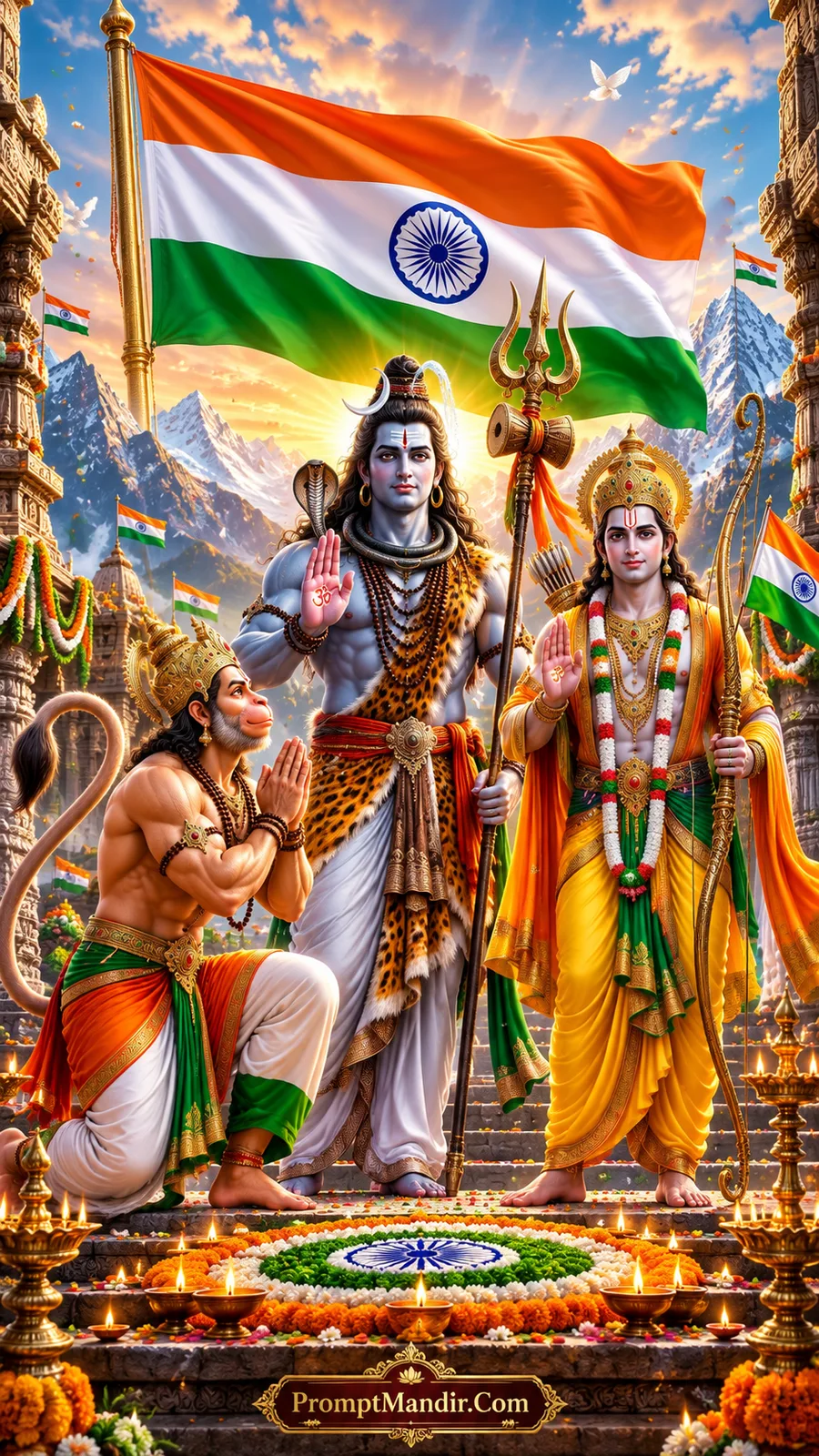
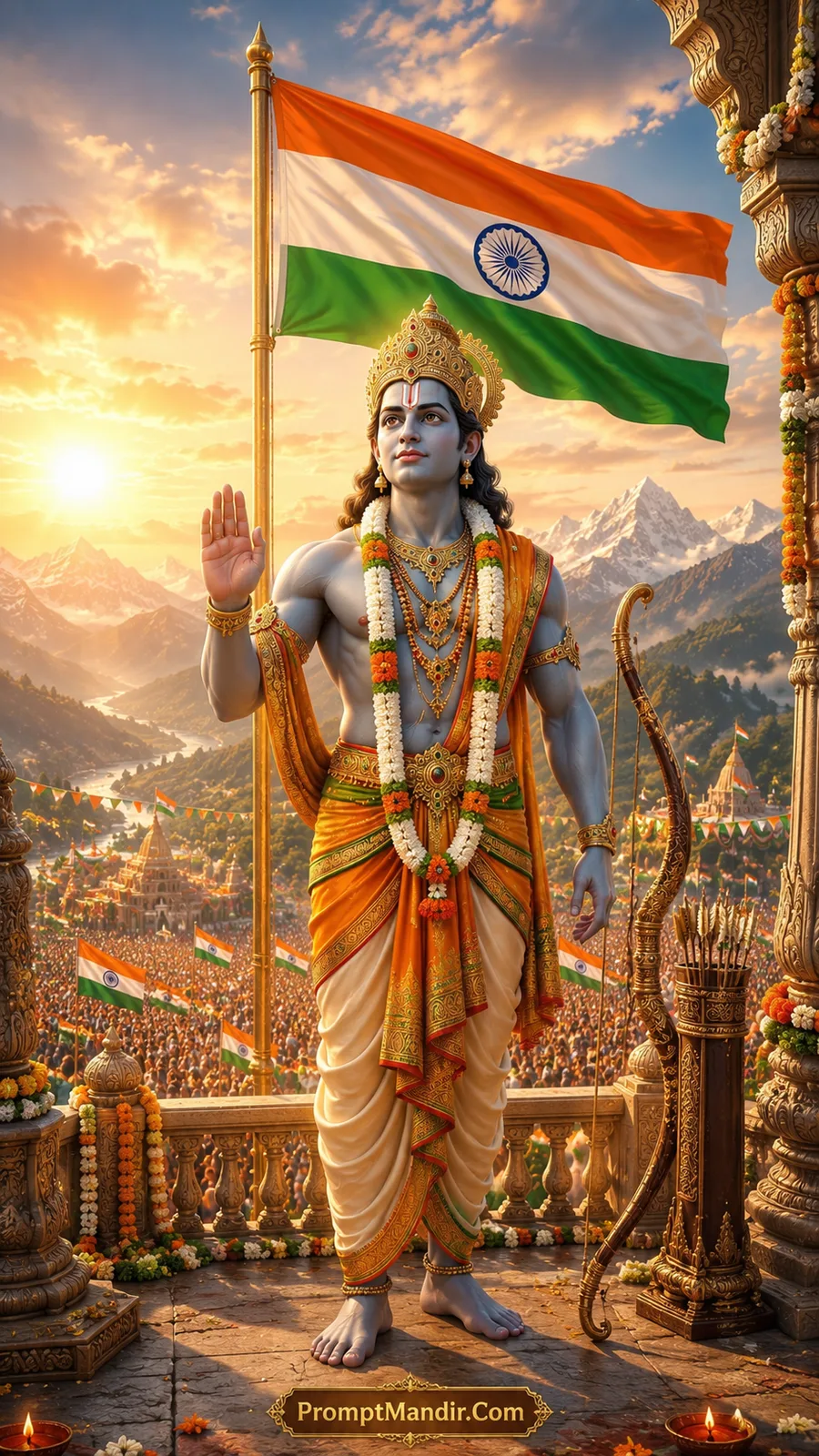
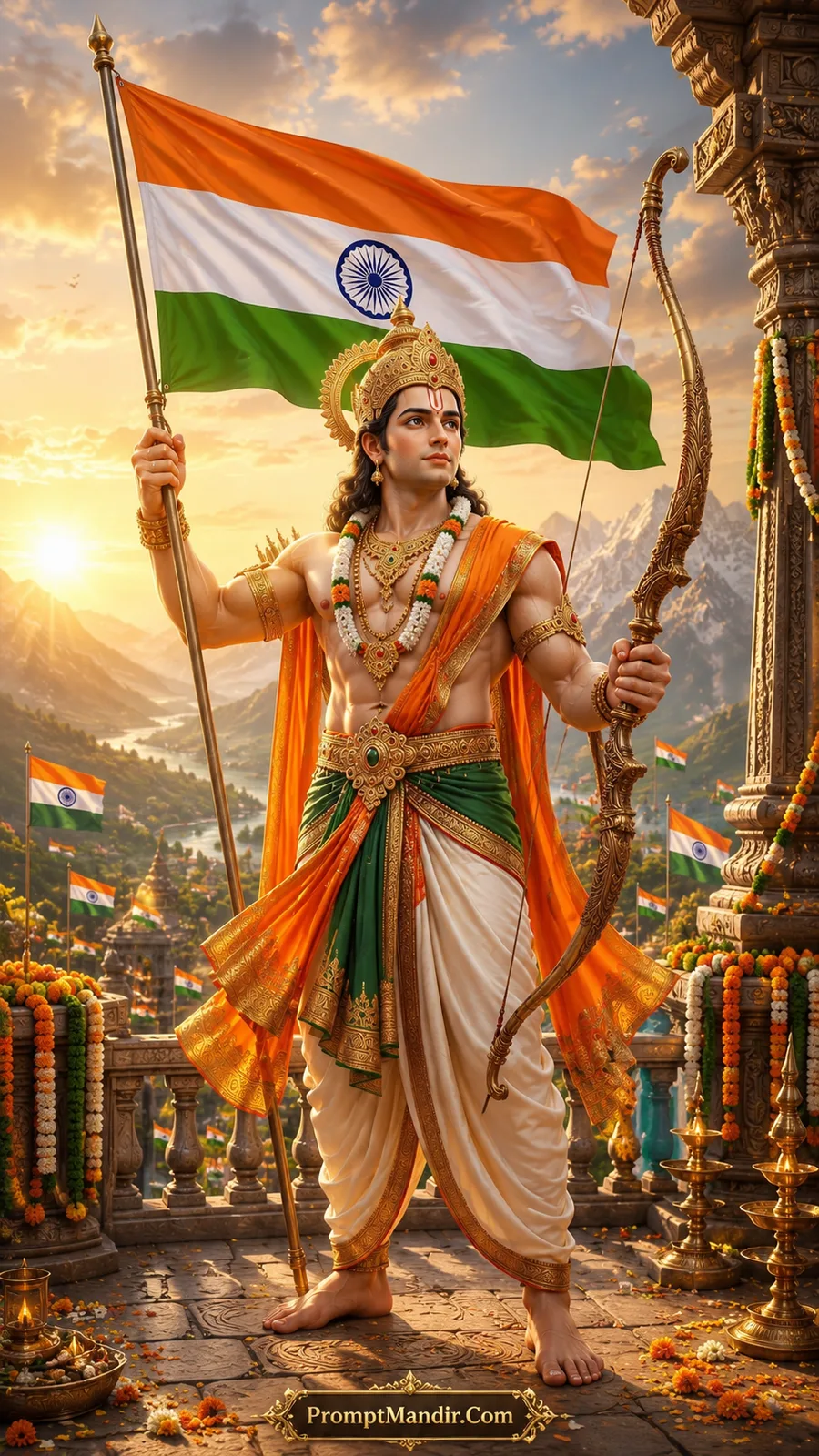
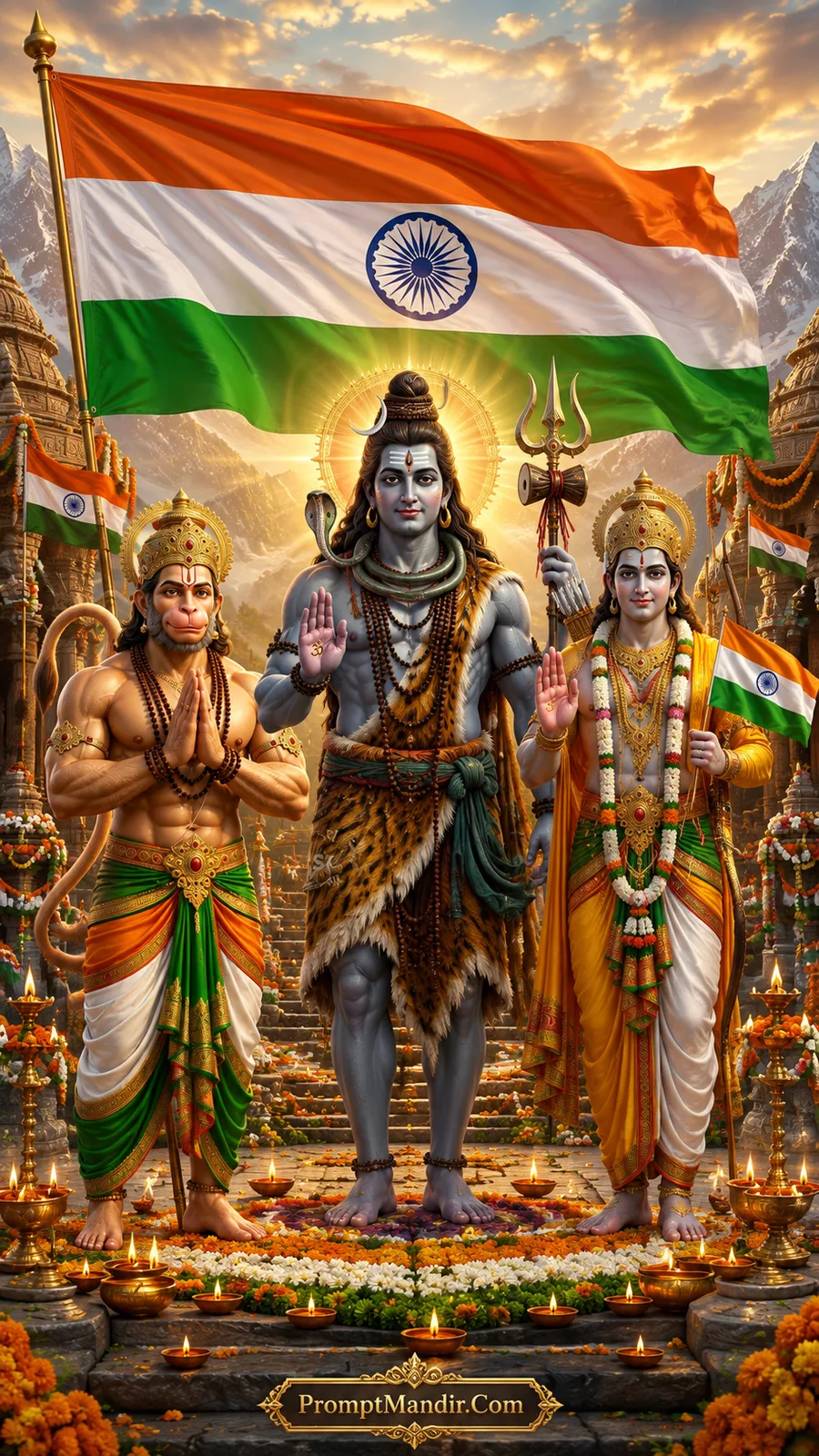
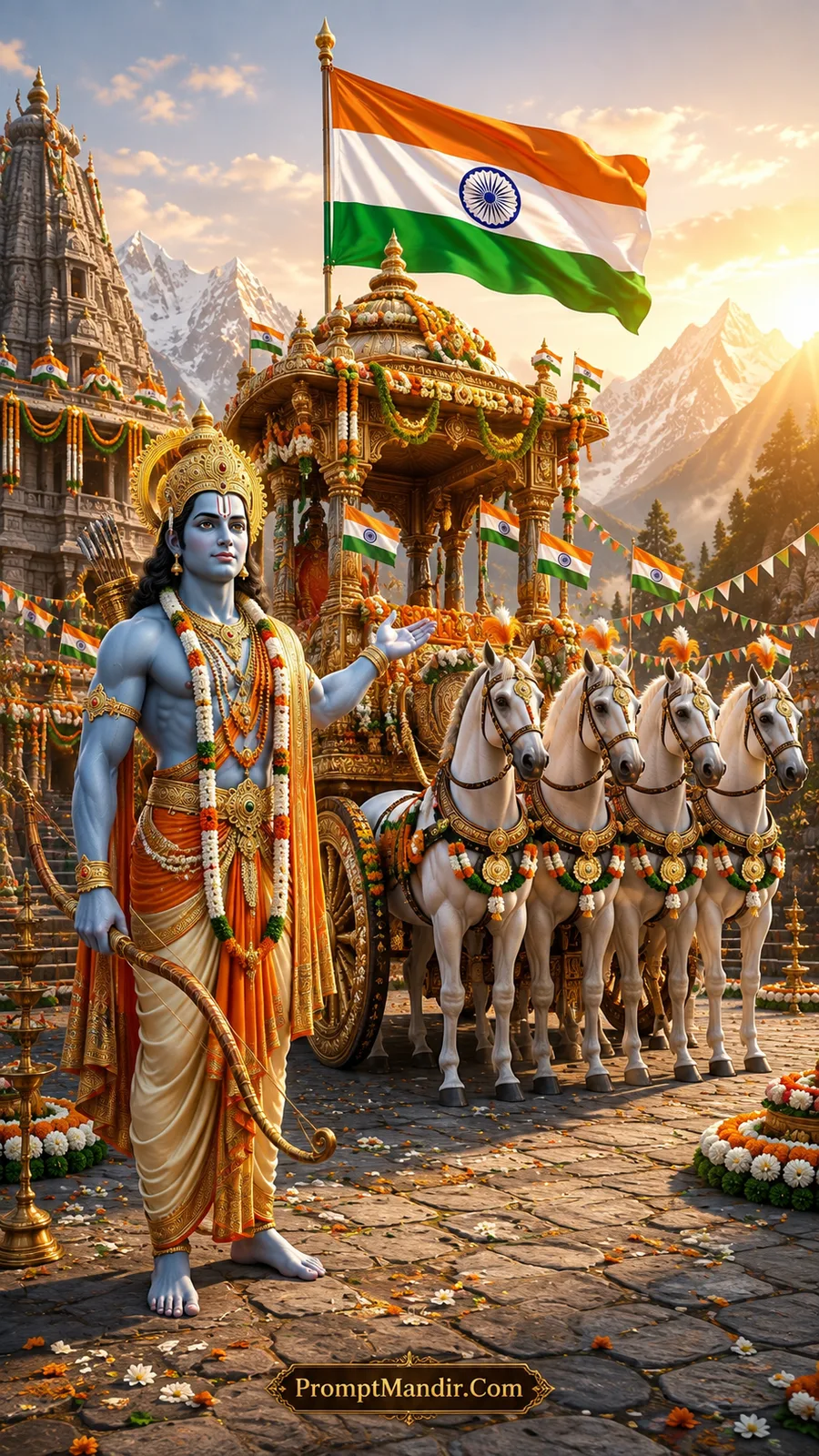
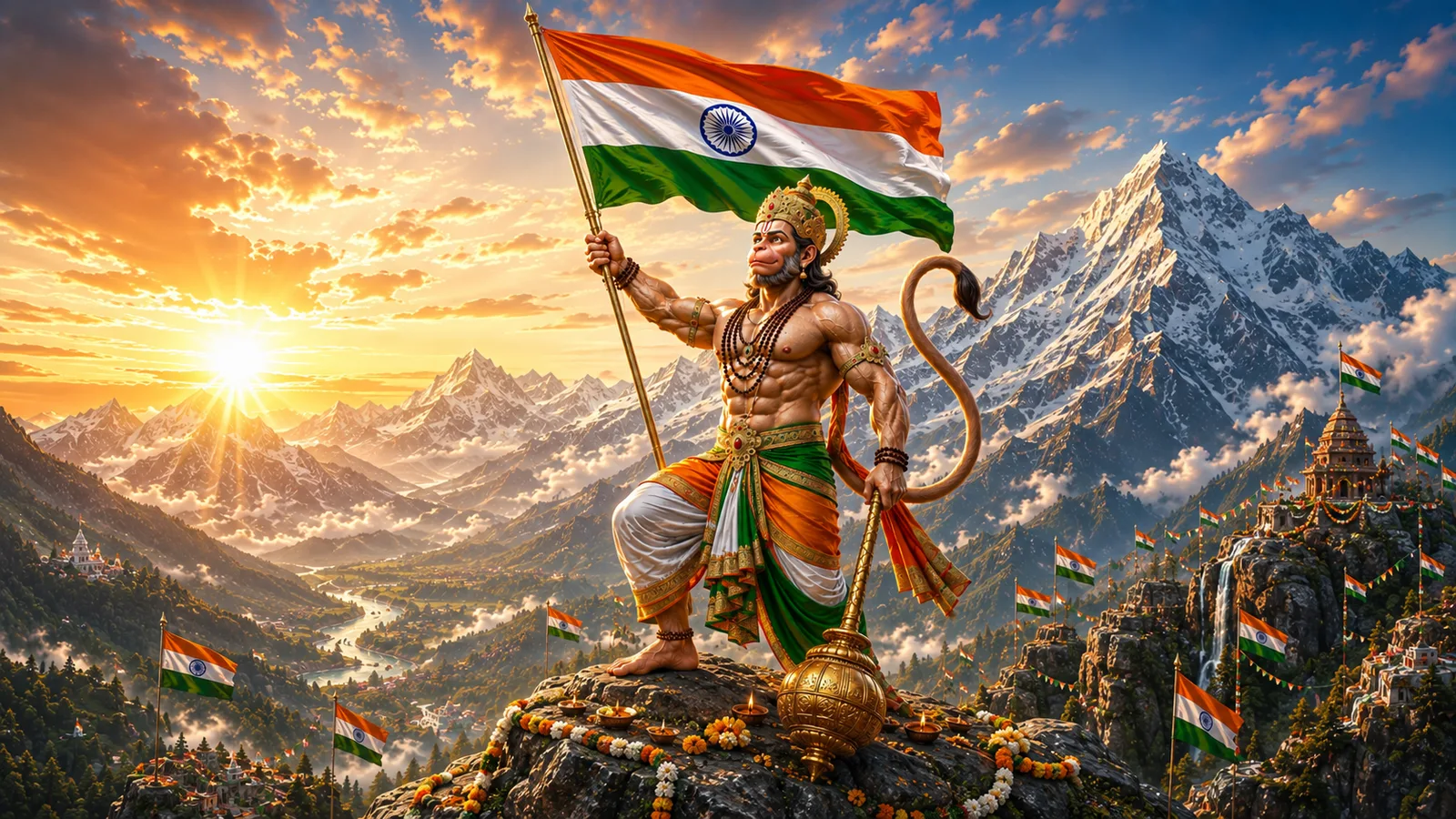
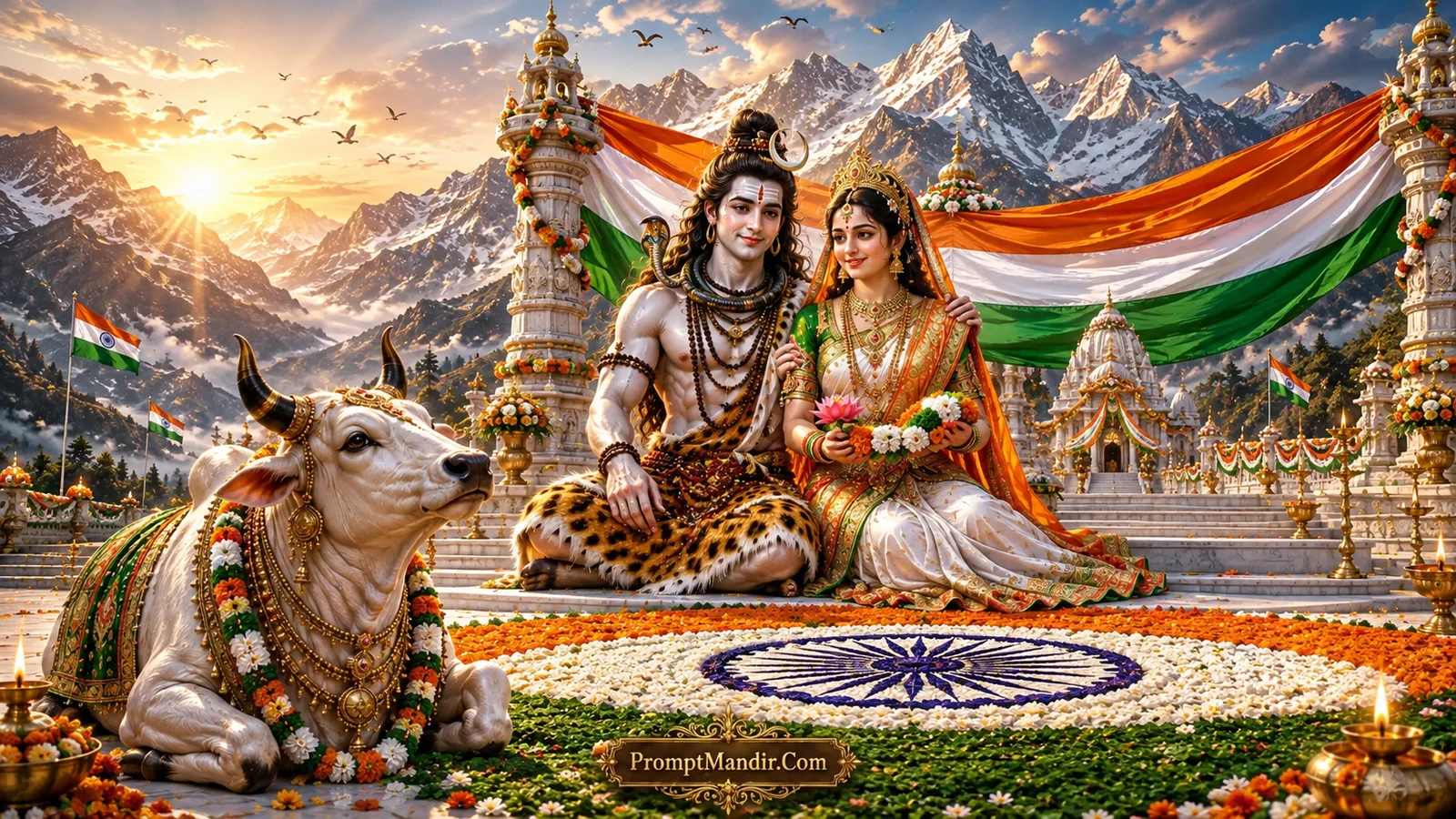
Mahadev stands elevated, his trishul steady, the Ganga flowing from his hair. Shri Ram holds his bow with the dignity of a king who has never needed to raise his voice. Hanuman Ji kneels or stands nearby, his gada resting easy, his eyes soft with devotion. Behind them, the Indian flag flows against the mountains, its Ashoka Chakra turning slowly in the wind.
These are not three gods sharing a frame. They are three forms of the same eternal promise. The promise that righteousness will be protected. That courage will never bow. That the land will always be watched over by those who have walked it longest. The Divine Independence Day collection is not about mixing religion with politics. It is about remembering that the soul of this nation has never been separate from its spirit.
VIEW PROMPT
VIEW PROMPT
VIEW PROMPT
VIEW PROMPT
VIEW PROMPT
VIEW PROMPT
VIEW PROMPT
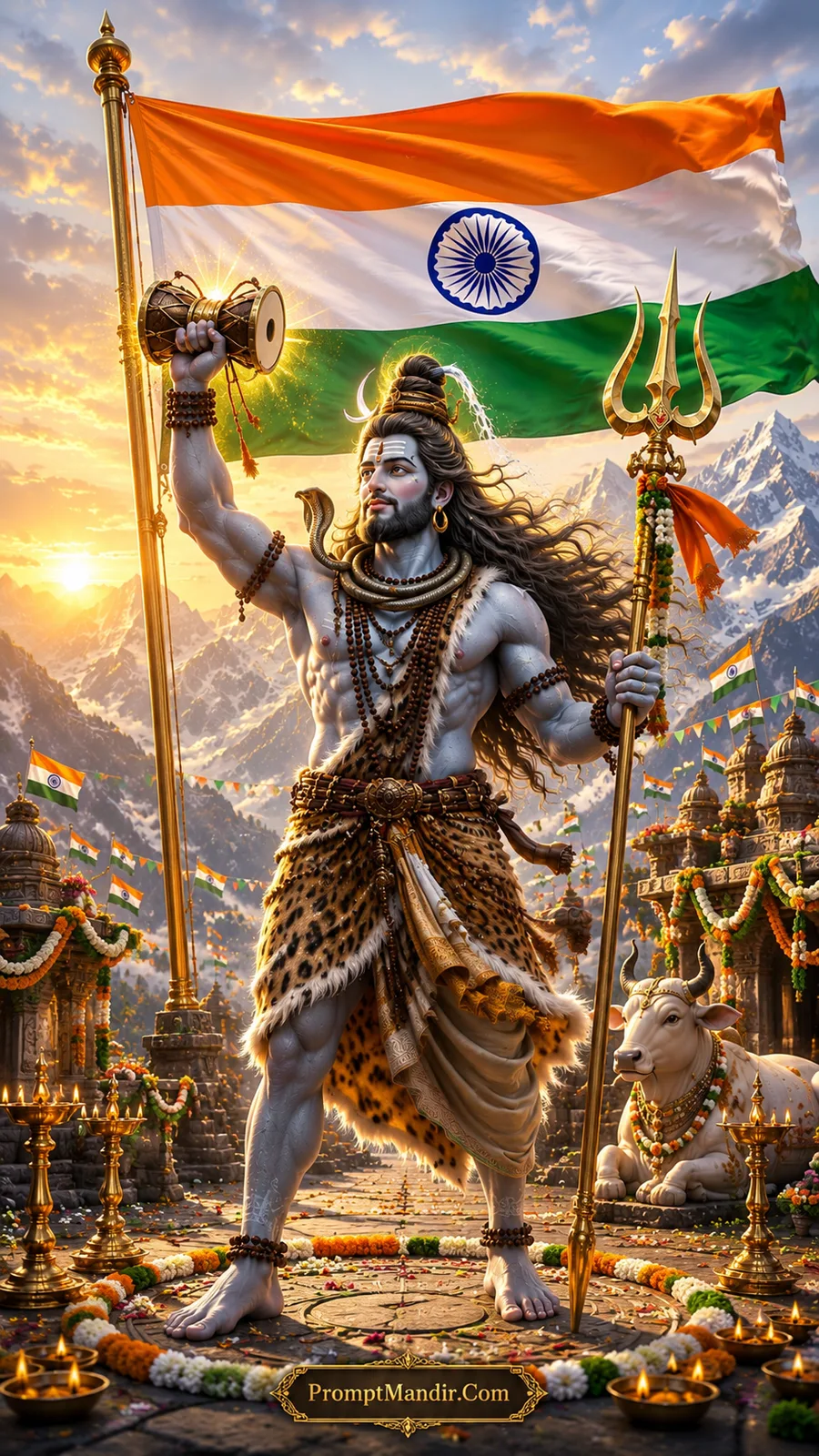
VIEW PROMPT
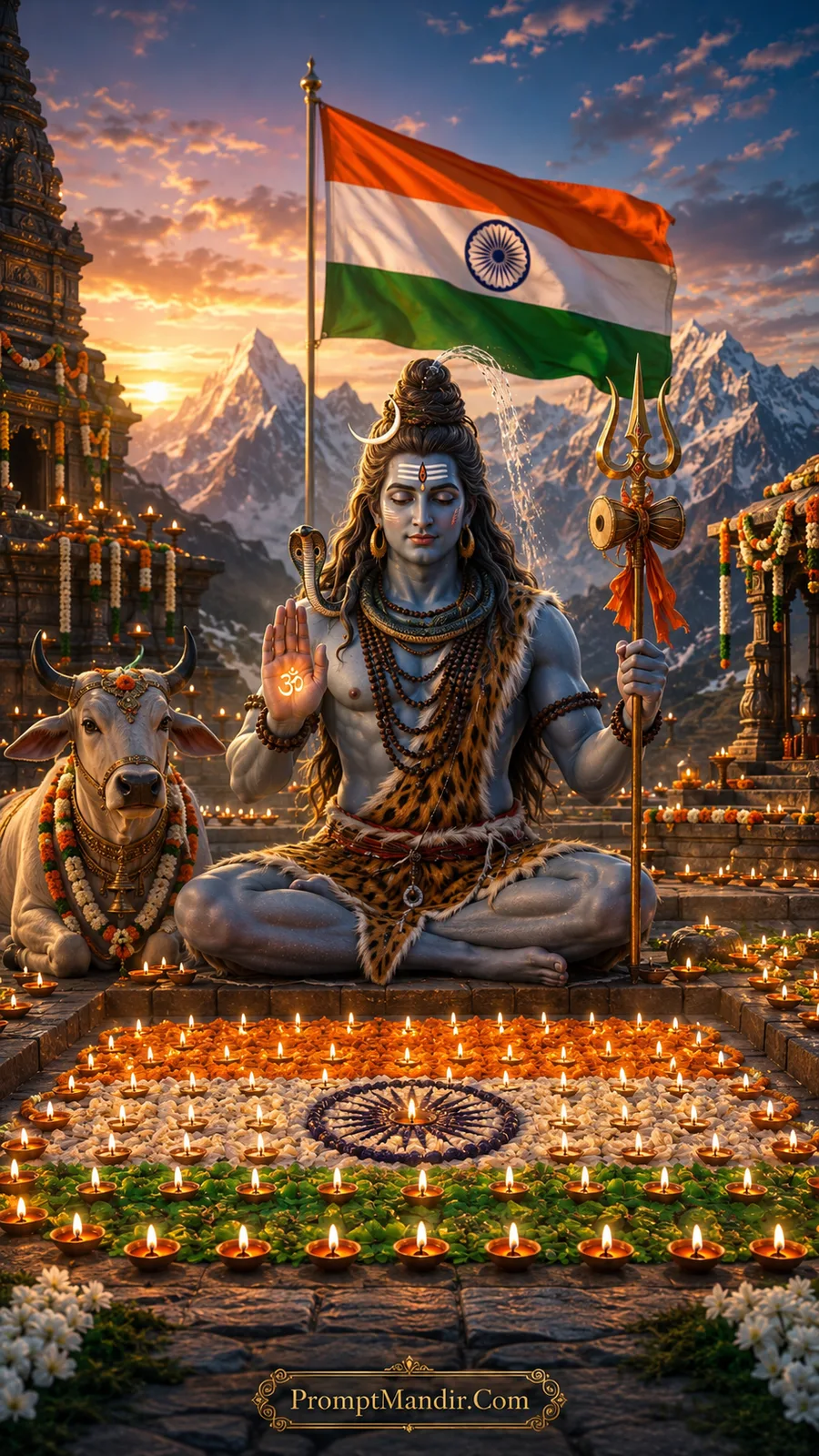
VIEW PROMPT
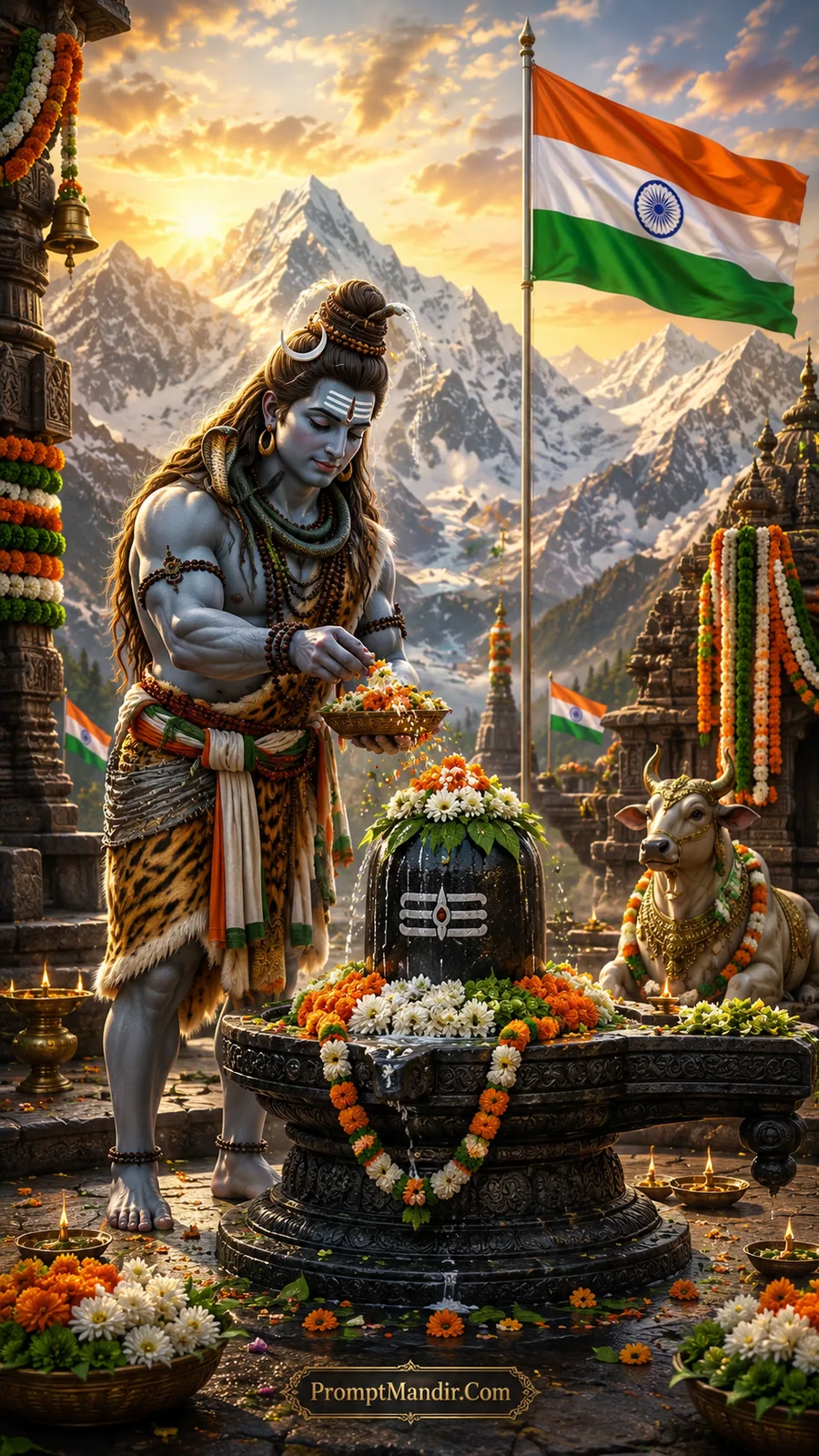
VIEW PROMPT
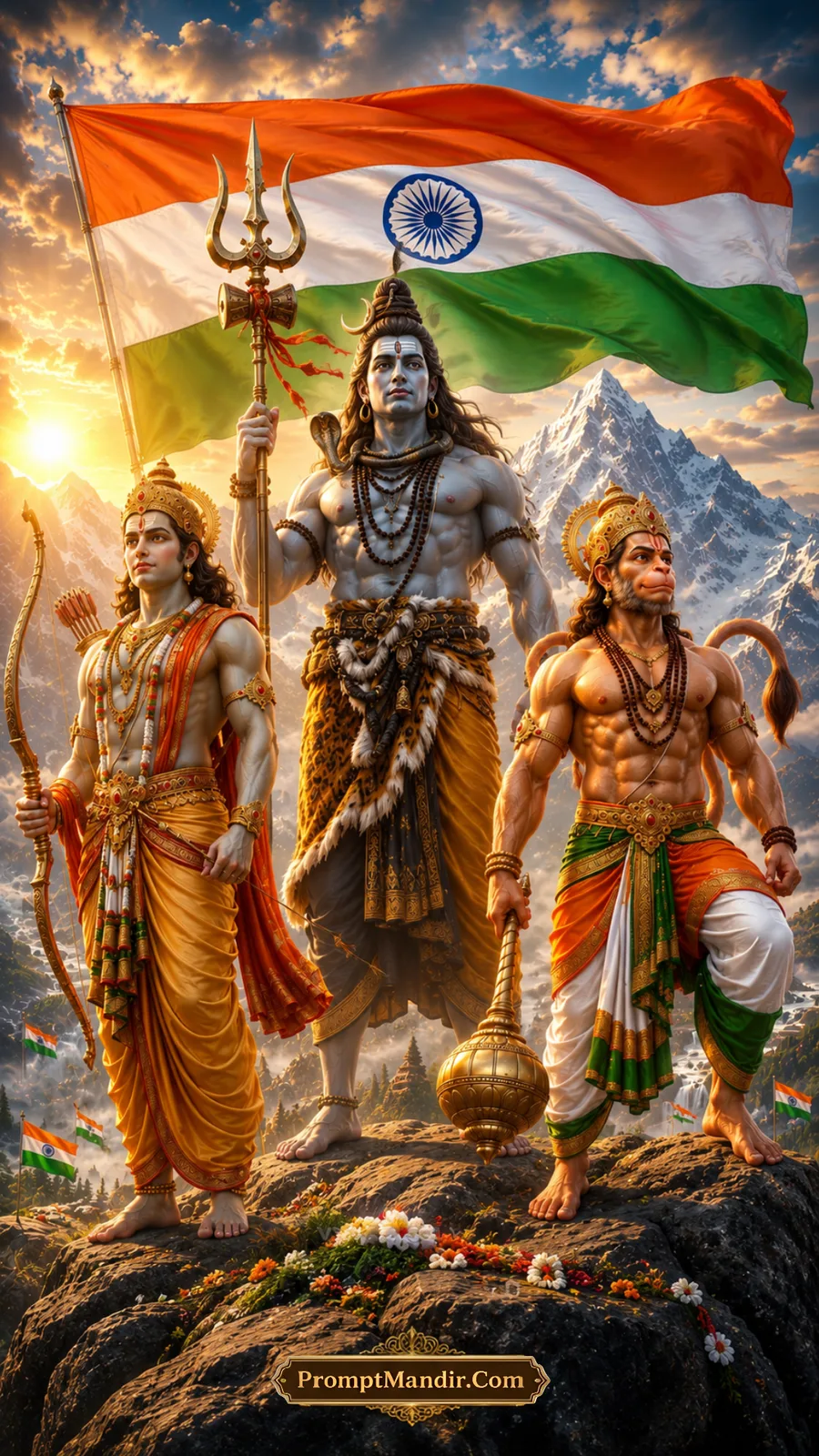
VIEW PROMPT
Explore More AI Prompt Collections
Discover more AI prompt collections covering devotional artwork, spiritual illustrations, divine characters, temple-inspired scenes, cultural designs, and creative visual concepts.
Browse related categories to find fresh inspiration for generating unique AI images, wallpapers, posters, social media graphics, and digital artwork.
Prompt Customization Tips
Character placement is the first discipline of every Divine Independence Day prompt. Mahadev must occupy the highest point, the center of the composition. He is the Adiyogi, the source. Shri Ram stands to the left in a noble warrior stance. Hanuman Ji stands to the right, his gada planted firmly. This triangular arrangement creates balance and hierarchy. The Divine Independence Day collection is built on this visual structure.
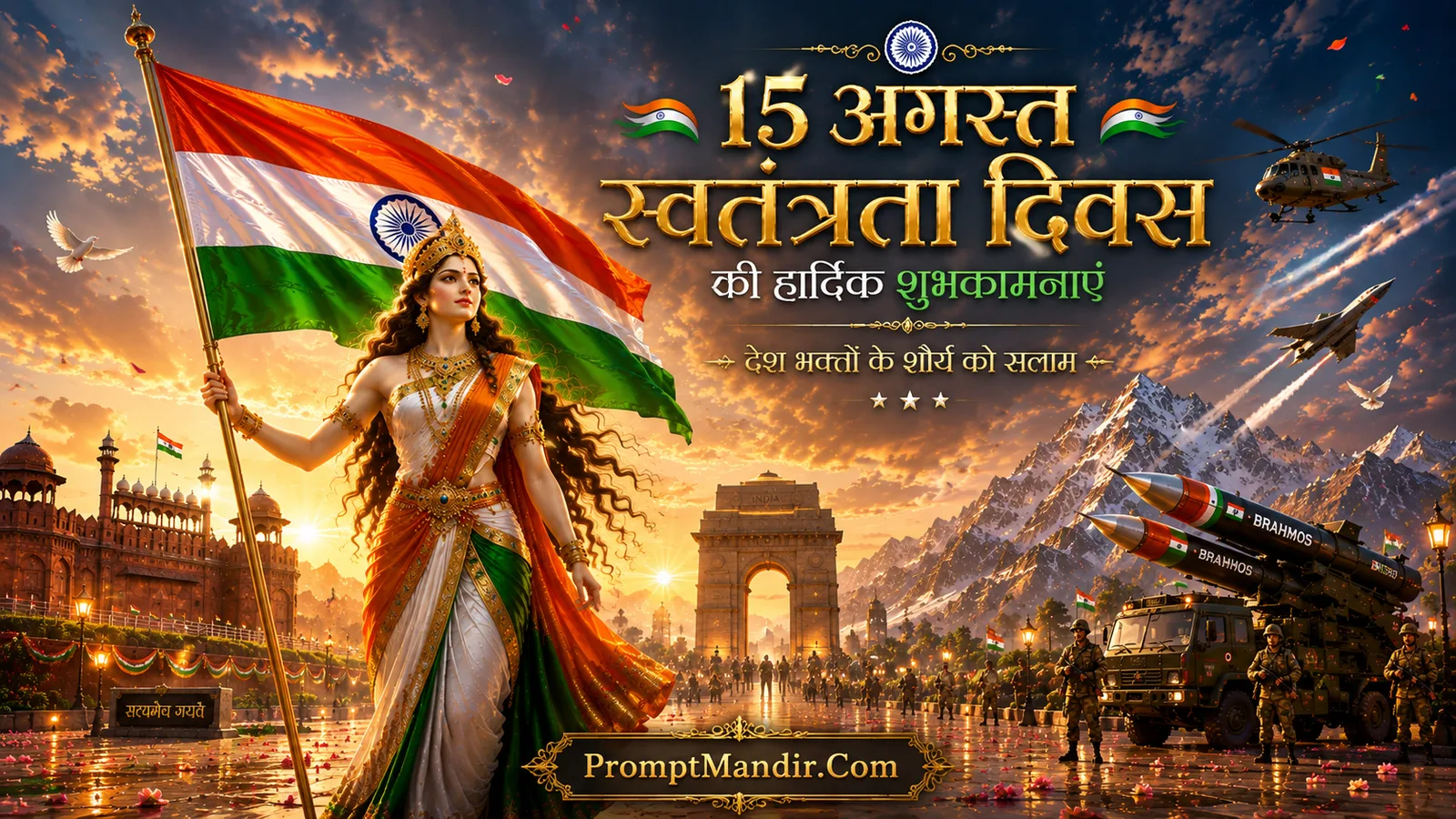
The Indian flag is the only flag that matters in a Divine Independence Day image. It must be large, accurate, and undeniable. The saffron band, the white band with the navy Ashoka Chakra, the green band. The flag rises behind the three deities, its fabric catching the mountain wind. The Divine Independence Day collection treats the flag as a sacred object, not a background texture.
The Himalayas are not optional scenery. They are the stage. The peaks hold the snow and the silence. The valleys carry the mist. The sun breaks over the ridges with a light that feels older than the nation itself. Every Divine Independence Day prompt must include this landscape. It is the only appropriate setting for gods and heroes to stand together on a day of national remembrance.
Shri Ram’s bow must be complete and correctly held. This is a recurring instruction in the Divine Independence Day collection because it is a recurring failure in AI generation. The bow must curve naturally. The string must be taut. The fingers must grip it correctly. Hanuman’s gada must have weight and proportion. Mahadev’s trishul must be singular and steady. The Divine Independence Day collection demands anatomical and object precision.
The attire of the three deities is traditional, not theatrical. Mahadev wears his tiger-skin, rudraksha, and snake. Shri Ram wears royal saffron and gold with a noble crown. Hanuman Ji wears a dhoti that may carry the tricolor in its embroidery, but never in a way that looks like a costume. The Divine Independence Day collection blends patriotism into tradition, never over it.
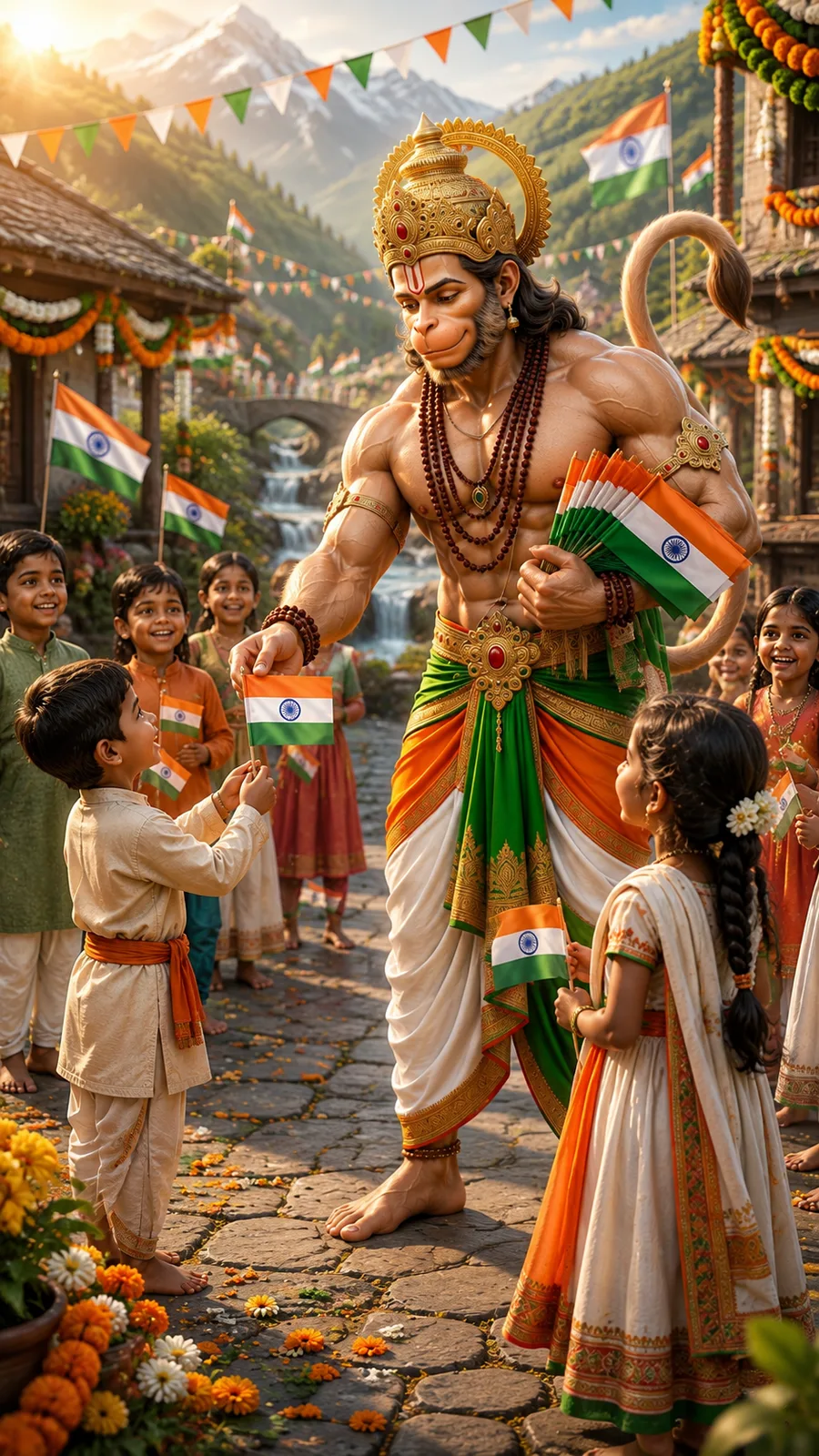
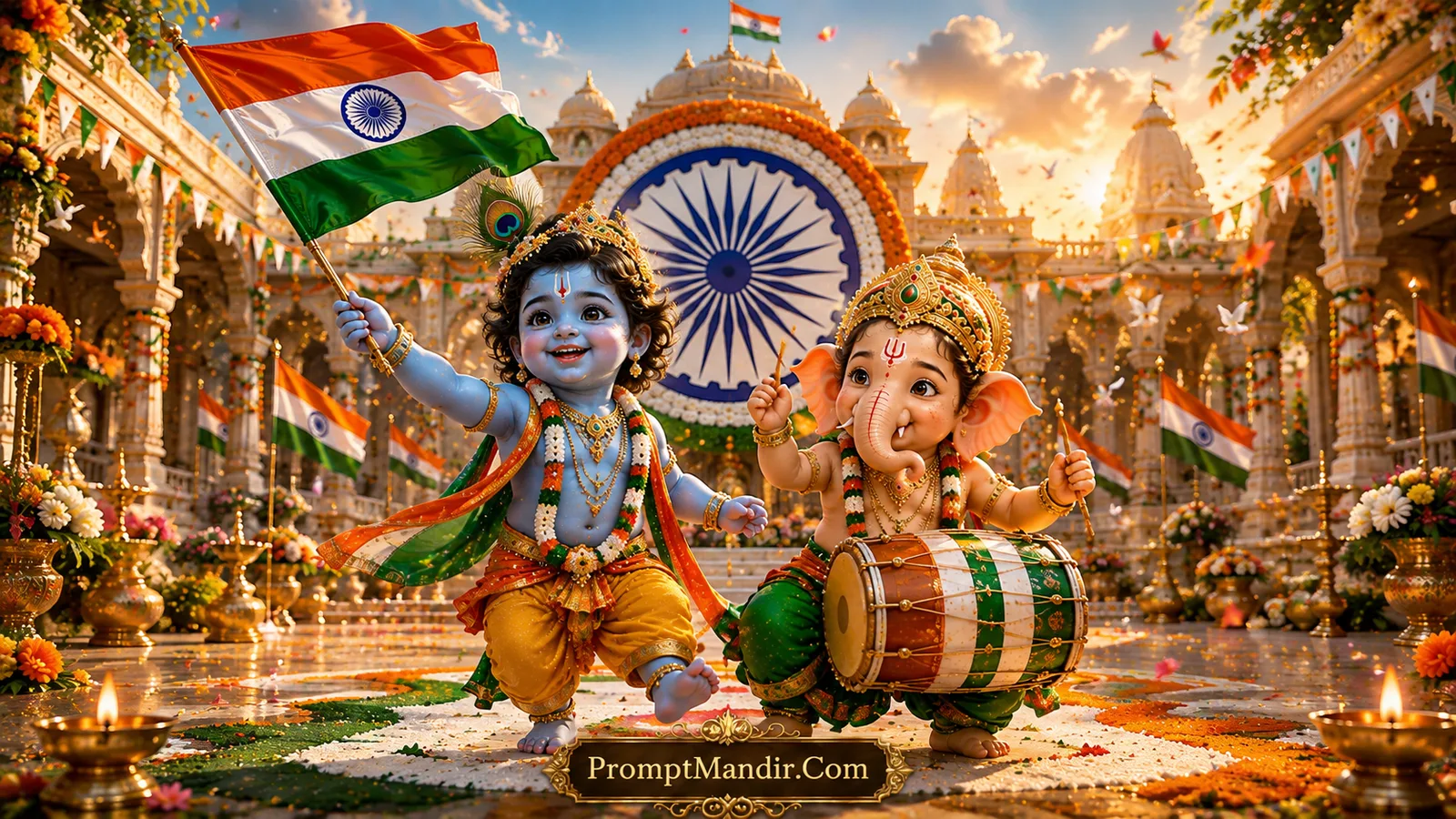
The children and smaller figures in the Divine Independence Day prompts are not distractions. They are the reason. In the village scene, Hanuman Ji hands a small flag to a child. The children gather around him, their faces bright. These moments ground the collection in something tender. The Divine Independence Day collection understands that national pride is felt most clearly in the small gestures, not the grand ones.
The lighting must be golden, warm, and volumetric. It should feel like the first hour of a holiday morning. The light catches the edges of the flag, the metal of the trishul, the folds of silk. It softens the mountains without dimming them. The Divine Independence Day collection uses light the way a painter uses breath. It gives every image life.
Frequently Asked Questions
What is the Divine Independence Day collection?
It is a cinematic devotional series that places Lord Mahadev, Shri Ram, and Lord Hanuman together in Himalayan settings to honor India’s Independence Day. The Divine Independence Day collection blends traditional divine imagery with patriotic symbols in a way that feels reverent, grand, and emotionally sincere.
Why are these three deities chosen for the Divine Independence Day collection?
They represent three essential virtues. Mahadev is liberation and eternal stillness. Shri Ram is righteousness and royal duty. Hanuman Ji is devotion and unstoppable service. Together, they embody the spirit that the nation aspires to. The Divine Independence Day collection uses their presence to express the deeper meaning of freedom.
How is the Indian flag treated in the Divine Independence Day prompts?
With absolute respect. The flag must be large, accurate, and clearly visible. The Ashoka Chakra must be correct. The flag rises behind the deities, moving naturally in the wind. The Divine Independence Day collection never makes the flag an afterthought or a blurred background element.
What are the correct positions for the three deities in a Divine Independence Day composition?
Mahadev is central and elevated. Shri Ram stands to his left. Hanuman Ji stands to his right. This triangular balance is consistent throughout the Divine Independence Day collection. It gives each figure visual weight and symbolic equality.
What are the common anatomical errors to avoid in the Divine Independence Day prompts?
Extra fingers, duplicated arms, fused weapons, distorted bows, and unnatural body proportions. The Divine Independence Day collection repeatedly instructs for correct anatomy, natural grips, and clearly separated objects. Precision is non-negotiable.
Can Hanuman Ji hold the Indian flag in a Divine Independence Day image?
The prompt asks that Hanuman Ji hold only his gada, not the flag. This keeps his silhouette clean and his symbolic identity intact. In some prompts, however, Hanuman Ji may hand a small flag to a child. The Divine Independence Day collection allows for this narrative exception while keeping the main trio composition flag-free in Hanuman’s hands.
What role do children and villagers play in the Divine Independence Day collection?
They provide emotional warmth and human scale. When children gather around Hanuman Ji or villagers decorate their homes, the divine feels closer to everyday life. The Divine Independence Day collection uses these small human moments to balance its epic scale.
What is the signature color palette of the Divine Independence Day collection?
Saffron, white, green, deep blue for Mahadev’s skin, gold for ornaments, and the pale blue-white of Himalayan snow. The palette is rich but controlled. The Divine Independence Day collection avoids oversaturation and keeps the tones natural, warm, and cinematic.
Is the Divine Independence Day collection suitable for both social media and print?
Yes. The 9:16 vertical format is built for phone screens. The high detail and cinematic composition also make it suitable for posters and banners. The Divine Independence Day collection is designed to work across digital and physical formats.
What makes the Divine Independence Day collection different from ordinary Independence Day artwork?
Most patriotic artwork is either purely political or purely devotional. The Divine Independence Day collection refuses that separation. It presents the gods and the flag as part of one continuous story. The result is not a holiday greeting. It is a visual declaration of what the nation means to those who believe.
About This Divine Independence Day Collection
There are moments when the flag does not need to be lowered or saluted to be honored. It simply needs to be seen, flying against the same mountains that have witnessed the birth and death of empires, the rise and fall of kingdoms, and the quiet endurance of faith.
The Divine Independence Day collection is built for those moments. It places Mahadev, Shri Ram, and Hanuman Ji not above the nation, but within it. Standing on its soil. Breathing its air. Watching over its children. The flag flows behind them. The mountains hold them. The morning light blesses them.
This is not a political statement. It is a devotional one. It says that the freedom won in 1947 is not separate from the freedom promised by the divine. They are the same dream, dreamed in different languages. And on this one day, they share a single frame.