
The Eternal Lanes of Vrindavan — A Photograph Taken Before the World Wakes
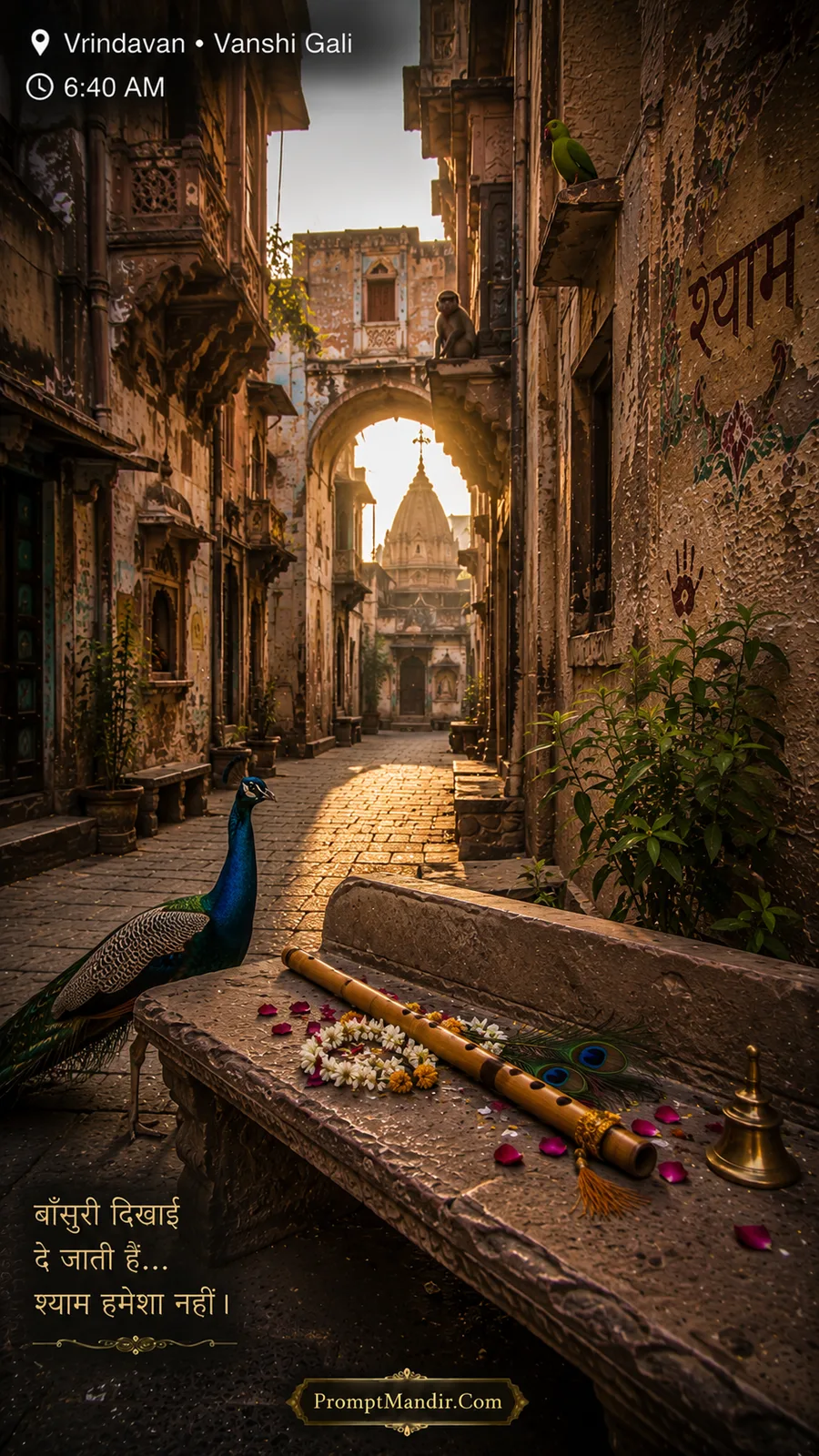
There is a Vrindavan that exists before the shops open. Before the temple bells begin their full-throated call. Before the first bus arrives from Mathura. It is a town of narrow stone lanes and old sandstone walls. Of peacocks crossing empty courtyards. Of a single flute resting on a weathered bench as if someone just left it there.
The Eternal Lanes of Vrindavan collection is a series of images that feel less like art and more like memory. They are composed like travel photographs. A wide-angle lens. A timestamp in the corner. A location tag. A line of Hindi poetry that reads like something overheard in a temple courtyard. The Eternal Lanes of Vrindavan does not ask you to worship. It asks you to arrive.
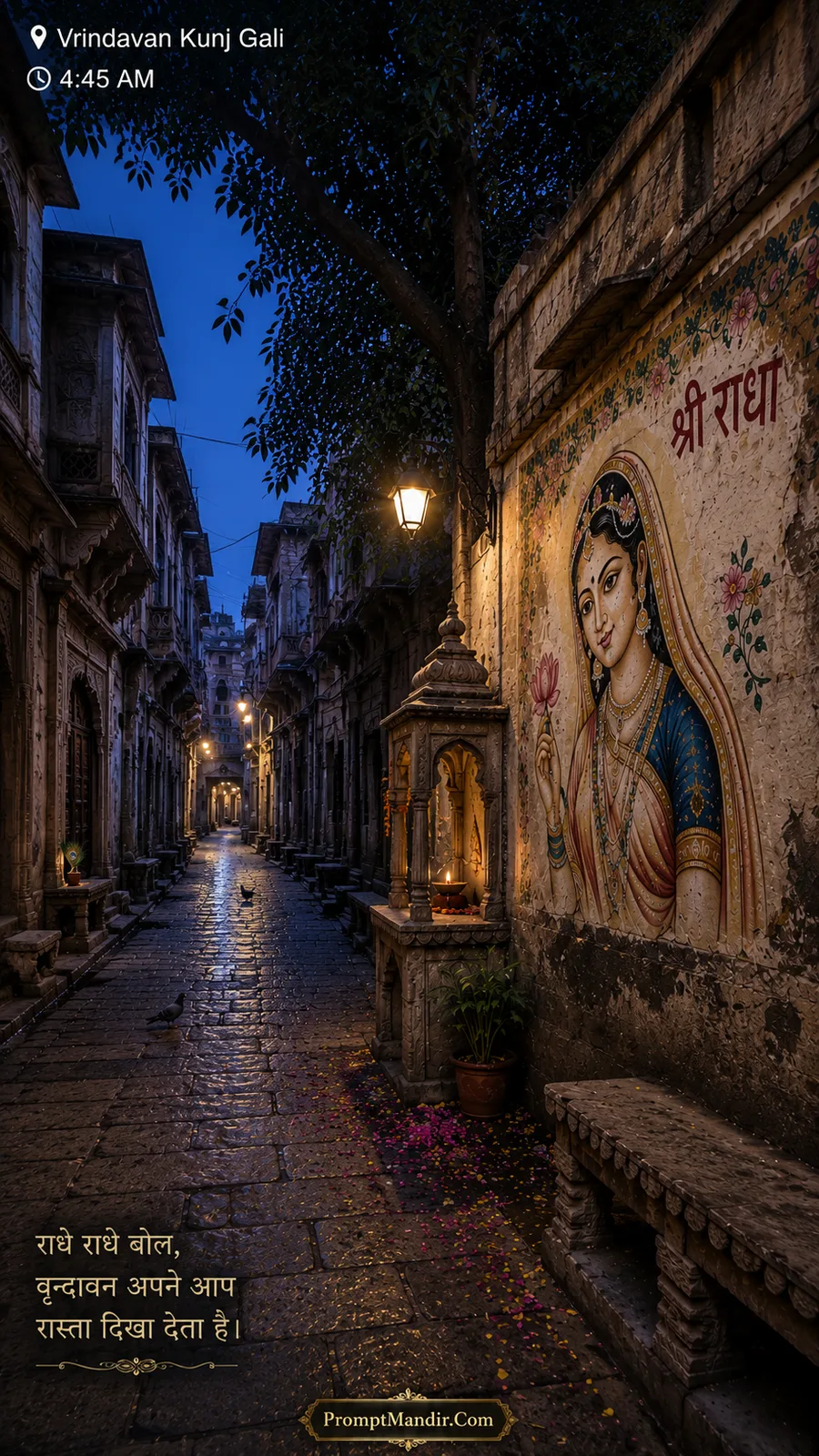
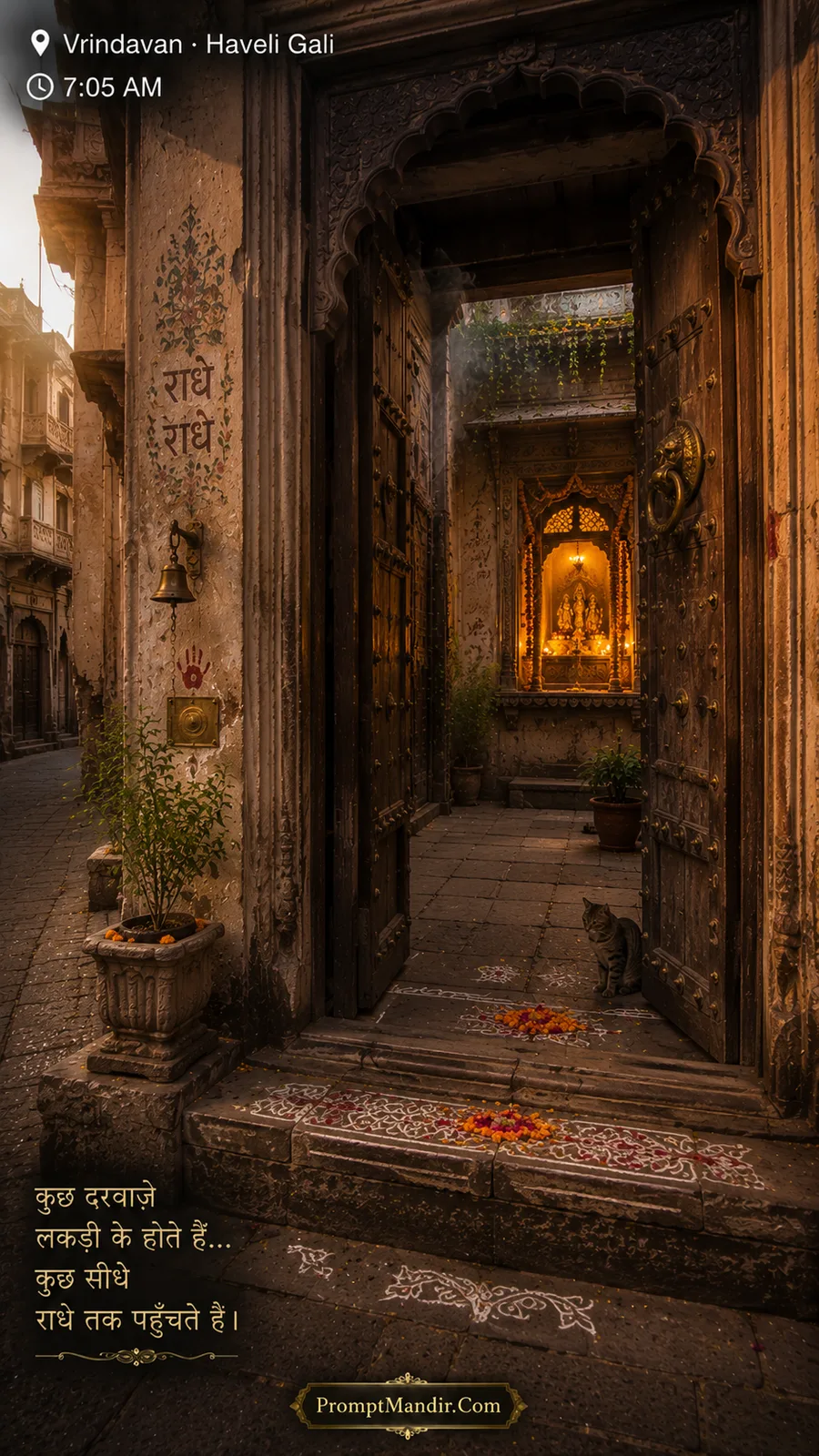
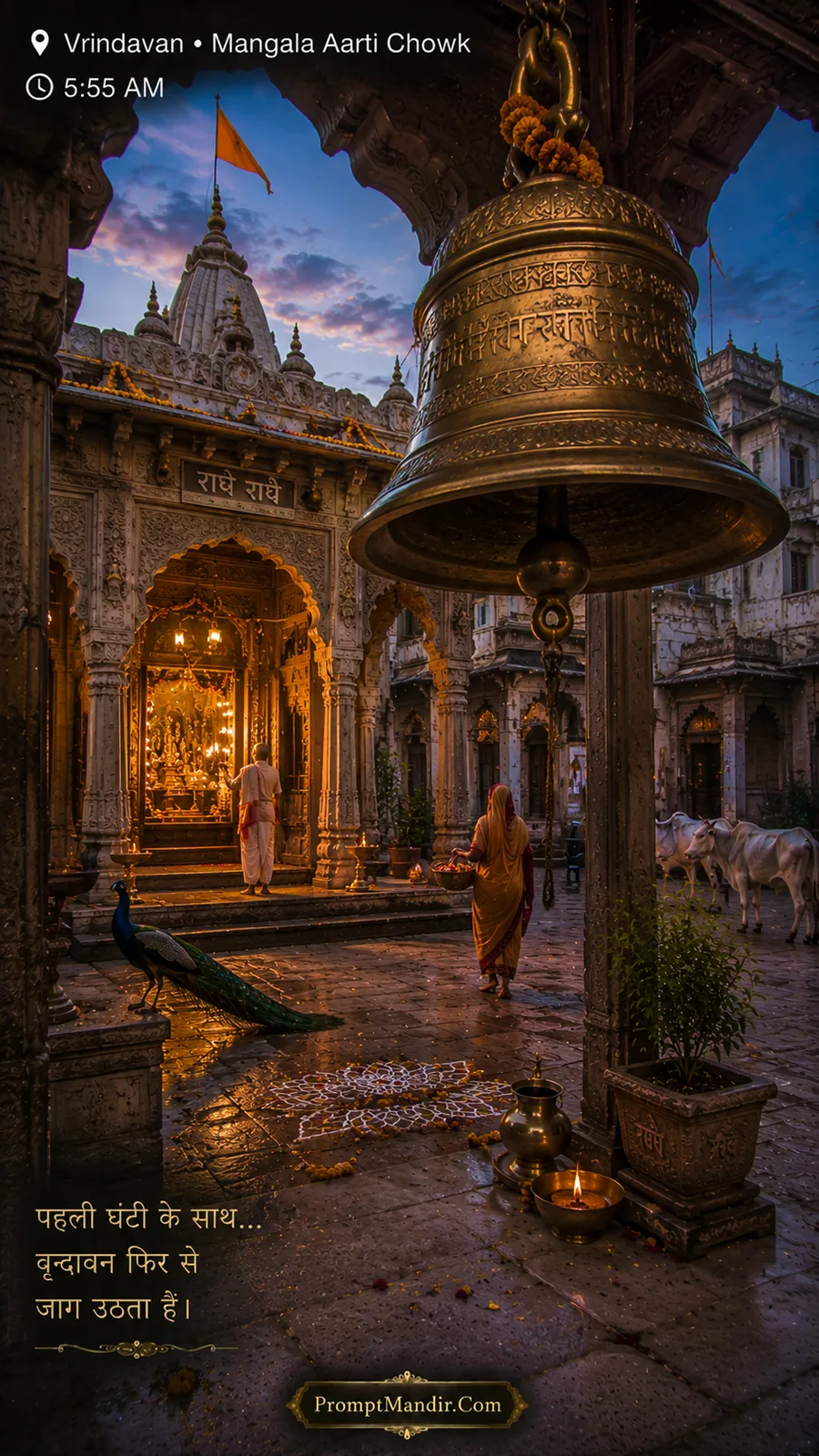
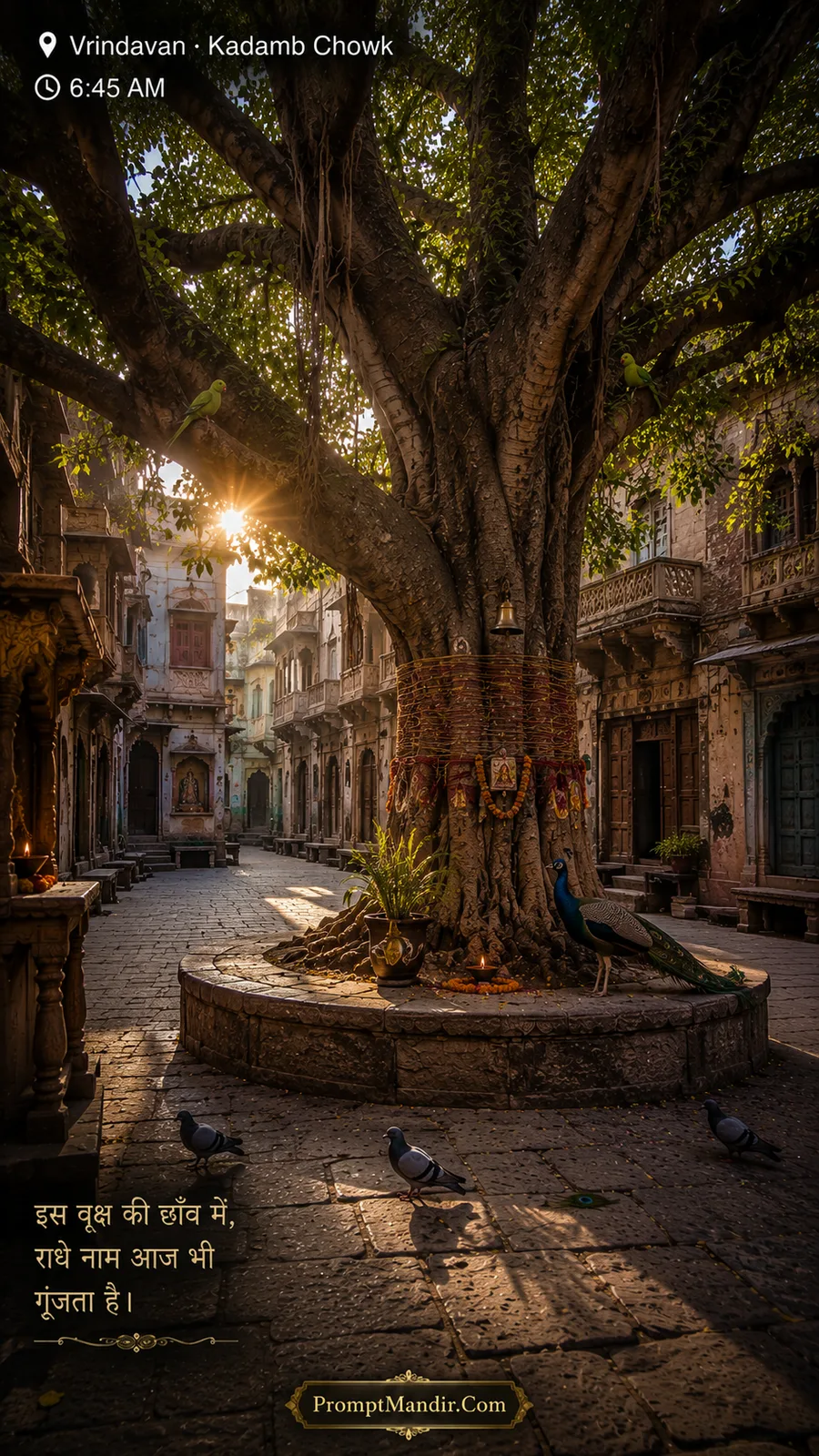
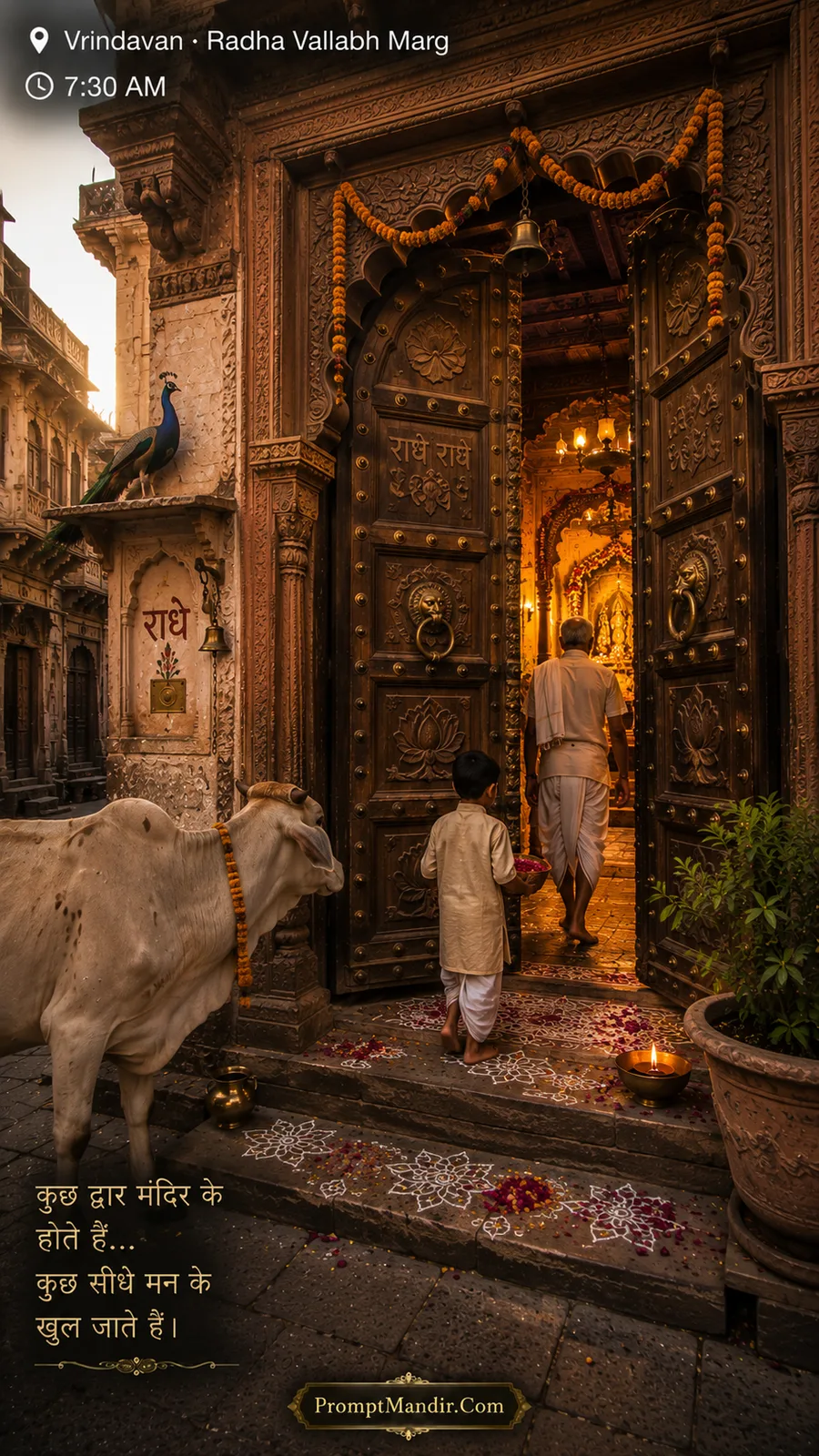
Each image is set at a specific time. 5:32 AM at a silent crossroads. 5:55 AM for Mangala Aarti. 6:40 AM on Vanshi Gali. 6:45 AM at Kadamb Chowk. 7:05 AM outside an old haveli. 7:10 AM at Prem Chowk. 7:30 AM on Radha Vallabh Marg. The Eternal Lanes of Vrindavan is built around these precise moments. The light is always natural. Soft morning gold. Cool pre-dawn blue. The warm amber glow of a single oil lamp from inside a shrine.
Kadamba trees spread their branches over worn stone platforms. Tulsi planters stand beside carved doorways. A brass bell hangs above a small recessed shrine. A cow waits near the temple steps. A young boy carries a basket of flower petals. An elderly saint sits in meditation. The Eternal Lanes of Vrindavan is populated by people and animals who belong there, but they never pose for the camera. They are going about their morning, and you are simply lucky enough to be walking past.
This is not a collection of deities. It is a collection of the spaces they inhabit. The lanes they might walk if they chose to visit their own town. The Eternal Lanes of Vrindavan is an invitation to step into a photograph and discover that Vrindavan is not a place you see. It is a place you feel.
VIEW PROMPT
VIEW PROMPT
VIEW PROMPT
VIEW PROMPT
VIEW PROMPT
VIEW PROMPT
VIEW PROMPT
VIEW PROMPT
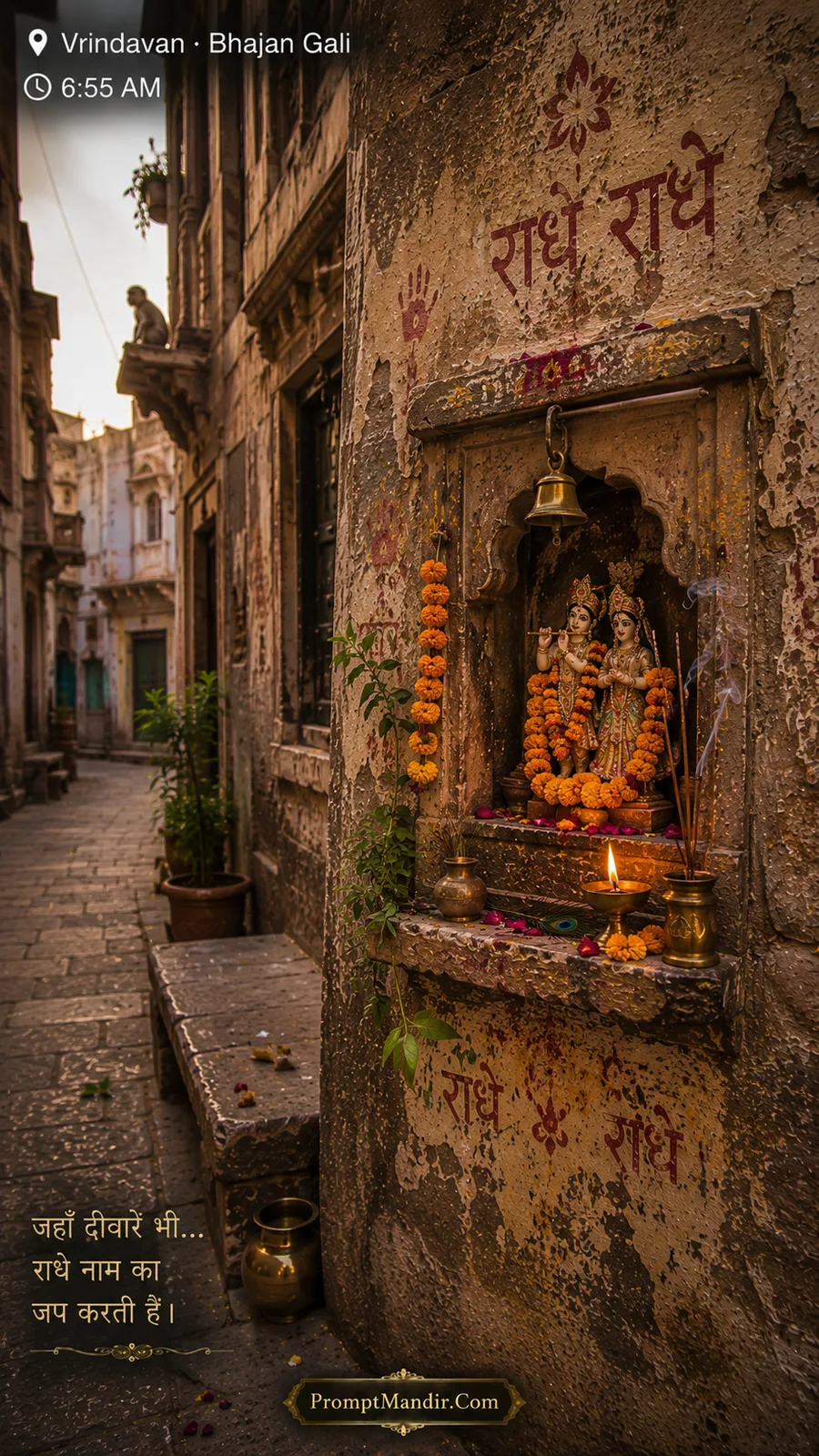
VIEW PROMPT
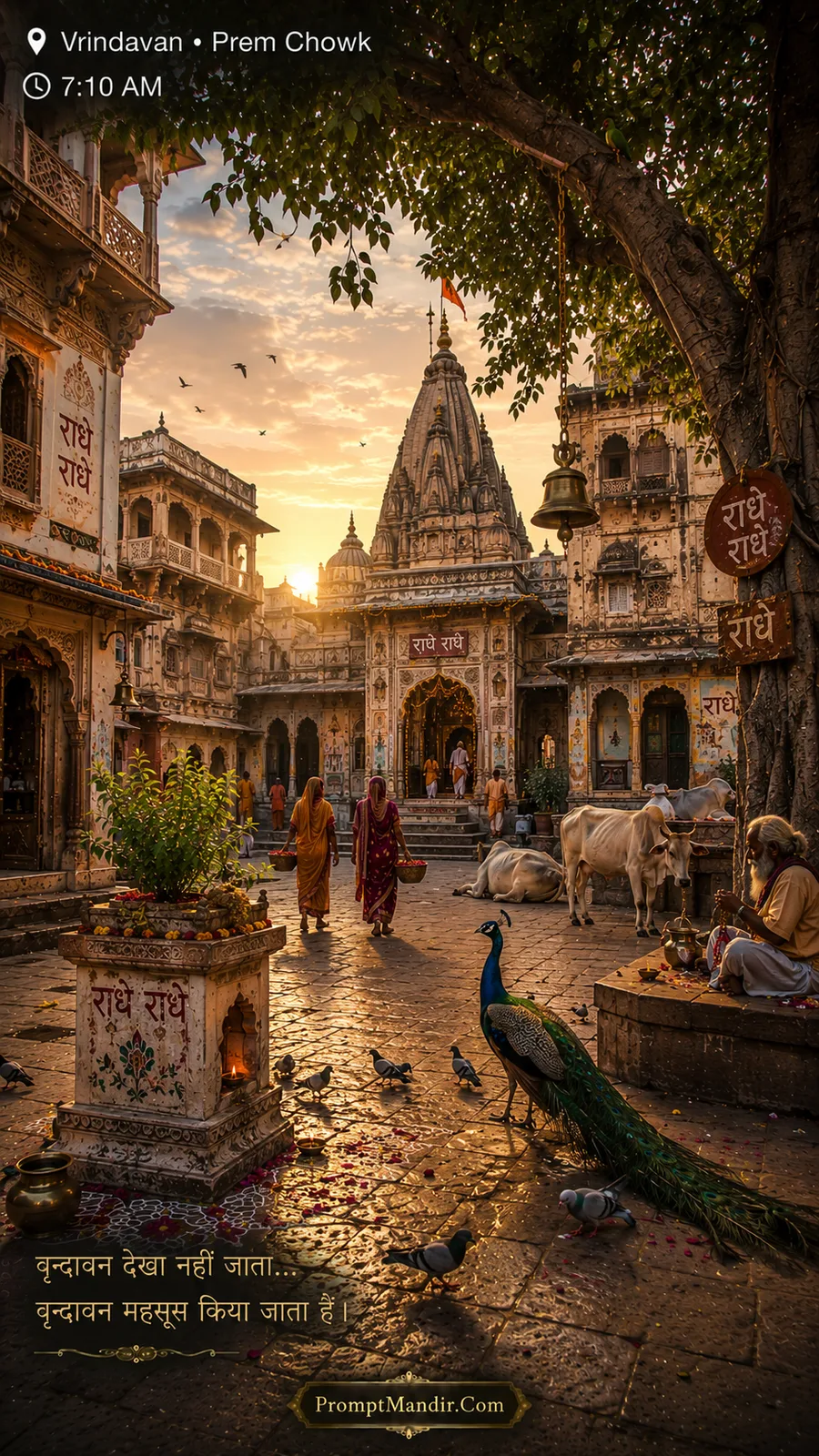
VIEW PROMPT
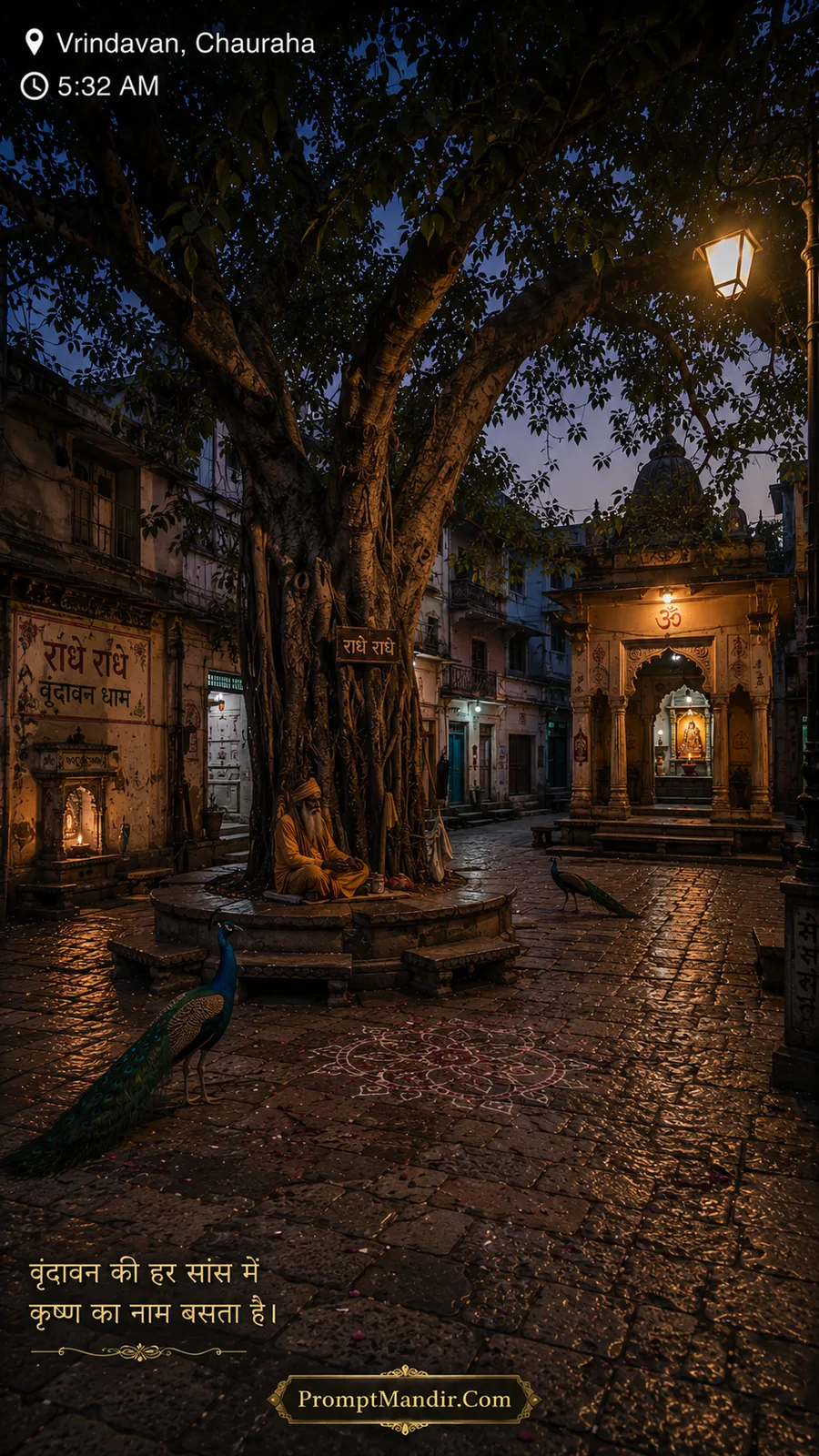
VIEW PROMPT
Explore More AI Prompt Collections
Discover more AI prompt collections covering devotional artwork, spiritual illustrations, divine characters, temple-inspired scenes, cultural designs, and creative visual concepts.
Browse related categories to find fresh inspiration for generating unique AI images, wallpapers, posters, social media graphics, and digital artwork.
Prompt Customization Tips
The timestamp is sacred in The Eternal Lanes of Vrindavan. Every prompt must specify an exact time between 5:30 and 7:30 AM. The light changes dramatically across those two hours. At 5:32 AM, the sky is deep pre-dawn blue with only ambient light and warm street lamps. At 6:45 AM, soft golden morning light filters through leaves. At 7:30 AM, the sun is higher and the shadows are sharper. The Eternal Lanes of Vrindavan uses time as its primary atmospheric tool.
The location tag is the second anchor of The Eternal Lanes of Vrindavan. Kadamb Chowk. Vanshi Gali. Haveli Gali. Bhajan Gali. Radha Vallabh Marg. Prem Chowk. Mangala Aarti Chowk. Each name roots the image in a specific, believable place. The prompt must include the location in the documentary overlay. The Eternal Lanes of Vrindavan treats these names with the same care a travel photographer treats captions.
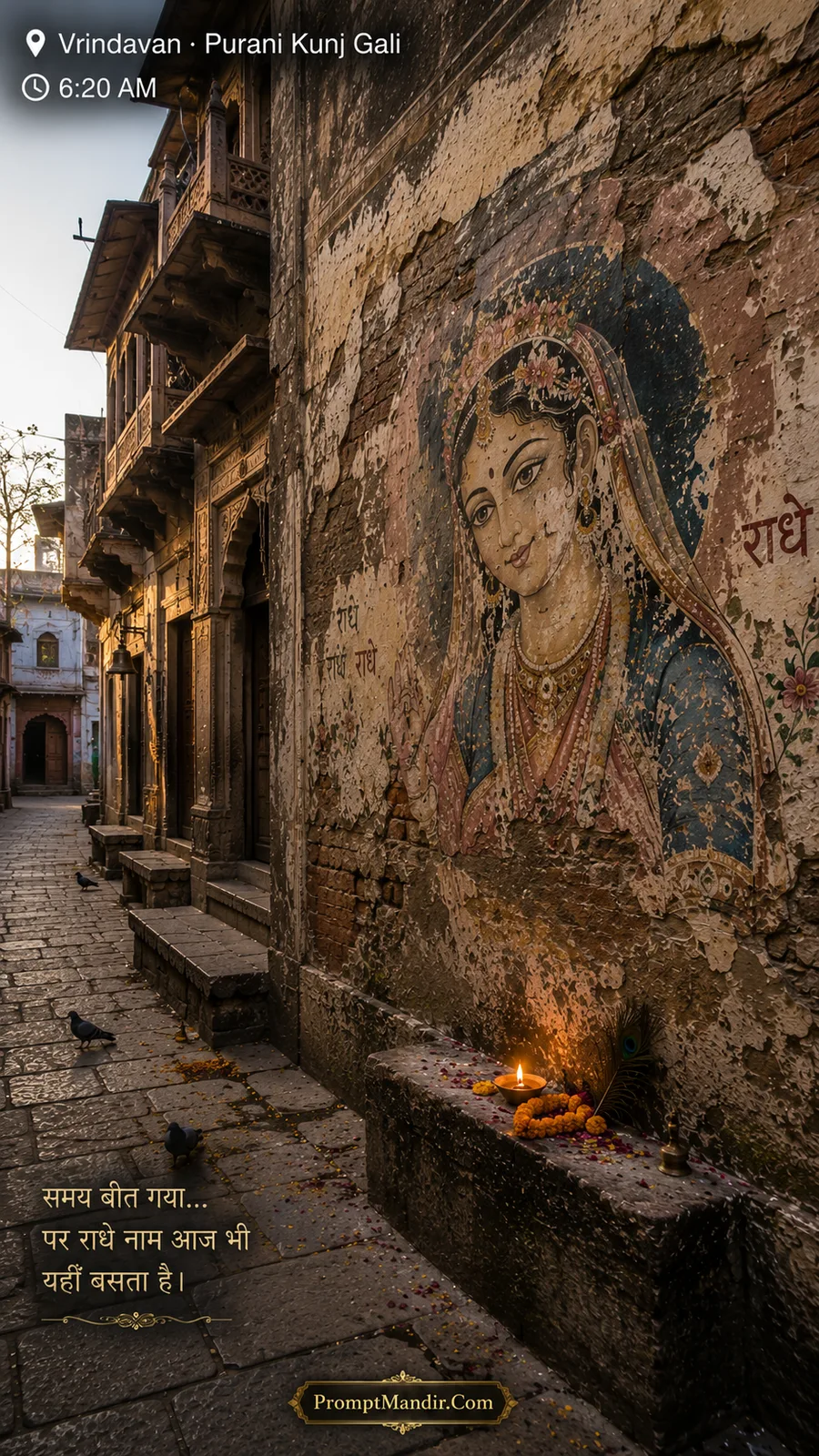
Architecture in The Eternal Lanes of Vrindavan is never new. It is ancient, weathered, and layered with time. Sandstone havelis. Carved wooden balconies. Faded lime-plaster walls. Antique teakwood doors with brass ring knockers. Stone pavements polished by centuries of bare feet. Intricate jharokhas. Old cracks and chipped textures. The prompt must describe the age of the surfaces. The Eternal Lanes of Vrindavan is a portrait of a town that has been standing for hundreds of years.
The Kadamba tree appears throughout The Eternal Lanes of Vrindavan. It is the living center of many courtyards. Its trunk is enormous and textured. Its roots are exposed and wrapped around circular stone platforms. Sacred red and yellow threads are tied around it. Marigold garlands hang from it. A small brass bell is sometimes attached to a low branch. The Kadamba tree in The Eternal Lanes of Vrindavan is a character, not a backdrop.
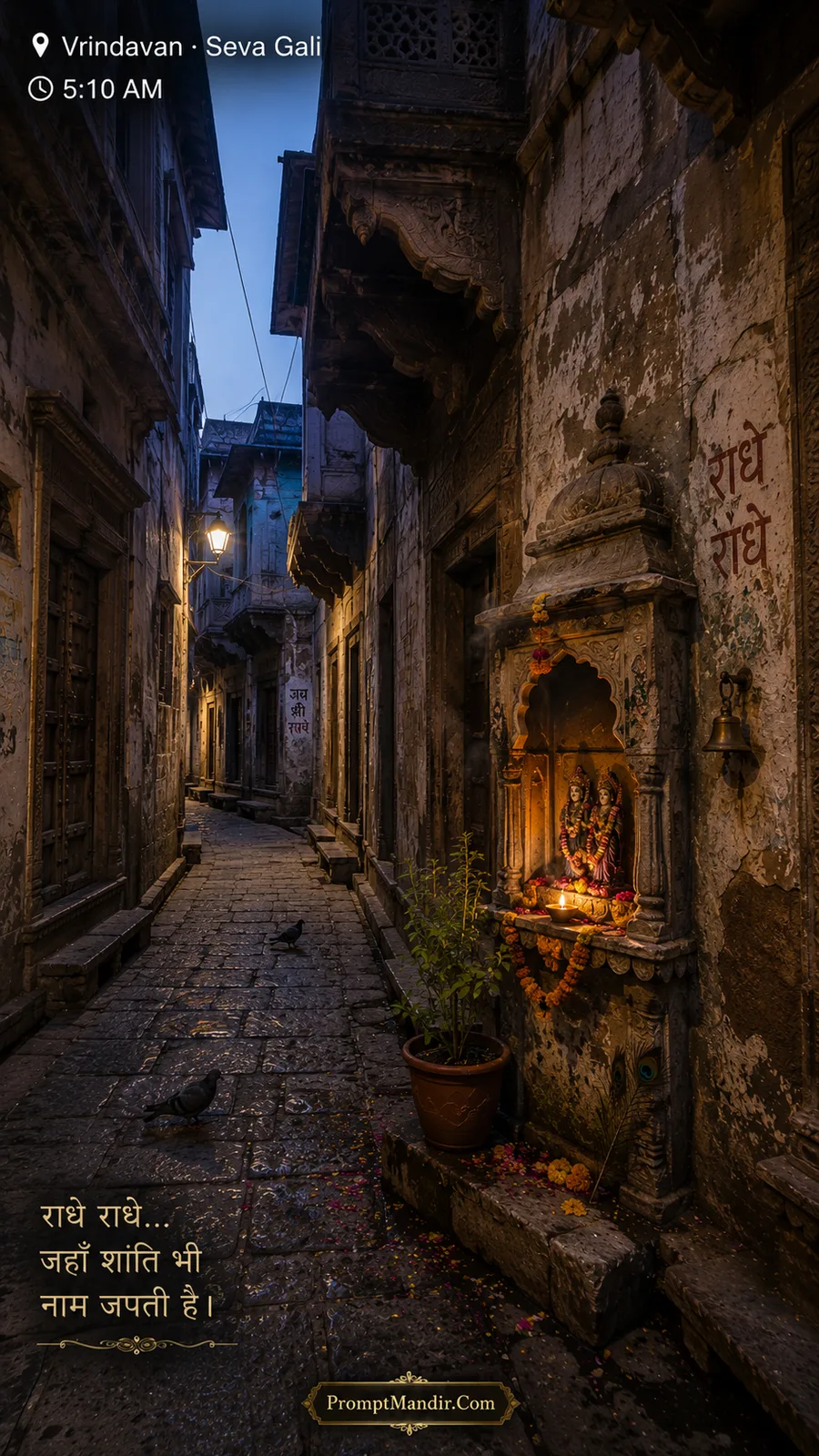
Devotional elements in The Eternal Lanes of Vrindavan are simple and domestic. A small recessed shrine in a wall. A Tulsi planter beside a doorway. A brass lota. A clay oil lamp. Fresh flower petals scattered on stone steps. A hand-drawn rangoli on a threshold. A peacock feather resting below a shrine. These are not grand temple decorations. They are the small, daily offerings of a living tradition. The Eternal Lanes of Vrindavan captures devotion in its most intimate form.
People in The Eternal Lanes of Vrindavan are few and quiet. A young boy in a cream kurta carrying flowers. An elderly devotee in a white dhoti entering a temple. Two women in traditional sarees walking toward a shrine. An old saint meditating on a stone platform. A priest performing morning aarti. They never face the camera. They never pose. They are going about their morning, and the camera simply observes. The Eternal Lanes of Vrindavan respects their privacy even while capturing their presence.
Animals bring the lanes to life in The Eternal Lanes of Vrindavan. A peacock standing beside a stone bench. Pigeons walking across the pavement. Green parrots resting on a Kadamba branch. A calm white cow waiting near the temple steps. A curious monkey on a distant balcony. These animals are not decorative. They are residents. The Eternal Lanes of Vrindavan treats them as part of the town’s living fabric.
The poetry at the bottom of each image is essential to The Eternal Lanes of Vrindavan. It is always in Hindi. It is always devotional and slightly melancholic. “बाँसुरी दिखाई दे जाती है… श्याम हमेशा नहीं।” “कुछ दरवाज़े लकड़ी के होते हैं… कुछ सीधे राधे तक पहुँचते हैं।” The poetry is not a caption. It is a reflection. The Eternal Lanes of Vrindavan uses these lines to turn a photograph into a meditation.
Lighting in The Eternal Lanes of Vrindavan is never artificial. No fantasy glow. No dramatic god rays. No HDR overload. The light is natural and specific to the time of day. Soft golden morning light filtering through leaves. Warm amber lamp light spilling from a shrine. Cool blue pre-dawn ambience. The Eternal Lanes of Vrindavan relies on physically accurate light to create its atmosphere.
Frequently Asked Questions
What is The Eternal Lanes of Vrindavan collection?
It is a series of photorealistic travel-style devotional images set in the ancient streets and courtyards of Vrindavan during the early morning hours. The Eternal Lanes of Vrindavan captures the town before the crowds arrive, focusing on architecture, atmosphere, and quiet moments of daily devotion.
Why is The Eternal Lanes of Vrindavan always set in the early morning?
Because that is when Vrindavan is most itself. Before the shops open and the buses arrive, the lanes belong to the saints, the animals, and the first devotees. The Eternal Lanes of Vrindavan captures that brief, sacred window between 5:30 and 7:30 AM.
What role does the timestamp play in The Eternal Lanes of Vrindavan?
The timestamp is essential. It anchors the image in a real moment. 5:32 AM at a crossroads. 5:55 AM for Mangala Aarti. 6:40 AM on Vanshi Gali. The Eternal Lanes of Vrindavan uses precise times to determine the exact quality of light and the mood of the scene.
What architecture appears in The Eternal Lanes of Vrindavan?
Ancient Braj heritage architecture. Sandstone havelis. Carved wooden balconies. Weathered lime-plaster walls. Antique teakwood doors with brass knockers. Stone pavements. Intricate jharokhas. The Eternal Lanes of Vrindavan is a celebration of centuries-old Indian craftsmanship.
What is the Kadamba tree’s role in The Eternal Lanes of Vrindavan?
It is a central, living presence. It appears in multiple images, always ancient and textured, with exposed roots, sacred threads, marigold garlands, and a small brass bell. The Eternal Lanes of Vrindavan treats the Kadamba tree as a sacred character, not a background element.
Are deities directly shown in The Eternal Lanes of Vrindavan?
Rarely. When they appear, it is as small, naturally integrated shrines. A recessed niche in a wall. A tiny Radha-Krishna idol glowing with lamp light inside a jharokha. The Eternal Lanes of Vrindavan is about the spaces the divine inhabits, not the deity itself.
What kind of devotional objects appear in The Eternal Lanes of Vrindavan?
Simple, domestic objects. A brass lota. A clay oil lamp. A Tulsi planter. Fresh marigold petals. A hand-drawn rangoli. A peacock feather resting below a shrine. The Eternal Lanes of Vrindavan captures the small, daily offerings of a living tradition.
What is the purpose of the Hindi poetry in The Eternal Lanes of Vrindavan?
The poetry turns the image into a reflection. It is not a caption. It is a line that lingers after the eye has moved on. The Eternal Lanes of Vrindavan uses poetry to add an emotional, contemplative layer to each photograph.
How should people and animals appear in The Eternal Lanes of Vrindavan?
As natural residents, not posed subjects. A boy carrying flowers. A saint meditating. A peacock crossing the courtyard. A cow waiting near the temple. The Eternal Lanes of Vrindavan treats people and animals with documentary respect. They are going about their morning, and the camera simply observes.
Can The Eternal Lanes of Vrindavan be used for meditation or devotional screens?
Yes. The quiet, natural atmosphere, the soft morning light, and the absence of crowds make The Eternal Lanes of Vrindavan ideal for meditation screens, devotional wallpapers, and any space where peace is wanted.
About The Eternal Lanes of Vrindavan
Vrindavan is not a destination. It is a frequency. You do not arrive there by train. You arrive there by silence. By waking up before the world does and walking down a lane where the only sound is a peacock calling from a rooftop and the soft ring of a brass bell touched by someone who just finished their prayers.
The Eternal Lanes of Vrindavan is a collection of moments captured on that walk. The Kadamba tree at the crossroads. The flute resting on a stone bench. The shrine glowing inside an old haveli. The saint sitting in meditation while the town slowly stirs around him. These are not grand images. They are quiet ones. And in their quietness, they come closer to the truth of Vrindavan than any temple portrait ever could.
This collection is for those who understand that the divine does not only live inside the sanctum. He also lives in the lane outside, in the Tulsi planter by the door, in the marigold petals scattered on the stone, in the first light that touches the courtyard at 6:45 in the morning. The Eternal Lanes of Vrindavan is an invitation to take that walk yourself.